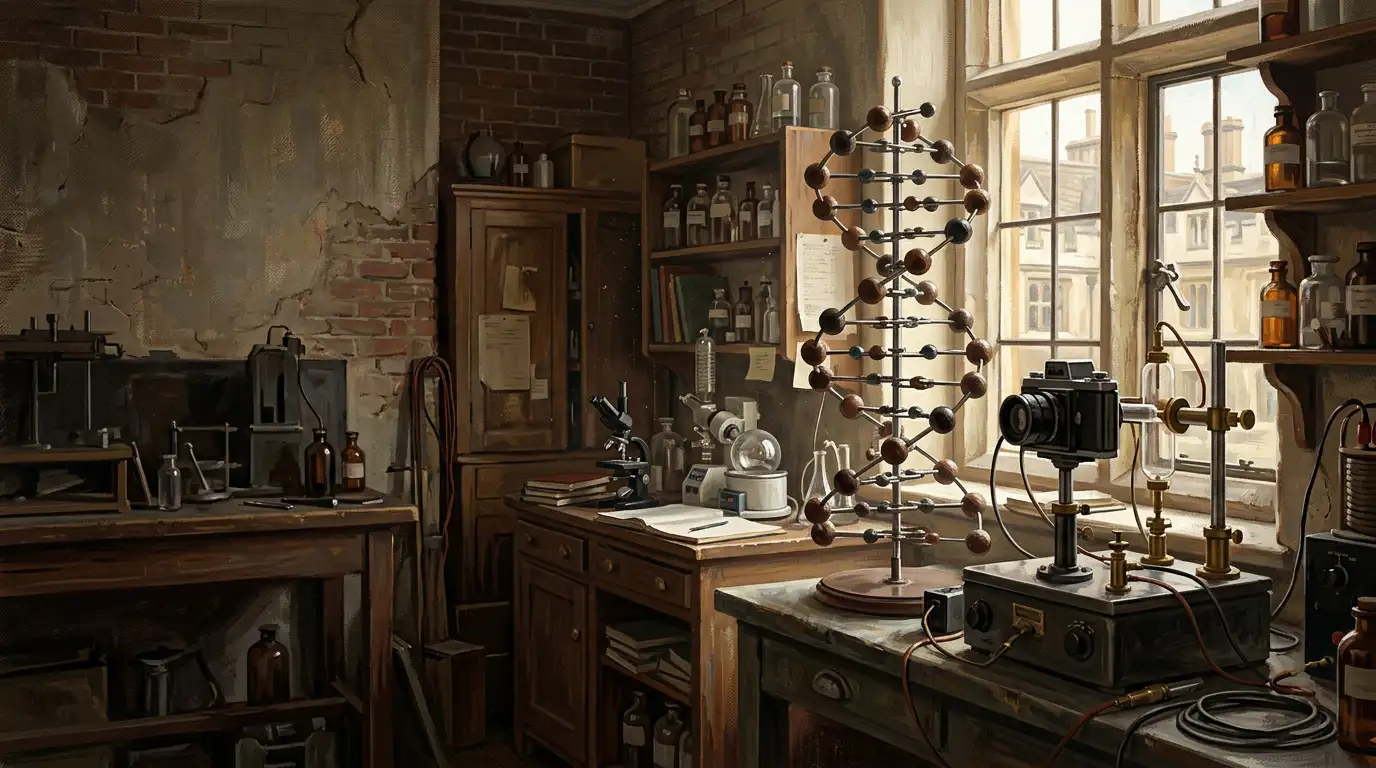
The race to uncover DNA's structure brought together brilliant experiments, model-building, fierce competition and a dispute over credit that still shapes how the discovery is remembered.
The Race for DNA
By the early 1950s, scientists knew the basic ingredients of deoxyribonucleic acid (DNA) and there was growing evidence that it carried hereditary information. What nobody knew was how the molecule was arranged in three dimensions.
Several groups wanted the answer. At Cambridge, James Watson and Francis Crick were trying to build a physical model that fitted the known chemistry. At King's College London, Maurice Wilkins, Rosalind Franklin, Raymond Gosling and others were studying DNA fibres using X-ray diffraction. In the United States, Linus Pauling, already one of the world's most celebrated chemists, was also working on the problem.
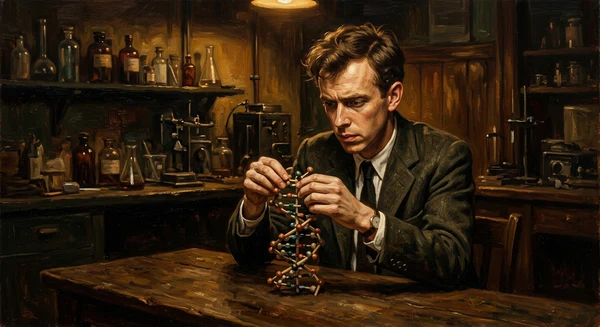
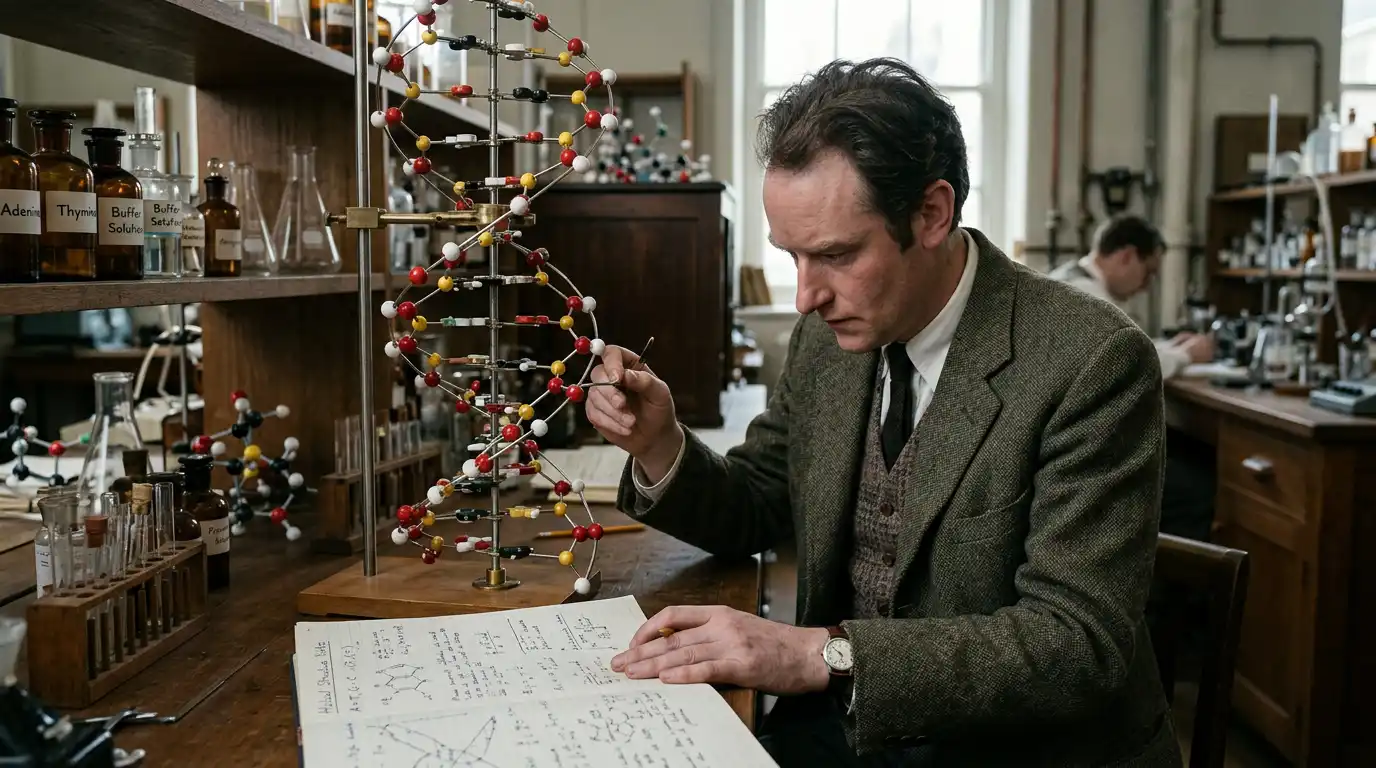
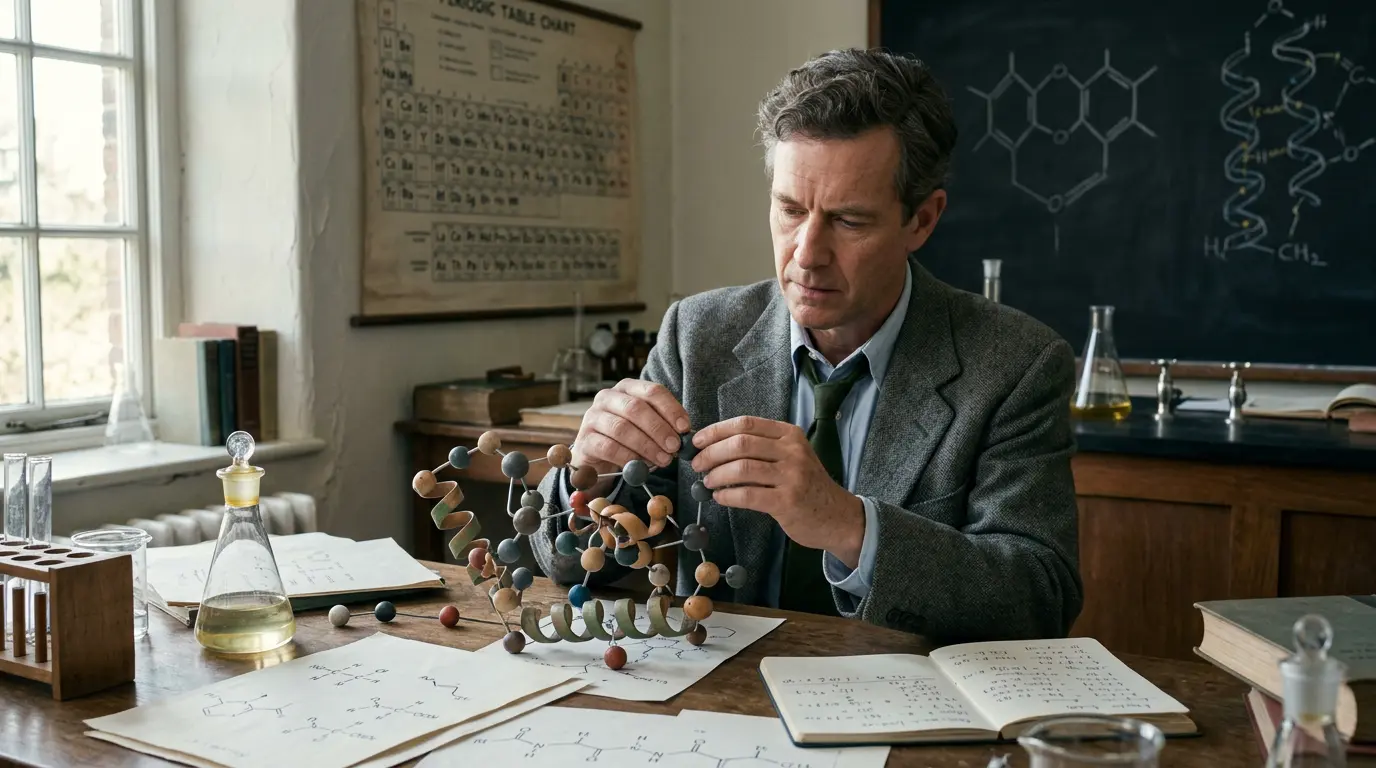
The approaches were different. Watson and Crick relied heavily on model-building, while the King's researchers were producing experimental measurements. Neither approach was enough on its own.
To solve DNA, chemistry, models and experimental evidence would all have to agree.
Franklin and the X-ray Evidence
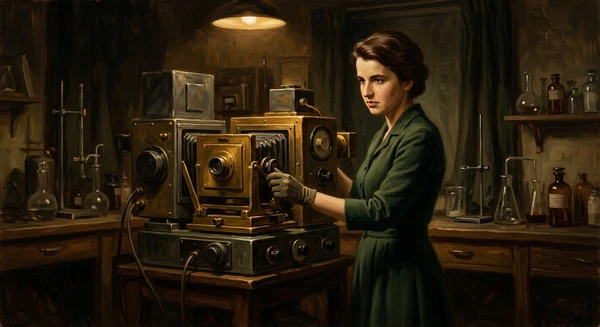
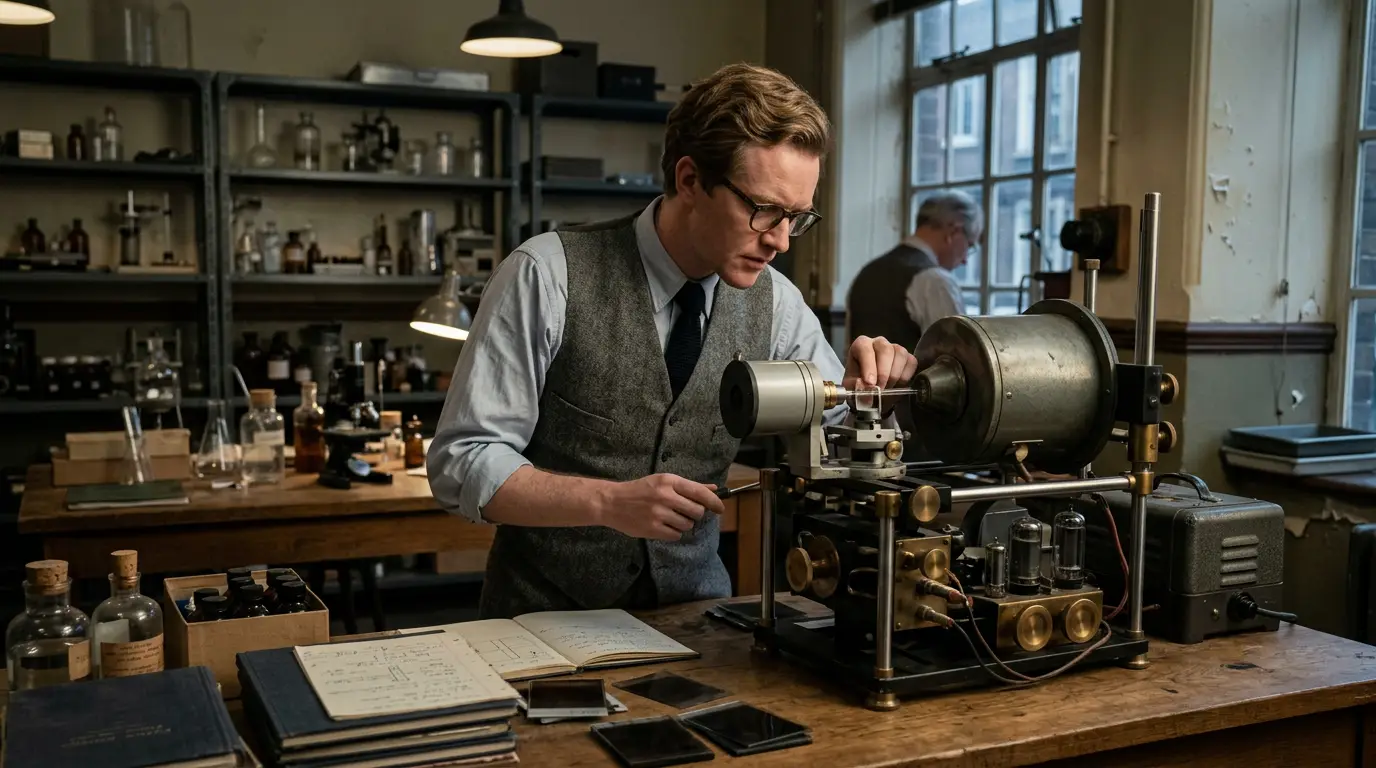
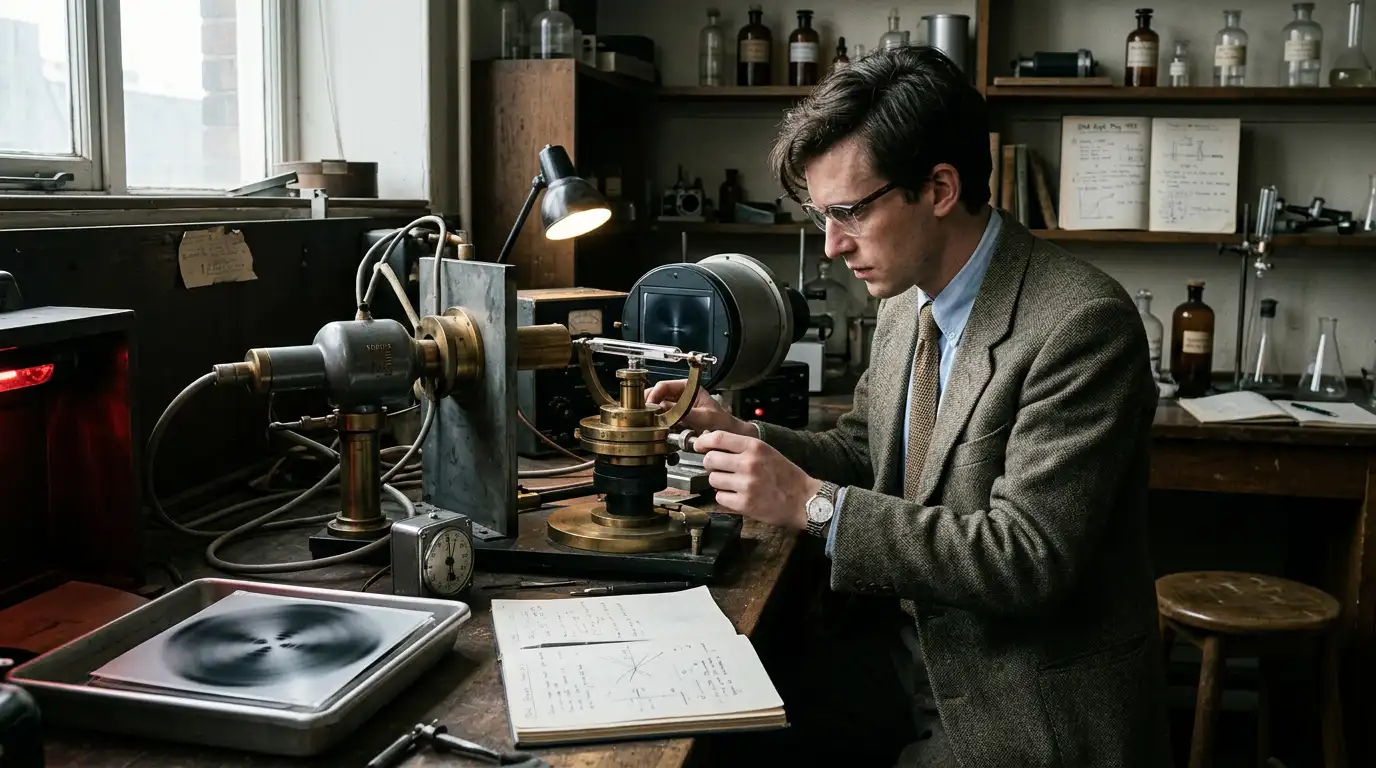
Rosalind Franklin arrived at King's College London in 1951 with considerable experience in X-ray diffraction. Working with PhD student Raymond Gosling, she carefully controlled the amount of water in DNA fibres and showed that DNA could produce two distinct diffraction patterns, known as the A and B forms.
The wetter B form produced a particularly striking pattern. In May 1952, Franklin and Gosling made an exceptionally clear X-ray diffraction image that later became famous as Photograph 51. Its strong X-shaped pattern was powerful evidence that DNA had a helical structure.
But Franklin's contribution went far beyond one photograph.
She analysed DNA's dimensions, symmetry and water content in detail. Her surviving work shows that by early 1953 she was moving towards a two-chain helical structure herself. She had also recognised that the sequence of bases along DNA could vary enormously, an important property for a molecule capable of carrying biological information.
Older accounts sometimes present Franklin as the scientist who gathered the data while others understood it.
That is not an accurate picture.
She was actively trying to solve the structure of DNA.
Photograph 51 — and the Data Beyond It
Early in 1953, Maurice Wilkins showed Photograph 51 to James Watson. Franklin was not consulted about Watson seeing it, although later accounts differ over exactly what she knew about the photograph passing to Wilkins.
Watson immediately recognised how strongly the image pointed towards a helix.
The photograph mattered, but it did not contain a finished answer. Watson and Crick still had to determine the number of chains, the position of the sugar-phosphate backbone and how the chemical bases could fit inside the molecule.
They also benefited from another source of experimental information from King's.
An internal Medical Research Council report contained measurements and conclusions from the King's research, including results produced by Franklin. Max Perutz, who had received the report during an official visit, later showed it to Watson and Crick.
The report was not formally secret. Scientific information also moved informally between the groups. Franklin, however, was not directly consulted about how her unpublished results were being used.
Those measurements helped Watson and Crick test whether their developing model was compatible with the experimental evidence.
This is why the history does not fit comfortably into a simple story of either theft or independent discovery. Watson and Crick carried out substantial theoretical and model-building work themselves, but they also benefited from important experimental results produced by researchers at King's.
Building the Double Helix
Watson and Crick had already tried once and failed. Their first serious DNA model in 1951 was wrong, and Franklin was among those who pointed out its problems.
By early 1953, the race had become more urgent. Linus Pauling proposed a triple-helix structure for DNA, but his model contained serious chemical problems.
Watson and Crick returned to model-building with better information. They also had another crucial clue from the biochemist Erwin Chargaff. His measurements showed that DNA contained roughly equal amounts of adenine and thymine, and roughly equal amounts of guanine and cytosine.
Gradually, the pieces fitted together.
The sugar-phosphate backbones belonged on the outside of the molecule while the bases pointed inward. Adenine paired with thymine, and guanine paired with cytosine. Two chains wound around one another to form a double helix.
The model did more than explain DNA's shape.
Because the bases on one strand determined the bases on the other, the structure immediately suggested a possible mechanism by which genetic information could be copied.
Watson and Crick had produced the successful model, but the evidence that made it possible had come from several laboratories and several scientists.
Three Papers, One Issue
On 25 April 1953, Nature published three papers on DNA one after another.
Watson and Crick's short paper appeared first and proposed the double-helix model. It was followed by a paper from Wilkins and colleagues and another from Franklin and Gosling presenting X-ray diffraction evidence from King's.
Seen together, the papers tell a more complicated story than the later image of two scientists making an isolated breakthrough.
Watson and Crick acknowledged that they had been stimulated by knowledge of unpublished experimental results from the King's researchers. Their brief acknowledgement did not make clear how useful some of that information had been. In later accounts, Franklin and Wilkins received much fuller recognition for their experimental contributions.
Raymond Gosling's role also deserves attention. As Franklin's PhD student, he worked directly with her on Photograph 51 and other important DNA diffraction studies.
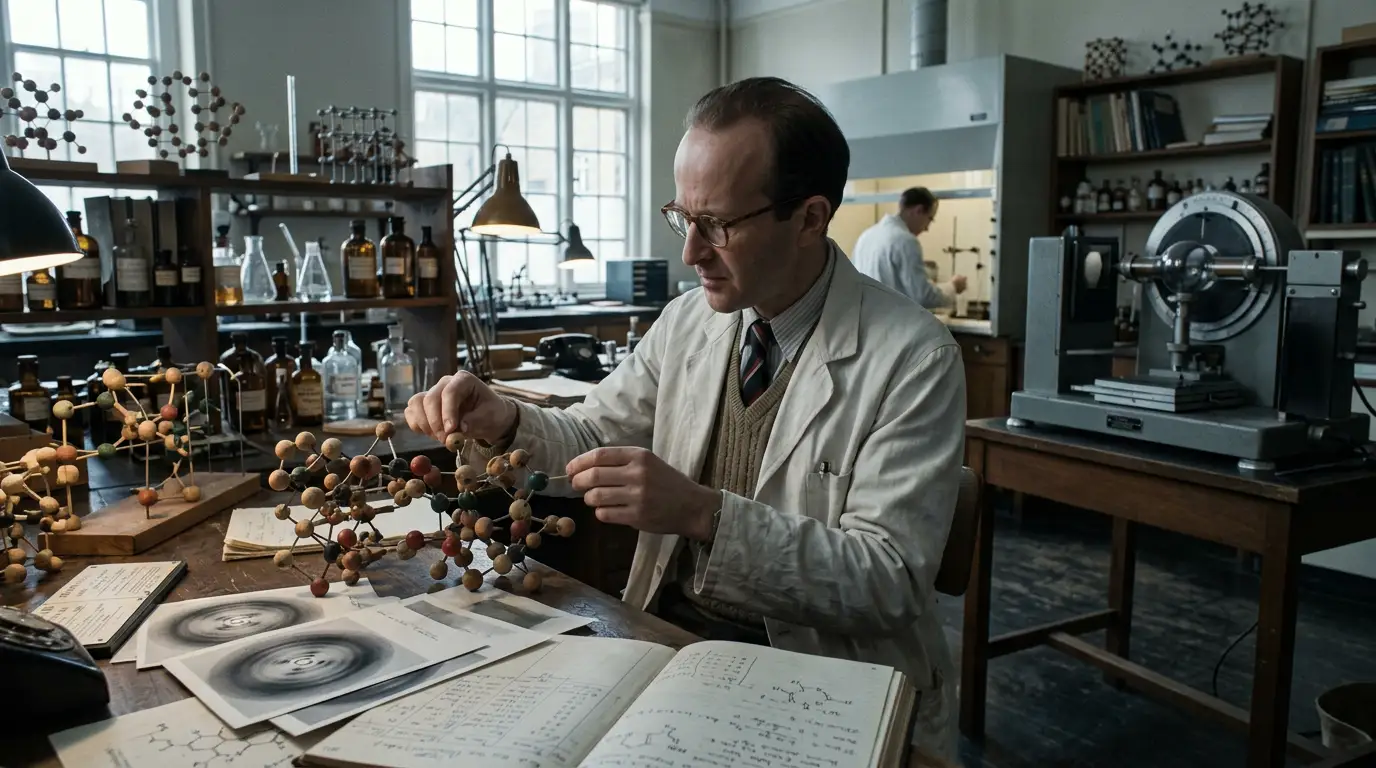
The discovery therefore involved different kinds of scientific skill. Franklin, Gosling, Wilkins and colleagues produced crucial experimental evidence. Chargaff supplied important chemical relationships. Watson and Crick combined several strands of information into a successful molecular model.
That does not make every contribution identical.
It does mean that the double helix was never simply the work of two people.
Credit, the Nobel Prize and the Story We Remember
In 1962, the Nobel Prize in Physiology or Medicine was awarded jointly to Francis Crick, James Watson and Maurice Wilkins for discoveries concerning the molecular structure of nucleic acids and its importance in transferring information.
Rosalind Franklin was not among them. She had died from ovarian cancer in 1958 at the age of 37.
It is tempting to ask whether she would have shared the prize had she lived, but there is no way to know what the Nobel committee would have decided.
What can be judged more confidently is the science.
Watson and Crick built the successful double-helix model and identified complementary base pairing. Franklin and Gosling produced crucial X-ray diffraction evidence. Wilkins and colleagues contributed important experimental work and exchanged information with Cambridge. Chargaff's chemical findings helped make the pairing of the bases understandable.
No single contribution tells the whole story.
Nor does recognising Franklin diminish Watson and Crick's achievement. Their model was an extraordinary scientific breakthrough. The mistake is turning that achievement into a story in which everyone else's work becomes merely background.
The double helix emerged from experiments, chemistry, model-building, competition and information moving between laboratories.
That makes the history messier than the familiar story of two men suddenly seeing the answer.
It also makes it more interesting.
Scientific breakthroughs often look simple only after somebody has solved them.