_(2).jpg)
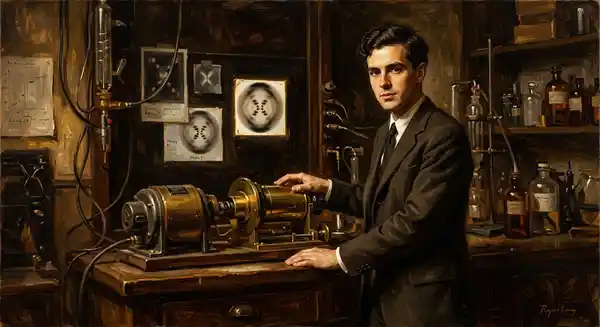
Raymond Gosling
1926–2015 · Physicist
Raymond Gosling was a British physicist who carried out X-ray diffraction research on DNA at King's College London. He produced Photograph 51 with Rosalind Franklin while a PhD student.
“I was very much impressed by the way the atoms were arranged in the DNA molecule.”
Why is this scientist famous?
His X-ray diffraction research on DNA and for producing Photograph 51 with Rosalind Franklin while a PhD student at King's College London.
Raymond's story
A Student at King's
Raymond George Gosling was born on 15 July 1926 in Wembley, London, England. He studied physics at University College London from 1944 to 1947.
After working as a hospital physicist, Gosling joined King's College London as a research student. He initially worked with Maurice Wilkins on DNA, using X-ray diffraction to study DNA fibres.
Photograph 51
Gosling subsequently worked under Rosalind Franklin's supervision. Under Franklin's supervision, Gosling helped produce the exceptionally clear B-form DNA diffraction image called Photograph 51 in May 1952.
Photograph 51 was produced by Franklin and Gosling together. Gosling was not merely Franklin's assistant — he was a doctoral researcher carrying out substantial experimental work. The image required a long X-ray exposure of carefully prepared DNA fibres.
The Nature Papers and After
Franklin and Gosling jointly published DNA diffraction research in Nature in 1953. Their evidence contributed important information used in developing the double-helix model.
Gosling completed his doctoral research on X-ray diffraction of DNA in 1954. He later worked at St Andrews and the University of the West Indies, and his later research moved substantially into medical physics.
Gosling died on 18 May 2015, aged 88. He remained an important witness to the history of the DNA research at King's.
What did they discover?
Photograph 51
In May 1952, Gosling helped produce the exceptionally clear B-form DNA diffraction image called Photograph 51 under Rosalind Franklin's supervision at King's College London.
Franklin and Gosling Nature Papers
Franklin and Gosling jointly published DNA diffraction research in Nature in 1953, providing evidence that contributed to developing the double-helix model.
Amazing facts
He was a PhD student when Photograph 51 was produced.
Photograph 51 required a long X-ray exposure of carefully prepared DNA fibres.
His later career included medical physics.
He remained an important witness to the history of the DNA research at King's.
He initially worked with Maurice Wilkins before working under Rosalind Franklin.
Timeline
Born in Wembley, London, England.
Began studying physics at University College London.
Completed physics degree at UCL.
Began research at King's College London, initially working with Maurice Wilkins.
Photograph 51 produced with Rosalind Franklin in May.
Franklin and Gosling DNA papers published in Nature.
Completed doctoral research on X-ray diffraction of DNA.
Died aged 88.
Related Super Scientists
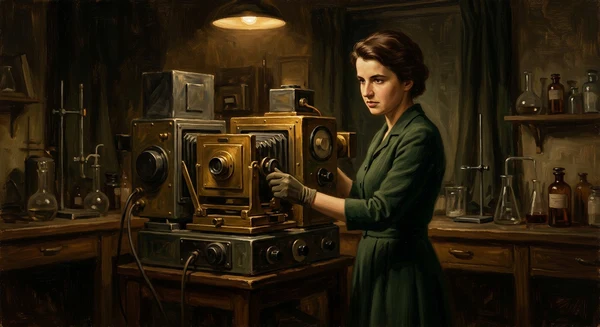
Rosalind Franklin
1920–1958 · Chemist & X-ray Crystallographer
Producing crucial X-ray diffraction data on DNA, including Photograph 51, with her student Raymond Gosling.
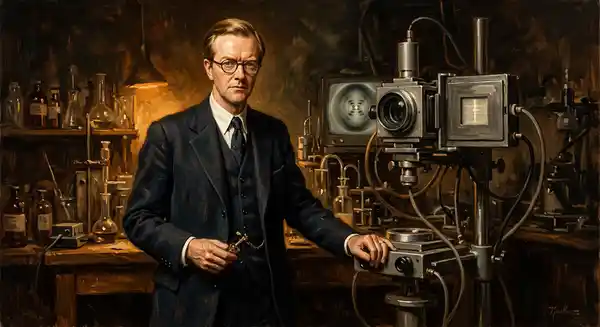
Maurice Wilkins
1916–2004 · Biophysicist
Important X-ray diffraction studies of DNA at King's College London and sharing the 1962 Nobel Prize in Physiology or Medicine with Francis Crick and James Watson.
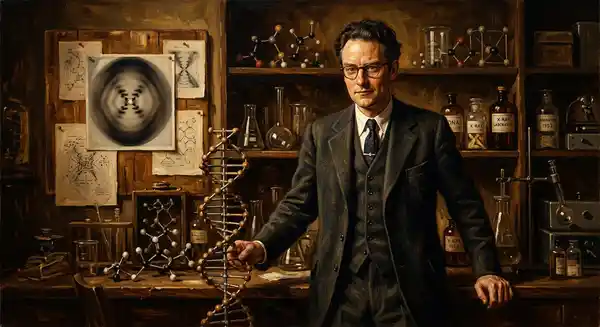
Francis Crick
1916–2004 · Molecular Biologist
Working with James Watson to develop the double-helix model of DNA in 1953 and later making major contributions to understanding genetic information and the genetic code. He shared the 1962 Nobel Prize in Physiology or Medicine with James Watson and Maurice Wilkins.