_(2).jpg)
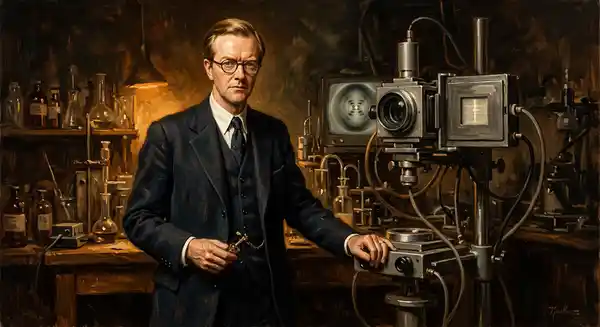
Maurice Wilkins
1916–2004 · Biophysicist
Maurice Wilkins was a New Zealand-born British biophysicist who carried out important X-ray diffraction studies of DNA at King's College London. He shared the 1962 Nobel Prize in Physiology or Medicine with Francis Crick and James Watson.
“I think we must accept that science is not a perfect instrument and that its findings are always provisional.”
Why is this scientist famous?
Important X-ray diffraction studies of DNA at King's College London and sharing the 1962 Nobel Prize in Physiology or Medicine with Francis Crick and James Watson.
Maurice's story
From New Zealand to Cambridge
Maurice Hugh Frederick Wilkins was born on 15 December 1916 in Pongaroa, New Zealand. He moved from New Zealand to Britain as a child and grew up mainly there.
Wilkins studied physics at St John's College, Cambridge, receiving his degree in 1938. He then undertook doctoral work with John Randall at the University of Birmingham.
Wartime Research
During the Second World War, Wilkins worked on radar and uranium-isotope separation. He later worked in Berkeley as part of the Manhattan Project.
After the war, Wilkins worked briefly at St Andrews before joining John Randall's biophysics unit at King's College London. He remained at King's for the rest of his career.
DNA X-ray Diffraction
Wilkins began X-ray studies of DNA at King's. He and graduate student Raymond Gosling produced early DNA diffraction images.
Rosalind Franklin joined King's in 1951 and, working with Gosling, produced much higher-quality X-ray work including Photograph 51. Wilkins and colleagues continued experimental work testing the Watson-Crick DNA model.
Photograph 51 was produced by Franklin and Gosling, not by Wilkins. However, as recorded by King's College London, Wilkins showed the image to Watson without Franklin's knowledge or agreement.
Nobel Prize and Legacy
Wilkins was elected a Fellow of the Royal Society in 1959. In 1962, he shared the Nobel Prize in Physiology or Medicine with Francis Crick and James Watson for their work on the molecular structure of nucleic acids.
He was appointed CBE in 1963. Wilkins later campaigned for socially responsible uses of science. He died on 5 October 2004 in London.
What did they discover?
DNA X-ray Diffraction at King's
Wilkins began X-ray studies of DNA at King's College London, producing early diffraction images with Raymond Gosling. Franklin and Gosling later produced the much higher-quality Photograph 51.
Testing the Watson-Crick Model
Wilkins and colleagues continued experimental work testing the Watson-Crick DNA double-helix model.
Nobel Prize in Physiology or Medicine, 1962
Wilkins shared the 1962 Nobel Prize with Francis Crick and James Watson for their work on the molecular structure of nucleic acids.
Amazing facts
Born in New Zealand but grew up mainly in Britain.
Worked on wartime radar and uranium-isotope separation before moving into biophysics.
Worked in Berkeley as part of the Manhattan Project.
Later campaigned for socially responsible uses of science.
Remained associated with King's College London throughout his later career.
Timeline
Born in Pongaroa, New Zealand.
Received physics degree from St John's College, Cambridge.
Wartime radar and isotope-separation work began.
Joined John Randall's biophysics unit at King's College London.
Rosalind Franklin joined King's and began higher-quality DNA X-ray work with Gosling.
Elected Fellow of the Royal Society.
Shared the Nobel Prize in Physiology or Medicine with Crick and Watson.
Appointed CBE.
Died in London.
Awards & honours
Related Super Scientists
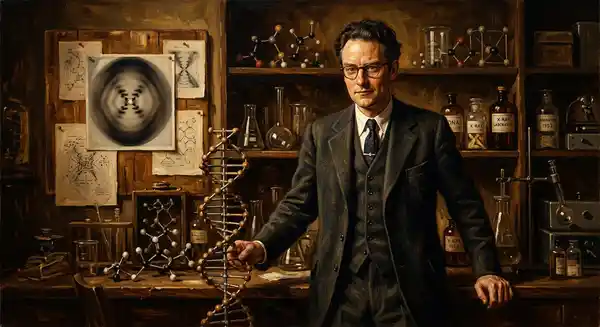
Francis Crick
1916–2004 · Molecular Biologist
Working with James Watson to develop the double-helix model of DNA in 1953 and later making major contributions to understanding genetic information and the genetic code. He shared the 1962 Nobel Prize in Physiology or Medicine with James Watson and Maurice Wilkins.
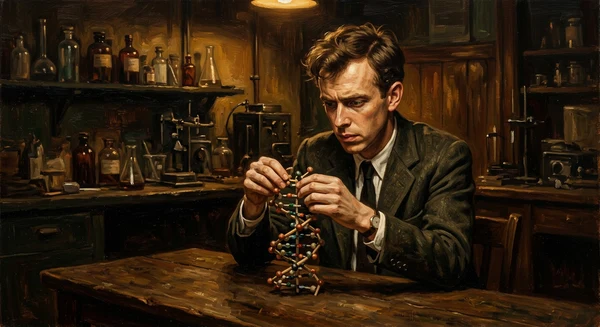
James Watson
1928–2025 · Molecular Biologist & Geneticist
Helping determine the double-helix structure of DNA with Francis Crick in 1953, using crucial X-ray diffraction and other experimental evidence produced by researchers including Rosalind Franklin, Raymond Gosling and Maurice Wilkins.
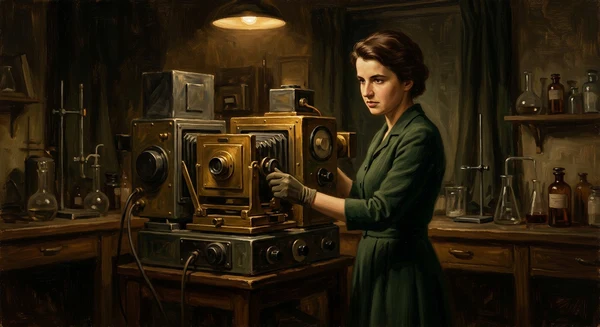
Rosalind Franklin
1920–1958 · Chemist & X-ray Crystallographer
Producing crucial X-ray diffraction data on DNA, including Photograph 51, with her student Raymond Gosling.