_(2).jpg)
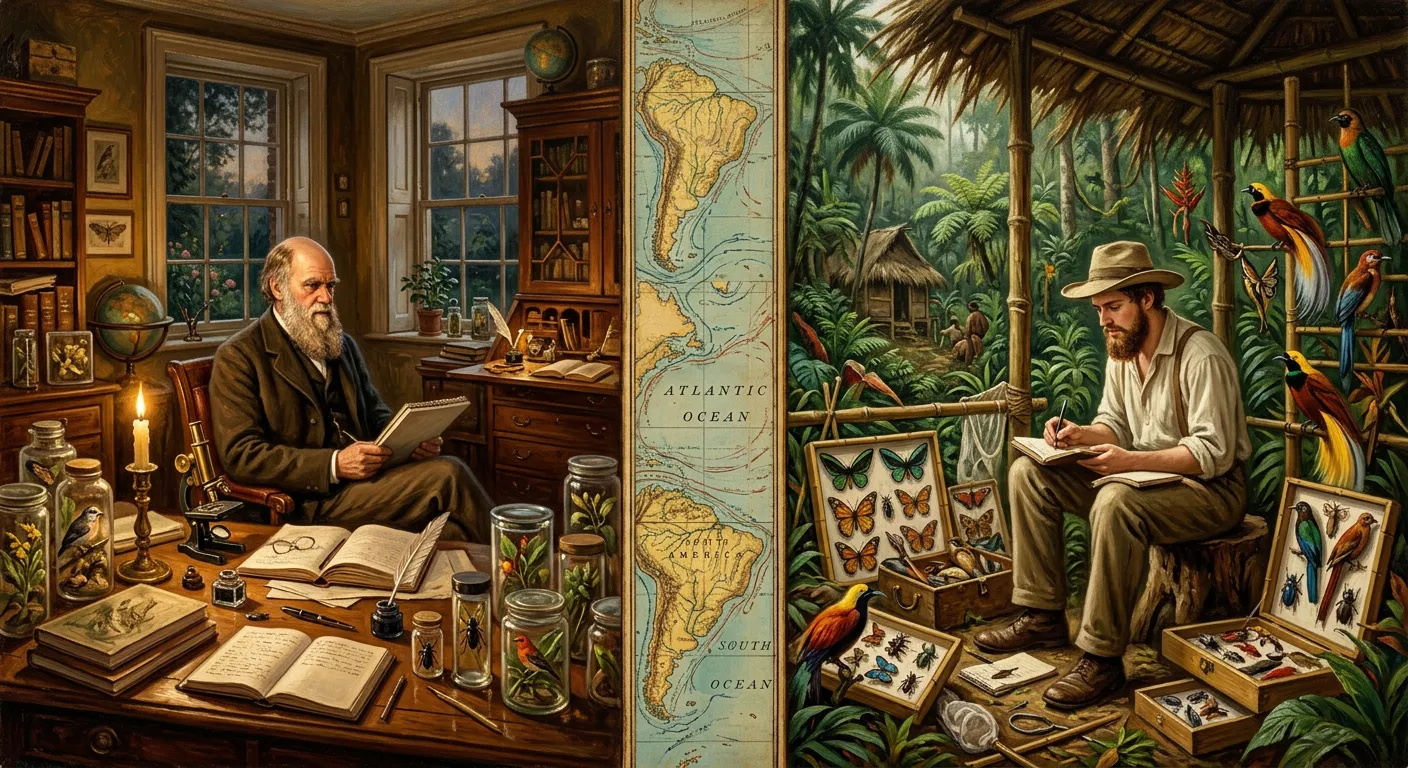
Charles Darwin had spent years developing his explanation for how species change when an essay arrived from Alfred Russel Wallace, working thousands of miles away. Wallace had independently reached a strikingly similar idea, creating one of science's most remarkable cases of simultaneous discovery.
Two Naturalists, One Problem
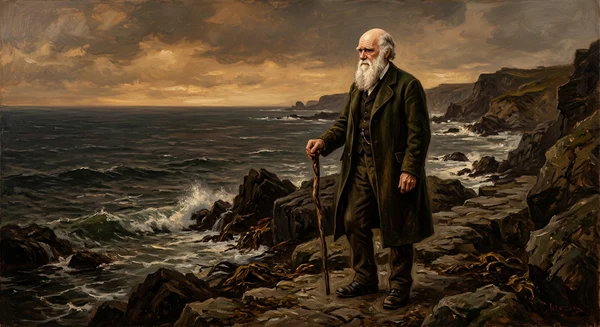
Charles Darwin returned from the voyage of HMS Beagle in 1836 with an enormous collection of observations and specimens — and increasingly difficult questions about species.
By 1837 he was seriously considering that species might change over time. The following year, his thinking about competition and survival helped him develop the mechanism that became natural selection. Darwin wrote an outline of his theory in 1842 and expanded it into a longer essay in 1844.
But he did not immediately publish it.
Instead, Darwin spent years gathering evidence. He studied domesticated animals, variation, geographical distribution, fossils, barnacles and many other subjects, trying to build a convincing explanation for how new species could arise.
Alfred Russel Wallace was approaching the same problem from a very different direction.
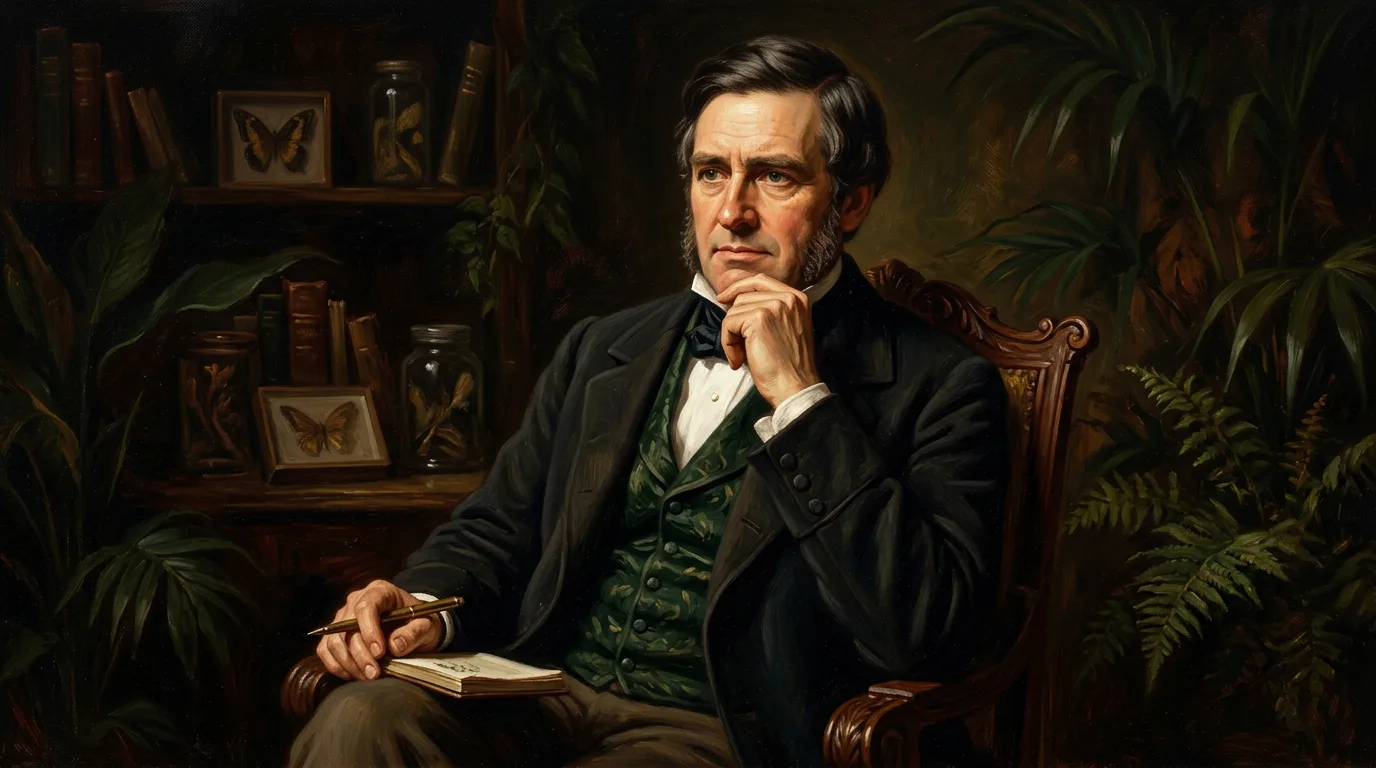
Wallace spent years collecting and studying wildlife, first in the Amazon and later across the Malay Archipelago. The geographical distribution of animals fascinated him. Why did neighbouring islands sometimes contain dramatically different species? Why did closely related animals appear in particular places?
Darwin was building his theory largely from years of accumulated evidence.
Wallace was following patterns across the living world.
Neither knew exactly where the other's work would lead.
Wallace Reaches the Same Idea
By the 1850s, Wallace was already arguing that new species appeared in geographical and historical connection with closely related species.
Then, while working in the Malay Archipelago in 1858, he developed an explanation for how such change could happen.
Populations contain differences. More organisms are born than can survive. Individuals whose characteristics suit their surroundings are more likely to survive and reproduce, allowing useful variations to become more common over generations.
It was remarkably close to the mechanism Darwin had been developing independently.
Wallace wrote an essay explaining his idea, titled On the Tendency of Varieties to Depart Indefinitely From the Original Type. He sent it to Darwin and asked him to pass it to the geologist Charles Lyell if Darwin thought it worthwhile.
Wallace could hardly have known what was about to happen.
The man receiving his essay had been working on essentially the same problem for roughly two decades.
The Letter Darwin Did Not Expect
Darwin received Wallace's essay on 18 June 1858 and immediately recognised how closely it resembled the theory he had been developing for years.
Darwin had strong evidence that his own work came earlier. He had written a sketch of natural selection in 1842, expanded it in 1844 and described his ideas to the American botanist Asa Gray in 1857. Wallace, however, had reached a closely related explanation independently and had now sent Darwin an essay ready to be communicated.
Darwin forwarded Wallace's manuscript to Charles Lyell and asked for advice.
Lyell and the botanist Joseph Dalton Hooker proposed presenting Wallace's essay alongside extracts from Darwin's earlier unpublished work. Their solution was intended to recognise both Darwin's earlier work and Wallace's independent discovery.
A Joint Announcement — But Not a Joint Discovery
On 1 July 1858, material from Darwin and Wallace was presented at a meeting of the Linnean Society of London.
The presentation included extracts from Darwin's earlier writing, part of his 1857 letter to Asa Gray and Wallace's 1858 essay. Lyell and Hooker explained that the two naturalists had reached similar ideas independently.
Neither scientist attended. Wallace was still working in the Malay Archipelago, while Darwin was dealing with illness and bereavement in his family.
Darwin and Wallace had not worked together to develop natural selection. Their separate paths had simply reached remarkably similar conclusions.
The 1858 presentation attracted relatively little immediate attention. The much larger impact came when Darwin published his fuller argument the following year.
Why Darwin Became the Famous Name
Wallace's essay pushed Darwin to publish much sooner than he had planned.
Instead of completing the enormous book he had been preparing, Darwin produced a shorter account. On the Origin of Species was published in 1859.
Darwin could draw on more than twenty years of observations, experiments, correspondence and accumulated evidence. The book presented a detailed argument that species were not fixed and explained how natural selection could produce adaptation and biological diversity over long periods of time.
Origin attracted enormous attention, and Darwin's name became increasingly associated with evolution by natural selection.
Wallace's 1858 essay was much shorter, but his independent contribution remained important. Today, Darwin and Wallace are commonly recognised as having independently developed the theory of evolution by natural selection.
Rivals Who Kept Talking
The events of 1858 did not create lasting hostility between Darwin and Wallace.
They continued corresponding about evolution for many years. Wallace strongly supported Darwin's work, while Darwin respected Wallace's scientific abilities and praised his research on the geographical distribution of animals.
They did not agree about everything. They debated sexual selection and, most importantly, human evolution. Darwin believed natural and sexual selection could explain human characteristics, while Wallace later argued that natural selection alone could not explain some aspects of the human mind.
Despite these disagreements, their relationship remained respectful. Darwin even helped campaign for Wallace to receive a government pension later in life.
Their story shows that scientists can disagree strongly while still respecting one another's work.
So Who Discovered Natural Selection?
Darwin had developed natural selection years before Wallace and had accumulated a much larger body of evidence for it. Wallace nevertheless reached a closely related explanation independently.
The 1858 presentation recognised both contributions, and Darwin's On the Origin of Species then provided the detailed argument that transformed biology.
Their story is therefore not simply about deciding who was first.
Two naturalists, working independently and thousands of miles apart, followed different evidence towards the same powerful scientific idea.
Science remembers both.