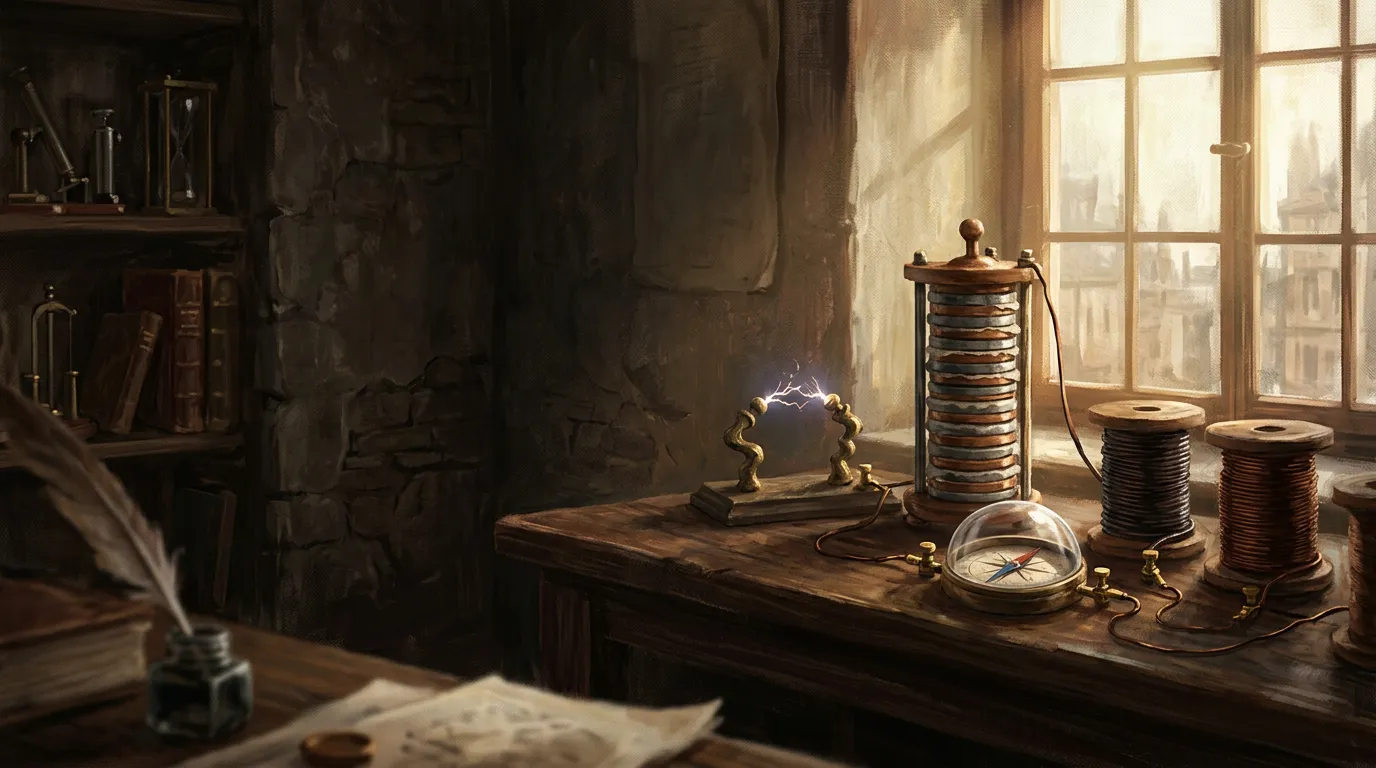
_(2).jpg)
Discover how Hooke, Leeuwenhoek, Schleiden, Schwann, Remak and Virchow helped reveal that living things are made from cells.
Every plant you have seen, every animal, every mushroom and every human body is built from cells.
Some organisms consist of just one cell. Your own body contains an enormous number of specialised cells working together as tissues and organs.
Today, the cell is one of the first big ideas students meet in biology. But for most of human history, nobody knew cells existed.
They were simply too small to see.
Finding them required a new piece of technology, generations of observation and an important change in the way scientists thought about living things.
A hidden world becomes visible
The breakthrough began with microscopes.
By the seventeenth century, lens makers and experimenters had developed instruments that could reveal details invisible to the naked eye. One of the people fascinated by this new world was English scientist Robert Hooke.
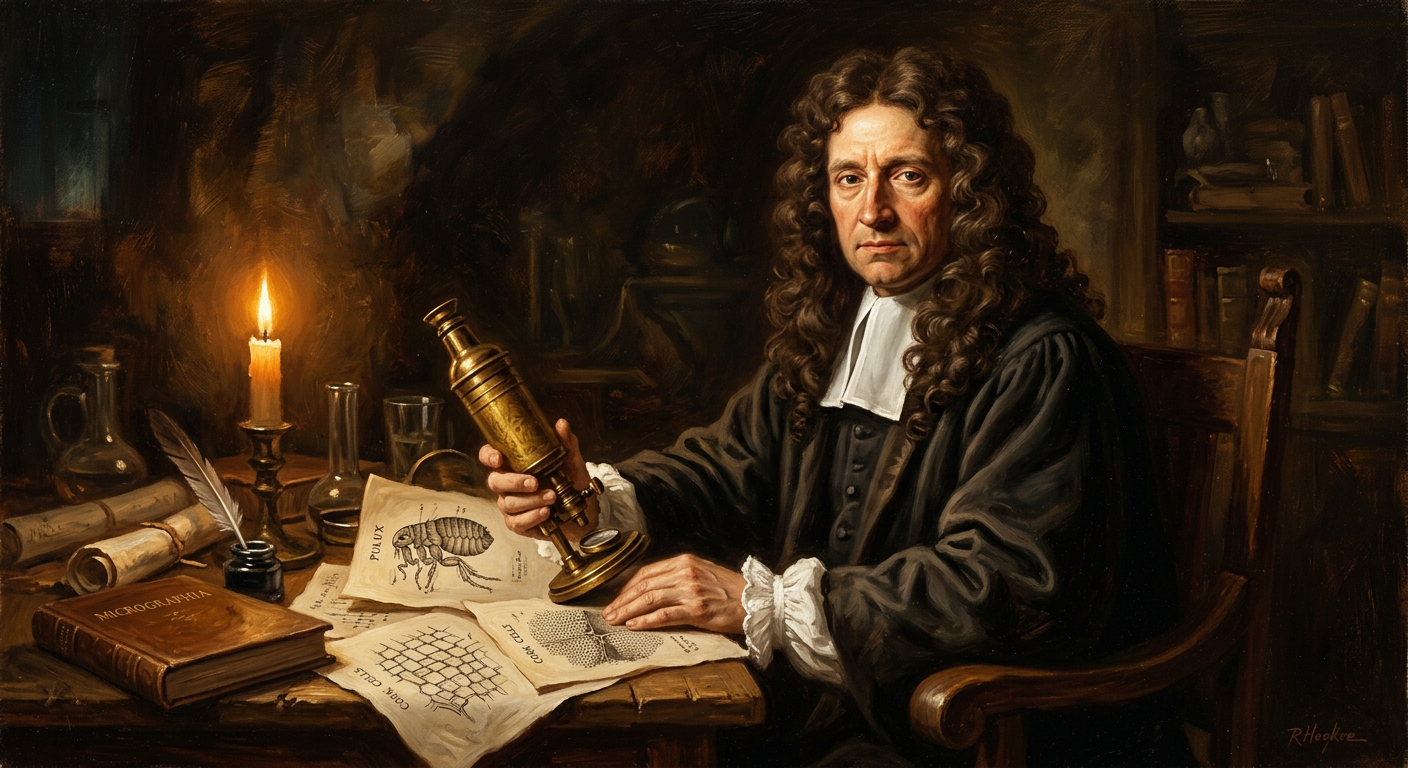
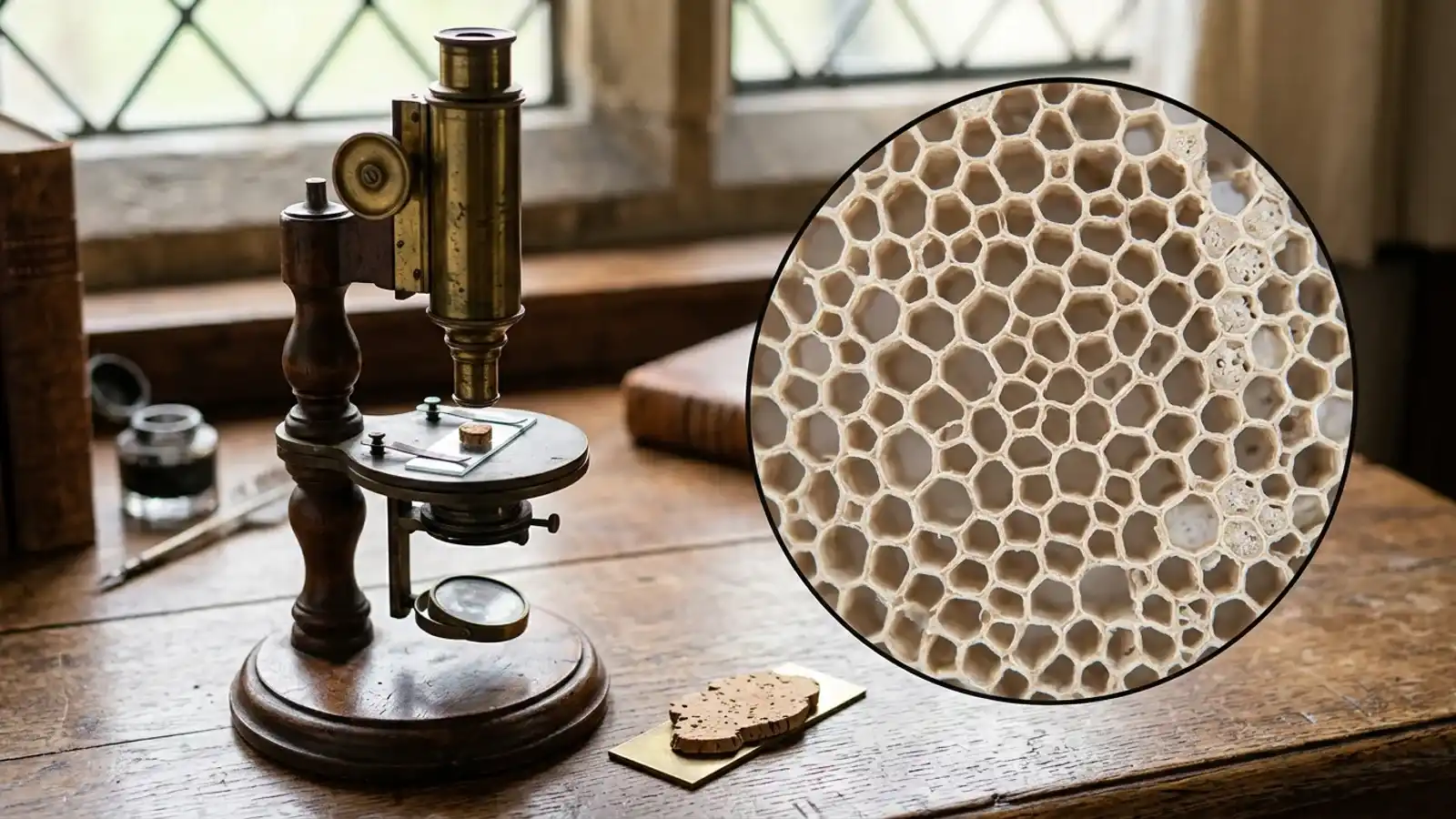
In 1665, Hooke published *Micrographia*, a remarkable collection of observations made with a microscope.
Among the objects he examined was a thin piece of cork.
Under magnification, the cork did not look solid. Hooke saw a repeating pattern of tiny box-like compartments. He called these structures **cells**.
The name remained, but Hooke had not yet discovered cell theory. Cork is dead plant tissue, and what he could see most clearly were the rigid walls left around the plant cells.
He had discovered an important structure without yet knowing just how important it was.
Leeuwenhoek sees living cells
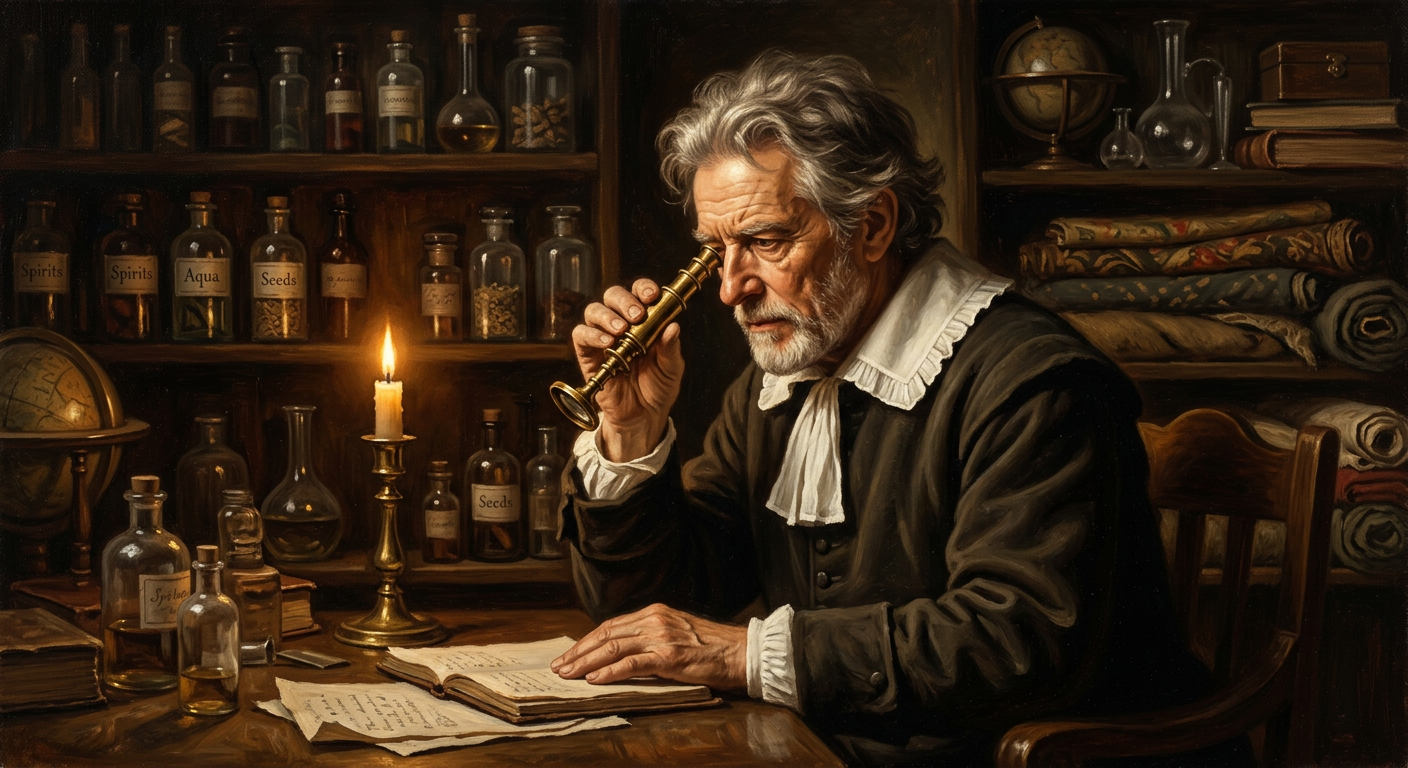
A few years later, Dutch investigator Antonie van Leeuwenhoek pushed microscopic observation much further.
Leeuwenhoek made small, powerful single-lens microscopes and examined an extraordinary range of materials. He observed blood cells, sperm cells and tiny living organisms in water and other samples.
He called some of the microscopic organisms he saw "animalcules".
For the first time, scientists were beginning to realise that an entire living world existed beyond ordinary human vision.
Hooke had seen the compartments in cork. Leeuwenhoek showed that microscopic structures could also be alive.
But there was still a huge unanswered question.
Were cells simply interesting structures that appeared in some living things, or were they something much more fundamental?
From observations to a theory
For more than a century, scientists continued examining plants and animals under increasingly effective microscopes.
They found more and more cellular structures.
The decisive change came during the nineteenth century.
German botanist **Matthias Schleiden** studied plants and argued in 1838 that cells were a fundamental part of plant structure.
The following year, German physiologist **Theodor Schwann** compared plant and animal tissues and extended the idea much further.
Plants and animals looked completely different at normal scale, but under the microscope both could be understood as being organised from cells.
That was a powerful unifying idea.
A tree, a mouse and a human being were not built according to completely separate biological rules. At a fundamental level, their tissues shared a cellular organisation.
This became the foundation of **cell theory**.
They had the big idea — but not everything right
Science rarely moves from complete ignorance to a perfectly correct theory in one step.
Schleiden and Schwann helped establish one of biology's most important ideas, but their explanation of how new cells formed was wrong.
They thought cells could arise within non-cellular material.
Further observations showed something different.
Cells divide.
One of the scientists who produced important evidence for this was **Robert Remak**, a physician and embryologist working in nineteenth-century Germany.
By studying developing tissues, Remak argued that new cells were produced through the division of existing cells.
This matters because the history is sometimes simplified into a neat three-name story: Schleiden, Schwann and Rudolf Virchow.
Virchow was enormously important, but Remak's contribution should not disappear.
Cells come from cells
**Rudolf Virchow**, a German physician and pathologist, helped make the idea of cellular continuity famous.
By the 1850s, the principle that new cells arise from existing cells was becoming an essential addition to cell theory.
Virchow also applied cellular thinking to disease.
Rather than treating illness only as something affecting a whole organ or whole body, scientists could investigate what had changed in particular cells and tissues.
That helped establish cellular pathology and connected cell biology directly with medicine.
The developing theory could now explain not only what organisms were made from, but also how their cellular organisation continued.
The school science behind the history
The modern classroom version of cell theory is often summarised through three closely connected ideas:
**Living organisms are made from cells.**
**The cell is a basic unit of living structure and activity.**
**New cells arise from existing cells.**
Those statements look simple written on a page.
Reaching them took around two centuries of microscopy, argument, mistakes and improved evidence.
Hooke supplied the name after looking at cork.
Leeuwenhoek revealed living microscopic cells and microorganisms.
Schleiden recognised the importance of cells in plants.
Schwann helped extend cellular organisation across animals.
Remak provided important evidence that cells arise through division.
Virchow helped establish and popularise cellular thinking in biology and medicine.
No single one of them simply "discovered cell theory".
It was assembled piece by piece.
What scientists can see today
The microscopes used by Hooke and Leeuwenhoek could reveal things no human had previously seen, but modern microscopy goes vastly further.
Light microscopes allow students to examine structures such as plant cells, animal cells and some microorganisms.
Electron microscopes use beams of electrons rather than visible light and can reveal structures far smaller than those visible with ordinary classroom microscopes.
Other techniques allow scientists to label particular molecules, follow events inside living cells and build detailed three-dimensional images.
Modern cell biology now investigates DNA, membranes, proteins, organelles, signalling, cell division and the ways cells cooperate inside complex organisms.
Medicine also depends heavily on cellular understanding. Cancer, for example, involves failures in the systems controlling cell growth and division. Researchers studying infection, immunity, inherited disease, tissue repair and new treatments all work with processes that occur in or between cells.
The technology has changed dramatically.
The central idea has not.
To understand living things, we have to understand cells.
Why this discovery matters
Cell theory gave biology something enormously powerful: a common level at which apparently different forms of life could be compared.
A leaf and a human muscle do very different jobs, yet both are built from cells.
Different cells can become specialised for different functions while still sharing fundamental biological processes.
That insight connects many subjects pupils encounter separately at school: growth, reproduction, organs, microorganisms, genetics, disease and inheritance.
The story also demonstrates something important about science itself.
Hooke could see cells without understanding their significance.
Schleiden and Schwann could make a major theoretical breakthrough while still being wrong about how cells originated.
Remak could provide crucial evidence without becoming the most famous name attached to it.
Later scientists could correct and extend what came before.
Science advances not because every scientist gets everything right, but because observations can be checked, ideas can be challenged and explanations can improve.
Something as familiar as a diagram of a cell in a school textbook is the result of centuries of that process.