_(2).jpg)
Earth's age was not found in a single rock. Discover how geology, physics and meteorites led to today's estimate of about 4.54 billion years.
A rock can tell you that one event happened before another. It cannot always tell you how many years passed between them. For a long time, that was the difficulty facing anyone who asked a deceptively simple question: how old is Earth?
Today, the commonly stated estimate is about 4.54 billion years. Reaching that figure took more than one discovery. Geologists learned to read the order of events preserved in rocks. Physicists studied heat and radioactivity. Chemists measured tiny differences between atoms of lead. Eventually, a meteorite supplied a clue that Earth's own rocks could not.
Rocks revealed a vast history
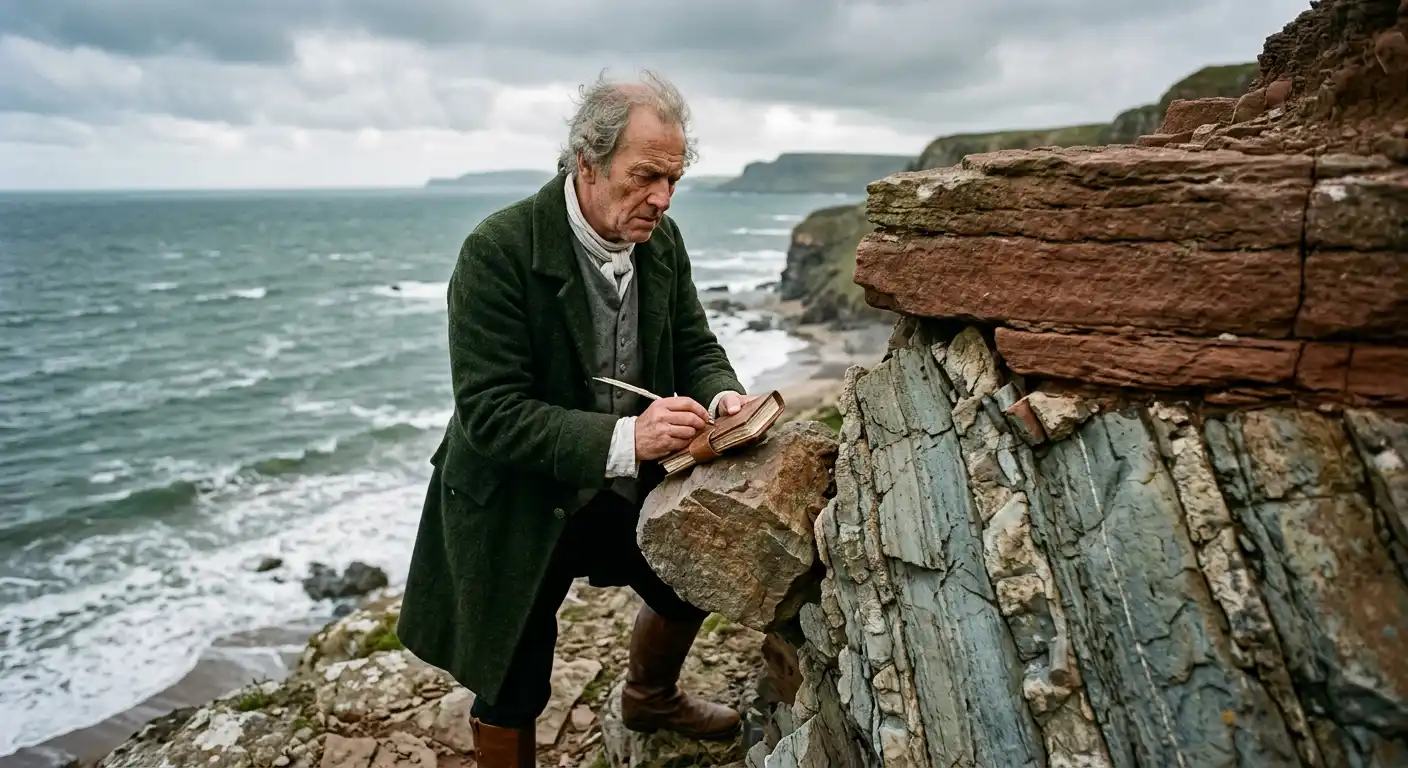
In the eighteenth century, Scottish geologist James Hutton studied the processes shaping the land around him. Rock wore away. Sediment settled in new layers. Given enough time, those layers could become rock themselves.
At Siccar Point in Scotland, older tilted rock lies beneath younger sandstone. The older layers had to form, tilt and wear down before the younger layers were deposited. The contact between them records a long sequence of events.
Hutton argued that processes still visible today had shaped Earth over immense spans of time. He did not calculate an age in years. His contribution was to show why Earth's history must be much longer than everyday human experience could suggest.
A clock based on cooling?
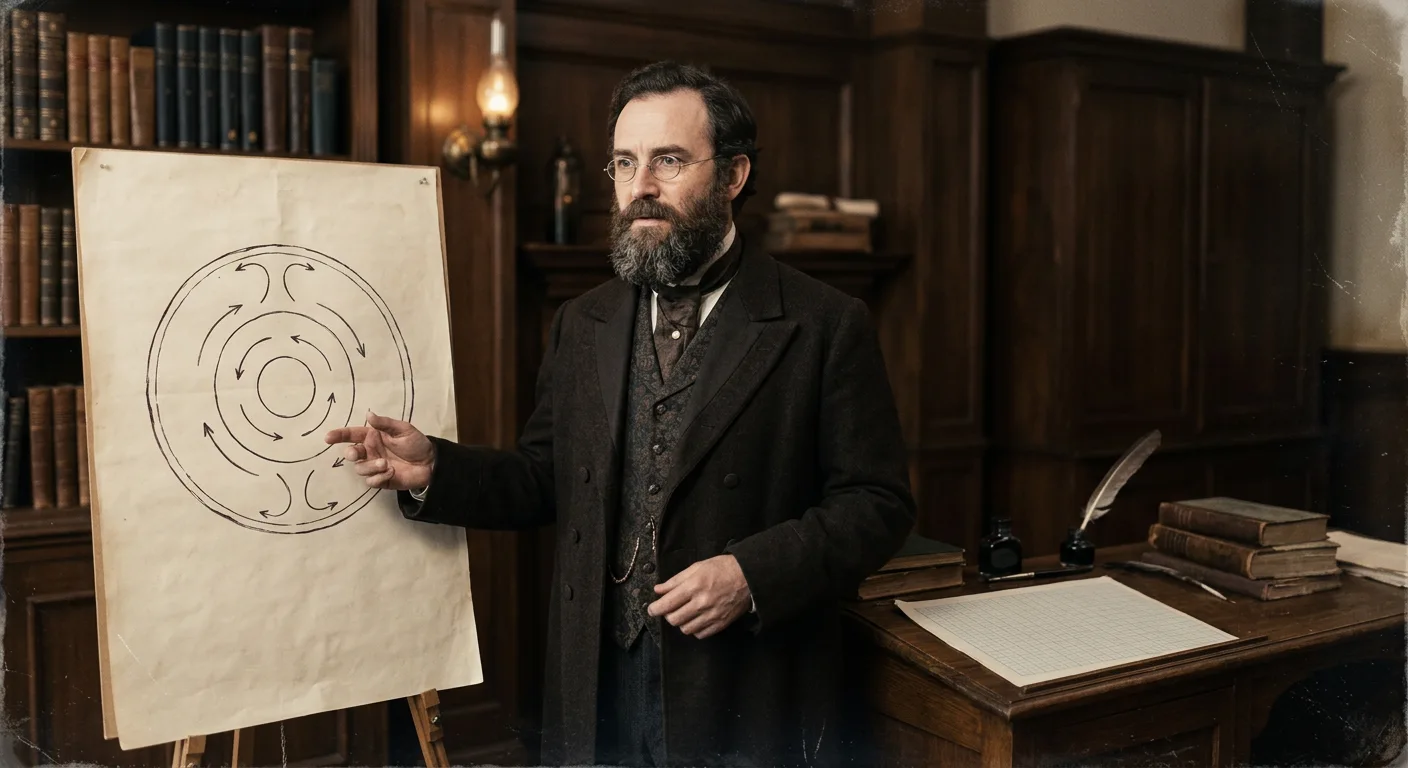
In the nineteenth century, physicist William Thomson, later Lord Kelvin, approached the question through heat. If Earth began very hot and had been cooling ever since, perhaps its present temperature could reveal how long that cooling had taken.
Kelvin's calculations produced ages far younger than the age accepted today. They were serious attempts to apply physics to a difficult problem, but their answer depended on how heat moved through Earth's interior.
In 1895, engineer John Perry challenged a crucial assumption. He argued that movement within the interior could carry heat towards the surface, changing what surface measurements implied about Earth's age. His criticism came before the discovery of radioactivity. It showed that Kelvin's cooling calculation could not securely settle the question on its own.
Radioactivity gave rocks a numerical clock
A new kind of evidence arrived when scientists began to understand radioactive decay. Some atoms change into other atoms at measurable rates. By comparing the amounts of a radioactive substance and its decay products in a suitable mineral, researchers can estimate how long that mineral's clock has been running.
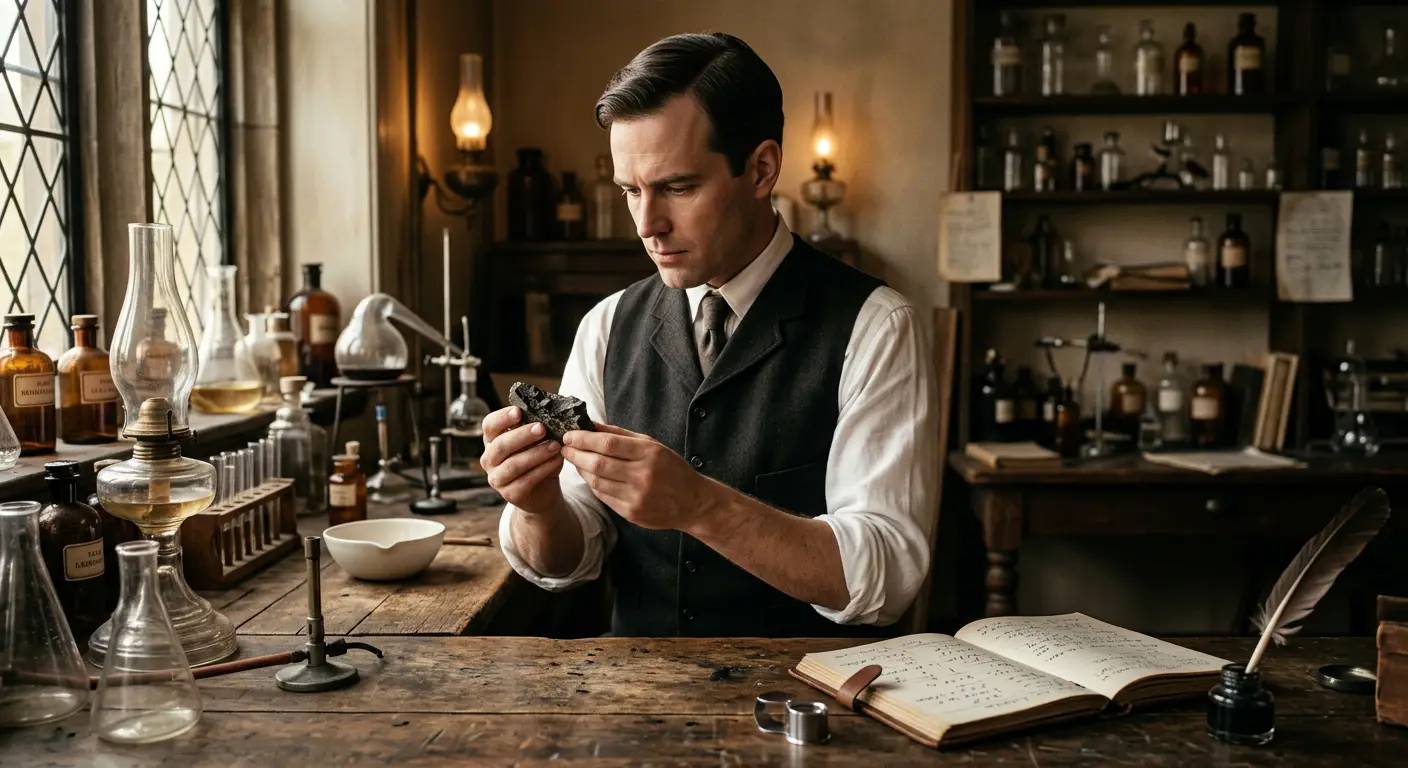
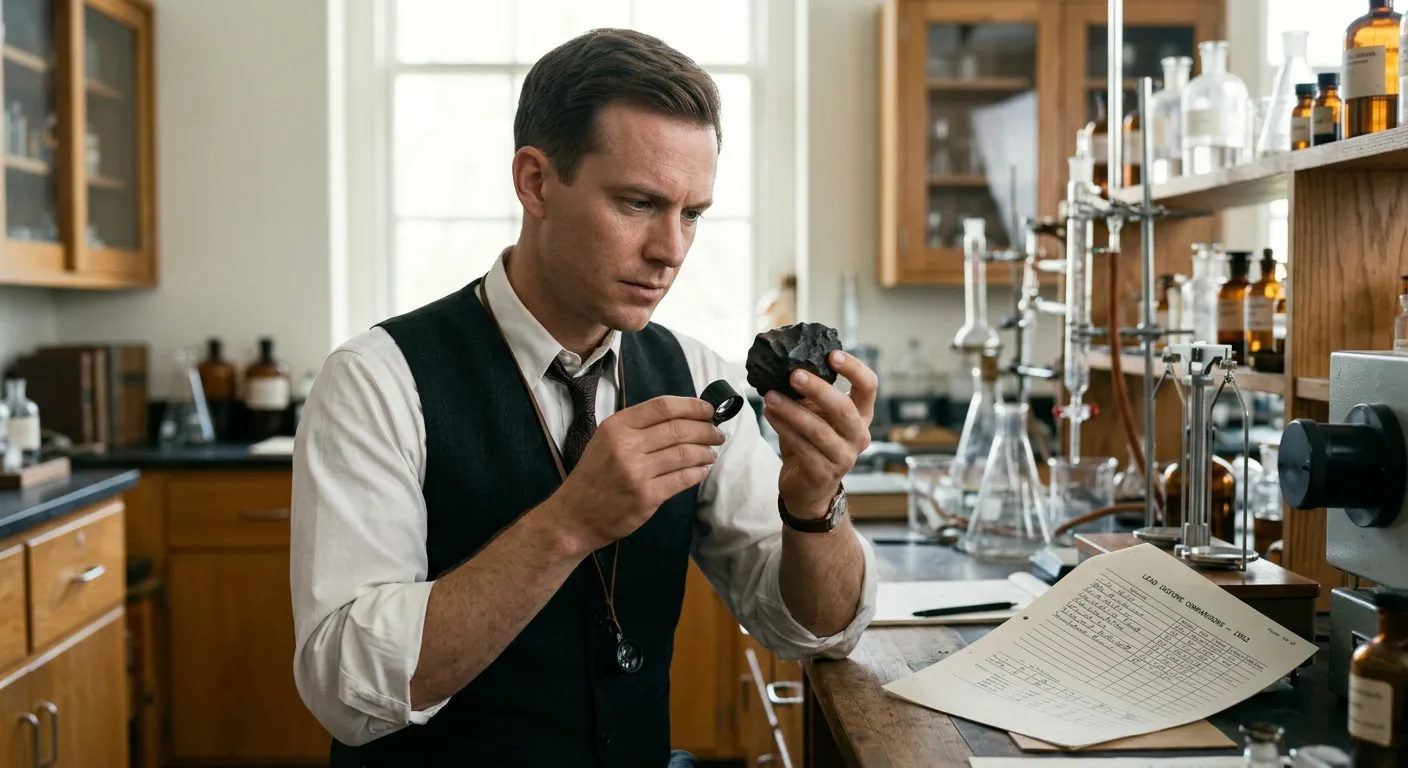
Ernest Rutherford helped establish the science of radioactive change and recognised its potential for dating minerals. Chemist Bertram Borden Boltwood then investigated uranium-bearing minerals and the lead associated with them. In 1907, his calculations produced mineral ages reaching billions of years. Some of his measurements and assumptions needed later correction, but the method showed how to put numbers beside the sequence of events geologists had already found.
Arthur Holmes developed radioactive dating further and worked towards a numerical geological timescale. In his 1913 book *The Age of the Earth*, an early estimate associated with his work was about 1.6 billion years. That was still short of today's figure. As measurements improved, estimates changed.
Dating an ancient mineral tells us when that mineral formed or when its dating system last changed significantly. Even a very old mineral therefore need not have existed from Earth's beginning. To estimate the planet's age, scientists needed another comparison.
Why look to a meteorite?
Earth is an active planet. Rocks melt, erode and form again, so much of its earliest rock record has been altered or lost. Meteorites can preserve evidence from the early Solar System that is difficult to find in Earth's surface rocks.
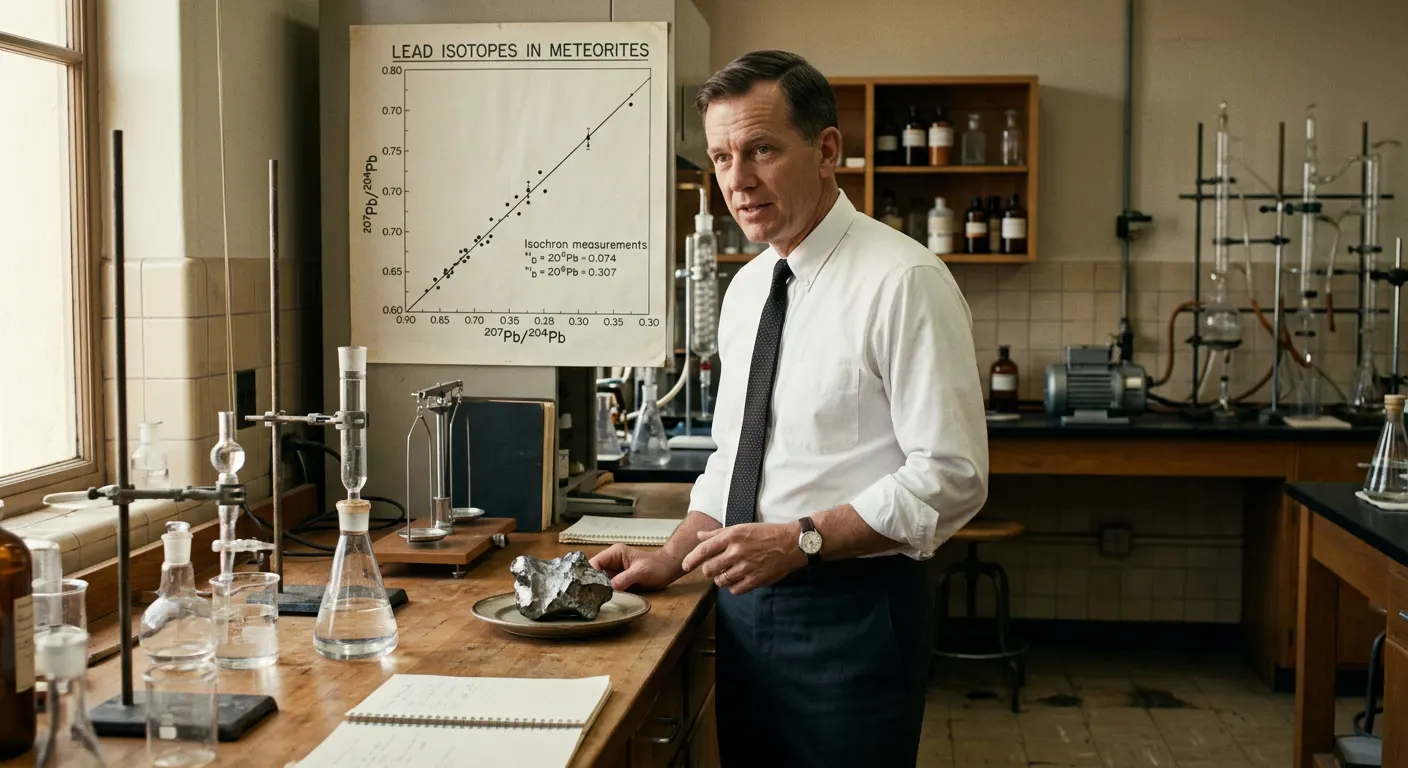
Geochemist Harrison Scott Brown proposed a useful approach: lead in certain iron meteorites could help reveal the lead-isotope composition present near the Solar System's beginning. Isotopes are forms of an element whose atoms have different masses. Knowing that early starting composition would help researchers interpret how lead changed over time.
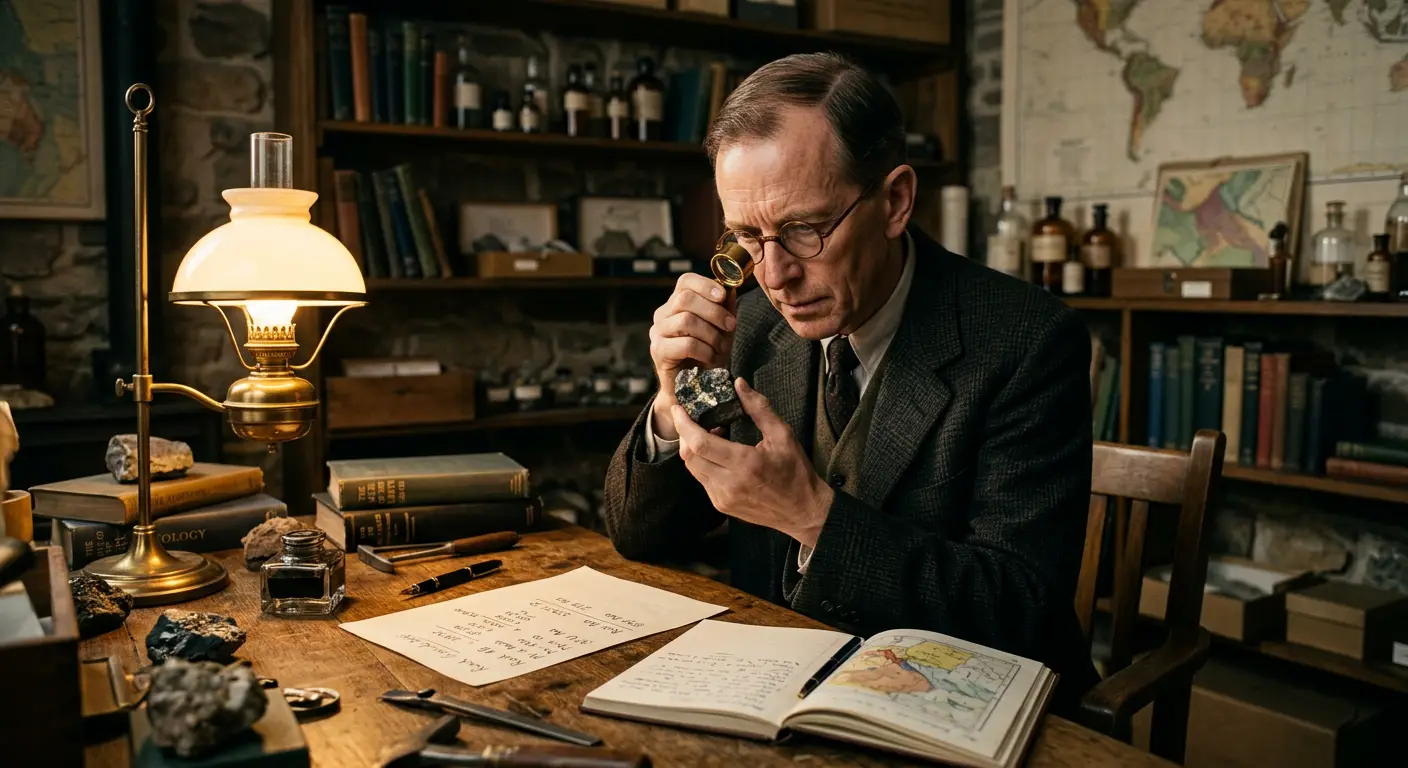
Brown encouraged his student Clair Cameron Patterson to make the extraordinarily difficult measurements. The quantities of lead were tiny, and lead from ordinary laboratory materials could contaminate the samples. Patterson developed much cleaner ways to prepare and measure them. His work used material from the Canyon Diablo meteorite, alongside other evidence needed for the age calculation.
In a paper published in 1956, Patterson reported an age of about 4.55 billion years for Earth and the early Solar System. Later refinements led to the commonly stated estimate of about 4.54 billion years. The meteorite had not provided a simple date stamped on Earth itself: its lead isotopes supplied evidence about the early Solar System that could be compared with measurements from other materials.
An answer built from many clues
These scientists solved different parts of the problem. Hutton showed that rock layers preserve an immense sequence of time. Perry exposed a weakness in an influential cooling calculation. Boltwood and Holmes helped turn radioactive decay into a practical tool for geological dating. Brown proposed a crucial meteorite comparison, and Patterson made the measurements that brought the estimate close to the value used today.
The answer is powerful because several kinds of evidence fit together. Rocks show the order of events. Radioactive isotopes help measure elapsed time. Meteorites offer clues from the Solar System's earliest history. Together, they tell us that Earth formed approximately 4.54 billion years ago.