_(2).jpg)
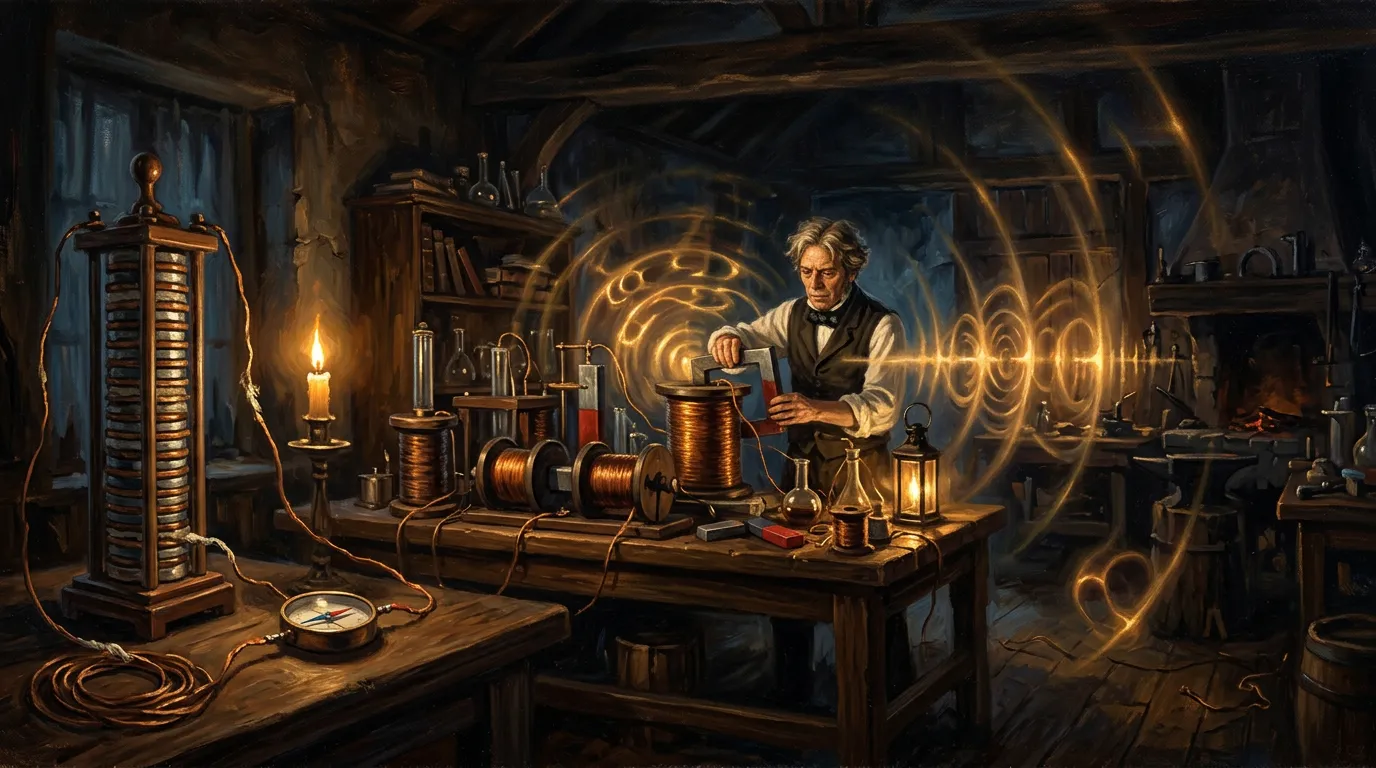
Electricity and magnetism once seemed like completely different phenomena. A battery, a moving compass needle and a remarkable chain of discoveries revealed that they were deeply connected — and eventually led to motors, generators, radio and modern wireless communication.
A Battery Changes What Scientists Can Do
Before 1800, researchers could create static electricity, but it usually arrived as a brief discharge rather than a continuous flow.
Alessandro Volta changed that.
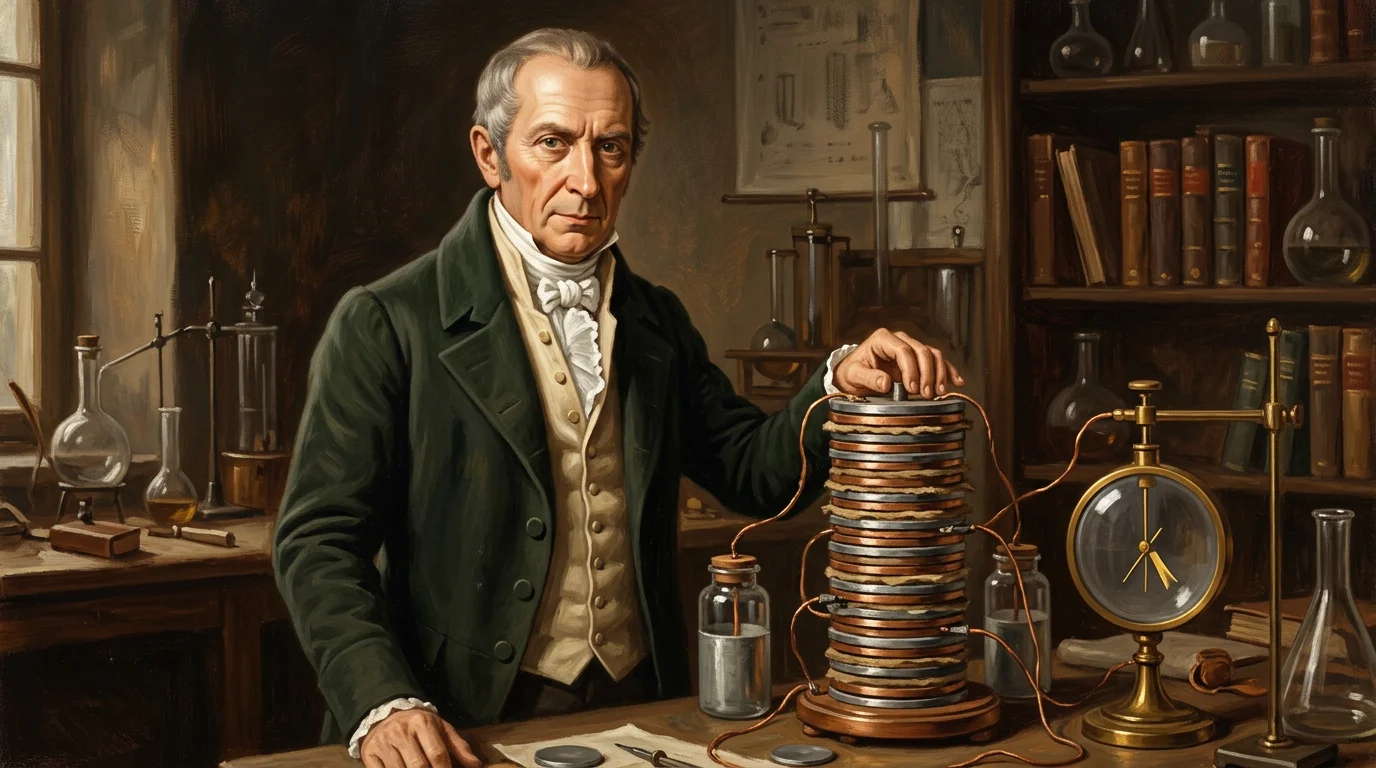
In 1800 he announced the voltaic pile, made from alternating metal discs separated by material soaked in an electrolyte. It provided a relatively steady electric current.
That mattered enormously.
Scientists could now send current through wires for long enough to investigate what electricity actually did. The battery was not simply a useful invention: it became a new experimental tool.
Twenty years later, one of those experiments produced a result that nobody could ignore.
The Compass Needle Moves
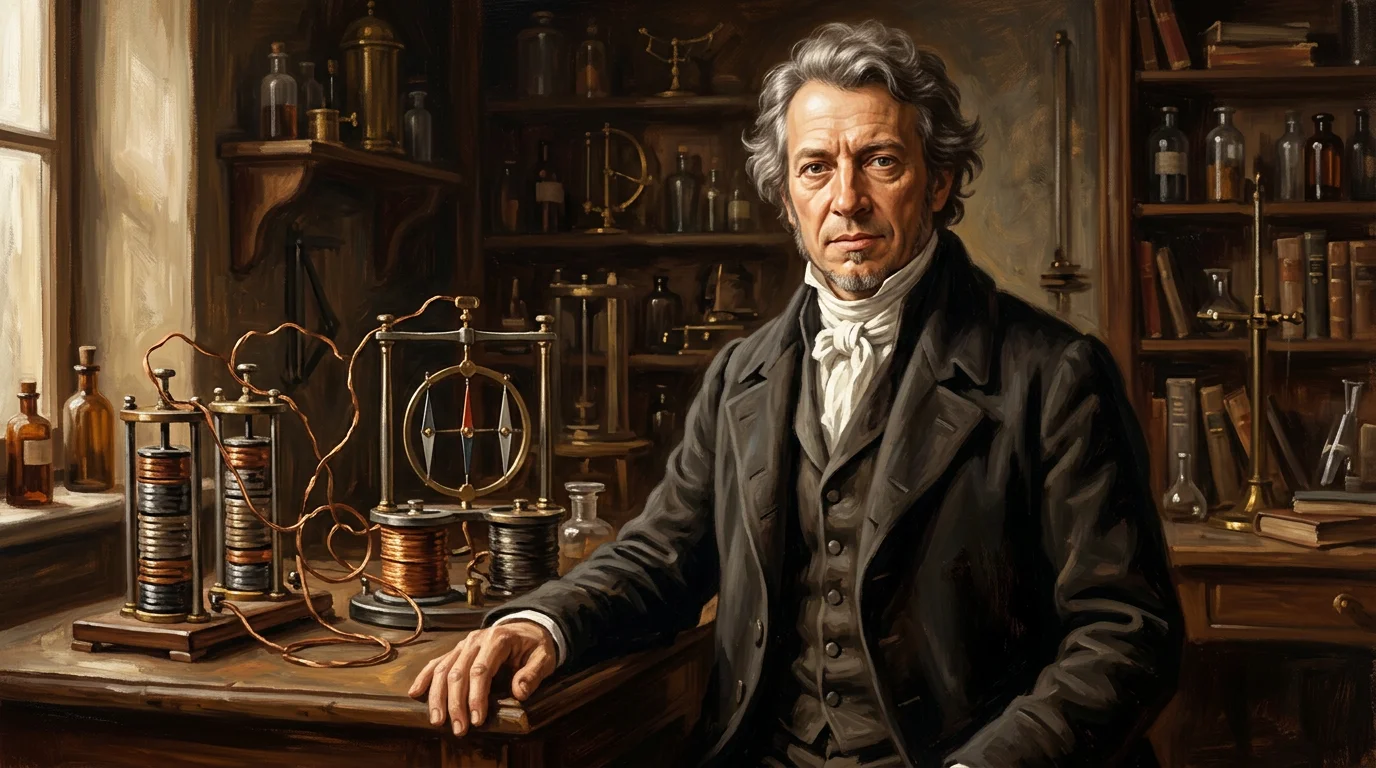
In 1820 Danish physicist Hans Christian Ørsted observed that a wire carrying an electric current could deflect a nearby compass needle.
A compass responds to magnetism.
Yet here an electric current was making it move.
Ørsted investigated the effect further and published his findings that year. For the first time, scientists had compelling experimental evidence connecting electricity with magnetism.
The news spread rapidly through European science.
French physicist and mathematician André-Marie Ampère began investigating almost immediately.
Ampère studied how electric currents affected one another and developed mathematical descriptions of the forces between current-carrying wires. His work helped turn Ørsted's striking observation into a much broader science of interactions between electricity and magnetism.
But an important question remained.
If electricity could produce magnetic effects, could magnetism produce electricity?
Faraday Reverses the Experiment
Michael Faraday became one of the central figures in answering that question.
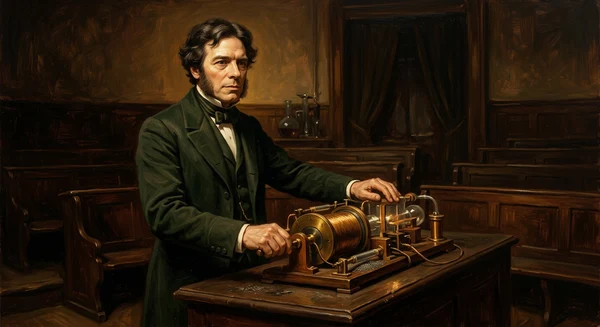
In 1821, building on the discovery of electromagnetism, Faraday demonstrated electromagnetic rotation. He had produced continuous motion from electricity — an early ancestor of the electric motor.
Ten years later he made an even more consequential discovery.
In 1831 Faraday discovered electromagnetic induction.
He found that changing the magnetic conditions around a wire could produce an electric current in that wire. Moving a magnet through a coil, for example, could make a measuring instrument register current.
This was the principle behind electrical generation.
Modern generators are vastly more sophisticated than Faraday's laboratory apparatus, but much of the electricity used around the world is still produced using the same basic physical idea: motion and magnetism can generate electric current.
Faraday's experiments also encouraged him to think about something less visible.
He imagined electric and magnetic influence extending through space in what he called lines of force.
This idea of a field would become essential.
Maxwell Turns the Picture into Mathematics
Faraday was an extraordinary experimental scientist, but he did not express his field ideas through advanced mathematics.
James Clerk Maxwell did.
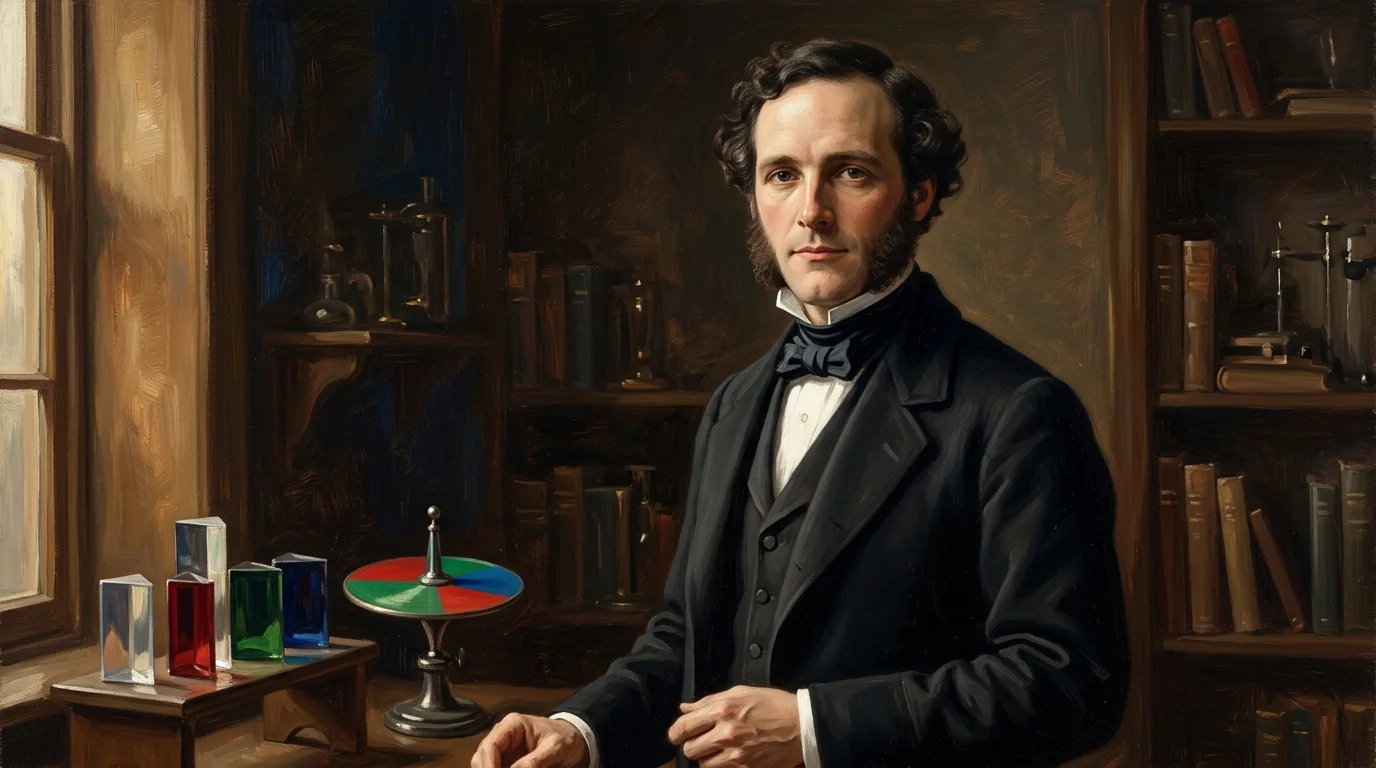
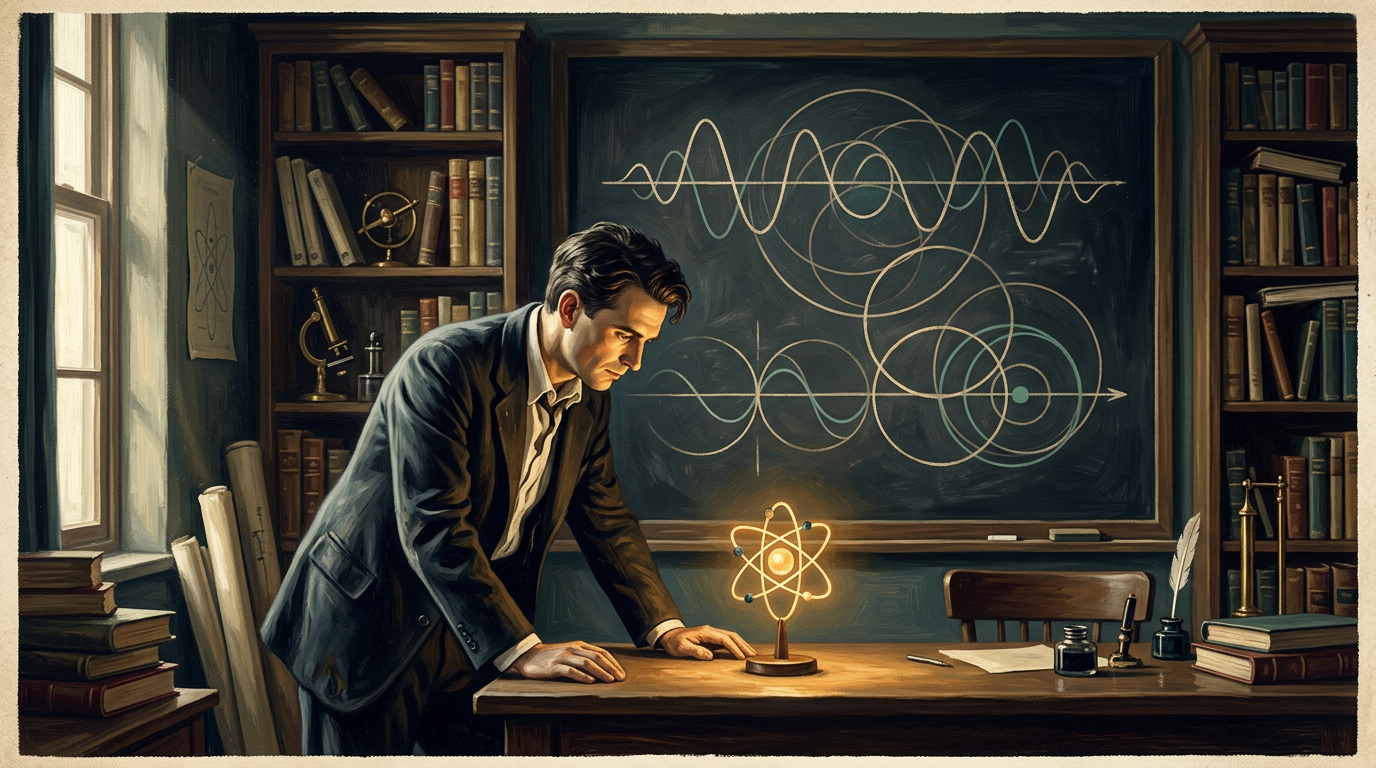
During the nineteenth century Maxwell developed a mathematical theory that brought together existing knowledge about electric and magnetic fields.
His work showed that changing electric fields and changing magnetic fields could sustain one another and travel through space as waves.
Maxwell calculated the speed at which these waves should travel.
The result was remarkably close to the measured speed of light.
That was not a coincidence.
Maxwell concluded that light itself is an electromagnetic phenomenon.
Electricity, magnetism and light — once treated as separate subjects — had been drawn into a single theoretical framework.
Maxwell presented his major paper, A Dynamical Theory of the Electromagnetic Field, to the Royal Society in 1864. It was published in 1865.
The compact four equations commonly called Maxwell's equations today are a later reformulation of his much larger mathematical treatment. But the underlying theory was transformative.
There was just one major problem.
Maxwell had predicted electromagnetic waves mathematically, but nobody had yet deliberately produced and detected those waves in the laboratory.
Hertz Makes the Invisible Waves Real
Maxwell died in 1879.
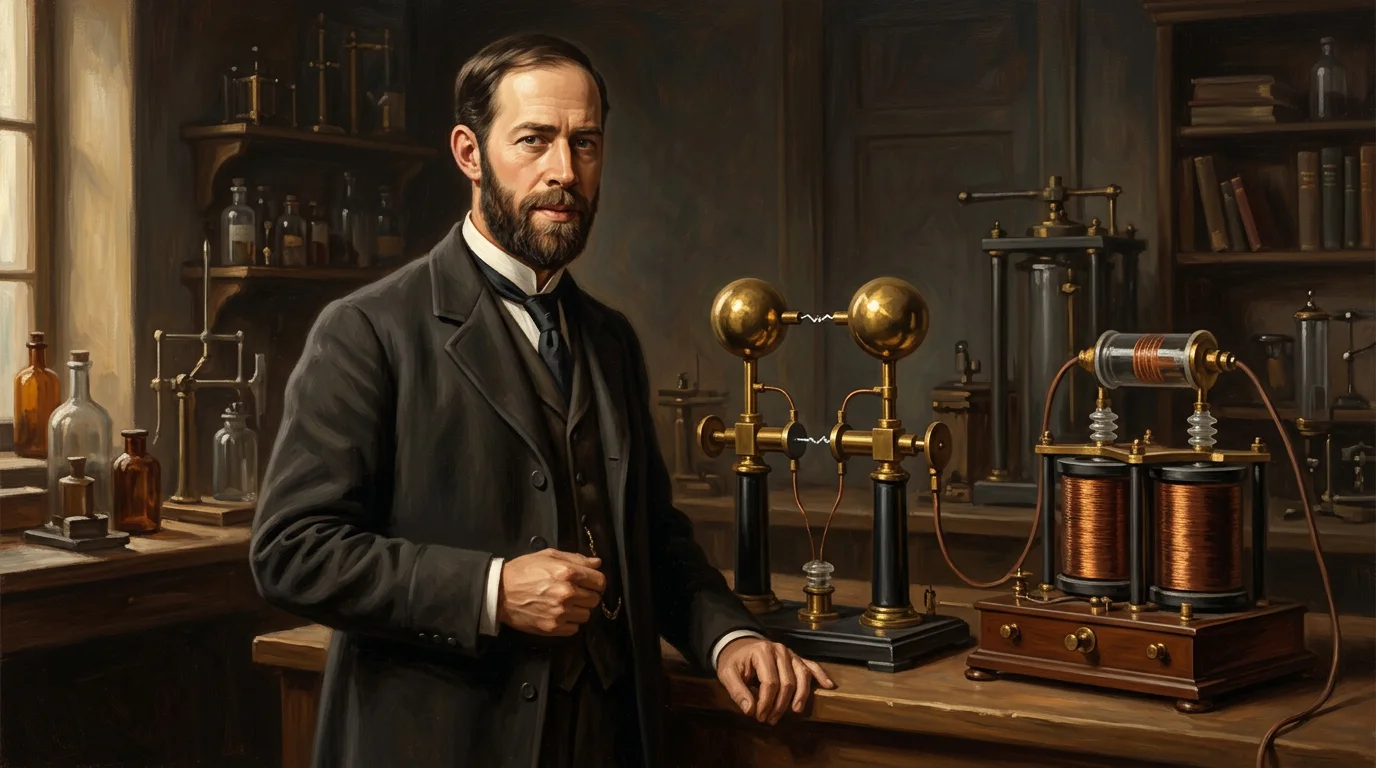
In the following decade, German physicist Heinrich Hertz set out to investigate Maxwell's theory experimentally.
Hertz created rapidly changing electrical currents that produced electromagnetic waves. A separate receiver detected their arrival through tiny electrical sparks.
He then showed that the waves behaved in ways expected of waves: they could be reflected, interfered with and displayed other properties comparable with light.
Maxwell's invisible electromagnetic waves were no longer only a mathematical prediction.
They could be generated and detected.
These experiments also strengthened the extraordinary connection Maxwell had proposed between electricity and light.
Hertz himself was studying fundamental physics rather than designing a communications network.
Other inventors soon recognised a practical possibility.
If electromagnetic waves could cross space without wires, perhaps they could carry information.
From Laboratory Waves to Wireless Messages
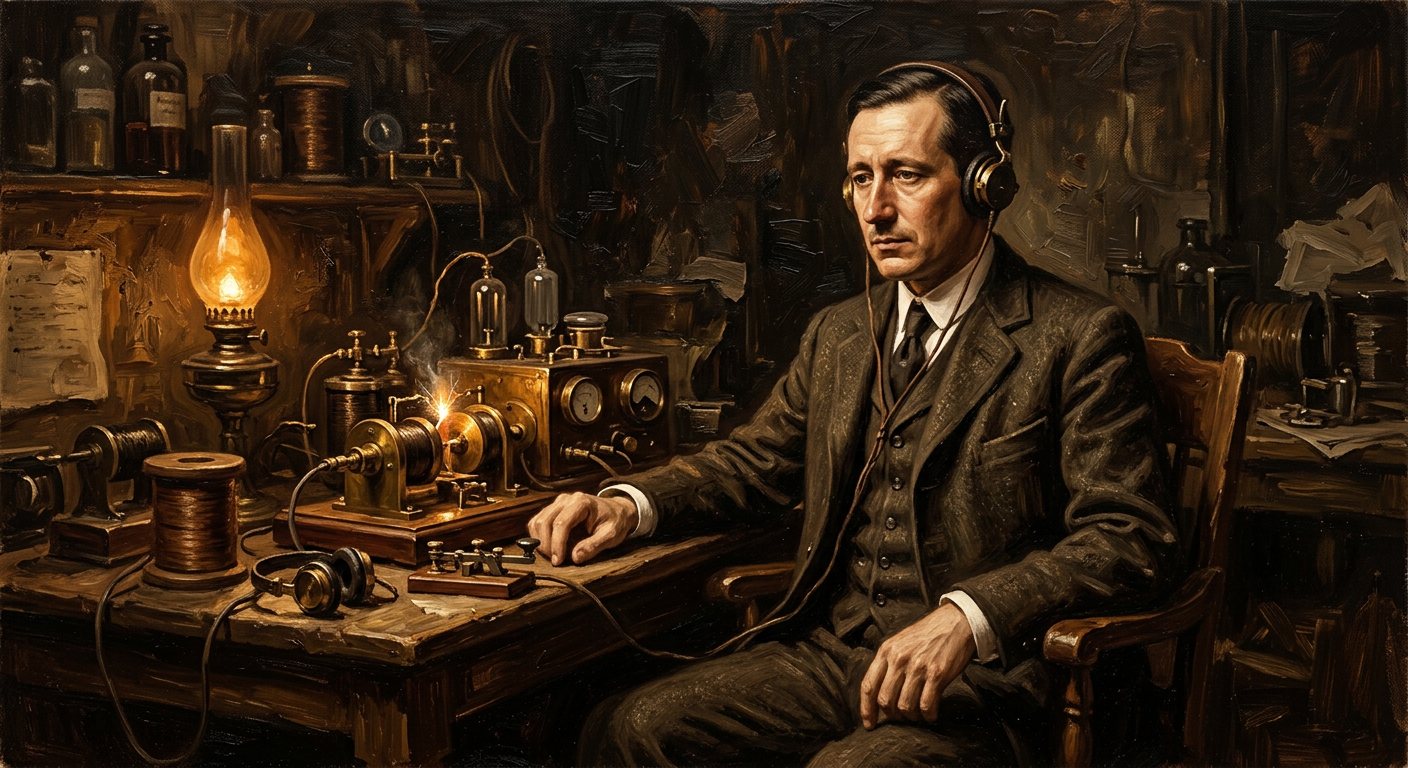
During the 1890s, Guglielmo Marconi developed increasingly practical systems for sending telegraph signals using radio waves.
His experiments built on a much wider body of work by Maxwell, Hertz and other scientists and inventors investigating electromagnetic waves.
In 1895 Marconi successfully transmitted wireless signals over considerable distances at his family's estate in Italy.
He took his equipment to Britain in 1896 and continued improving the range and reliability of wireless communication.
By 1901 he was carrying out his famous attempt to receive a transatlantic wireless signal between Cornwall and Newfoundland.
Wireless communication had moved from theoretical physics to engineering in only a few decades.
Marconi later shared the 1909 Nobel Prize in Physics with Karl Ferdinand Braun for contributions to the development of wireless telegraphy.
One Discovery Led to Another
It can be tempting to tell the history of science as a series of isolated geniuses making sudden discoveries.
Electromagnetism shows why that picture is misleading.
Volta's battery made new experiments possible.
Ørsted showed that current could produce a magnetic effect.
Ampère investigated and mathematically described interactions involving electric currents.
Faraday showed that changing magnetism could produce electricity and developed powerful ideas about fields.
Maxwell transformed those ideas into a mathematical theory that connected electricity, magnetism and light.
Hertz produced the electromagnetic waves Maxwell's theory predicted.
Engineers and inventors including Marconi then found ways to use those waves for communication.
Each stage depended on what had come before.
Why Electromagnetism Still Matters
The electromagnetic revolution did much more than explain a nineteenth-century scientific puzzle.
Electromagnetic induction is fundamental to electrical generators and transformers.
Electromagnetic forces make electric motors work.
Maxwell's theory describes light and radio waves as parts of the electromagnetic spectrum.
Radio, television, radar, mobile phones, satellite communication, Bluetooth and Wi-Fi all depend on our ability to generate, control, transmit or detect electromagnetic waves.
Even technologies that would have been unimaginable to Faraday or Maxwell follow physical principles revealed during this chain of discoveries.
What began with metal discs, wires and a compass needle ultimately changed both physics and everyday life.
Scientists had started with two apparently separate phenomena.
They ended with one of the great unifications in the history of science: electromagnetism.