_(2).jpg)
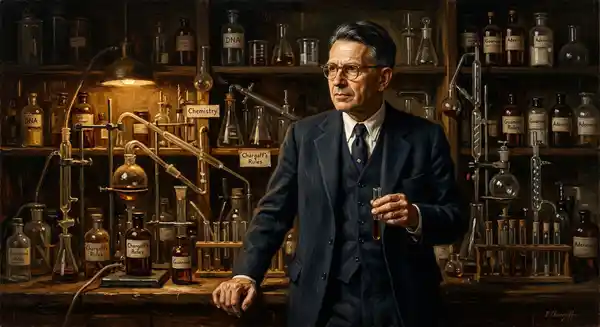
Erwin Chargaff
1905–2002 · Biochemist
Erwin Chargaff was an Austrian-born American biochemist who discovered important relationships in DNA base composition, later called Chargaff's rules. These findings supplied crucial evidence for understanding the structure of DNA.
“Science is wonderfully equipped to answer the question 'How?' but it gets terribly confused when you ask the question 'Why?'”
Why is this scientist famous?
Discovering important relationships in DNA base composition — later called Chargaff's rules — which supplied crucial evidence for understanding DNA structure.
Erwin's story
From Vienna to Columbia
Erwin Chargaff was born on 11 August 1905 in Czernowitz, Austria-Hungary. He studied chemistry at the University of Vienna and received his doctorate in chemistry in 1928.
Chargaff undertook postdoctoral work at Yale from 1928 to 1930, then worked at the University of Berlin from 1930. He left Germany after the Nazi rise to power in 1933 and worked at the Institut Pasteur in Paris before moving to New York.
Columbia and DNA Base Composition
In 1935, Chargaff joined Columbia University, where he would spend roughly four decades. He was elected to the US National Academy of Sciences in 1965.
Chargaff's work was strongly influenced by growing evidence that DNA carried genetic information. He established two crucial features of DNA composition: first, that DNA base composition varies between species; and second, that in ordinary double-stranded DNA, the amount of adenine is approximately equal to thymine and guanine approximately equal to cytosine.
Chargaff's Rules
These findings became known as Chargaff's rules. They provided important chemical evidence used by Watson and Crick when developing the double-helix model of DNA.
Chargaff's experiments established the base-composition relationships that helped make the pairing model possible. He did not discover DNA itself, nor the double helix, nor the specific A-T and G-C base pairing — his contribution was the quantitative evidence about base composition that pointed towards those pairings.
Later Career and Legacy
Chargaff retired from Columbia in 1974. He received the 1974 National Medal of Science for fundamental chemical and biological studies involving nucleic acids and protein synthesis.
Chargaff was also a prolific scientific essayist and writer. He remained critical of some later developments in molecular biology. He died on 20 June 2002 in New York City.
What did they discover?
Chargaff's Rules
Chargaff established that DNA base composition varies between species and that in double-stranded DNA, adenine approximately equals thymine and guanine approximately equals cytosine. These findings provided crucial evidence for the double-helix model.
National Medal of Science, 1974
Chargaff received the 1974 National Medal of Science for fundamental chemical and biological studies involving nucleic acids and protein synthesis.
Amazing facts
His work was strongly influenced by evidence that DNA carried genetic information.
Chargaff's rules became an essential clue in understanding DNA structure.
He was also a prolific scientific essayist and writer.
He remained critical of some later developments in molecular biology.
He spent roughly four decades at Columbia University.
Timeline
Born in Czernowitz, Austria-Hungary.
Received doctorate in chemistry from the University of Vienna.
Began postdoctoral work at Yale.
Moved to the University of Berlin.
Left Germany after the Nazi rise to power.
Joined Columbia University in New York.
Established DNA base-composition relationships later known as Chargaff's rules.
Elected to the US National Academy of Sciences.
Retired from Columbia; received the National Medal of Science.
Died in New York City, USA.
Awards & honours
Related Super Scientists
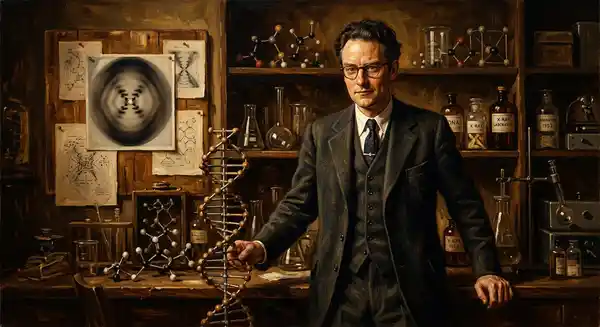
Francis Crick
1916–2004 · Molecular Biologist
Working with James Watson to develop the double-helix model of DNA in 1953 and later making major contributions to understanding genetic information and the genetic code. He shared the 1962 Nobel Prize in Physiology or Medicine with James Watson and Maurice Wilkins.
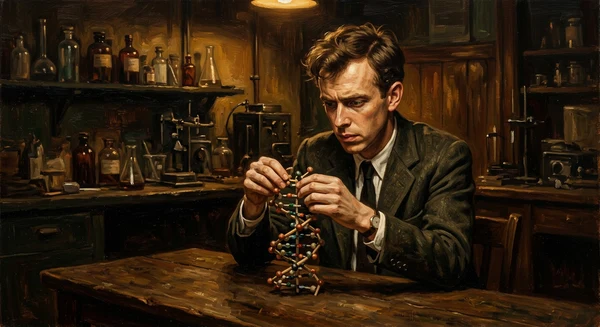
James Watson
1928–2025 · Molecular Biologist & Geneticist
Helping determine the double-helix structure of DNA with Francis Crick in 1953, using crucial X-ray diffraction and other experimental evidence produced by researchers including Rosalind Franklin, Raymond Gosling and Maurice Wilkins.
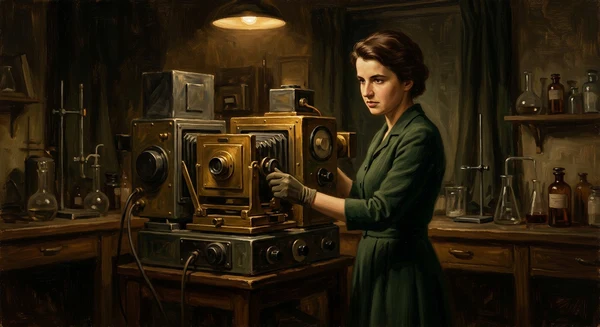
Rosalind Franklin
1920–1958 · Chemist & X-ray Crystallographer
Producing crucial X-ray diffraction data on DNA, including Photograph 51, with her student Raymond Gosling.