_(2).jpg)
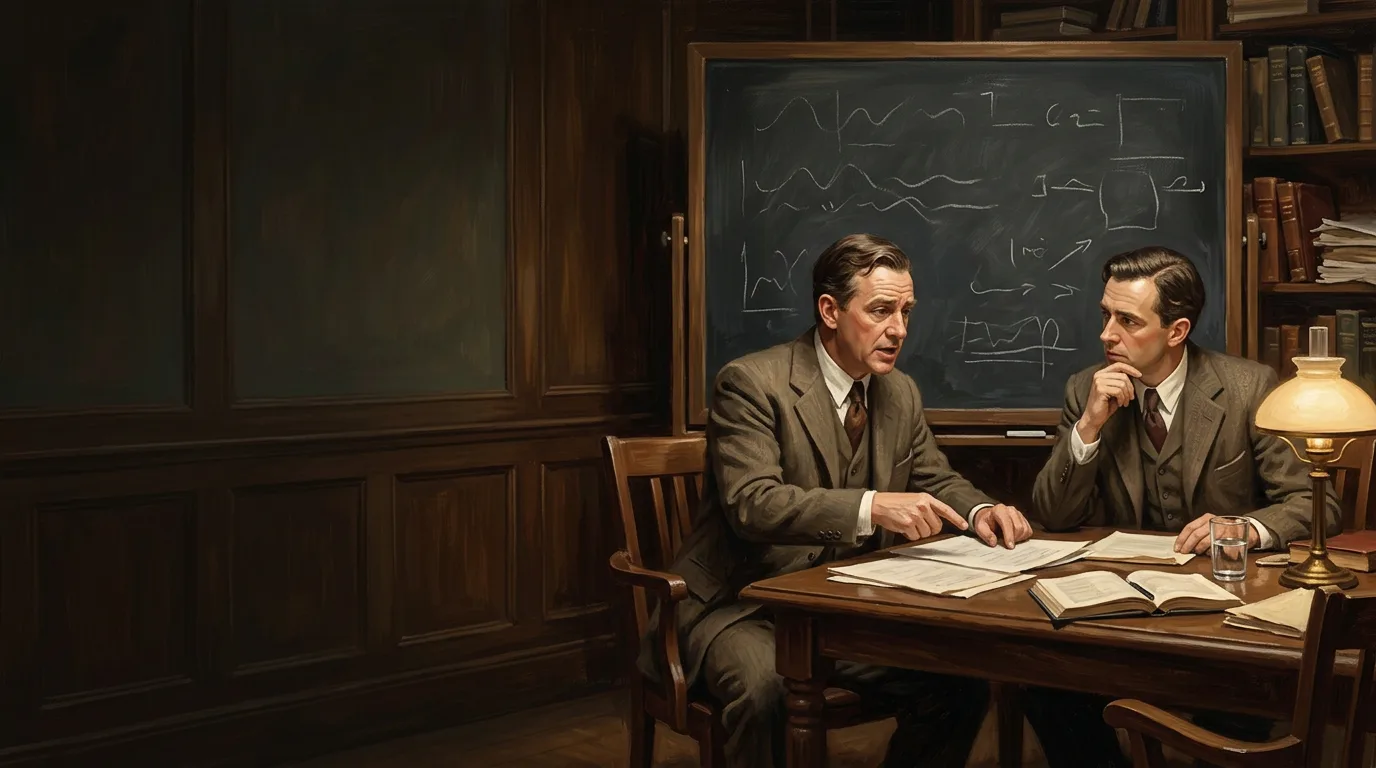
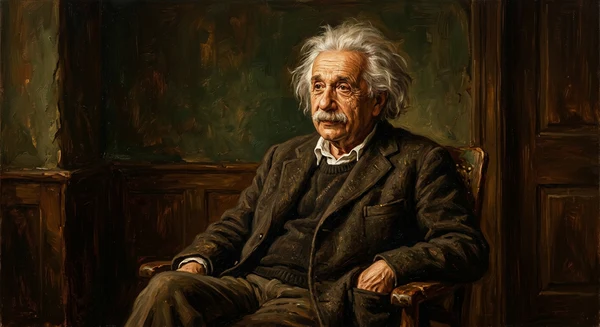
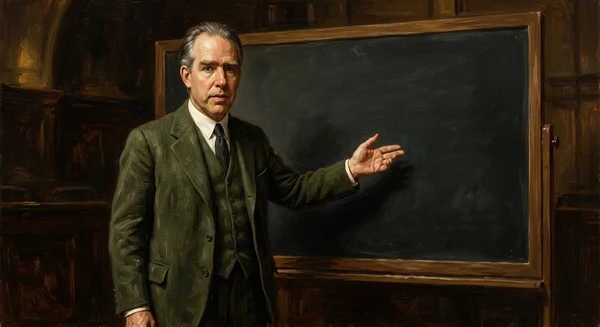
The equations worked. Einstein still asked what they left out. Bohr argued that the way an experiment is arranged shapes what can be learned from it.
A theory that worked—and a question that would not go away
Quantum mechanics became remarkably good at predicting the behaviour of atoms and light. Yet Albert Einstein, one of the people who had helped begin the quantum story, kept asking what its equations said about the world itself.
Could they describe everything that was physically real? Or did they leave something out? Niels Bohr thought Einstein's question relied on assumptions that no longer worked at the atomic scale. Their debate became one of the most revealing arguments in science.
Two founders of quantum physics
In 1905, Albert Einstein proposed that light could transfer energy in individual packets, helping explain the photoelectric effect. In 1913, Niels Bohr used quantum ideas to explain important features of the hydrogen atom. Both had helped change physics before their famous disagreement began.
By the late 1920s, a new mathematical theory called quantum mechanics could predict the probabilities of different results in experiments. For example, it could predict how likely a measurement was to give one result rather than another. That success did not settle what the probabilities meant. Did the theory give a complete account of an individual system, or was there more to discover beneath its statistical predictions?
Einstein took the theory's successes seriously. His objection was to treating its existing description as the final word about physical reality. Bohr argued that questions about an atomic system had to take account of the experiment used to study it.
The arguments at Solvay
At scientific meetings in 1927 and 1930, Einstein challenged Bohr with imagined experiments. These were thought experiments: carefully described situations used to test whether an idea's consequences made sense. The two were arguing about how to interpret a theory that already worked impressively well.
Bohr had developed the idea of complementarity. A quantum phenomenon may show different features depending on the kind of experiment performed. For example, arrangements that reveal wave-like behaviour and arrangements that reveal particle-like behaviour cannot simply be treated as though they were the same measurement. Both kinds of evidence matter, but neither familiar picture by itself describes everything.
Einstein kept pressing the limits of that view. In a famous 1930 challenge, he imagined a box designed to release a single packet of light at a known time. By weighing the box before and after, could someone also find the packet's energy with a precision that defeated the theory's limits? Bohr argued that the weighing and the clock had to be considered as part of the experiment; effects of gravity on the clock mattered. Their exchange did not make Einstein abandon his deeper concerns.
A puzzle involving two distant systems
In 1935, Einstein joined Boris Podolsky and Nathan Rosen in publishing a sharper challenge, now known by their initials as the EPR argument. They considered two systems that had interacted and then moved apart. Measurements on one could let a researcher predict a result for the other. Under their assumptions about physical reality and separated systems, they argued that the quantum description was incomplete.
Bohr published a reply later that year. He challenged the way the EPR argument defined what could be called a physical property independently of the measurement arrangement. The papers did not end the discussion: they made its assumptions clearer, and gave later scientists a more precise problem to investigate.
From an argument to an experiment
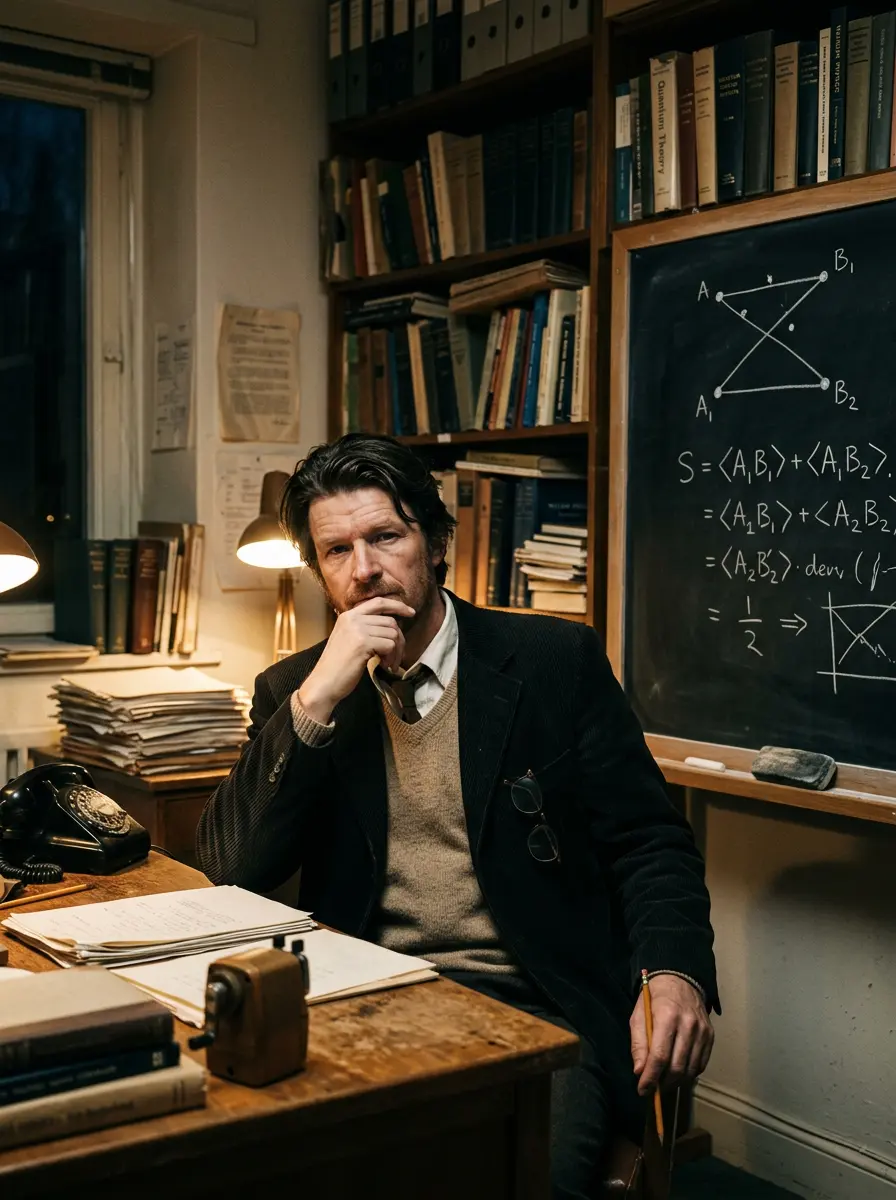
For years, this looked like a question that experiment might never settle. In 1964, physicist John Stewart Bell found a way forward. He showed that a broad class of explanations based on local hidden variables—pre-existing information carried by the separated systems, with no influence travelling between them—placed limits on how strongly their measurement results could be correlated.
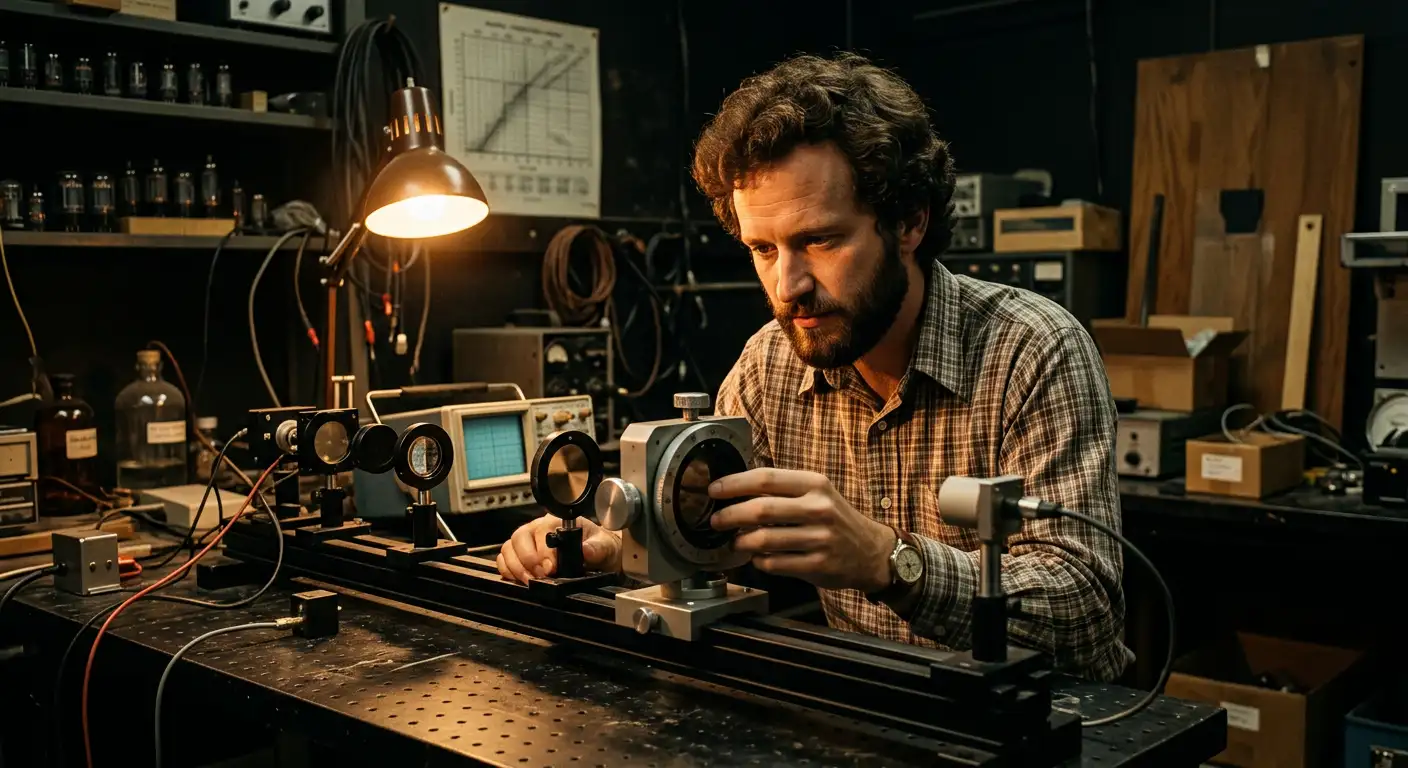
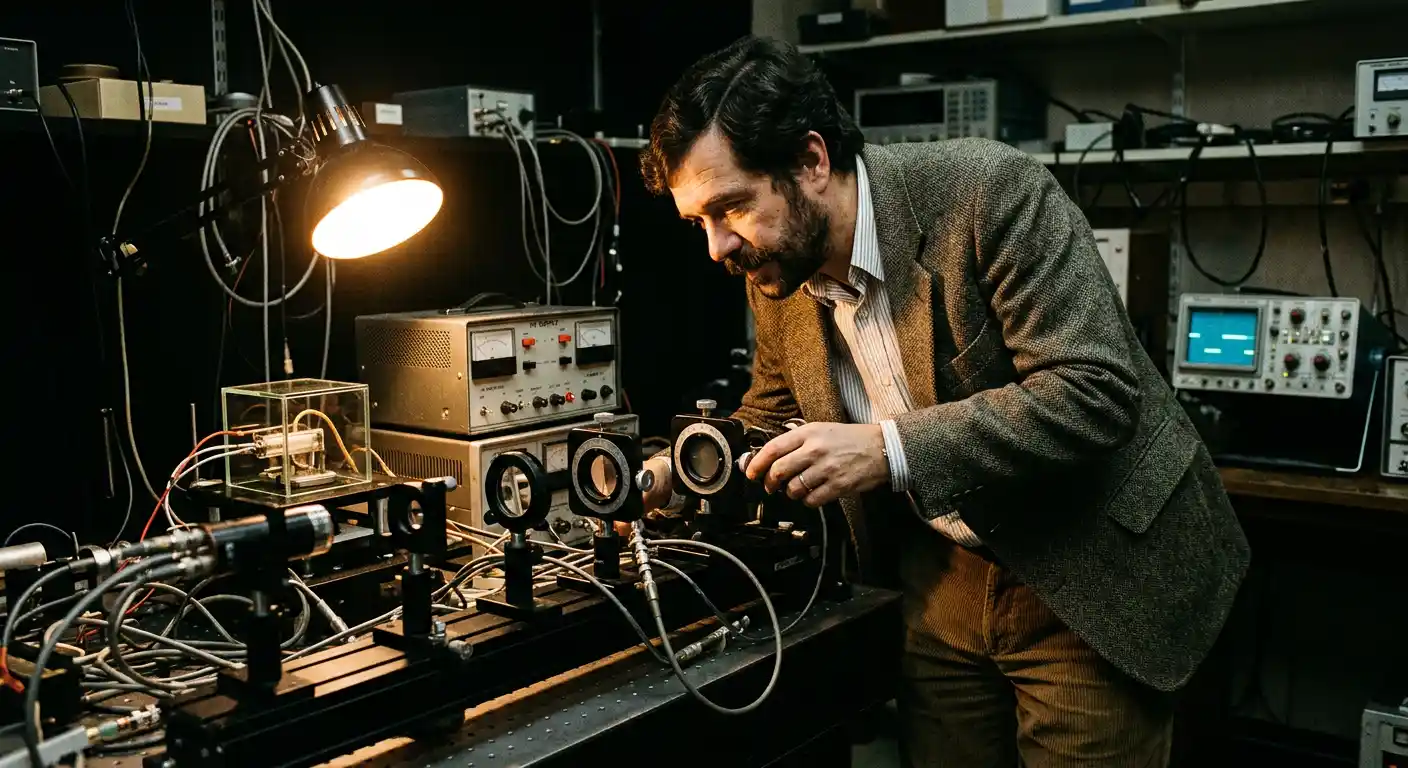
Quantum mechanics predicted correlations that could exceed those limits. In 1972, John Clauser and Stuart Freedman measured correlations between pairs of photons and reported a violation of a Bell inequality. In 1982, Alain Aspect and colleagues carried out further tests, including one with rapidly changing measurement settings. These results agreed with quantum predictions. This evidence rules out the local hidden-variable explanations covered by those tests. It does not prove that every possible interpretation of quantum mechanics is wrong except Bohr's. Nor does entanglement let people send usable messages faster than light.
Why the debate still matters
Einstein and Bohr did not need to agree for their exchange to advance physics. Einstein's questions helped expose exactly what a complete description would have to explain. Bohr's replies forced scientists to think carefully about what an experiment can establish. Bell then showed how part of that argument could be tested against nature.
Their story is a reminder that a successful theory can still prompt searching questions. The experimental results have put strong limits on certain answers, while discussion about what quantum mechanics ultimately means continues.