_(2).jpg)
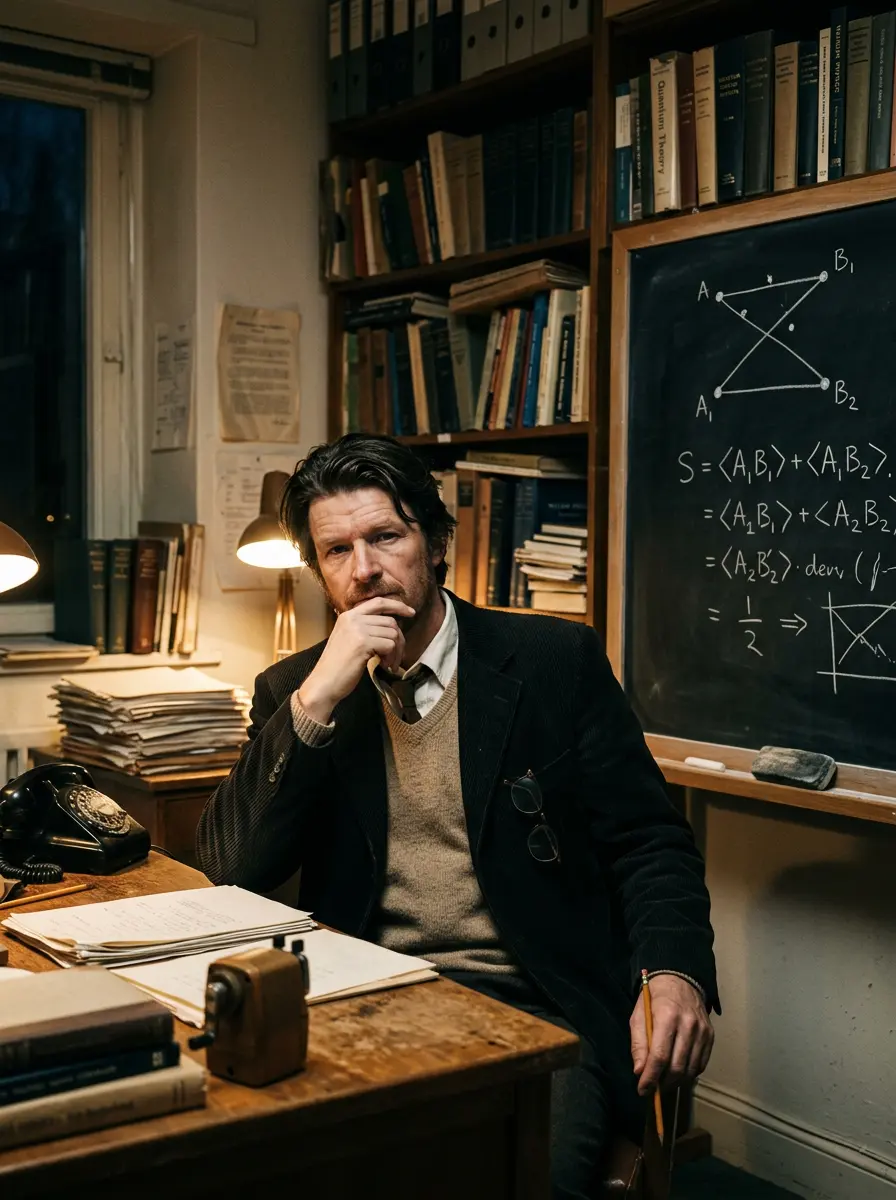
John Stewart Bell
1928–1990 · Theoretical physics
Bell found a way to test whether quantum predictions could be explained by hidden information shared by separated particles, turning a debate into an experiment.
Why is this scientist famous?
His 1964 theorem showed that local hidden-variable accounts obey limits on correlations that quantum mechanics can exceed, turning a longstanding debate into a testable question.
Bell's inequality gave experimenters a measurable limit to test, and the experiments it inspired became part of the work recognised by the 2022 Nobel Prize in Physics — a prize Bell himself did not live to see.
John's story
From Belfast to physics
John Stewart Bell grew up in Belfast, Northern Ireland, the son of a family with no strong academic background. At 16 he took a job as a junior laboratory assistant in the physics department at Queen's University Belfast, learning practical physics before he had even begun his own degree. He went on to study there and earned a degree in experimental physics in 1948, followed by a separate degree in mathematical physics in 1949.
Accelerators and quantum theory
Bell worked for the UK Atomic Energy Research Establishment at Harwell, where he tackled problems in accelerator design and particle physics. He earned a doctorate from the University of Birmingham in 1956 for work connected with quantum field theory. In 1960 he moved to the European Organization for Nuclear Research (CERN) in Geneva, where he continued researching particle physics and also pursued his longstanding interest in the foundations of quantum theory. His wife, Mary Ross Bell, was also a physicist who worked on accelerator design.
The theorem that changed the debate
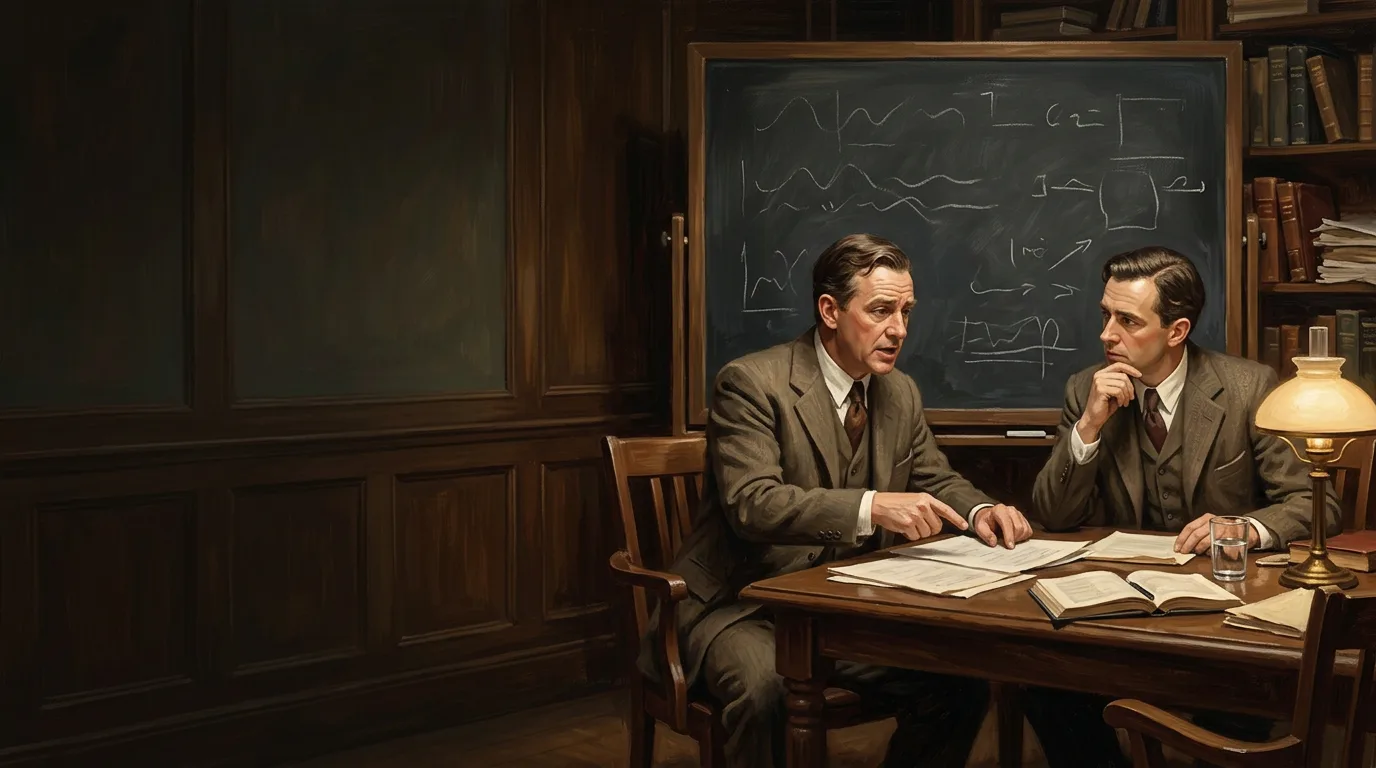
The 1935 Einstein–Podolsky–Rosen (EPR) paper had raised a question about whether quantum mechanics completely describes physical reality. Bell knew of an alternative hidden-variable account proposed by David Bohm and asked whether quantum mechanics could be explained by local hidden variables — pre-existing information carried by separated systems, with no influence travelling between them. In his 1964 paper he derived a limit on how strongly measurement results on separated particles could be correlated if those assumptions held. Quantum mechanics predicted correlations that could exceed those limits. That limit is now called Bell's inequality, and the result is known as Bell's theorem.
A testable idea, not a final verdict
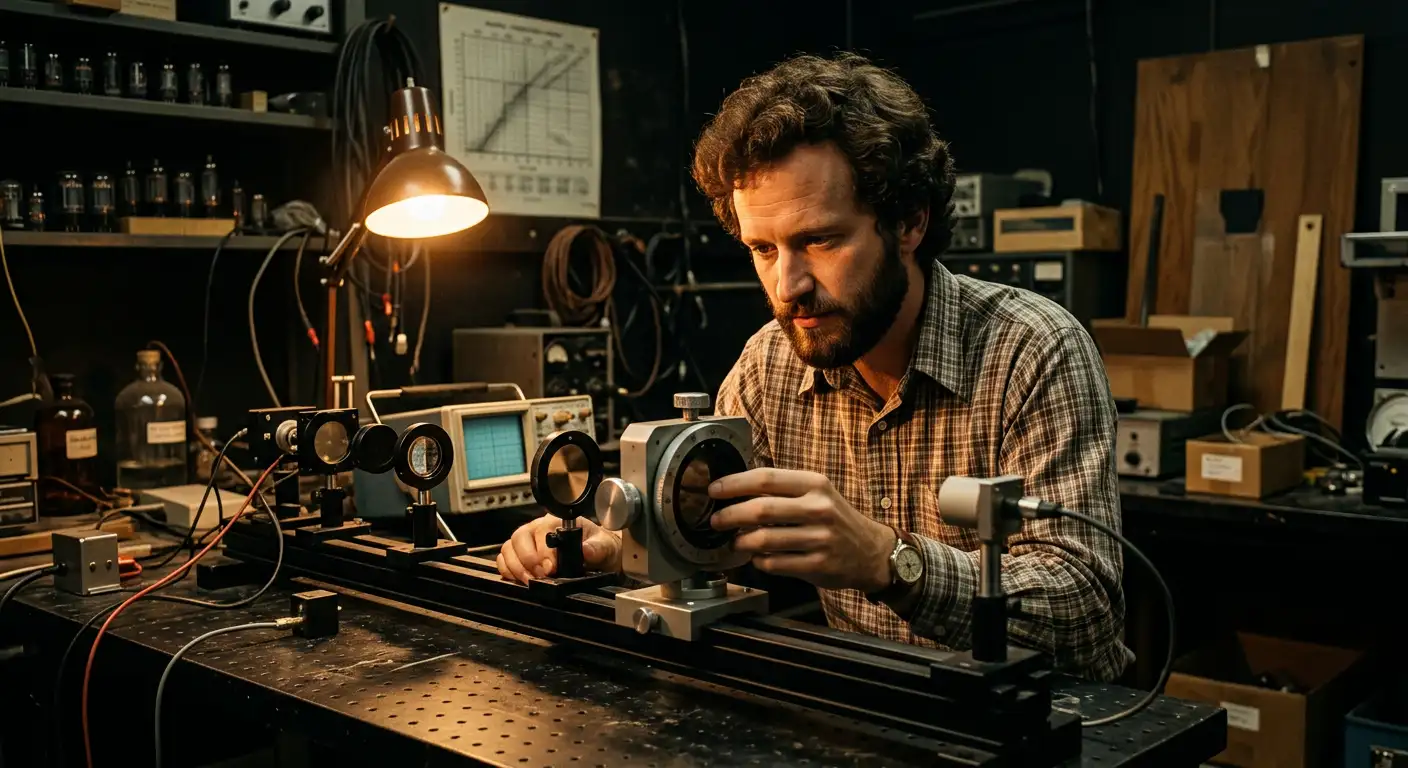
Bell's work turned a philosophical argument into something experiments could test. Later experiments by Clauser, Aspect and others found violations of Bell inequalities, agreeing with quantum predictions. Bell did not conduct those experiments himself, nor did his theorem prove that faster-than-light communication is possible, rule out every hidden-variable theory, or show that one particular interpretation of quantum mechanics is uniquely correct. His broader career also included work in high-energy physics and accelerator theory. His 1987 book Speakable and Unspeakable in Quantum Mechanics collected writings on quantum foundations.
What did they discover?
Bell's theorem (1964)
Showed that any explanation based on local hidden variables places limits on correlations between measurements on separated particles, and that quantum mechanics predicts those limits can be exceeded — making the EPR question experimentally testable.
Amazing facts
At 16 he worked in a university physics laboratory before starting his own degree.
He earned separate degrees in experimental and mathematical physics.
He also worked on accelerator and particle physics.
Mary Ross Bell, his wife, was a physicist who worked on accelerator design.
He revisited a 1935 question raised by Einstein, Podolsky and Rosen.
His 1964 reasoning gave experimenters a measurable limit to test.
He worked at CERN in Geneva from 1960.
His ideas later guided photon-pair experiments even though he did not conduct those tests himself.
Timeline
Born in Belfast, Northern Ireland
Began work as a junior laboratory assistant at Queen's University Belfast
Earned a degree in experimental physics from Queen's University Belfast
Earned a separate degree in mathematical physics from Queen's University Belfast
Earned a doctorate from the University of Birmingham for work connected with quantum field theory
Moved to CERN in Geneva
Published his theorem on the Einstein–Podolsky–Rosen paradox
Elected Fellow of the Royal Society
Published Speakable and Unspeakable in Quantum Mechanics
Awarded the Dirac Medal by the Institute of Physics and an honorary doctorate from Queen's University Belfast
Awarded the Royal Society Hughes Medal
Died in Geneva, Switzerland
Awards & honours
Related Super Scientists
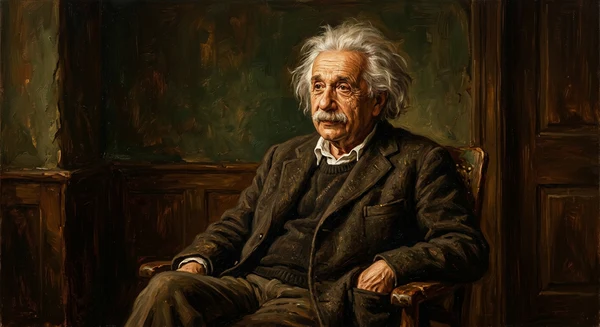
Albert Einstein
1879–1955 · Theoretical Physicist
Developing the theory of relativity and the equation E=mc².
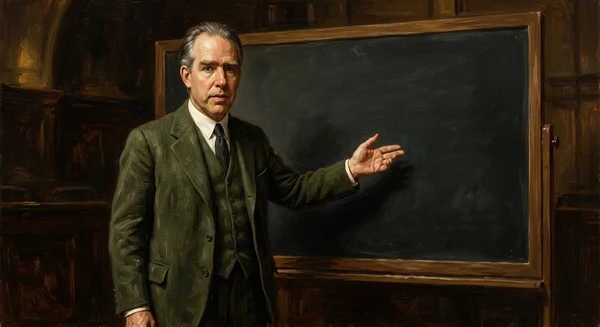
Niels Bohr
1885–1962 · Physicist
Developed the Bohr model of the atom and made foundational contributions to quantum mechanics.
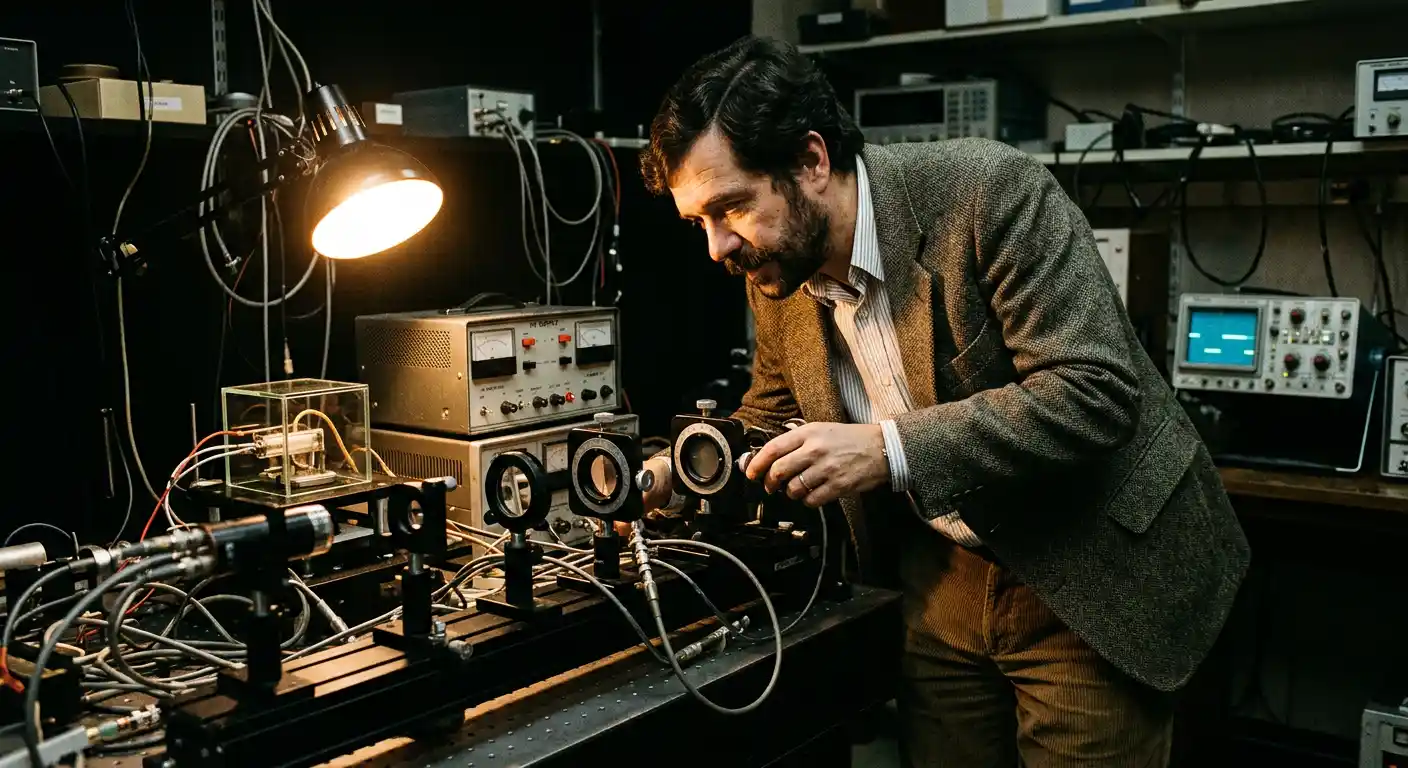
Alain Aspect
1947–present · Experimental quantum optics
His team's 1981–82 entangled-photon tests provided stronger evidence for quantum correlations and he shared the 2022 Nobel Prize in Physics.
Articles about this scientist
Sources & references
- American Physical Society, Physics — Quantum Milestones, 1964: John Stewart Bell Quietly Rings in New Era of Quantum Theory
- Royal Irish Academy, Dictionary of Irish Biography — Bell, John Stewart
- American Physical Society, Physics Physique Fizika — On the Einstein Podolsky Rosen paradox (1964)
- Queen's University Belfast — The John Bell Day Lecture 2024