_(2).jpg)
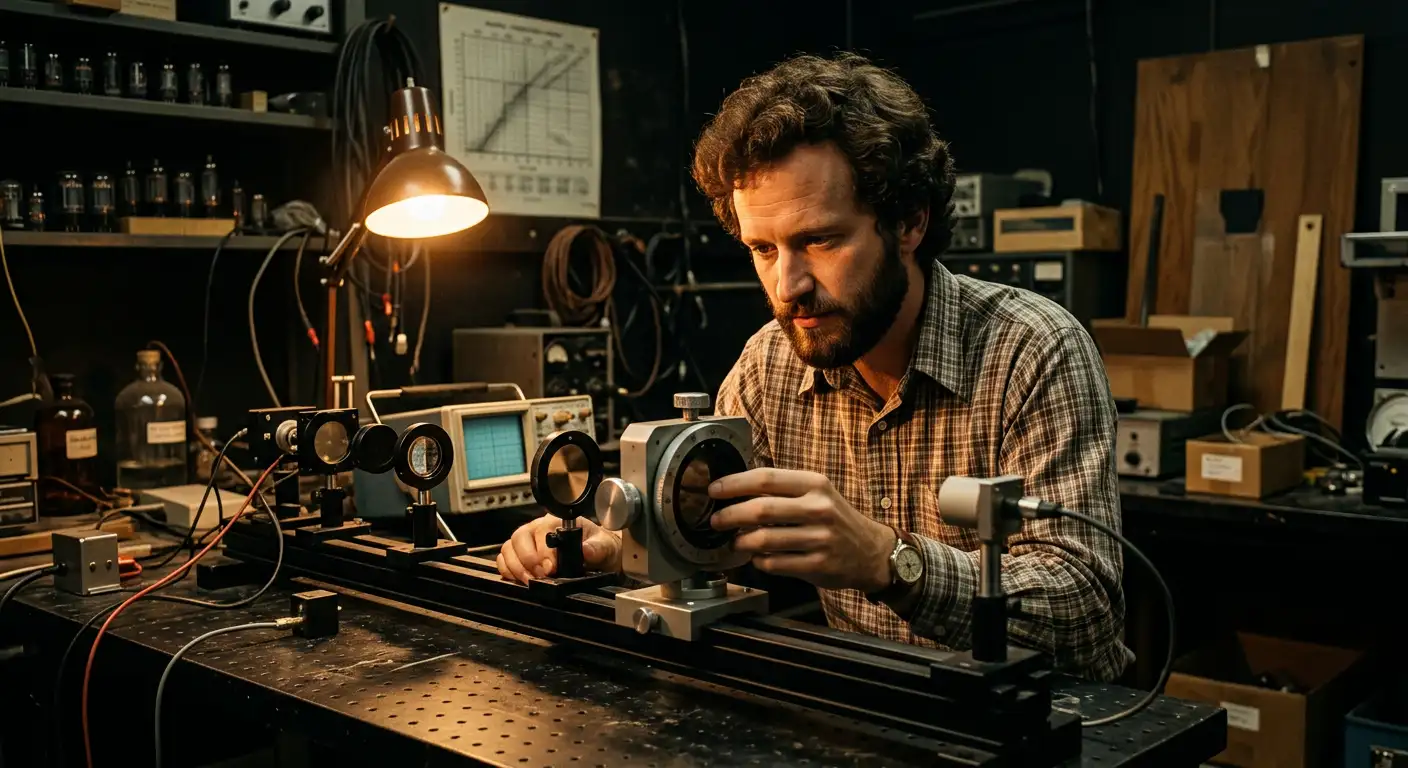
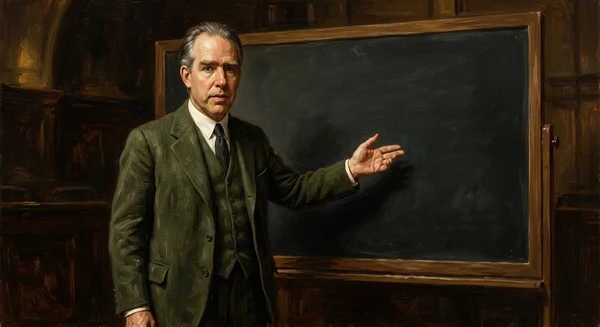
John Francis Clauser
1942–present · Experimental and theoretical physics
John Clauser helped make Bell's theorem testable and, with Stuart Freedman, measured photon correlations that violated a Bell inequality, sharing the 2022 Nobel Prize.
Why is this scientist famous?
Co-developed the 1969 CHSH inequality and shared the 2022 Nobel Prize in Physics for experiments with entangled photons.
Clauser's early experiments with entangled photons helped launch the field of quantum information science, work that was later recognised with the 2022 Nobel Prize in Physics.
John's story
From Caltech to Columbia
John Francis Clauser was born on 1 December 1942 in Pasadena, California. He earned a bachelor's degree in physics from the California Institute of Technology in 1964, then a master's degree in 1966 and a doctorate in physics in 1969 from Columbia University.
The CHSH inequality
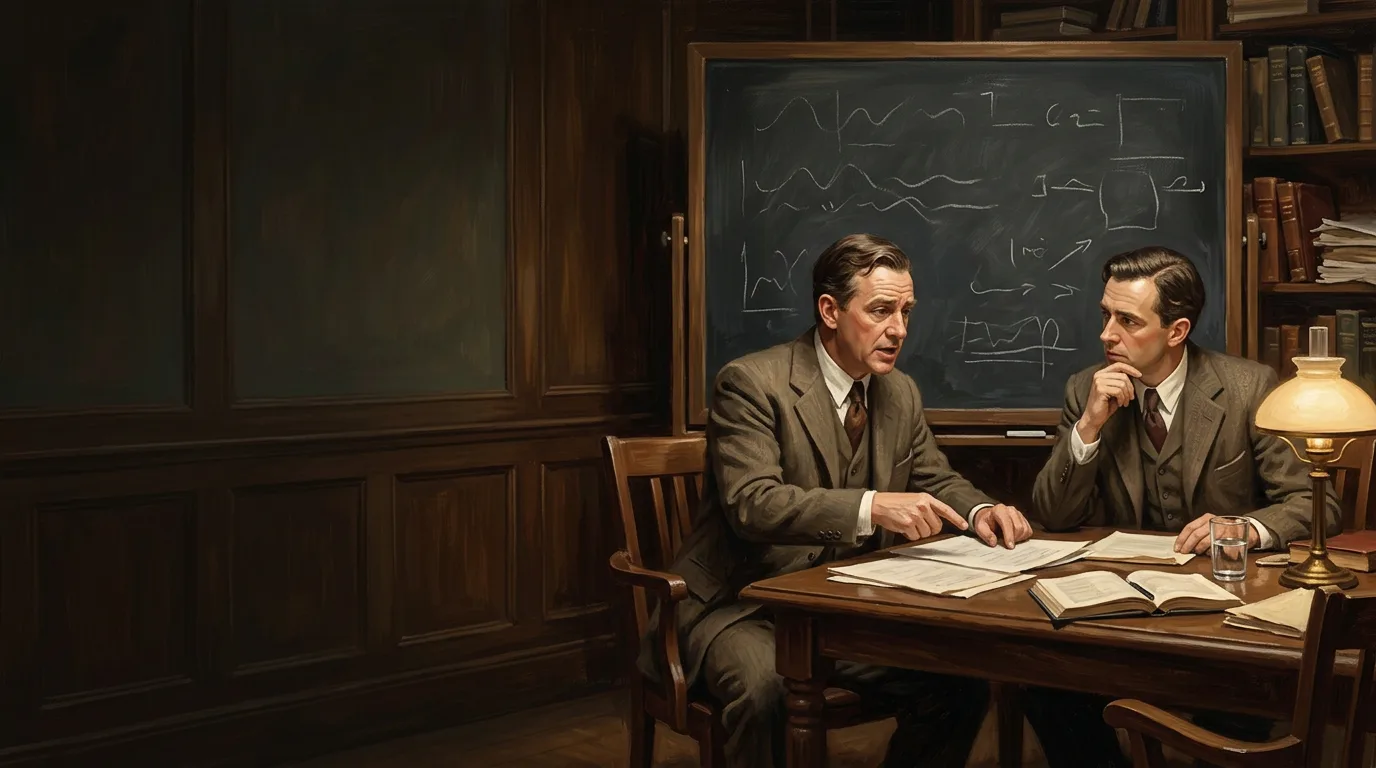
Inspired by Bell's 1964 theorem, Clauser joined with Michael Horne, Abner Shimony and Richard Holt to publish a proposal in 1969 for an experimental test. Their paper introduced the Clauser–Horne–Shimony–Holt (CHSH) inequality, which provides a measurable constraint under local hidden-variable assumptions.
The 1972 photon experiment
At the Lawrence Berkeley National Laboratory and the University of California, Berkeley, Clauser worked as a postdoctoral researcher from 1969 to 1975. In 1972 he and graduate student Stuart Freedman tested correlations of polarised photons produced by calcium atoms. Their observed result violated a Bell inequality and agreed with the quantum prediction. The experiment was the subject of Freedman's doctoral dissertation. A later test by Alain Aspect addressed some limitations of earlier tests, but the 1972 experiment did not close every loophole or prove instantaneous communication.
Recognition
Clauser later worked at Lawrence Livermore National Laboratory and other research settings, continuing to study optics and interferometry questions. He shared the 2010 Wolf Prize in Physics with Alain Aspect and Anton Zeilinger, and the 2022 Nobel Prize in Physics with the same two physicists. The Nobel citation concerned experiments with entangled photons, Bell inequality violations and pioneering quantum information science. His 1972 partner Freedman was not a 2022 co-laureate, having died in 2012, but his contribution remains fully credited.
What did they discover?
The CHSH inequality (1969)
Co-developed with Horne, Shimony and Holt, this inequality provided a practical measurable constraint under local hidden-variable assumptions, making Bell's theorem experimentally testable.
The 1972 Bell test with Freedman
With Stuart Freedman, measured correlations of polarised photons from calcium atoms and found a violation of a Bell inequality, agreeing with quantum predictions — the first such experimental result.
Amazing facts
He studied at Caltech and Columbia University.
The four letters CHSH are the initials of four collaborators' surnames.
He helped make Bell's theoretical test workable for an experiment.
He and Freedman worked with pairs of polarised photons from calcium atoms.
Their measurement took place in a Berkeley laboratory.
Freedman's 1972 doctoral research included their experiment.
Clauser and Aspect shared a Wolf Prize in 2010.
He shared the 2022 Nobel Prize with Aspect and Zeilinger.
Timeline
Born in Pasadena, California
Earned a bachelor's degree in physics from Caltech
Earned a master's degree from Columbia University
Earned a doctorate from Columbia and coauthored the CHSH paper with Horne, Shimony and Holt
Conducted a photon-pair Bell test with Stuart Freedman at Berkeley
Shared the Wolf Prize in Physics with Aspect and Zeilinger
Shared the Nobel Prize in Physics with Aspect and Zeilinger
Awards & honours
Related Super Scientists
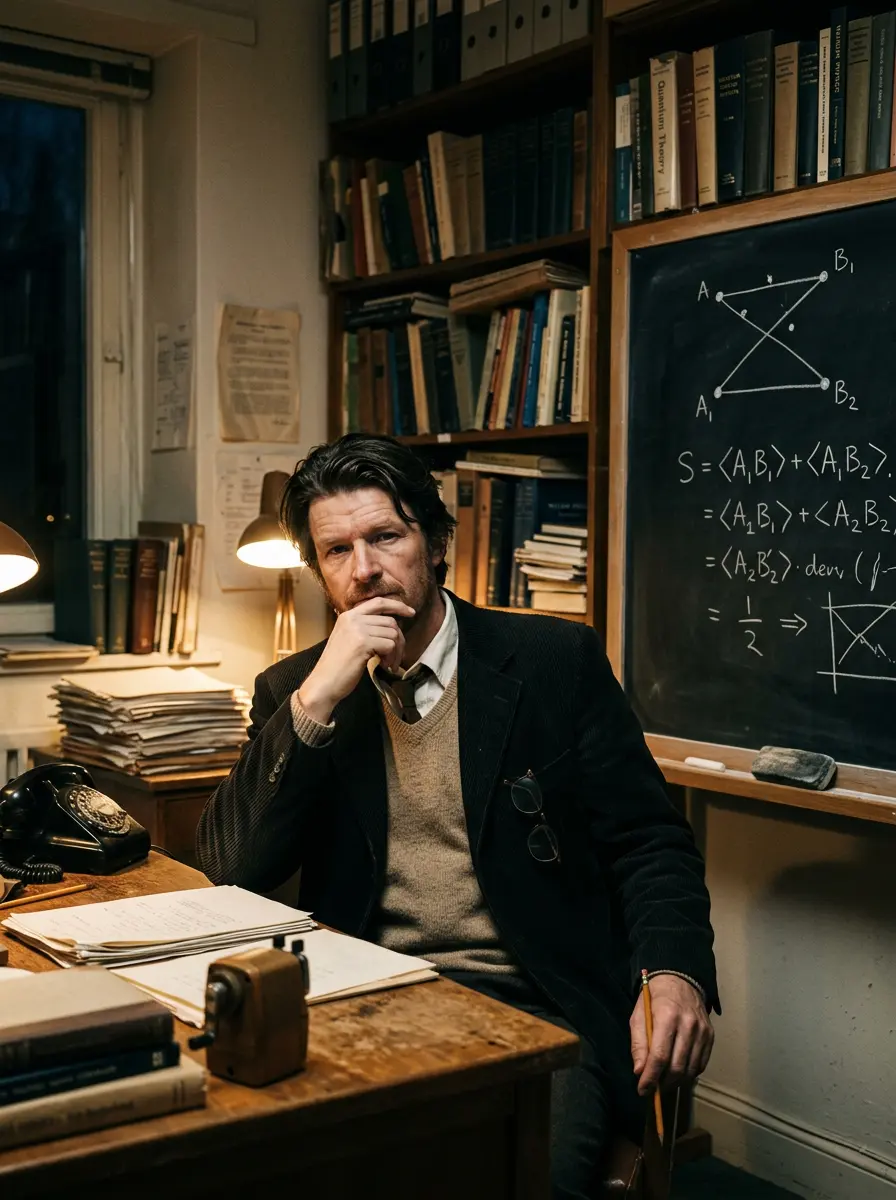
John Stewart Bell
1928–1990 · Theoretical physics
His 1964 theorem showed that local hidden-variable accounts obey limits on correlations that quantum mechanics can exceed, turning a longstanding debate into a testable question.
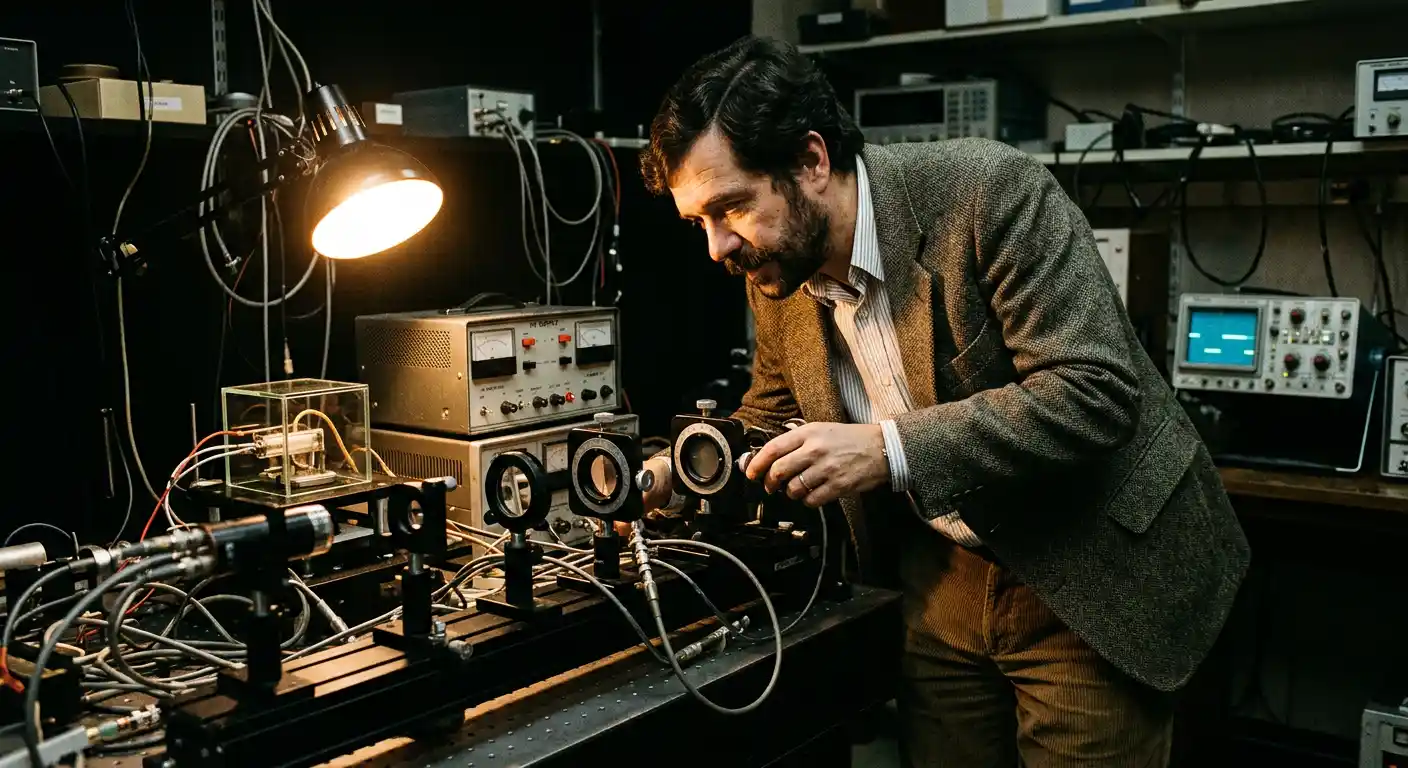
Alain Aspect
1947–present · Experimental quantum optics
His team's 1981–82 entangled-photon tests provided stronger evidence for quantum correlations and he shared the 2022 Nobel Prize in Physics.
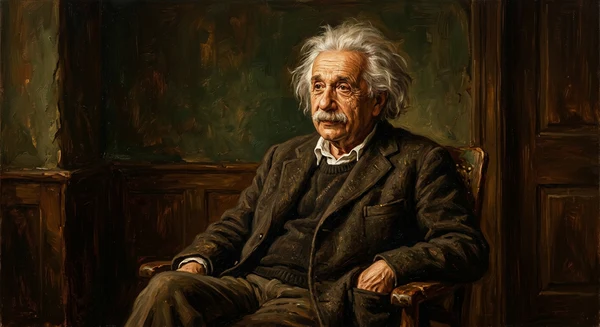
Albert Einstein
1879–1955 · Theoretical Physicist
Developing the theory of relativity and the equation E=mc².
Articles about this scientist
Sources & references
- NobelPrize.org — John Clauser: Facts, Nobel Prize in Physics 2022
- Lawrence Berkeley National Laboratory — Former Berkeley Lab Scientist John Clauser Among Three Awarded the 2022 Nobel for Physics
- John F. Clauser — About Me
- American Physical Society, Physical Review Letters — Proposed Experiment to Test Local Hidden-Variable Theories (1969)