_(2).jpg)
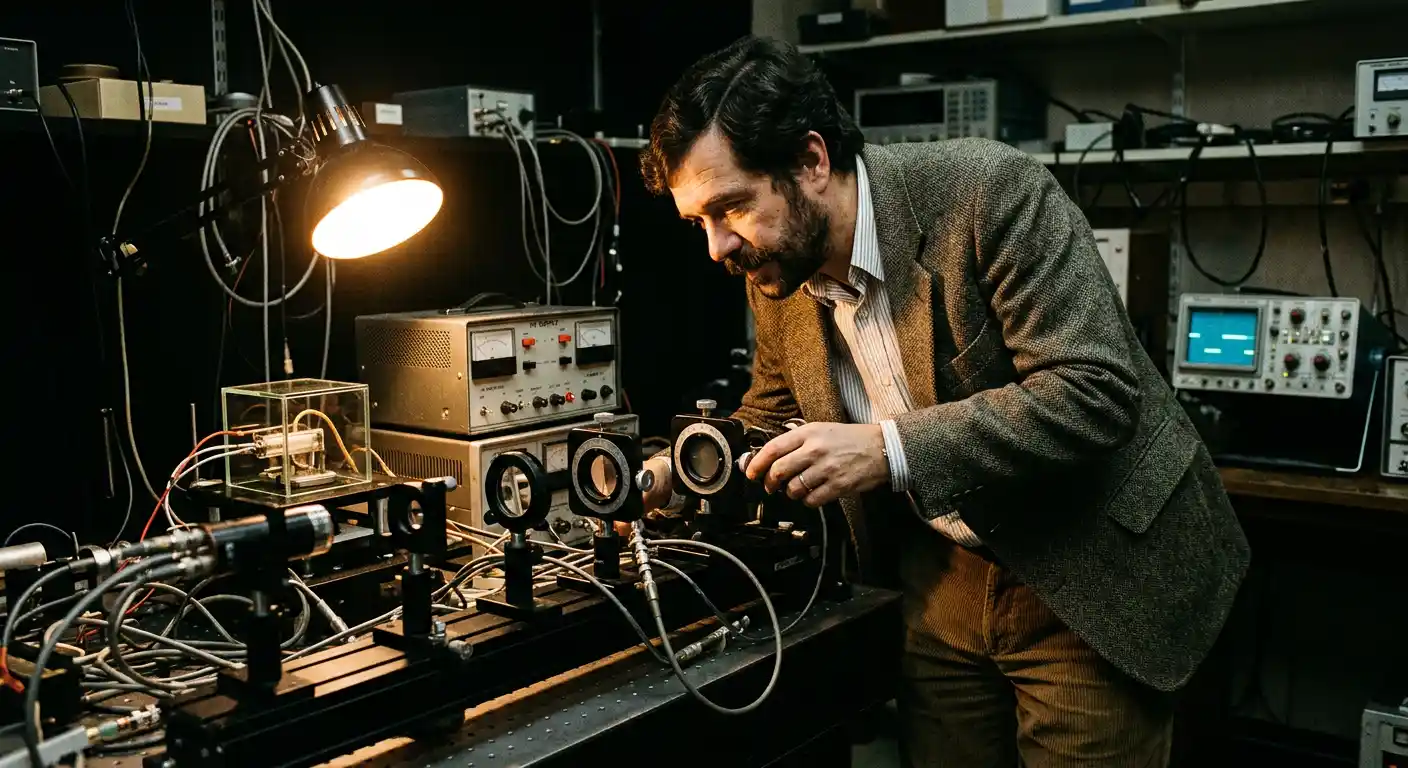
Alain Aspect
1947–present · Experimental quantum optics
Alain Aspect led entangled-photon tests of Bell inequalities, including one with rapidly changing measurement settings, and shared the 2022 Nobel Prize in Physics.
Why is this scientist famous?
His team's 1981–82 entangled-photon tests provided stronger evidence for quantum correlations and he shared the 2022 Nobel Prize in Physics.
Aspect's experiments helped transform quantum-foundations questions into precise laboratory science, and his later work on laser cooling of atoms opened new directions in quantum physics.
Alain's story
From Agen to quantum optics
Alain Aspect was born on 15 June 1947 in Agen in southwest France. He studied physics at the École normale supérieure de Cachan and the Université d'Orsay. From 1971 to 1974 he taught in Cameroon before returning to France for teaching and research at Cachan and the Institut d'Optique.
The entangled-photon experiments
Inspired by the 1935 Einstein–Podolsky–Rosen (EPR) argument and Bell's 1964 theoretical work, Aspect and his collaborators tested correlations between entangled photons. In 1982 Aspect, Philippe Grangier and Gérard Roger published a Bell-test result. A separate 1982 paper by Aspect, Jean Dalibard and Gérard Roger reported a test using time-varying analysers — rapidly changing measurement settings while photons travelled through the apparatus. The results violated relevant Bell inequalities and agreed with quantum mechanics. These experiments addressed some limitations of earlier tests, but they were not the final loophole-free test.
A doctorate and a career in French science
Aspect obtained a doctorate in 1983 for work involving three experimental tests of Bell inequalities with entangled photons. He subsequently studied wave–particle behaviour of single photons with Philippe Grangier and laser cooling of atoms in work connected with Claude Cohen-Tannoudji. After taking a senior research post at the Institut d'Optique in 1992, he also investigated ultracold atoms; his career included work at the French National Centre for Scientific Research (CNRS) and the École Polytechnique.
Recognition
Aspect received the CNRS Gold Medal in 2005. He shared the 2010 Wolf Prize in Physics with John F. Clauser and Anton Zeilinger, and the 2022 Nobel Prize in Physics with the same two physicists. These experiments helped transform quantum-foundations questions into precise laboratory science. They do not uniquely prove Bohr's whole interpretation, exclude every possible hidden-variable theory, or allow faster-than-light communication.
What did they discover?
Entangled-photon Bell tests (1981–82)
With Grangier, Roger and Dalibard, Aspect carried out three experimental tests of Bell inequalities using entangled photons. The results violated the inequalities and agreed with quantum predictions.
Time-varying analyser experiment (1982)
A 1982 experiment with Dalibard and Roger used rapidly changing measurement settings, addressing a key limitation of earlier Bell tests.
Laser cooling of atoms
Aspect later studied laser cooling of atoms in work connected with Claude Cohen-Tannoudji, and subsequently investigated ultracold atoms at the Institut d'Optique.
Amazing facts
He was born in Agen in southwest France.
He taught in Cameroon before his famous experiments.
He used pairs of entangled photons to test quantum predictions.
A 1982 experiment changed measurement settings quickly while photons travelled through the apparatus.
Gérard Roger coauthored both of the distinct 1982 papers named in this biography.
He completed his doctorate in 1983, after the 1982 tests.
His later research included cooling atoms with lasers.
He shared both the 2010 Wolf Prize and the 2022 Nobel Prize with Clauser and Zeilinger.
Timeline
Born in Agen, France
Began teaching in Cameroon
Published entangled-photon Bell test results with Grangier and Roger, and a separate test with Dalibard and Roger using time-varying analysers
Obtained a doctorate for work involving three experimental tests of Bell inequalities
Took a senior CNRS research post at the Institut d'Optique
Awarded the CNRS Gold Medal
Shared the Wolf Prize in Physics with Clauser and Zeilinger
Shared the Nobel Prize in Physics with Clauser and Zeilinger
Awards & honours
Related Super Scientists
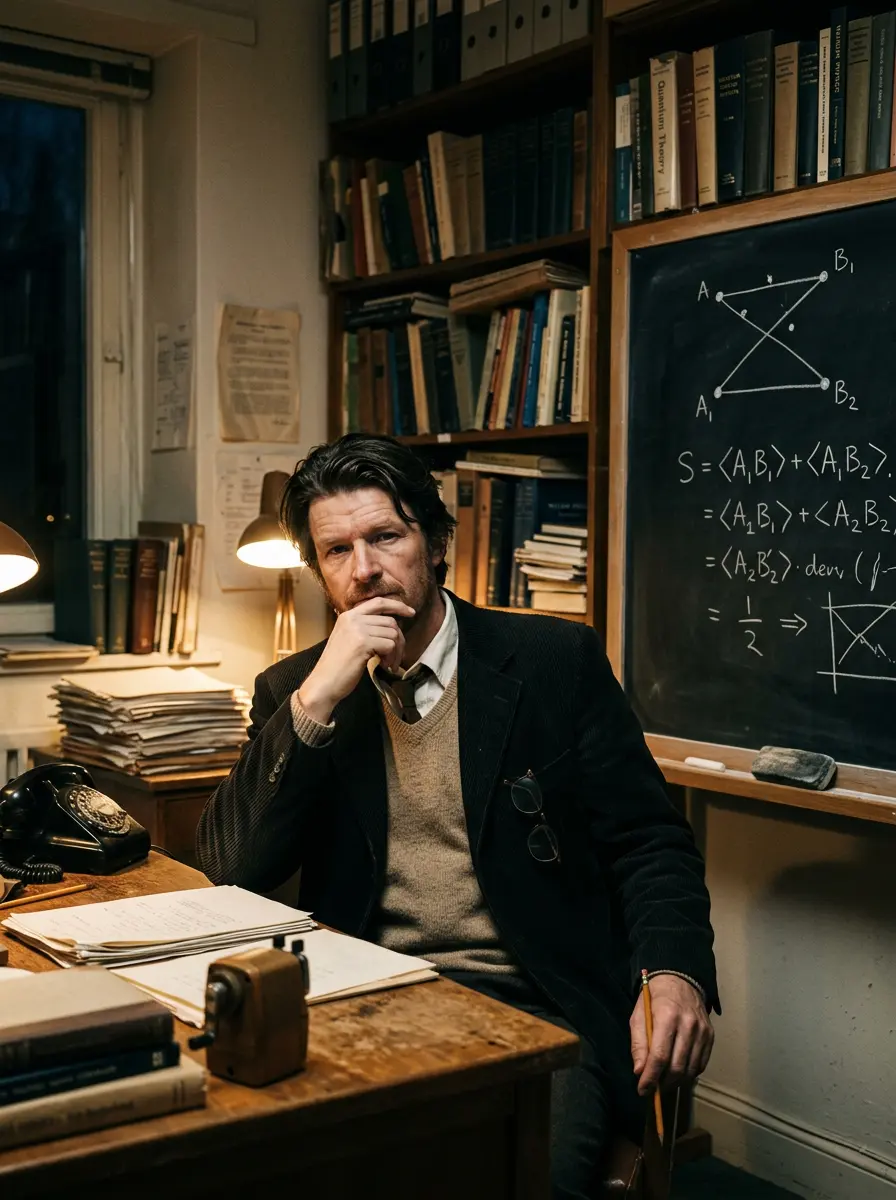
John Stewart Bell
1928–1990 · Theoretical physics
His 1964 theorem showed that local hidden-variable accounts obey limits on correlations that quantum mechanics can exceed, turning a longstanding debate into a testable question.
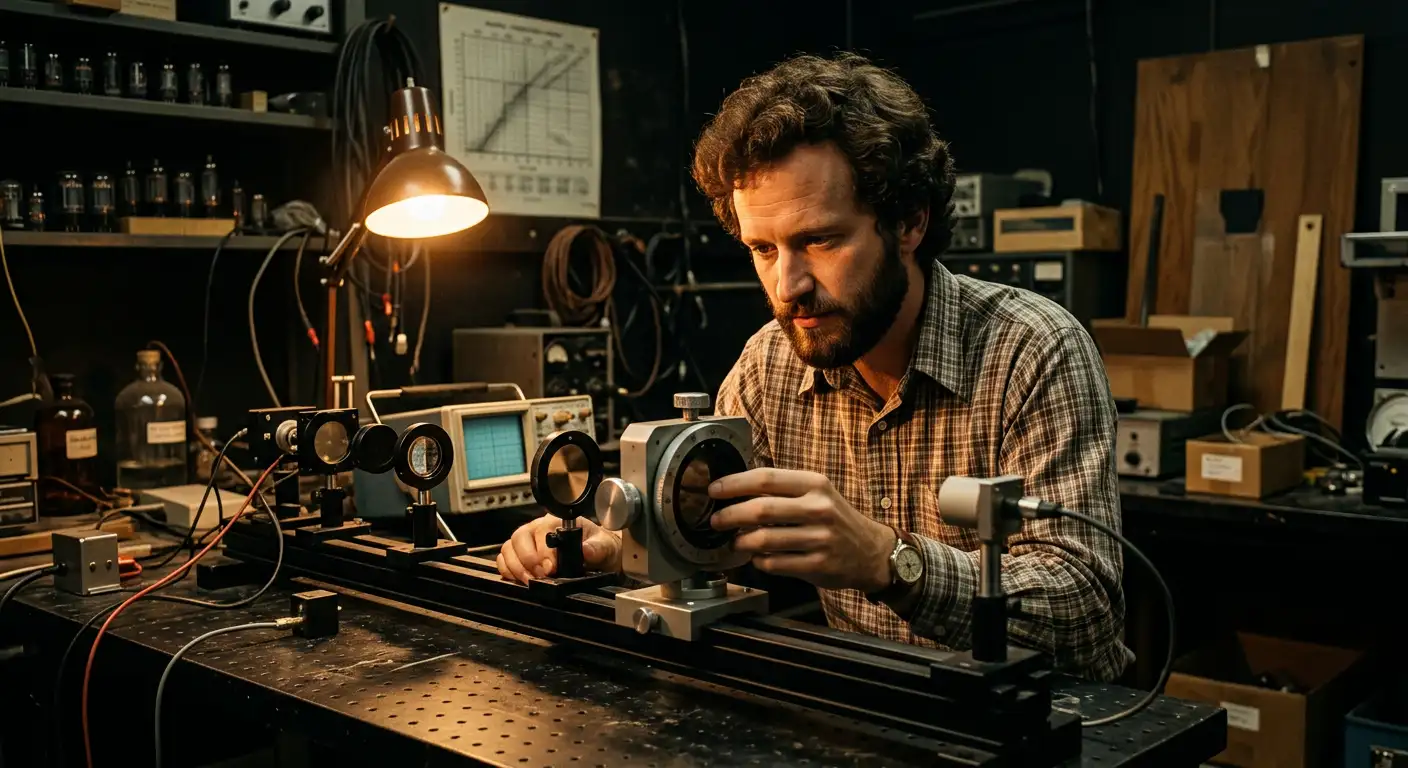
John Francis Clauser
1942–present · Experimental and theoretical physics
Co-developed the 1969 CHSH inequality and shared the 2022 Nobel Prize in Physics for experiments with entangled photons.
Albert Einstein
1879–1955 · Theoretical Physicist
Developing the theory of relativity and the equation E=mc².