_(2).jpg)
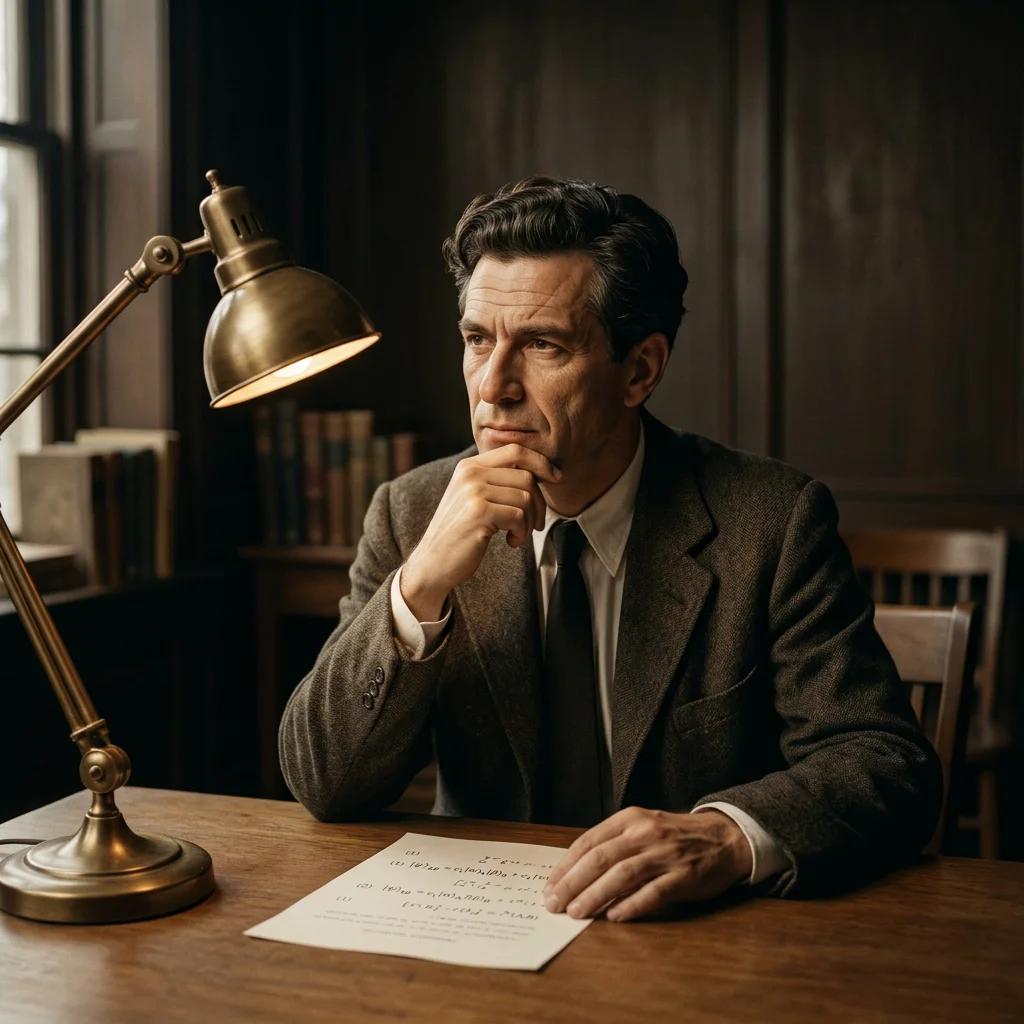
Boris Podolsky
1896–1966 · Theoretical physics
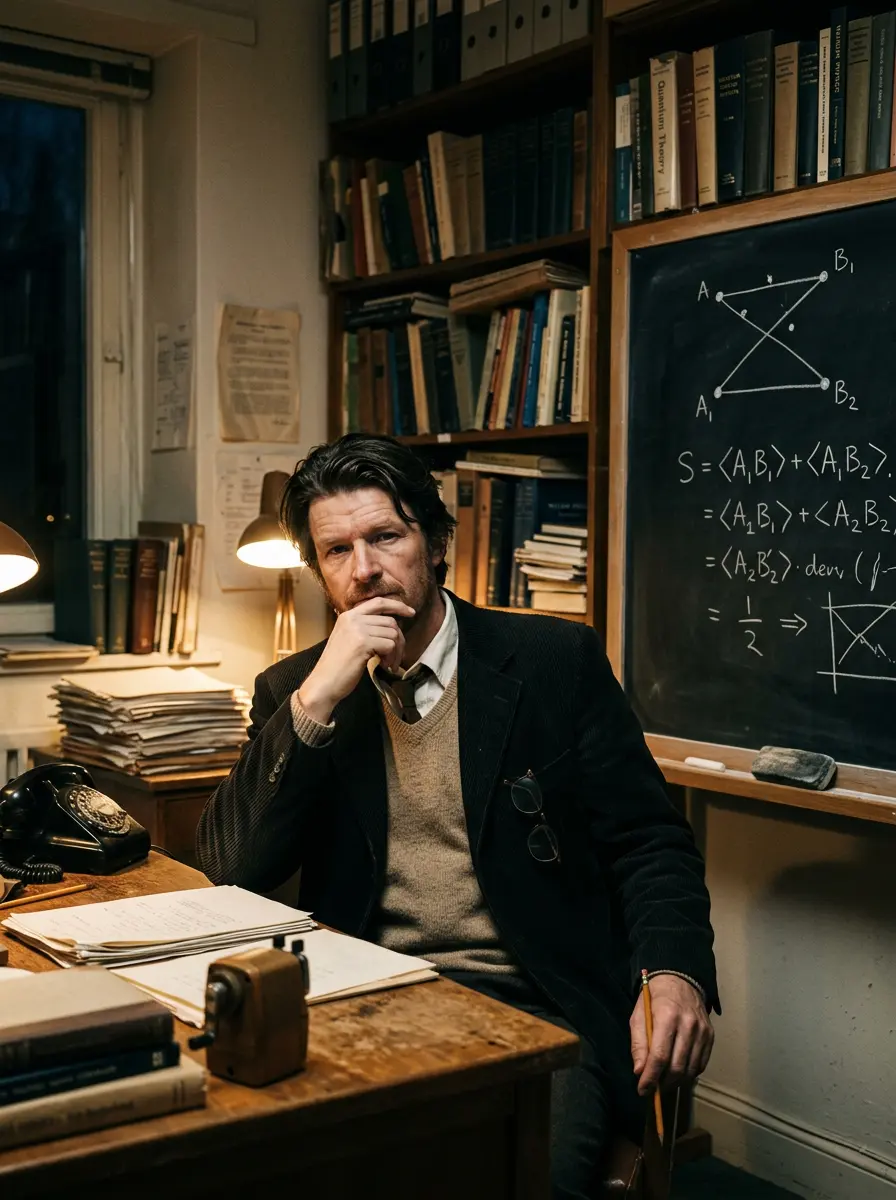
Boris Podolsky coauthored the 1935 EPR argument questioning whether quantum mechanics completely describes physical reality, later inspiring Bell's testable theorem.
Why is this scientist famous?
With Albert Einstein and Nathan Rosen, published the EPR paper that sharpened the question of quantum completeness and later inspired Bell's testable theorem.
The EPR paper remains a central starting point for quantum foundations, inspiring Bell's theorem and decades of experiments on entangled particles.
Boris's story
From Taganrog to California
Boris Podolsky was born on 29 June 1896 in Taganrog, then part of the Russian Empire. He studied at the University of Southern California, earning a bachelor's degree in 1918 and a master's degree in 1926. He went on to earn a doctorate at the California Institute of Technology in 1928. His research career crossed North America and Europe, including work in Leipzig and at a physics institute in Kharkiv.
Princeton and the EPR paper
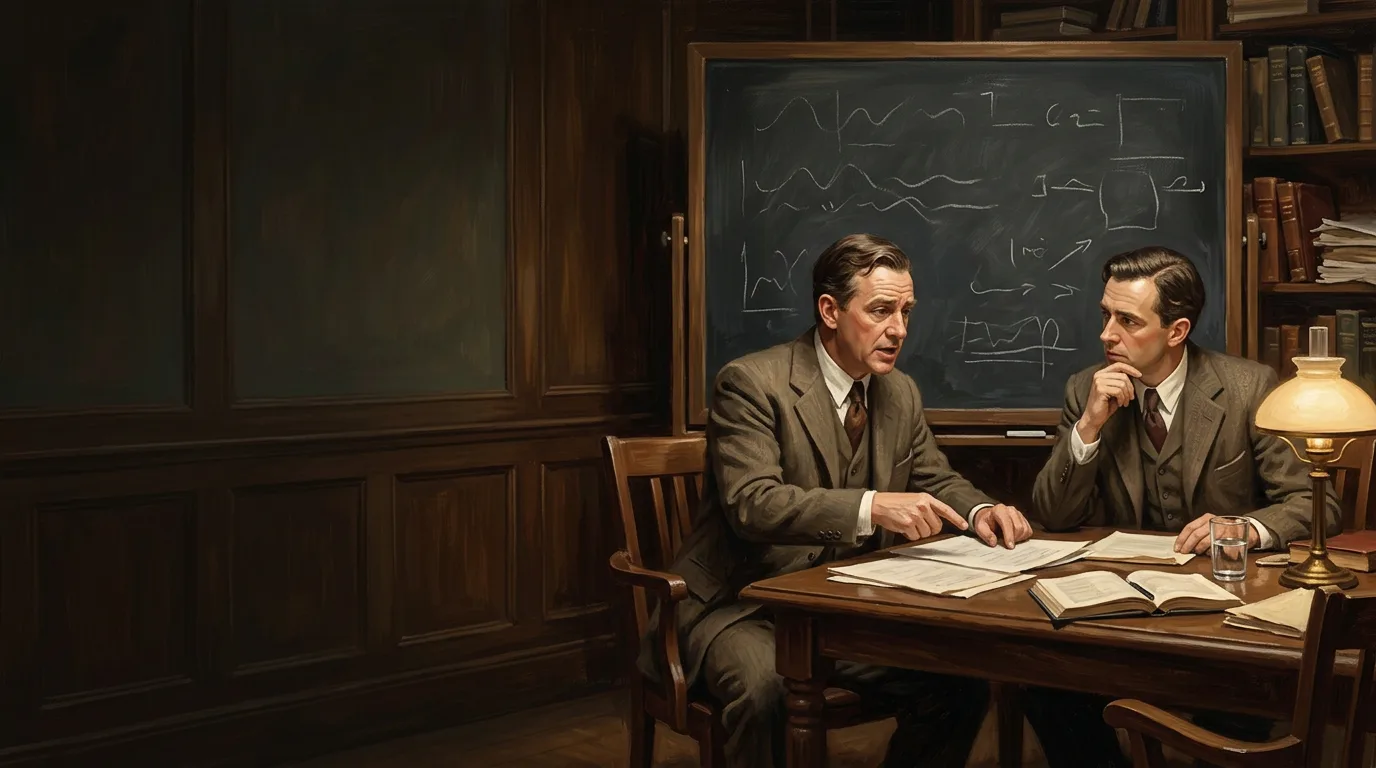
In the mid-1930s Podolsky was at the Institute for Advanced Study in Princeton, where he discussed quantum foundations with Albert Einstein and Nathan Rosen. Rosen helped bring up the puzzle; Podolsky joined the discussion and drafted the paper. The three coauthored the 1935 Einstein–Podolsky–Rosen (EPR) paper, titled Can Quantum-Mechanical Description of Physical Reality Be Considered Complete?, in Physical Review. Its reasoning used a thought experiment involving two separated systems and argued that, under its stated assumptions, the existing quantum description was incomplete. Niels Bohr responded the same year.
Beyond EPR
Podolsky was appointed assistant professor of mathematical physics at the University of Cincinnati in 1935. He later worked at Xavier University in Cincinnati in the 1960s. His research also addressed mathematical physics and electrodynamics. The University of Cincinnati later established a Podolsky–Wyatt chair in physics.
What did they discover?
The EPR paper (1935)
Coauthored with Einstein and Rosen, this paper used a thought experiment involving two separated systems to argue that, under its stated assumptions, quantum mechanics does not completely describe physical reality.
Amazing facts
He studied in both southern California and at Caltech.
He earned his doctorate in 1928.
His research career crossed North America and Europe.
He discussed quantum theory with Einstein and Rosen at Princeton.
He drafted the paper commonly known as EPR.
The EPR paper used a thought experiment, not a laboratory photon test.
University of Cincinnati later named a physics chair partly for him.
Timeline
Born in Taganrog, Russian Empire
Earned a bachelor's degree from the University of Southern California
Earned a master's degree from the University of Southern California
Earned a doctorate from the California Institute of Technology
Coauthored the EPR paper with Einstein and Rosen, and was appointed at the University of Cincinnati
Died in Cincinnati, Ohio
Related Super Scientists
Albert Einstein
1879–1955 · Theoretical Physicist
Developing the theory of relativity and the equation E=mc².
Niels Bohr
1885–1962 · Physicist
Developed the Bohr model of the atom and made foundational contributions to quantum mechanics.
Nathan Rosen
1909–1995 · Theoretical physics
Coauthored the 1935 Einstein–Podolsky–Rosen paper and the Einstein–Rosen bridge paper; later helped build theoretical physics at the Technion in Israel.
Articles about this scientist
Sources & references
- National Academy of Sciences of Ukraine, Encyclopedia of Modern Ukraine — Podolskyi Borys Yakovych
- Institute for Advanced Study — The Advent and Fallout of EPR
- University of Cincinnati, Department of Physics — Prof. Boris Podolsky
- American Physical Society, Physical Review — Can Quantum-Mechanical Description of Physical Reality Be Considered Complete? (1935)