Before electricity became something people simply expected from a wall socket, two incompatible systems competed to power America. The argument involved engineering, money, public fear and three men whose roles are still regularly confused.
Two Ways to Electrify a City
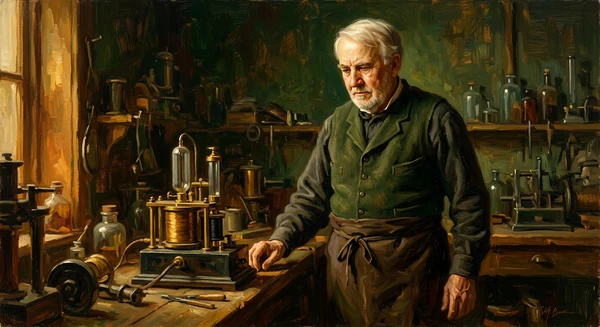
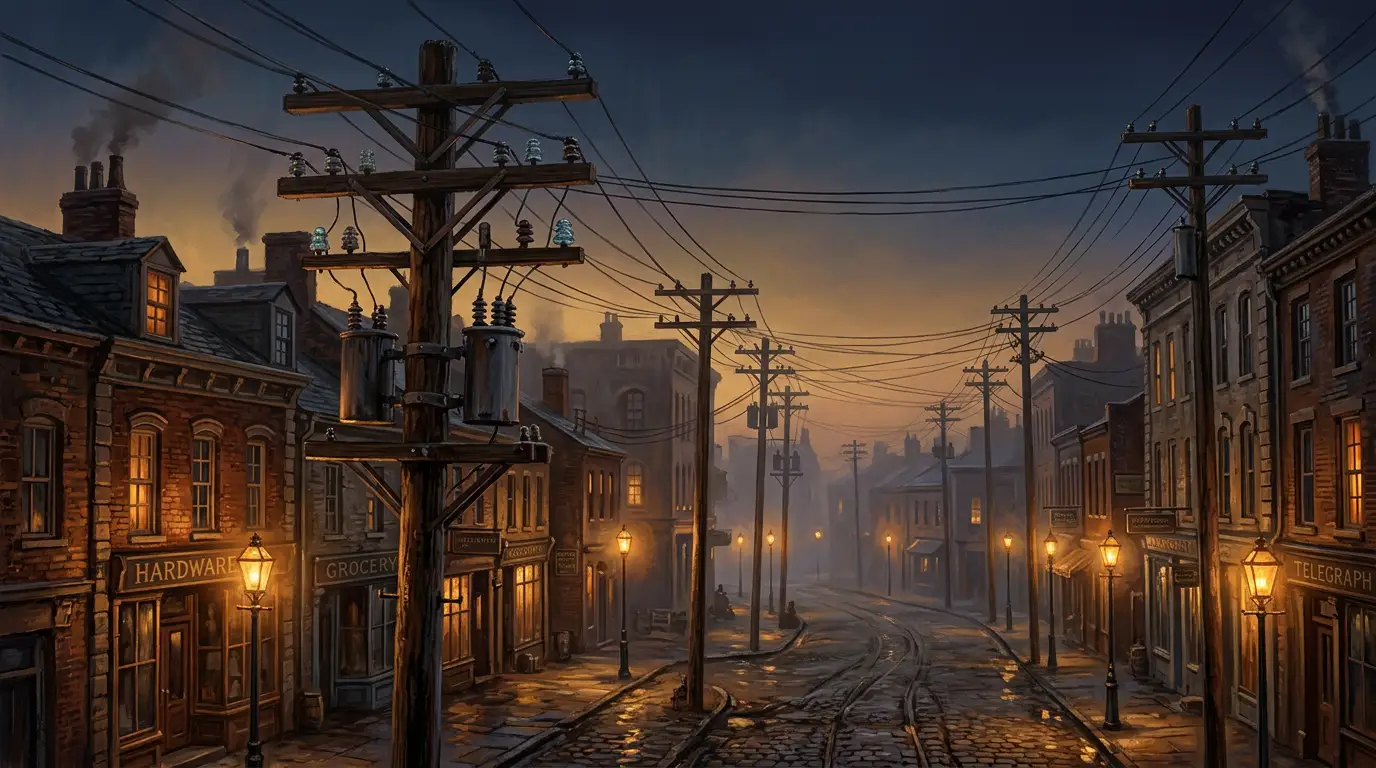
When Thomas Edison opened the Pearl Street generating station in New York in 1882, electric lighting was still something extraordinary. His direct-current system supplied electricity to customers in the surrounding streets and demonstrated that a central power station could provide reliable electric light on a commercial scale.
But direct current had a limitation. Edison's system worked well locally, yet supplying customers farther away meant more generating stations, heavier copper conductors and greater expense. Electricity was beginning to spread, and engineers were looking for a practical way to transmit it over much longer distances.
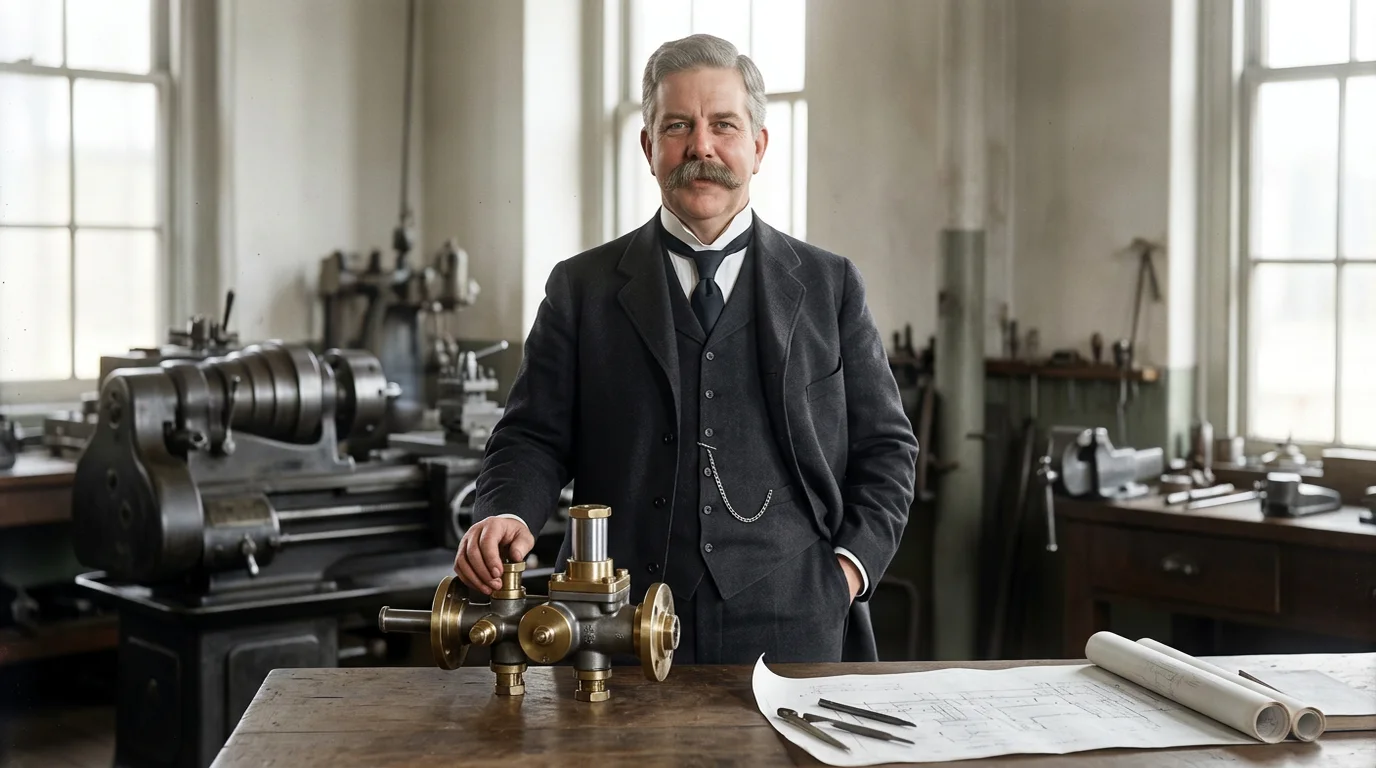
George Westinghouse saw an opportunity in alternating current. Unlike Edison's DC system, AC could be transformed to a high voltage for efficient transmission and then reduced again before reaching customers. Westinghouse formed an electrical company and began assembling a competing system using transformers and other technology developed by several engineers.
This was not yet Edison versus Tesla. The commercial rivalry that became known as the War of the Currents was principally between the Edison electrical interests and George Westinghouse's rapidly expanding AC business.
Tesla Gives AC a Powerful New Advantage
Alternating current could transmit electricity efficiently, but lighting was only part of the challenge. Industry also needed practical electric motors.
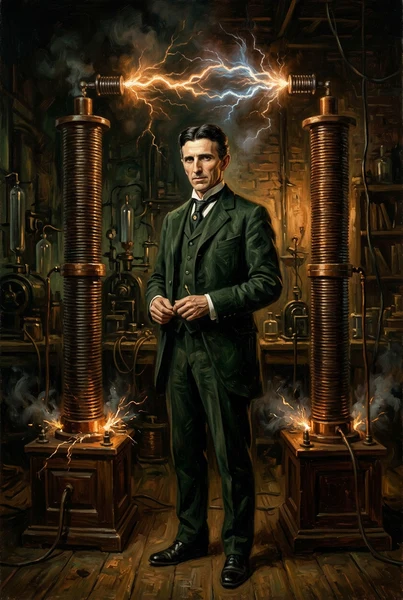
Nikola Tesla had been developing a polyphase AC system and induction motor based on a rotating magnetic field. In 1888, Westinghouse obtained rights to Tesla's patents and persuaded him to work with the company. The combination helped make alternating current useful not only for lighting but also for powering machinery.
Tesla's contribution was extremely important, but the popular picture of a personal Edison-versus-Tesla duel is misleading. Tesla was the inventor behind important parts of the polyphase system; Westinghouse was the businessman, engineer and manufacturer actually competing with Edison's companies for contracts and customers.
That distinction matters because the conflict was as much a commercial battle as a scientific one. Large sums had already been invested in incompatible systems. Whichever technology cities and companies adopted would influence where future generating stations, wires, motors and electrical equipment came from.
When an Engineering Argument Became a Fear Campaign
There was a genuine safety issue at the heart of the disagreement. AC was useful partly because it could be transmitted at much higher voltages, and badly installed high-voltage wires could kill. New York had already experienced fatal electrical accidents.
Edison argued strongly that high-voltage AC was too dangerous for public streets. His concerns were not entirely invented, but safety also became a weapon in the commercial fight. Experiments at Edison's laboratory demonstrated the effects of alternating current on animals, and supporters of the Edison system worked to associate Westinghouse's current with death and electrocution. The development of the electric chair became entangled with the same public argument.
One famous story, however, belongs nowhere near the War of the Currents.
In 1903 an elephant called Topsy was killed by electrocution at Luna Park in New York, and an Edison Manufacturing Company film crew recorded the event. Edison himself did not arrange the execution and was not present. More importantly, it happened more than a decade after the main current war. The story has nevertheless been repeated so often that Topsy is now routinely inserted into an Edison-versus-Tesla rivalry that she was never part of.
Chicago Lights Up
By the early 1890s, AC was gaining ground, but Westinghouse soon received an opportunity to demonstrate it on an enormous public stage.
His company won the contract to provide electric lighting for the World's Columbian Exposition in Chicago in 1893. The fair became a spectacular demonstration of what an AC system could achieve. Huge numbers of visitors saw buildings and grounds illuminated electrically on a scale few had experienced before.
For Westinghouse, it was more than a display. It showed potential customers that AC could operate a large and complicated electrical installation successfully.
The next challenge was even more ambitious: Niagara Falls.
Engineers had long dreamed of using the immense energy of the falls, but generating electricity there was only worthwhile if that power could be transported to places where people and factories could use it. Westinghouse supplied huge generators for the Niagara project, using a polyphase AC system connected with Tesla's work.
In 1896, Niagara electricity was transmitted to Buffalo, roughly 26 miles away. It was a powerful demonstration of what long-distance AC transmission could do.
So Did AC Win?
Yes — but not in the simple way the story is often told.
Alternating current became the dominant method for transmitting and distributing electricity because transformers made it practical to change voltages and send power efficiently over long distances. The vast interconnected electricity networks that developed during the 20th century were built largely around AC.
But direct current did not disappear.
Batteries produce DC. Electronics generally operate internally with DC. Solar panels generate DC, and some modern long-distance power links use high-voltage direct current because it can be advantageous for particular applications.
The eventual electrical system was therefore not a world in which one current survived and the other vanished. It was a world in which engineers learned where each was useful.
And even the idea that Westinghouse suddenly defeated Edison is too neat. Edison left the lighting business in 1892 when Edison General Electric merged with Thomson-Houston to form General Electric. The electrical industry continued evolving long after the personal rivalry had faded.
Three Men, Three Different Roles
The War of the Currents survives because it sounds like a perfect story: two brilliant inventors fighting over which electrical system would power the future.
The real story is better.
Edison and his teams had built one of the first successful central-station systems for electric lighting. Westinghouse recognised the advantages of alternating current and built a business capable of turning those advantages into large-scale electrical networks. Tesla developed inventions that made polyphase AC and induction motors far more powerful and practical.
None of them created modern electricity alone.
There were transformers developed by other engineers, generating stations built by large teams, manufacturers, investors, electricians and workers who installed the equipment, and thousands of customers whose choices helped determine which systems survived.
What looked like a battle between inventors was really a competition between entire technological systems.
AC became the foundation of large-scale electrical distribution. Tesla became one of its most important inventors. Westinghouse turned it into a formidable commercial system. Edison helped create the electrical industry they were fighting over in the first place.
That version may be less tidy than Edison versus Tesla.
It is also much closer to what actually happened.