_(2).jpg)
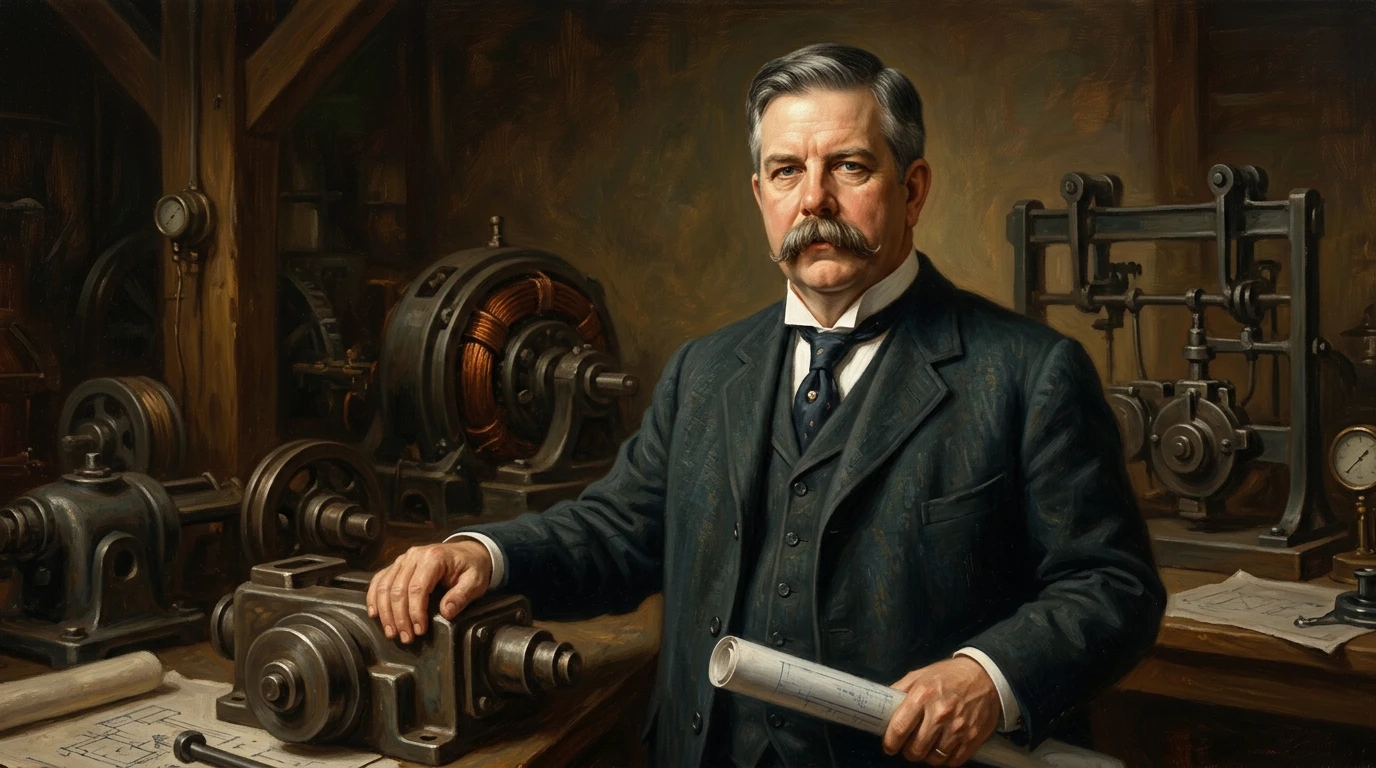
George Westinghouse Jr.
1846–1914 · Inventor and Engineer
An American inventor and engineer who made railway travel safer with the air brake and helped develop practical alternating-current electrical systems.
“I have always known what I wanted, and how to get it. As a child, I got it by tantrums; in mature years, by hard work.”
Why is this scientist famous?
George Westinghouse invented an influential compressed-air braking system for railways and founded companies that helped make alternating-current electricity practical. He worked with many engineers and inventors, including William Stanley and Nikola Tesla, to develop systems that could generate, transform and distribute electrical power.
Modern railway air brakes are more advanced than Westinghouse's original designs, but they descend from the principle of controlling brakes throughout a train using compressed air. The fail-safe idea that a loss of pressure should apply the brakes remains especially important. Alternating-current systems also remain central to many electrical grids. Transformers allow voltage to be raised for efficient transmission and lowered before electricity reaches homes and businesses.
George's story
Growing Up Around Machines
George Westinghouse Jr. was born on 6 October 1846 in Central Bridge, New York. His father owned a workshop that made agricultural machinery and small steam engines, giving George an early opportunity to examine tools and machinery.
During the American Civil War, Westinghouse served with Union forces, first in the Army and later as an engineering officer in the Navy. After the war, he briefly attended Union College but preferred practical engineering work. In 1865, he received his first United States patent for a rotary steam engine.
Making Trains Safer
Railway brakes were dangerous and inefficient during Westinghouse's youth. Brakemen had to move between carriages and apply separate hand brakes, making it difficult to stop a long train quickly.
Westinghouse designed a system that carried compressed air through a pipe running along the train. This allowed the driver to control brakes on every carriage from the locomotive. He received an important air-brake patent in 1869 and founded the Westinghouse Air Brake Company that year.
Westinghouse and his engineers continued improving the design. The later automatic air brake was designed so that a loss of air pressure would apply the brakes instead of leaving the train unable to stop. Air-brake technology became an important part of safer railway travel.
Signals, Gas and Electricity
Westinghouse did not stop with brakes. He also worked on railway signalling and track-switching systems, organising the Union Switch & Signal Company in the early 1880s.
His experiments with distributing natural gas helped shape his thinking about electricity. Gas could be transported at high pressure and reduced to a safer pressure near the place where it was needed. Westinghouse recognised that transformers could perform a comparable job for alternating-current electricity: voltage could be increased for transmission and reduced again for local use.
Westinghouse acquired rights to an early transformer design developed by Lucien Gaulard and John Dixon Gibbs. He then worked with engineers including William Stanley, who made important improvements and demonstrated a practical alternating-current distribution system in Great Barrington, Massachusetts, in 1886. Westinghouse founded the Westinghouse Electric Company that same year.
Working with Nikola Tesla
Westinghouse did not invent alternating current, the transformer or the induction motor by himself. His importance came from recognising valuable ideas, supporting skilled inventors and engineers, and combining their work into practical electrical systems.
In 1888, Westinghouse acquired rights to Nikola Tesla's patents for a polyphase alternating-current system and induction motor. Tesla worked with the Westinghouse company as it developed equipment based on these ideas.
William Stanley, Nikola Tesla, Benjamin Lamme and other engineers all made important contributions. Westinghouse supplied the financial backing, manufacturing organisation and determination needed to turn several people's inventions into large working power systems.
The War of the Currents
Thomas Edison's electrical businesses promoted direct current, while Westinghouse supported alternating current. Edison and other opponents warned that high-voltage alternating current was dangerous. This public and commercial struggle became known as the War of the Currents.
Alternating current had a major practical advantage: transformers allowed its voltage to be changed efficiently, making long-distance transmission more economical. This did not make electricity harmless, but it made large interconnected power systems possible when properly engineered and controlled.
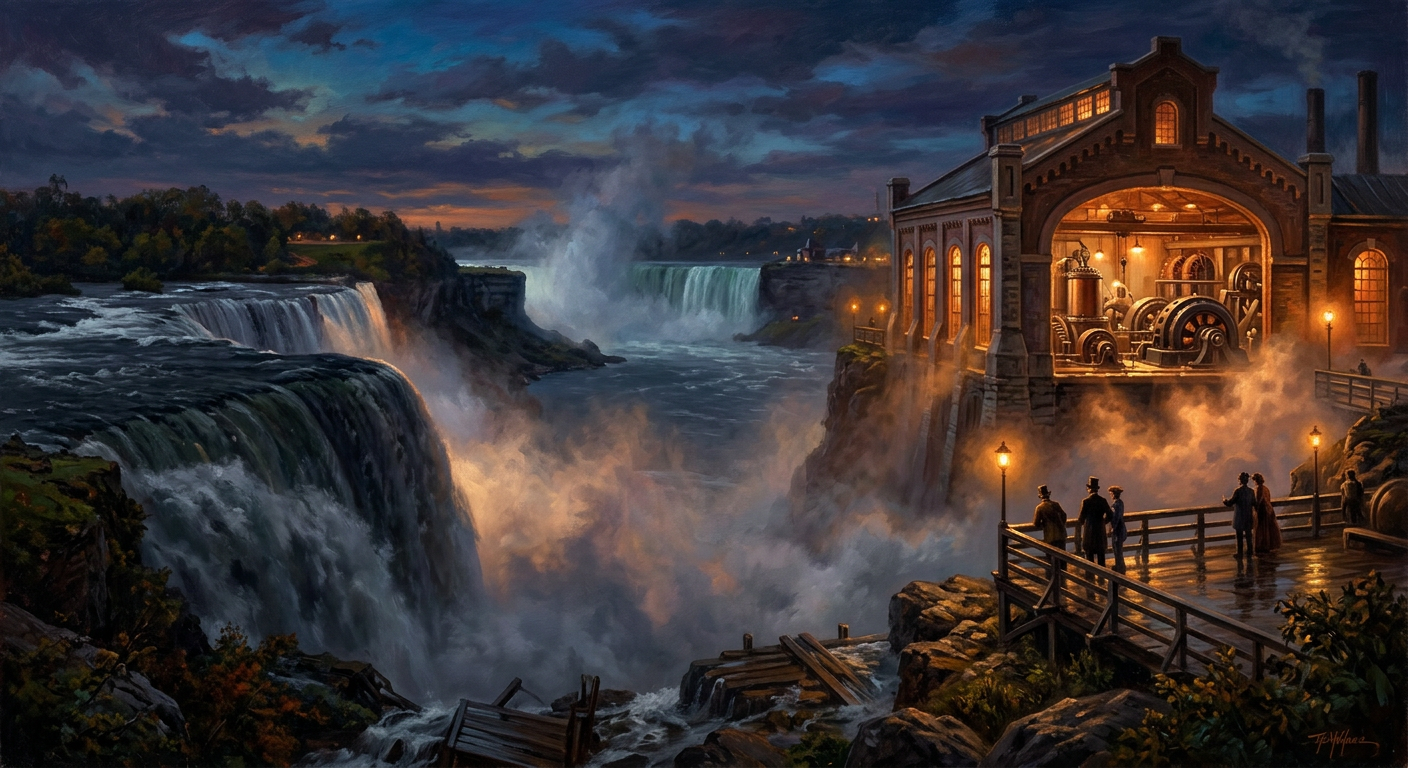
In 1893, the Westinghouse company supplied the electrical system that illuminated the World's Columbian Exposition in Chicago. Soon afterwards, Westinghouse Electric supplied polyphase generators for the hydroelectric project at Niagara Falls. The generating station began operating in 1895, and electricity was transmitted to Buffalo in 1896. These projects helped demonstrate alternating current on a large scale.
Later Years
The financial panic of 1907 placed Westinghouse's businesses under severe pressure, and he eventually lost control of Westinghouse Electric. He nevertheless continued developing inventions.
Westinghouse served as president of the American Society of Mechanical Engineers in 1910. In 1911, the American Institute of Electrical Engineers awarded him the Edison Medal for his work on alternating-current systems.
George Westinghouse died in New York City on 12 March 1914, aged 67. As a veteran of the American Civil War, he was buried in Arlington National Cemetery.
Why It Matters Today
Modern railway air brakes are more advanced than Westinghouse's original designs, but they descend from the principle of controlling brakes throughout a train using compressed air. The fail-safe idea that a loss of pressure should apply the brakes remains especially important.
Alternating-current systems also remain central to many electrical grids. Transformers allow voltage to be raised for efficient transmission and lowered before electricity reaches homes and businesses.
Westinghouse's story shows that major technologies rarely belong to one person. His achievements depended on recognising, financing and organising the work of inventors and engineers including William Stanley, Nikola Tesla, Benjamin Lamme, Lucien Gaulard and John Dixon Gibbs.
What did they discover?
Railway Air Brake
Westinghouse's compressed-air system allowed a train driver to control brakes throughout a train from the locomotive, replacing the slow and dangerous process of applying separate hand brakes.
Automatic Air-Brake Improvements
Westinghouse and his engineers developed an automatic system in which a serious loss of air pressure would apply the brakes. This helped prevent a broken pipe or separated carriage from leaving the train without effective braking.
Practical Alternating-Current Systems
Westinghouse brought together transformer technology, Tesla's polyphase patents and the work of engineers such as William Stanley and Benjamin Lamme. His companies manufactured and installed practical alternating-current equipment on a large scale.
Amazing facts
Westinghouse received his first United States patent in 1865 for a rotary steam engine.
During the American Civil War, he served in both the Union Army and the Union Navy.
He was only 22 years old when he received his important railway air-brake patent in 1869.
George Westinghouse received a total of 361 patents. His final patent was granted in 1918, four years after his death.
His companies supplied the electrical system that illuminated the enormous World's Columbian Exposition in Chicago in 1893.
The Edison Medal awarded to Westinghouse in 1911 was named after Thomas Edison, whose direct-current businesses had been his greatest electrical competitors.
Westinghouse founded or organised dozens of companies working in fields including railway brakes, signalling, natural gas, electrical power and machinery.
Timeline
Born in Central Bridge, New York.
Served with Union forces during the American Civil War, first in the Army and later in the Navy.
Received his first United States patent for a rotary steam engine.
Received an important patent for his compressed-air railway brake and founded the Westinghouse Air Brake Company.
Developed an automatic form of the railway air brake.
Organised the Union Switch & Signal Company to develop railway signalling and track-control equipment.
Founded the Westinghouse Electric Company; William Stanley demonstrated a practical alternating-current distribution system in Massachusetts.
Acquired rights to Nikola Tesla's polyphase alternating-current and induction-motor patents.
The Westinghouse company supplied the electrical system that illuminated the World's Columbian Exposition in Chicago.
Westinghouse generators began producing hydroelectricity at Niagara Falls, with power transmitted to Buffalo in 1896.
A major financial panic placed his businesses under severe pressure and eventually cost him control of Westinghouse Electric.
Served as president of the American Society of Mechanical Engineers.
Received the Edison Medal from the American Institute of Electrical Engineers.
Died in New York City, aged 67.
Awards & honours
Related Super Scientists
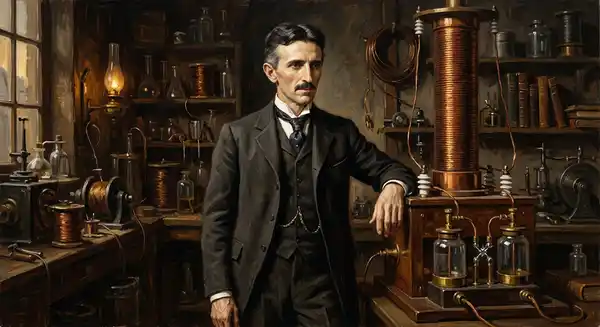
Nikola Tesla
1856–1943 · Inventor & Engineer
Developing the polyphase alternating-current system and induction motor, and pioneering high-frequency and wireless technologies.
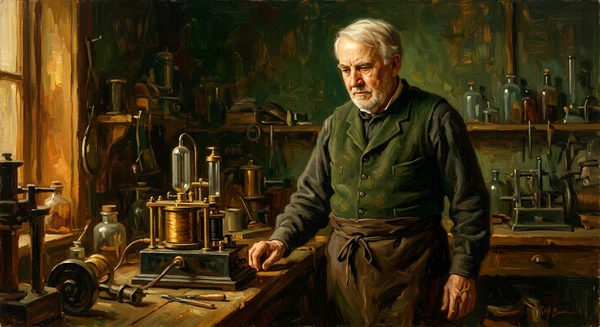
Thomas Edison
1847–1931 · Inventor & Businessman
Developing a practical electric-lighting system, inventing the phonograph and leading important work on early motion-picture technology.
Michael Faraday
1791–1867 · Physicist & Chemist
Discovered electromagnetic induction and created pioneering devices that became the foundations of the electric motor, transformer and generator.