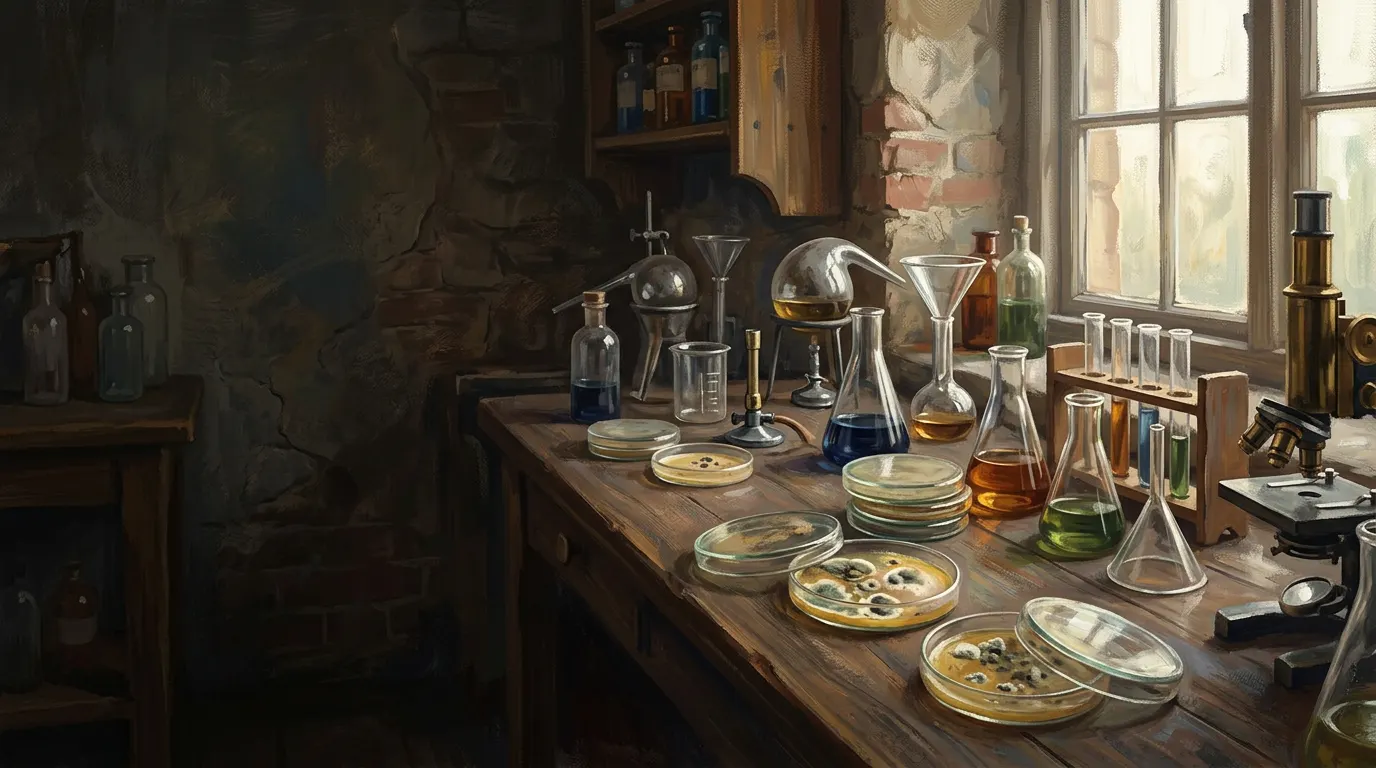
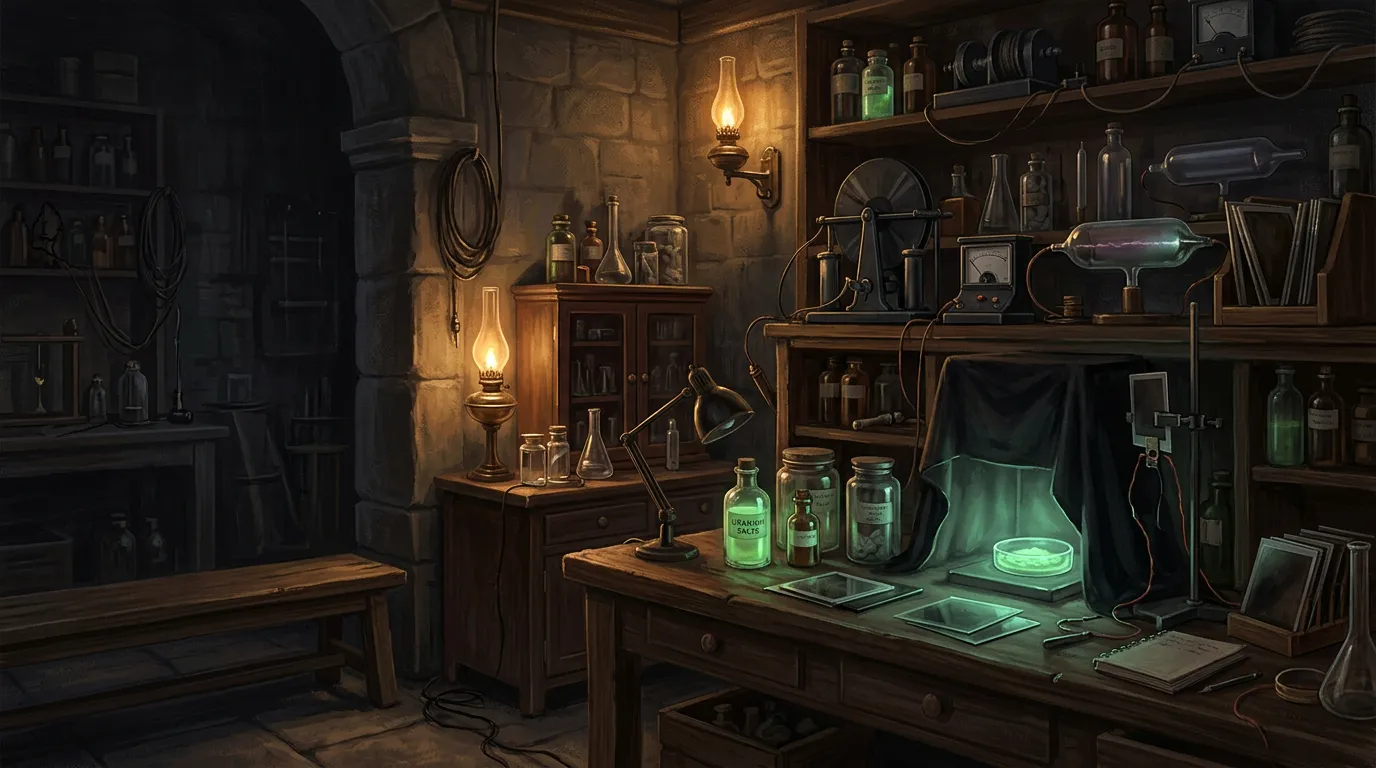
A cloudy week in Paris helped reveal that atoms were not as stable and indivisible as scientists had assumed. What began with a photographic plate and uranium salts changed our picture of matter.
The Experiment That Wasn't Supposed to Work
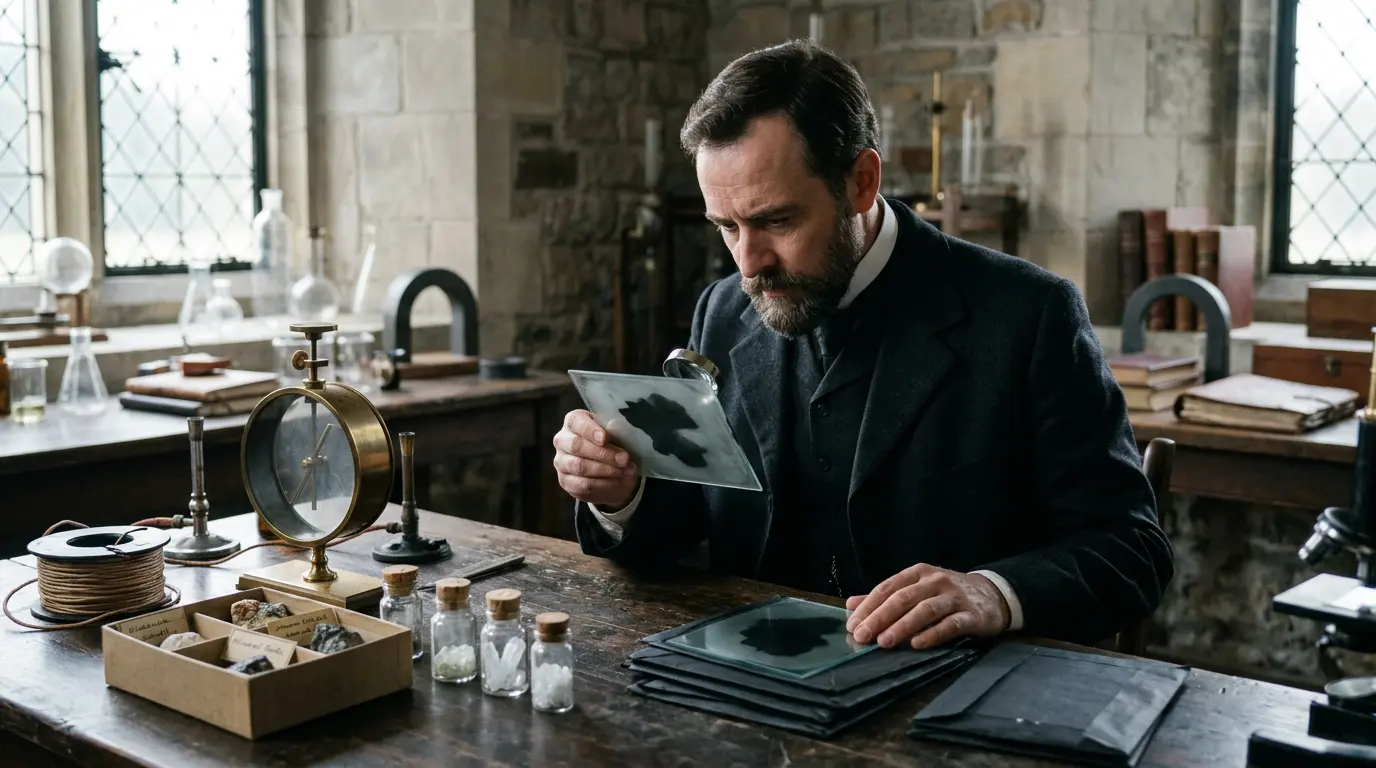
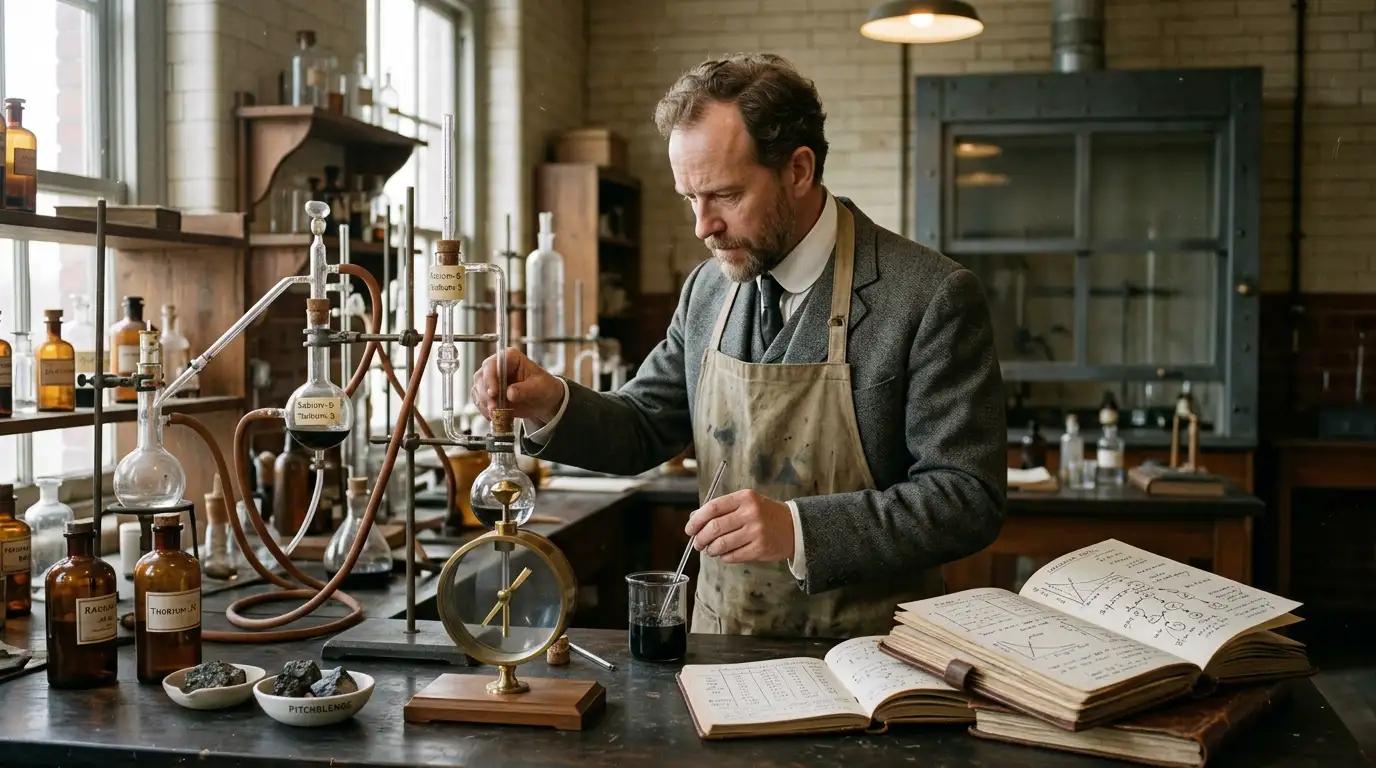
Paris was cloudy in the last days of February 1896, which was a nuisance for Henri Becquerel. He had been experimenting with uranium salts that glowed after exposure to light, trying to understand whether phosphorescent materials might also give off the newly discovered X-rays.
His experiment relied on sunlight. Becquerel placed uranium salts near photographic plates wrapped in opaque material, expecting sunlight to trigger some kind of penetrating radiation. When the weather turned dull, he put the prepared experiment away in a drawer and waited.
A few days later, Becquerel developed the photographic plate anyway. He expected a faint result. Instead, the plate showed a strong image. The uranium had affected it despite sitting in darkness.
That changed the experiment completely. Sunlight was not causing the mysterious rays after all. The uranium compound was producing radiation spontaneously. Becquerel had stumbled across a property of matter that nobody yet understood: natural radioactivity.
Marie Curie Follows the Signal
Becquerel had discovered something strange. Marie Curie wanted to know what it meant.
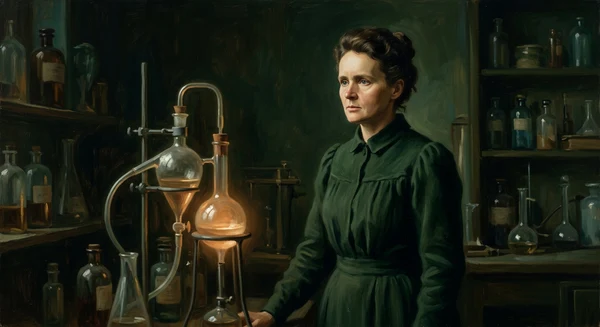
Curie chose the mysterious uranium rays for her doctoral research and began making careful measurements of how strongly different materials affected the air around them. She found that the strength of the radiation depended on the amount of uranium present rather than on the particular chemical compound containing it. Thorium showed similar behaviour.
That suggested something remarkable. The radiation seemed to be a property of the atom itself, not the result of an ordinary chemical reaction.
Then Curie found an even bigger clue. The uranium ore pitchblende was considerably more active than its uranium content could explain. Something else had to be hidden inside it.
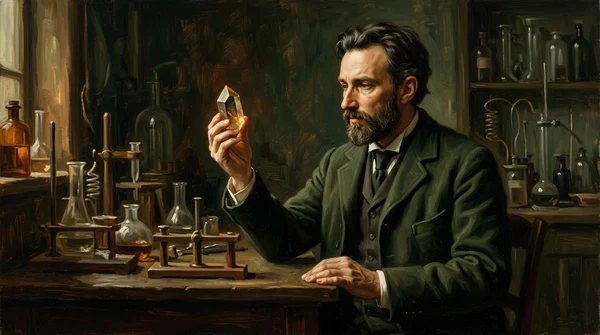
Marie and Pierre Curie began separating the ore chemically and measuring the activity of the different fractions. In 1898 they announced evidence for two previously unknown elements: polonium, named after Marie's native Poland, and radium. Marie also introduced the word radioactivity for the phenomenon they were investigating.
Finding the elements was one thing; separating useful quantities from the ore was another. Years of exhausting chemical work followed. The amounts involved were tiny, buried among enormous quantities of other material.
The discoveries brought Becquerel and the Curies the 1903 Nobel Prize in Physics. Marie Curie later received the 1911 Nobel Prize in Chemistry for work including the discovery of polonium and radium and the isolation and study of radium.
The Atom Begins to Fall Apart
Radioactivity created an uncomfortable problem for physics.
For much of the 19th century, atoms had been treated as the basic, permanent building blocks of matter. Yet radioactive substances appeared to release energy continuously without being heated, burned or chemically altered.
Ernest Rutherford helped uncover what was happening.
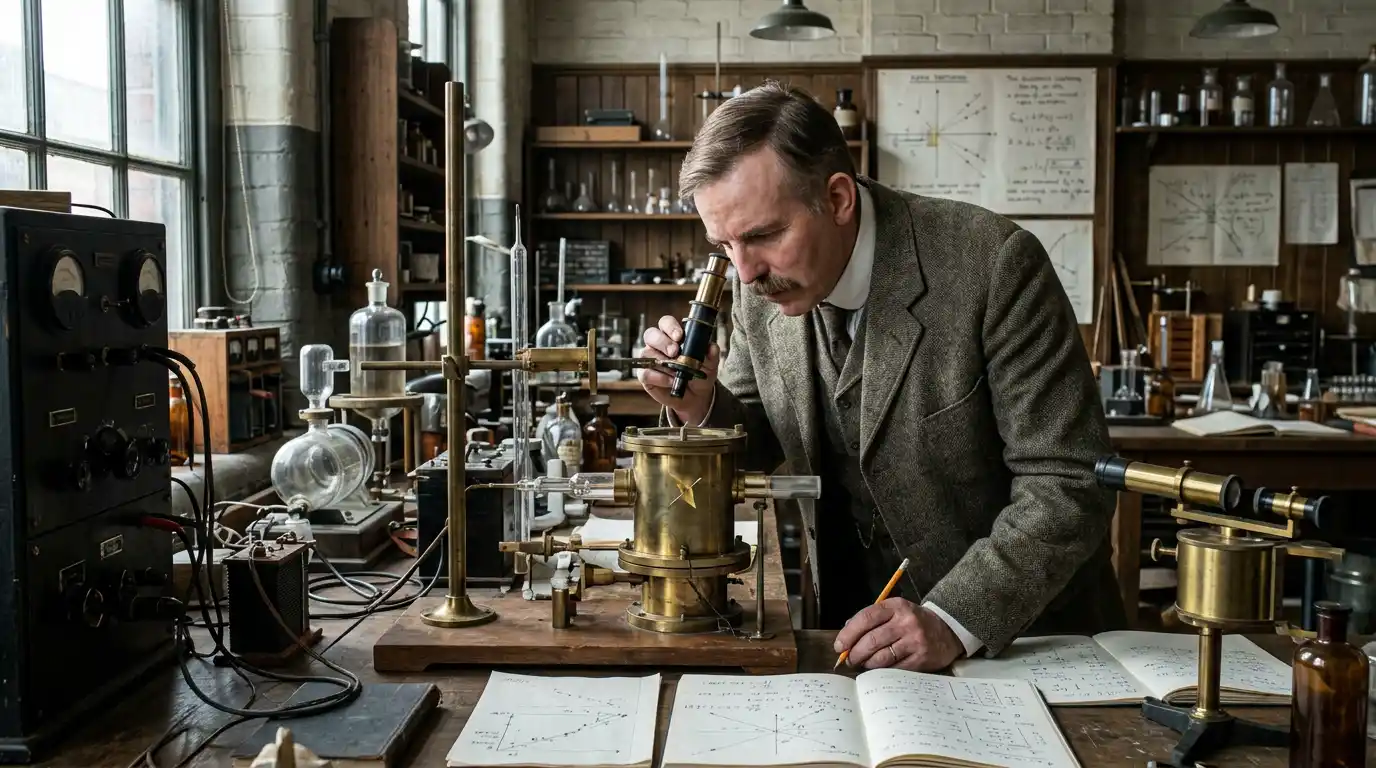
Working first with uranium radiation and later with other radioactive materials, Rutherford distinguished different forms of radiation, naming two of them alpha and beta. With the chemist Frederick Soddy, he went much further. Their experiments led them to conclude that radioactive atoms were actually transforming into different atoms as they decayed.
That was an extraordinary idea. One element could naturally change into another.
Rutherford eventually showed that alpha particles were closely connected with helium atoms. Radioactivity was no longer simply a mysterious ray coming from an otherwise unchanged substance. Something was happening inside the atom itself.
His work earned him the 1908 Nobel Prize in Chemistry for investigations into radioactive substances and the disintegration of the elements.
Radioactivity Opens the Atom
Radioactivity also gave physicists a new experimental tool.
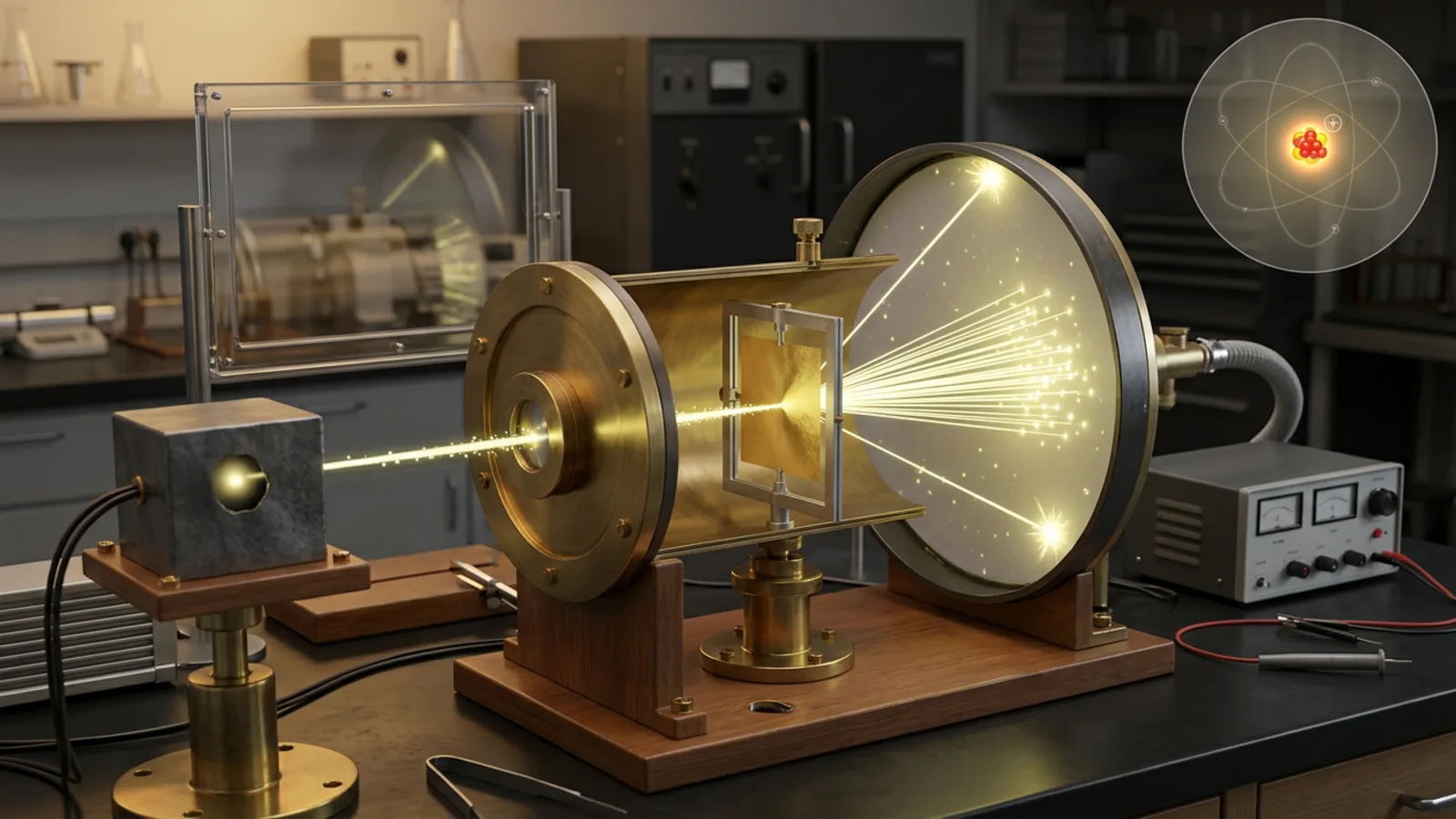
Rutherford's colleagues Hans Geiger and Ernest Marsden fired alpha particles at very thin metal foil. Most passed through almost as expected, but a small number were scattered through surprisingly large angles. Rutherford realised that this made sense only if most of an atom's positive charge and mass were concentrated in a very small central region.
The atomic nucleus had entered physics.
The story had travelled an astonishing distance in just fifteen years. Becquerel had begun by wondering whether sunlight made uranium salts emit something like X-rays. Now scientists were using radiation to probe the internal architecture of atoms.
Radioactivity had helped destroy the picture of the atom as a solid, indivisible object. Atoms had internal structure. Some nuclei were unstable. They could emit particles, release energy and transform into other nuclei.
A chance observation in a drawer had opened the door to nuclear physics.
Powerful — and Dangerous
Early researchers did not fully understand the risks of the radiation they were studying. Radioactive substances were handled far more casually than they would be today, and the long-term effects of exposure only became clear gradually.
Yet the same physical processes that can damage living tissue can also be put to useful work.
Modern nuclear medicine uses carefully chosen radioactive isotopes both to see inside the body and to treat certain diseases. Some radioisotopes emit radiation that can be detected by scanners, allowing doctors to investigate organs and biological processes. Others can deliver radiation to particular tissues and are used in treatments for conditions including some cancers.
Radioactivity also became fundamental to scientific research. By studying radioactive decay, scientists learned far more about nuclei, isotopes and the age of materials. The subject eventually connected with nuclear energy, particle physics and our understanding of how elements change.
None of that was visible on Becquerel's photographic plate in 1896. All he knew was that the image should have been weak — and wasn't.
A Discovery No One Planned
Radioactivity is often described as an accidental discovery, and there is truth in that. Becquerel did not put his experiment in a drawer expecting to uncover a new property of matter.
But chance alone did not make the discovery.
Becquerel noticed that an unexpected result mattered and tested the idea further. Marie Curie turned the strange effect into a systematic field of research. Pierre Curie helped identify new radioactive substances. Rutherford and Soddy worked out that radioactive atoms could transform. Other scientists then used radiation itself to investigate the structure hidden inside atoms.
The accident supplied the clue.
Science came from what happened next.