_(2).jpg)
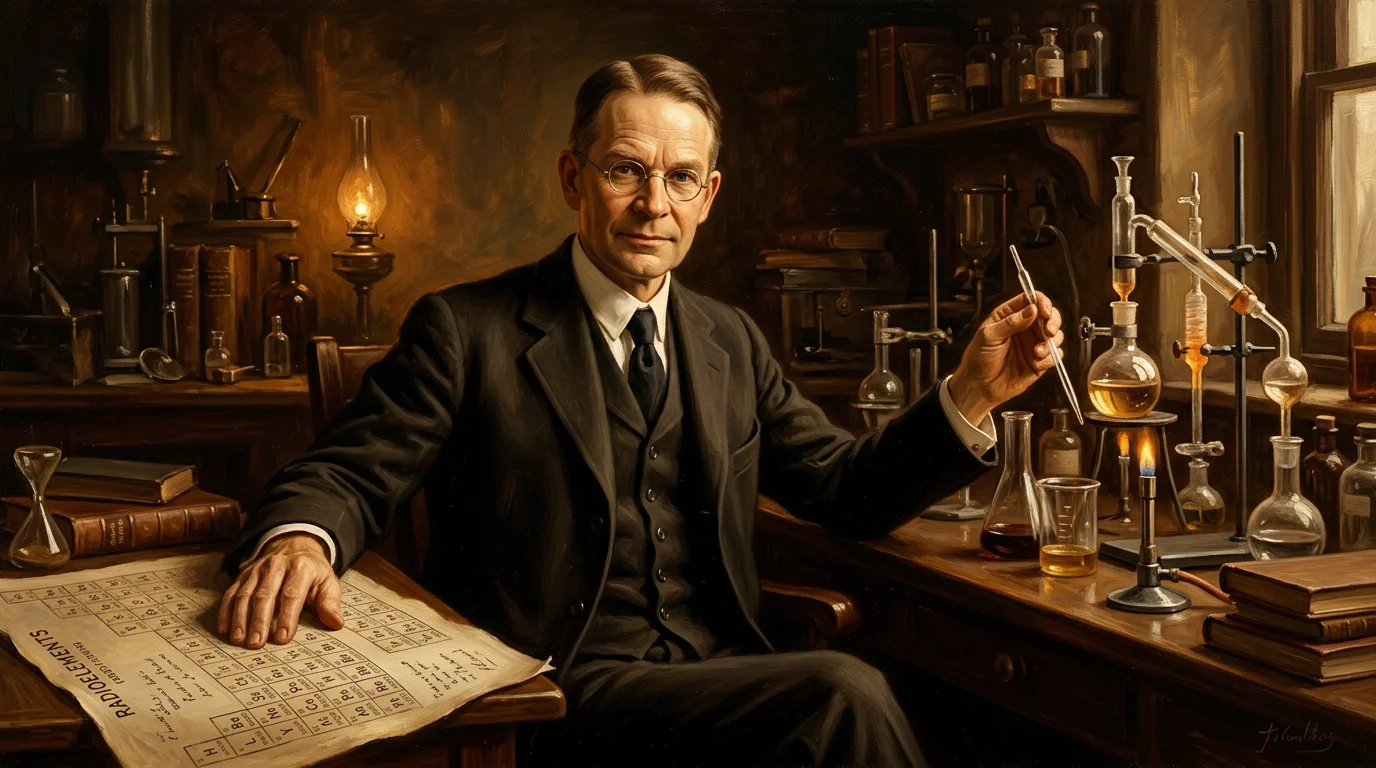
Frederick Soddy
1877–1956 · Radiochemist
Frederick Soddy worked with Ernest Rutherford on radioactive transmutation, developed the concept of isotopes, and received the 1921 Nobel Prize in Chemistry.
“The chemical elements are the building blocks of the universe, and radioactivity has shown us that they are not unchangeable.”
Why is this scientist famous?
Frederick Soddy helped establish that radioactive elements transform into other elements, developed the concept of isotopes, and received the 1921 Nobel Prize in Chemistry.
Soddy's isotope concept transformed chemistry: it showed that atoms of the same element could have different masses, fundamentally changing our understanding of the periodic table.
Frederick's story
Education and Early Career
Frederick Soddy was born on 2 September 1877 in Eastbourne, Sussex, England. He studied at the University College of Wales, Aberystwyth, before winning a scholarship to Merton College, Oxford. He graduated from Oxford in 1898 with first-class honours in chemistry.
His early training gave him a thorough grounding in chemistry that would prove essential when he turned to the new and puzzling phenomenon of radioactivity.
Rutherford and Atomic Transmutation
In 1900 Soddy went to McGill University in Montreal, where he worked with Ernest Rutherford. Together they investigated radioactivity and reached a startling conclusion: radioactive substances undergo spontaneous atomic change, meaning atoms of one element could transform into atoms of another element during radioactive decay.
This was revolutionary. The traditional chemical view had treated elements as essentially unchangeable. Their joint research helped establish the theory of radioactive disintegration and transmutation. The credit belongs to both Rutherford and Soddy — it was not Soddy's work alone.
Helium and Radioactive Decay
After McGill, Soddy worked with William Ramsay at University College London. Their experiments provided evidence that helium could be produced through radioactive decay. This was further proof that one type of atom could transform into another, reinforcing the transmutation theory.
As with the Rutherford work, this was a collaborative finding.
Glasgow and Isotopes
From 1904 to 1914 Soddy was Lecturer in Physical Chemistry and Radioactivity at the University of Glasgow. This became one of the most productive periods of his career. He studied radioactive decay series and the way radioactive changes moved elements through the periodic table.
In 1913 he developed the concept that atoms could belong to the same chemical element yet have different atomic masses. These different forms became known as isotopes. The word itself was suggested by Scottish doctor and writer Margaret Todd during a dinner conversation in Glasgow. It comes from Greek roots meaning approximately 'same place', because these different atomic forms occupied the same position in the periodic table. Soddy developed the scientific concept; Todd suggested the name.
The Displacement Law
Soddy also developed rules explaining how the position of an element in the periodic table changes during radioactive decay. Related work was independently developed by Kazimierz Fajans, and the result is often known as the Fajans–Soddy radioactive displacement law.
This was not Soddy's alone. Both scientists reached similar conclusions independently, and both deserve credit for clarifying how radioactive decay shifts elements around the periodic table.
Nobel Prize and Later Career
In 1914 Soddy became Professor of Chemistry at Aberdeen, and in 1919 he became Dr Lee's Professor of Chemistry at Oxford, where he remained until retiring in 1937. He was elected a Fellow of the Royal Society in 1910.
Soddy received the Nobel Prize in Chemistry for 1921, for his contributions to the chemistry of radioactive substances and his investigations into the origin and nature of isotopes. The 1921 prize was actually presented in 1922. Later in life his interests expanded into economics, society and monetary theory — ideas separate from the radiochemistry for which he won the Nobel Prize. He died on 22 September 1956 in Brighton, Sussex.
What did they discover?
Radioactive Disintegration Theory
Working with Ernest Rutherford at McGill University, Soddy helped establish that radioactive elements undergo spontaneous atomic change, transforming into other elements during decay.
The Isotope Concept
In 1913 Soddy developed the idea that atoms of the same chemical element could have different atomic masses. These forms became known as isotopes, a word suggested by Margaret Todd.
Fajans–Soddy Displacement Law
Soddy independently developed rules for how elements shift position in the periodic table during radioactive decay, alongside similar work by Kazimierz Fajans.
Nobel Prize in Chemistry, 1921
Soddy received the 1921 Nobel Prize in Chemistry for his contributions to the chemistry of radioactive substances and his investigations into isotopes. The prize was presented in 1922.
Amazing facts
As a young scientist at McGill, Soddy worked directly with Ernest Rutherford on the theory of radioactive transformation.
Their work helped overturn the old idea that chemical elements could never transform into other elements.
Soddy and William Ramsay demonstrated that helium could appear as a product of radioactive decay.
Soddy realised that atoms could have almost identical chemistry while having different atomic masses.
Scottish doctor Margaret Todd suggested the word 'isotope' during a dinner conversation in 1913.
'Isotope' means roughly 'same place', referring to the same position in the periodic table.
His Nobel Prize was officially the 1921 Chemistry Prize but was presented to him in 1922.
A mineral called soddyite and a crater on the Moon were later named after him.
Timeline
Born in Eastbourne, Sussex, England.
Graduated from Oxford with first-class honours in chemistry.
Went to McGill University in Montreal.
Worked with Rutherford on radioactive disintegration and transmutation.
Joined the University of Glasgow as Lecturer in Physical Chemistry and Radioactivity.
Elected Fellow of the Royal Society.
Developed the isotope concept; the term 'isotope' was suggested by Margaret Todd.
Became Professor of Chemistry at Aberdeen.
Became Dr Lee's Professor of Chemistry at Oxford.
Awarded the Nobel Prize in Chemistry.
Received the reserved 1921 Nobel Prize.
Retired from Oxford.
Died in Brighton, Sussex, England.
Awards & honours
Related Super Scientists
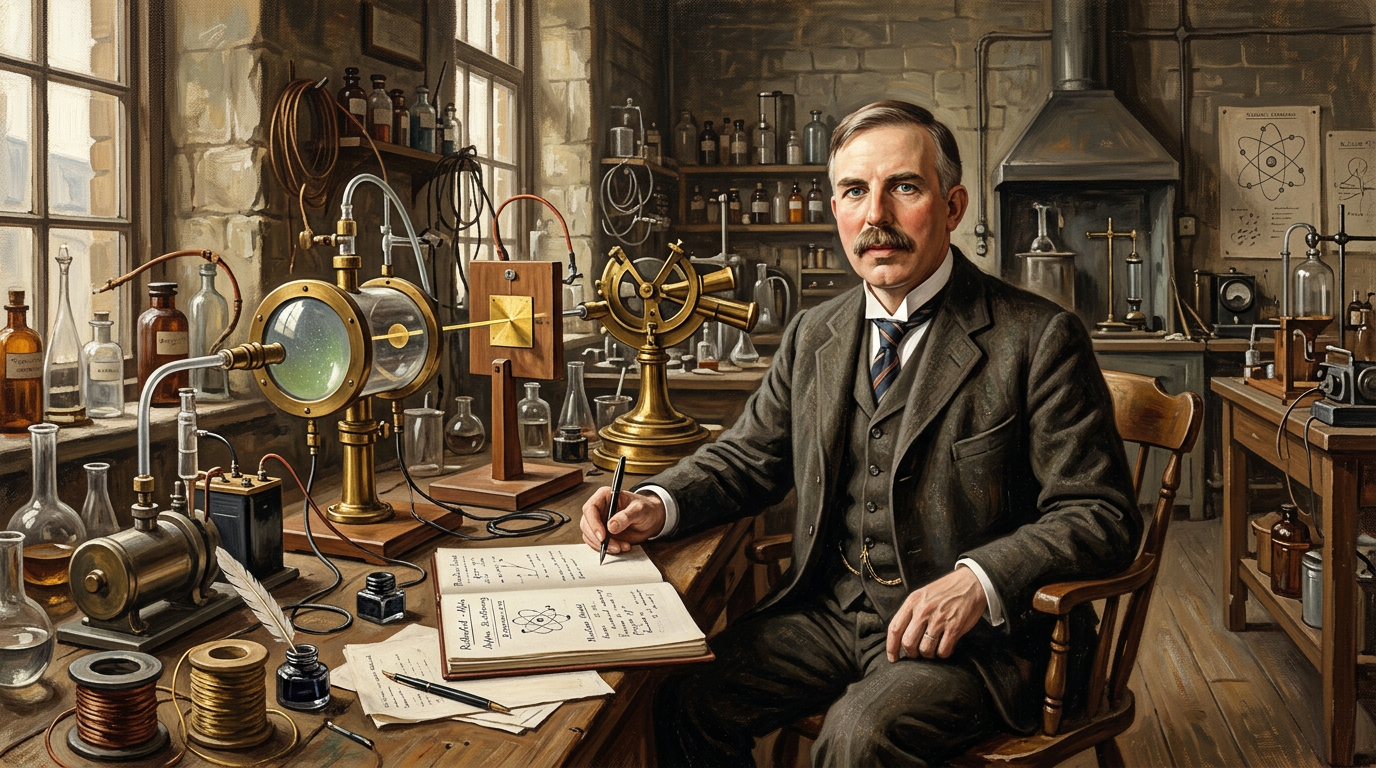
Ernest Rutherford
1871–1937 · Physicist
Discovering the nuclear structure of the atom and pioneering the field of nuclear physics.
Marie Curie
1867–1934 · Physicist & Chemist
Pioneering the study of radioactivity and discovering the elements polonium and radium with Pierre Curie.
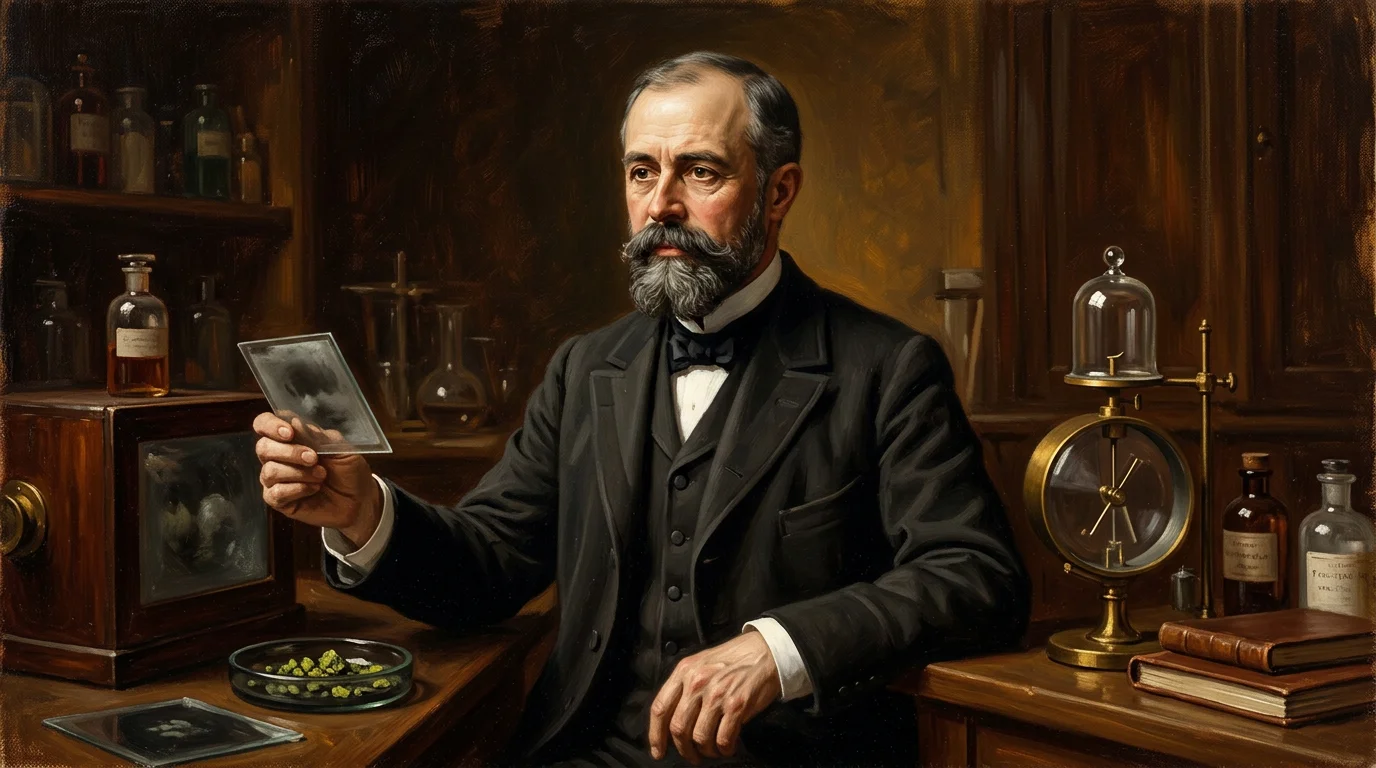
Henri Becquerel
1852–1908 · Experimental physicist
Henri Becquerel discovered that uranium emitted penetrating radiation spontaneously, providing the starting point for the scientific study of natural radioactivity.