_(2).jpg)
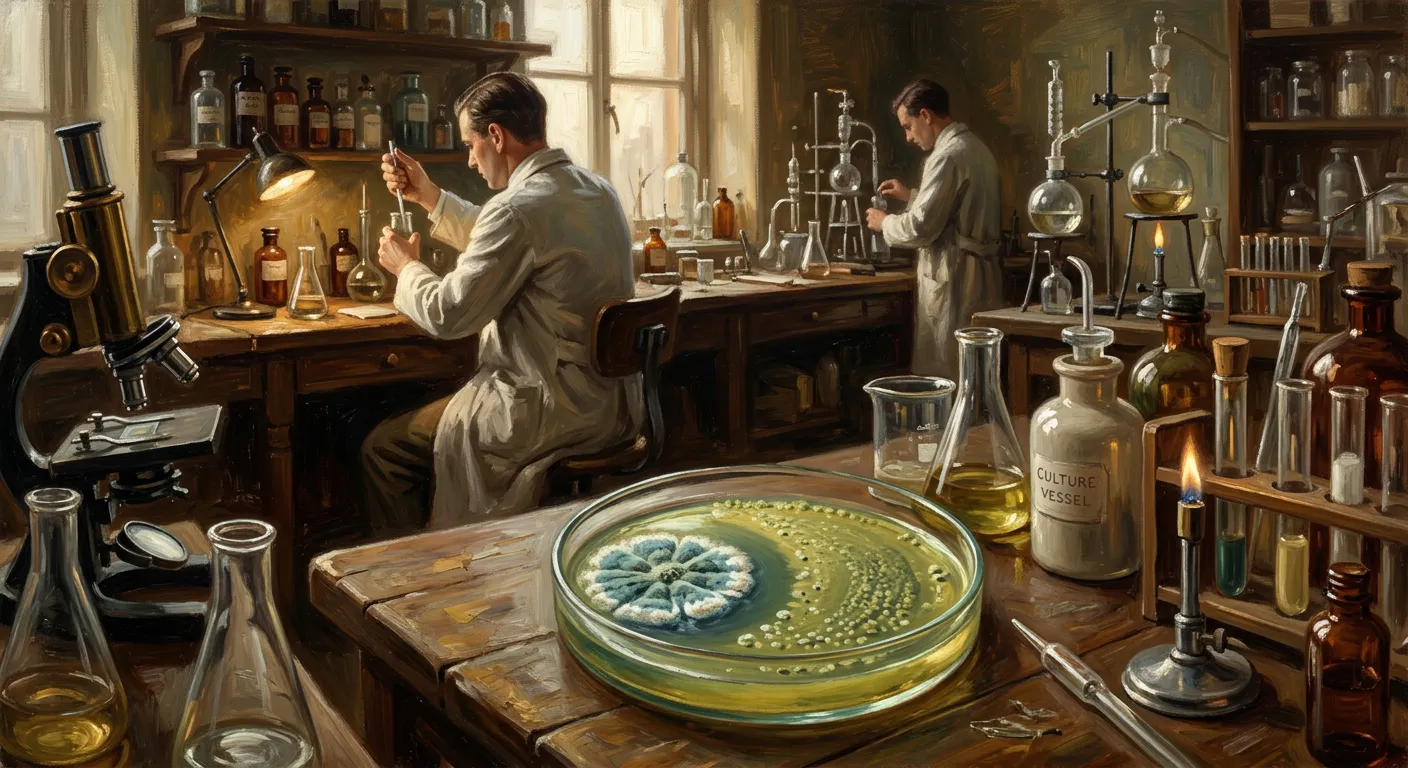
A mouldy culture plate began the story, but it took years of teamwork, experimentation and mass production to turn penicillin into a lifesaving medicine.
The Accident Everyone Remembers
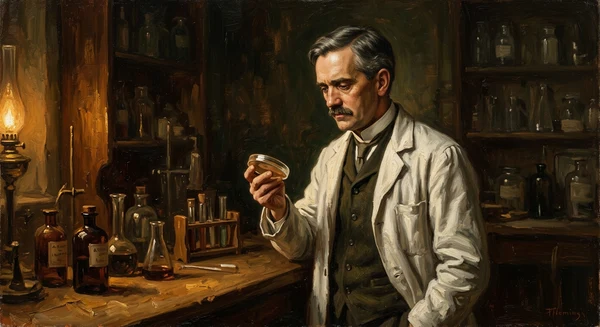
In 1928, Alexander Fleming was studying staphylococcal bacteria at St Mary's Hospital in London when he noticed something unusual on one of his culture plates. A mould had contaminated the dish, and around it was a clear area where the bacteria were not growing.
Fleming investigated the mould and found that it released a substance capable of stopping the growth of several kinds of bacteria. He called the substance penicillin, after the Penicillium mould, and published his findings in 1929.
It was an important discovery, but it was not yet a medicine.
Penicillin was unstable, difficult to purify and produced in tiny amounts. Fleming continued to use it in laboratory work and recognised that it might have medical value, but he did not develop it into a treatment that could be given through the body to fight serious infections.
For years, penicillin remained an intriguing scientific finding rather than a practical drug.
Oxford Takes Another Look
In the late 1930s, Howard Florey and Ernst Boris Chain at the University of Oxford began investigating antibacterial substances made by microorganisms. Penicillin became one of the substances they chose to study.
Their challenge was enormous. To test penicillin properly, they first needed to extract, concentrate and measure a substance that was easily destroyed.
Chain and the chemist Edward Abraham worked on methods for isolating and purifying penicillin. Norman Heatley, another member of Florey's team, made crucial practical advances. He developed ways to measure penicillin's antibacterial activity, worked out conditions that kept it stable, improved the extraction process and designed equipment for growing the mould and processing the liquid it produced.
This was not one scientist simply continuing Fleming's experiment. It was a multidisciplinary team solving a series of different problems in chemistry, biochemistry, pathology and production.
By 1940, they had made enough penicillin to test whether it could treat a serious bacterial infection inside a living animal.
The Mice That Changed the Story
On 25 May 1940, the Oxford team carried out a decisive experiment.
Eight mice were infected with a dangerous strain of bacteria. Four were also given penicillin. The untreated mice died, while the four that received penicillin were still alive when the experiment was assessed.
The result showed that penicillin could do much more than clear bacteria from a laboratory dish. It could work inside a living body.
Florey and Chain published the results in The Lancet in August 1940, but proving that penicillin worked in mice created a new problem: humans are much larger than mice.
The Oxford team needed far more penicillin.
Their laboratories became makeshift production spaces. Mould was grown in large numbers of vessels, including specially designed ceramic containers, while Heatley and others continually improved the extraction process. Penicillin was so scarce that the team even recovered it from patients' urine so that it could be purified and used again.
By early 1941, they had enough to begin treating people with serious bacterial infections.
A Treatment Works — Then Runs Out
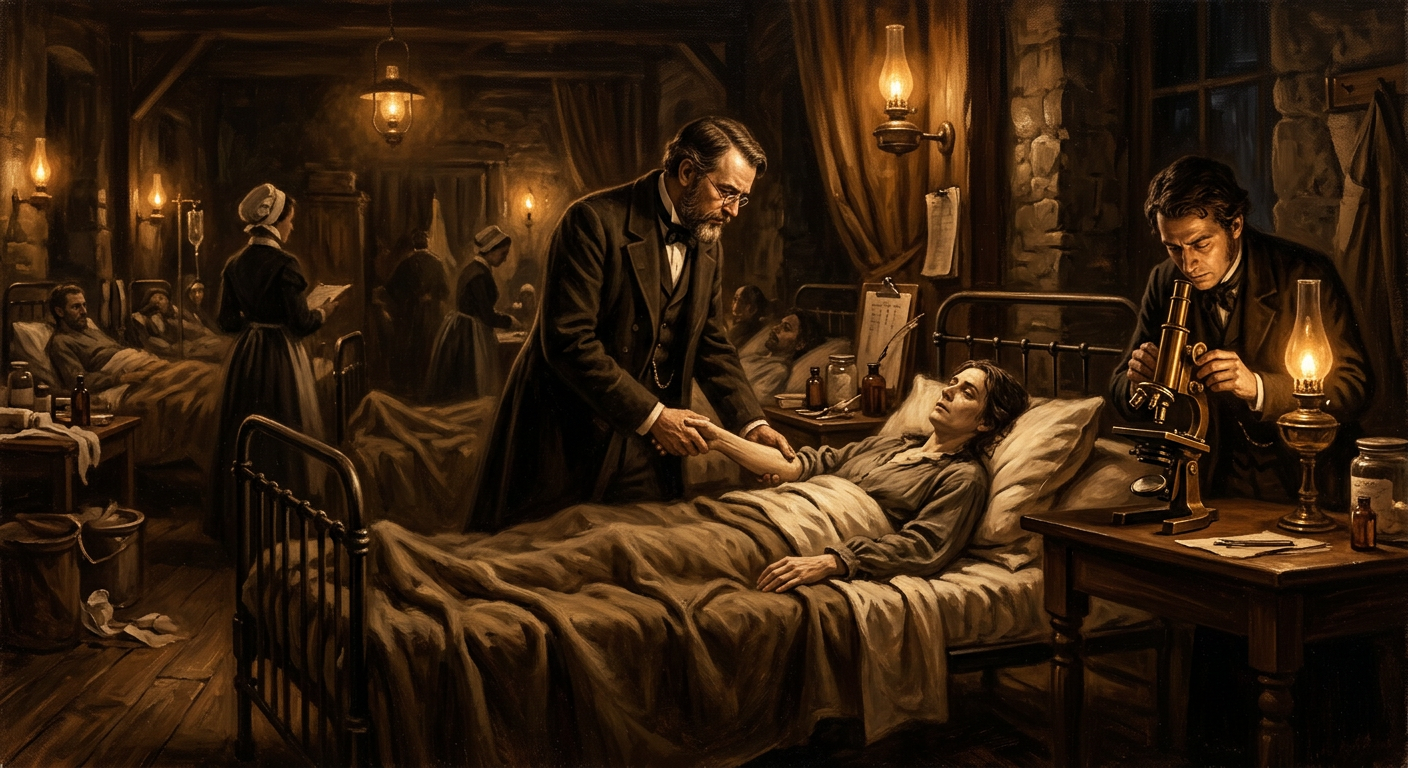
On 12 February 1941, a 43-year-old police officer named Albert Alexander became the first patient with a serious infection to be treated with penicillin at Oxford's Radcliffe Infirmary in an attempt to cure him.
His condition improved dramatically during the first days of treatment.
Then the supply ran out.
The team tried to recover and reuse penicillin from his urine, but there was still not enough to complete the treatment. Alexander's infection returned and he died.
The case was a painful demonstration of both penicillin's promise and its greatest weakness. The medicine appeared capable of fighting infections that doctors had struggled to control, but producing enough of it was extremely difficult.
The team learned from the failure, and further patients were treated with better results as supplies improved. Those successes made the value of the drug increasingly clear.
The problem was no longer whether penicillin could work.
It was how to make enough of it.
From Oxford Laboratory to Mass Production
Britain was already fighting the Second World War, and its industrial resources were under enormous pressure. In 1941, Florey and Heatley travelled to the United States seeking help with large-scale production.
At the U.S. Department of Agriculture's Northern Regional Research Laboratory in Peoria, Illinois, researchers combined the Oxford work with expertise in fermentation. They found that deep-tank methods, with air pumped through the growing culture, could produce much more penicillin than the shallow vessels used before. Corn-steep liquor, a by-product of corn processing, proved to be an especially useful growth medium.
Researchers also searched for more productive strains of Penicillium. A strain found on a mouldy cantaloupe bought in Peoria became particularly useful after further improvement.
Government laboratories, universities and pharmaceutical companies then worked together to scale up production. By the time Allied troops landed in Normandy in June 1944, penicillin was being produced in quantities large enough to treat wounded soldiers.
The famous accident in Fleming's laboratory had become an industrial medicine.
More Than One Discovery
Penicillin is often told as a simple story: Fleming noticed mould and discovered a miracle drug.
The real history is better.
Fleming made the crucial original discovery that Penicillium mould produced a powerful antibacterial substance. Florey organised and led the Oxford programme that turned that observation into a therapeutic project. Chain helped drive the biochemical investigation and purification work. Heatley solved vital practical problems in measuring, extracting and producing penicillin. Edward Abraham and many other researchers contributed important chemistry and laboratory work.
Then scientists, engineers, government laboratories and pharmaceutical companies in the United States helped transform small-scale production into mass manufacture.
In 1945, Alexander Fleming, Ernst Boris Chain and Howard Florey shared the Nobel Prize in Physiology or Medicine for the discovery of penicillin and its curative effect in infectious diseases. Heatley did not share the prize, but his contribution is now recognised as central to the Oxford team's success.
Penicillin helped open the antibiotic era and transformed the treatment of bacterial infections. It also left another lesson. Scientific breakthroughs are rarely a single moment. An observation can begin the story, but turning it into something that changes lives may take many people, many skills and years of work.