_(2).jpg)
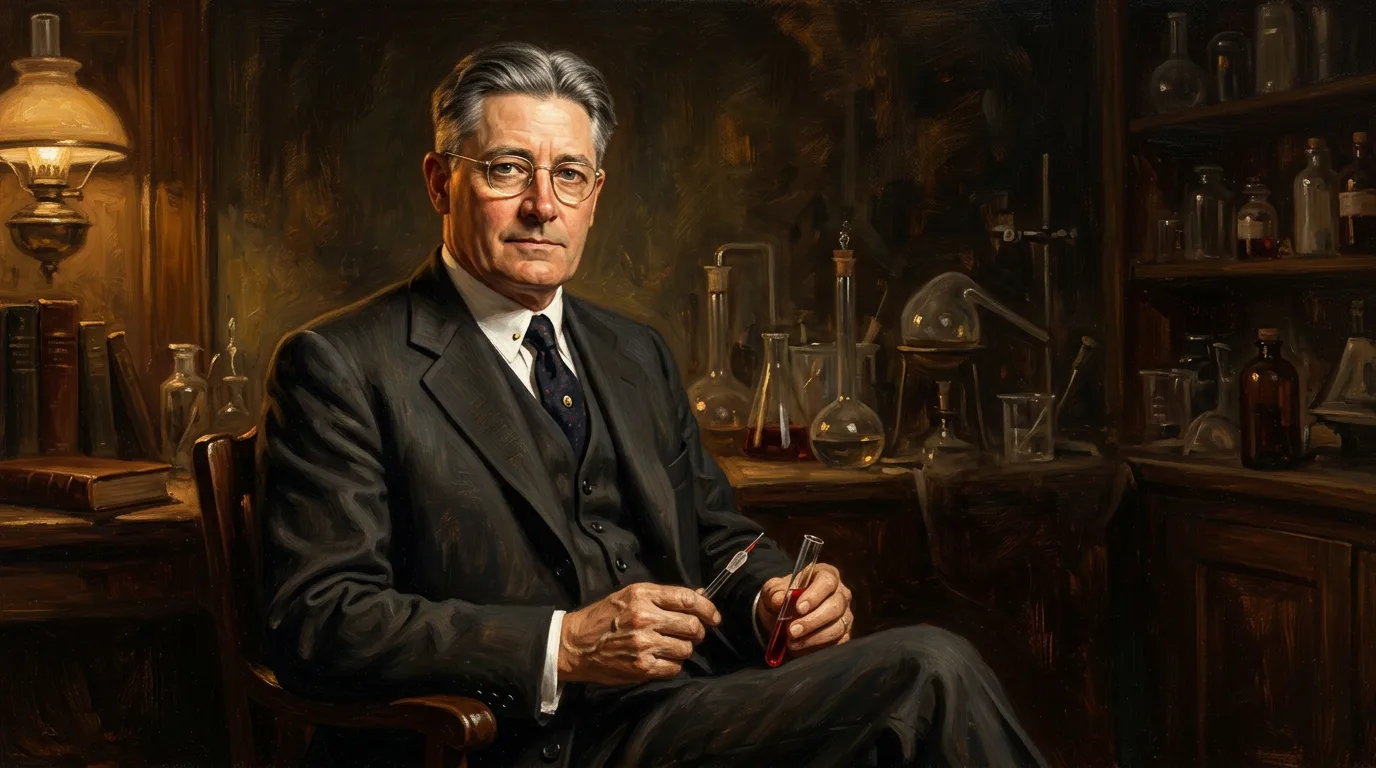
Howard Walter Florey
1898–1968 · Pathologist & Medical Scientist
An Australian pathologist who led the Oxford team that developed penicillin into a systemic antibacterial treatment, helping begin the antibiotic era.
Why is this scientist famous?
Leading the Oxford team that developed penicillin into a systemic antibacterial treatment, helping turn Alexander Fleming's earlier discovery into a medicine that could be tested clinically and produced on a large scale.
Florey's leadership of the Oxford penicillin team helped begin the antibiotic era, changing the treatment of bacterial infections worldwide. His career also influenced experimental pathology, the Royal Society, and biomedical research in Australia.
Howard's story
Early Life and Education
Howard Walter Florey was born in Malvern, Adelaide, South Australia, on 24 September 1898. He was educated at the Collegiate School of St Peter in Adelaide. At the University of Adelaide he graduated M.B., B.S. in 1921. Awarded a Rhodes Scholarship, he travelled to Oxford in 1921. At the University of Oxford he completed B.A. and B.Sc. degrees in 1924, studying physiology under the influence of Charles Sherrington. He then moved to the University of Cambridge, where he received a Ph.D. in 1927.
Pathology Careers
From 1927 Florey lectured in pathology at Cambridge. In 1931 he became Professor of Pathology at the University of Sheffield. In 1935 he became Professor of Pathology and head of the Sir William Dunn School of Pathology at Oxford, a position he held until 1962. He then became Provost of The Queen's College, Oxford, in 1962. He served as President of the Royal Society from 1960 to 1965 and played an important role in the development of the Australian National University, becoming its Chancellor in 1965.
The Penicillin Project
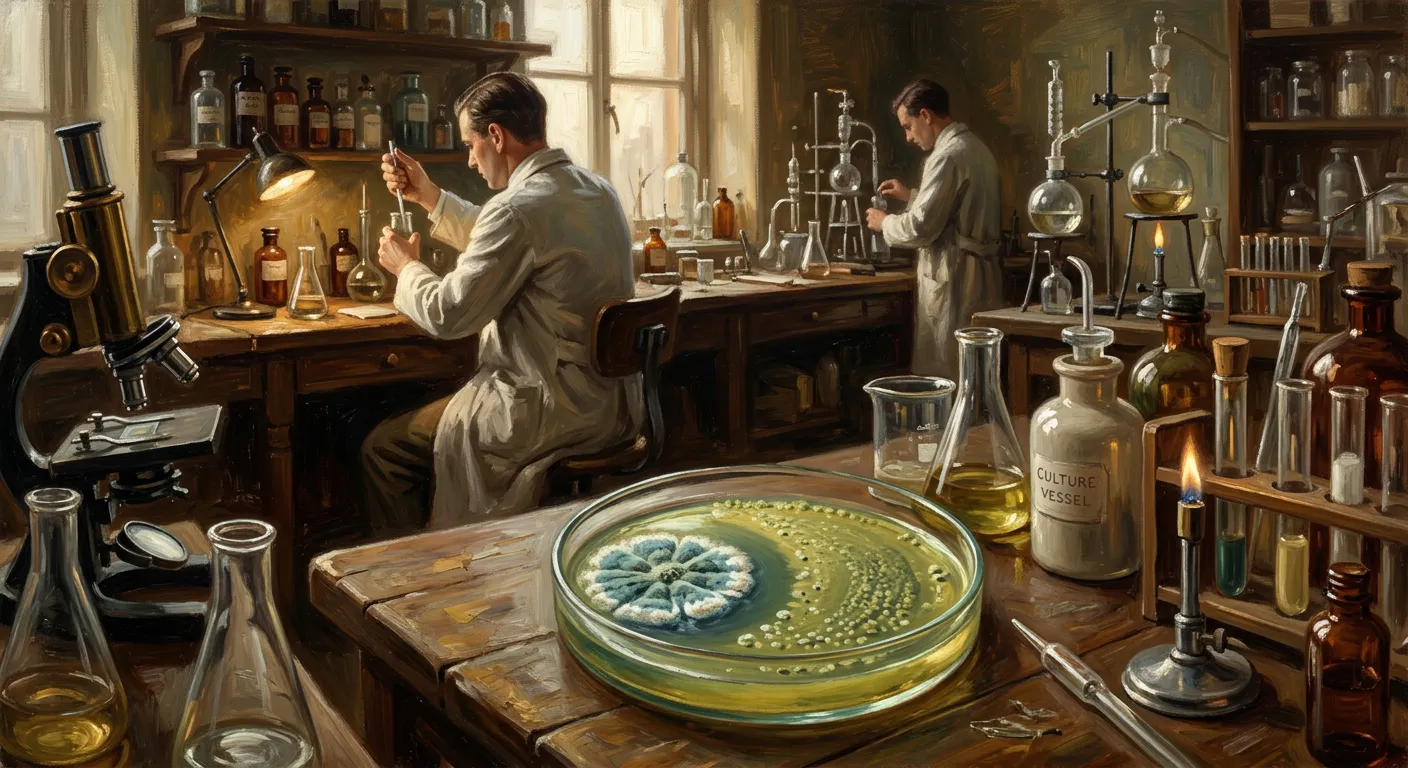
Alexander Fleming had discovered the antibacterial effect of Penicillium mould in 1928, but penicillin had not yet been developed into a practical systemic medicine. Florey had a long-standing interest in naturally occurring antibacterial substances, including lysozyme. He recruited biochemist Ernst Boris Chain to Oxford. In 1938-39, Florey and Chain began a systematic investigation of antibacterial substances produced by microorganisms and selected penicillin for detailed study. Florey led an interdisciplinary Oxford team that included Ernst Chain, Norman Heatley, Edward Abraham and other scientists and technicians. Chain and colleagues worked on biochemical purification and concentration; Heatley made crucial practical advances in assay, extraction, stability and production methods.
From Mice to Patients
In 1940, experiments in infected mice showed a striking protective effect from penicillin and encouraged the team to pursue clinical use. The Oxford team produced enough penicillin for clinical trials in 1941. Early patient trials showed remarkable antibacterial effects, but wartime Britain could not manufacture enough penicillin for widespread use. Florey and Heatley travelled to the United States in 1941 to seek help with large-scale production. The eventual mass production of penicillin transformed the treatment of bacterial infections.
Nobel Prize and Later Life
Florey shared the 1945 Nobel Prize in Physiology or Medicine with Alexander Fleming and Ernst Boris Chain. His first wife, Mary Ethel Florey, was a physician who participated in the clinical trials of penicillin and later wrote extensively on clinical antibiotic use. Florey was knighted in 1944, became Baron Florey of Adelaide and Marston in 1965, and was appointed to the Order of Merit in the same year. He died in Oxford on 21 February 1968.
What did they discover?
Developing Penicillin as a Systemic Treatment
Florey led the Oxford team that transformed penicillin from a laboratory observation into a systemic antibacterial medicine.
Clinical Trials of Penicillin
The Oxford team produced enough penicillin for the first clinical trials in 1941, demonstrating its remarkable antibacterial effects in patients.
Large-Scale Production in the United States
Florey and Heatley travelled to the United States in 1941 to seek help with mass production, which eventually made penicillin widely available.
Amazing facts
Florey was born in Australia but spent most of his scientific career in Britain.
A Rhodes Scholarship brought him from Adelaide to Oxford in 1921.
His scientific interests included naturally occurring antibacterial substances before the penicillin project began.
The wartime Oxford team used improvised equipment and intensive laboratory work to make enough penicillin for early testing.
Penicillin's promise was first demonstrated dramatically in infected mice before the human clinical trials.
Florey and Norman Heatley travelled to the United States in 1941 to help solve the problem of producing penicillin on a large scale.
Florey's first wife, Mary Ethel Florey, was a doctor who participated in the clinical trials and later wrote about antibiotic treatment.
Florey became President of the Royal Society from 1960 to 1965.
He helped shape the development of the Australian National University and later became its Chancellor.
He was knighted, became a baron and was appointed to the Order of Merit.
Timeline
Born in Malvern, Adelaide, on 24 September
Graduated M.B., B.S. from the University of Adelaide and travelled to Oxford as a Rhodes Scholar
Completed B.A. and B.Sc. degrees at Oxford
Received Ph.D. from Cambridge and lectured in pathology there
Became Professor of Pathology at Sheffield
Became Professor of Pathology at Oxford and head of the Sir William Dunn School of Pathology
Florey and Chain began systematic research into naturally occurring antibacterial substances, including penicillin
Oxford team's mouse experiments demonstrated penicillin's strong therapeutic promise
Clinical trials began; Florey and Heatley travelled to the United States seeking large-scale production support
Knighted
Shared the Nobel Prize in Physiology or Medicine with Alexander Fleming and Ernst Boris Chain
Became President of the Royal Society
Became Provost of The Queen's College, Oxford
Became Baron Florey, was appointed to the Order of Merit and became Chancellor of the Australian National University
Died in Oxford on 21 February