Modern computers were not invented in one moment. Their story runs from unfinished Victorian machines, through abstract mathematics and wartime electronics, to the moment a computer finally stored its own program in memory.
A Computer Made of Gears
Long before electronic computers existed, calculation could be slow, repetitive and surprisingly unreliable. Mathematical tables used for navigation, astronomy and engineering were often produced by people working through long chains of arithmetic by hand. Errors could creep in at almost any stage.
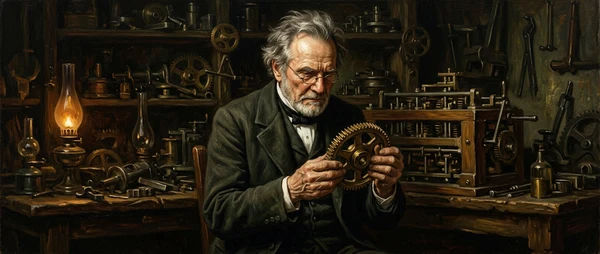
Charles Babbage believed machinery could do some of that work more reliably.
In the 1820s he began designing the Difference Engine, a mechanical machine intended to calculate and print mathematical tables automatically. A complete version was never built during his lifetime, although a working section demonstrated that the underlying engineering could work.
Then Babbage imagined something far more ambitious.
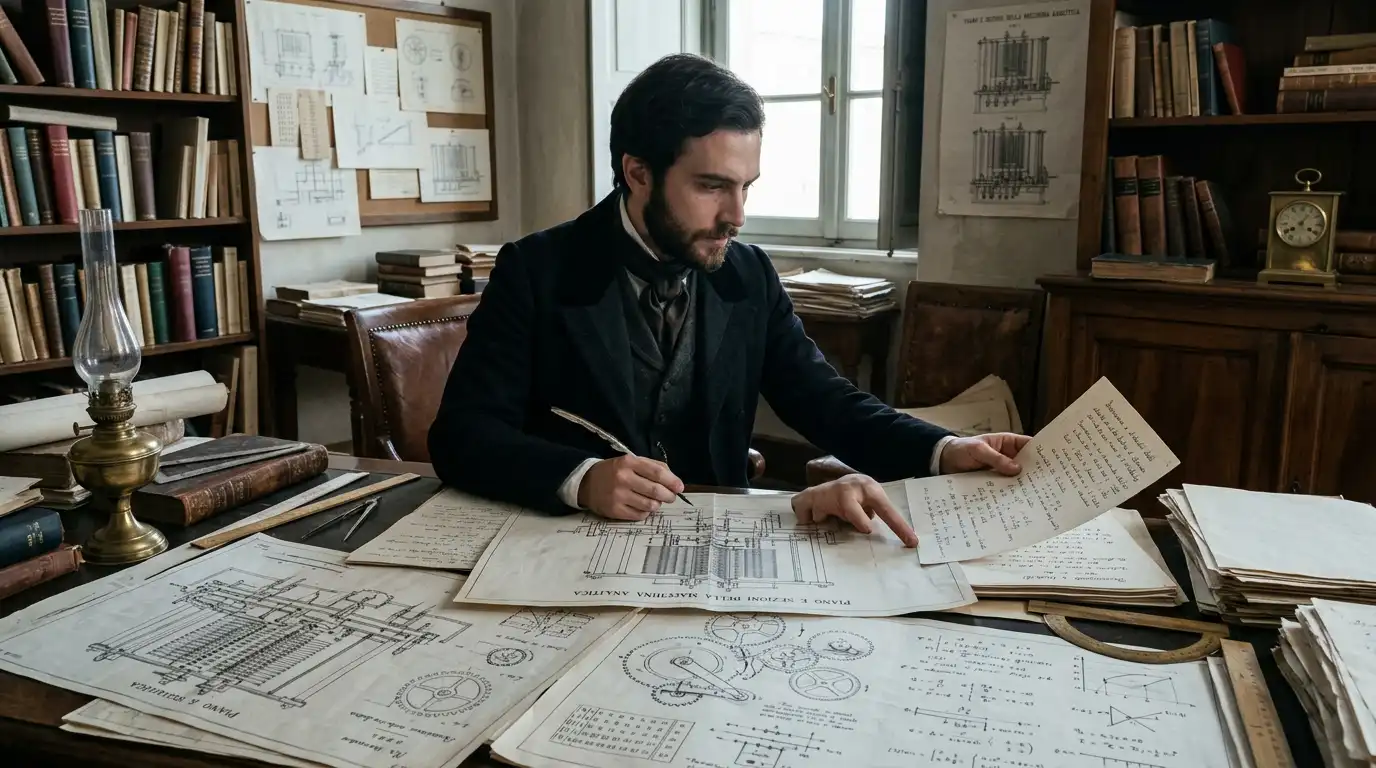
In 1834 he began developing plans for the Analytical Engine. Unlike the Difference Engine, which was designed for a particular kind of calculation, the Analytical Engine was conceived as a general-purpose programmable machine.
Its design contained ideas that sound remarkably modern. Numbers and intermediate results would be held in a memory that Babbage called the Store. Calculations would take place in a separate section called the Mill. Instructions and data could be supplied using punched cards inspired by those used to control Jacquard weaving looms.
The machine could even alter the sequence of operations depending on previous results and repeat groups of instructions.
Babbage never completed the Analytical Engine.
But on paper, many of the logical pieces of a modern computer were already beginning to appear.
Ada Lovelace Sees Something More
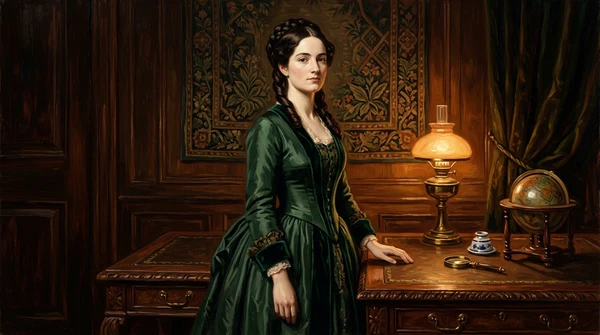
Ada Lovelace understood that Babbage's machine could represent more than a faster way to do arithmetic.
In 1843, she translated an article about the Analytical Engine written by the Italian engineer Luigi Menabrea. Her translation was accompanied by a much longer series of notes explaining the machine and exploring what it might eventually be capable of doing.
One of the notes described a sequence of operations for calculating Bernoulli numbers. It is often described as the first published computer program, although the history is more complicated than the simple claim that Lovelace invented programming. Babbage had already written examples of procedures for his machine, and the two worked closely together.
Lovelace's larger insight may have been even more important.
She recognised that numbers inside a computing machine could represent things other than quantities. If music, symbols or other information could be expressed according to suitable rules, she reasoned, a machine such as the Analytical Engine might manipulate them too.
That was a remarkable leap.
A calculating machine did not necessarily have to remain only a calculator.
The idea of general-purpose computation had begun to emerge decades before technology could build a machine capable of carrying it out.
Turing Defines the Computer on Paper
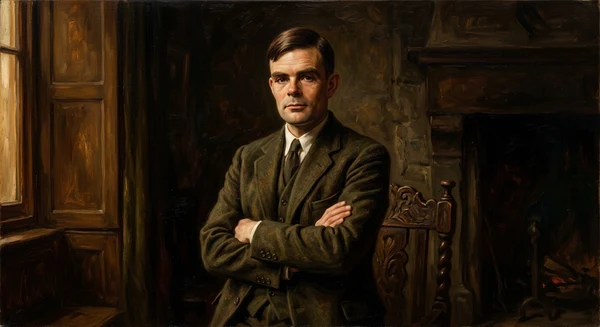
More than 90 years later, Alan Turing approached computation from a completely different direction.
Turing was not initially trying to design a physical computer. He was working on a problem in mathematical logic: whether there could be a definite mechanical procedure for deciding whether mathematical statements were provable.
In his famous 1936 paper, Turing described an imaginary machine that could read and write symbols on a tape while following a precise set of instructions.
Different machines could perform different procedures.
Then Turing introduced a much more powerful idea: a universal machine.
Instead of building a different machine for every task, a universal machine could read a description of another machine's instructions and imitate what that machine would do.
It was an abstract mathematical idea, not a drawing for a laptop or even an electronic computer.
But the principle was fundamental.
The same machine could perform completely different tasks simply by being given different instructions.
That distinction between the physical machine and the program running on it became one of the foundations of modern computing.
War Pushes Computing into Electronics
For Babbage, the problem had been mechanical engineering. By the 1940s, electronics offered an entirely new possibility.
The Second World War created an urgent need to process enormous amounts of information quickly. At Britain's Bletchley Park, codebreakers were trying to read encrypted German communications produced by the Lorenz cipher system.
Engineer Tommy Flowers and his team developed Colossus to help with the task.
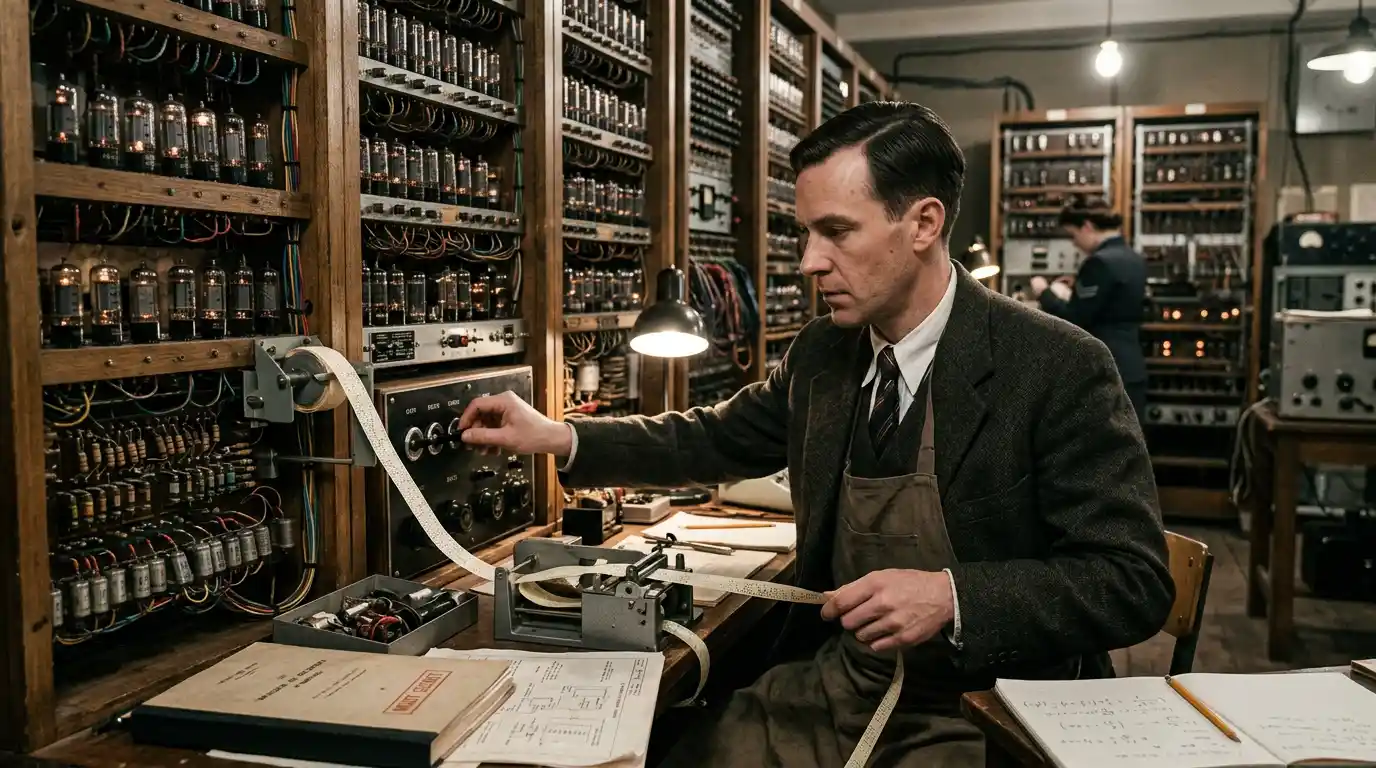
The first Colossus was operating at Bletchley Park by early 1944. It used large numbers of electronic valves to perform logical operations at speeds that would have been impossible with purely mechanical equipment.
Colossus is widely recognised as the first digital, programmable electronic computer, but those words need some care.
It was programmable only within the specialised kind of work for which it had been designed. It was not a general-purpose stored-program computer like the machines that followed.
Other wartime projects were also pushing electronic calculation forward. In the United States, the Electronic Numerical Integrator and Computer (ENIAC) demonstrated that a large electronic machine could perform general numerical calculations at extraordinary speed, although changing its program originally involved manually resetting switches and reconnecting cables.
The pieces of modern computing were coming together.
Electronic speed was possible.
Programmability was possible.
What computers still lacked was an easy way to keep both their data and their changing instructions in electronic memory.
The Program Moves Inside the Machine
That next step happened in Manchester.
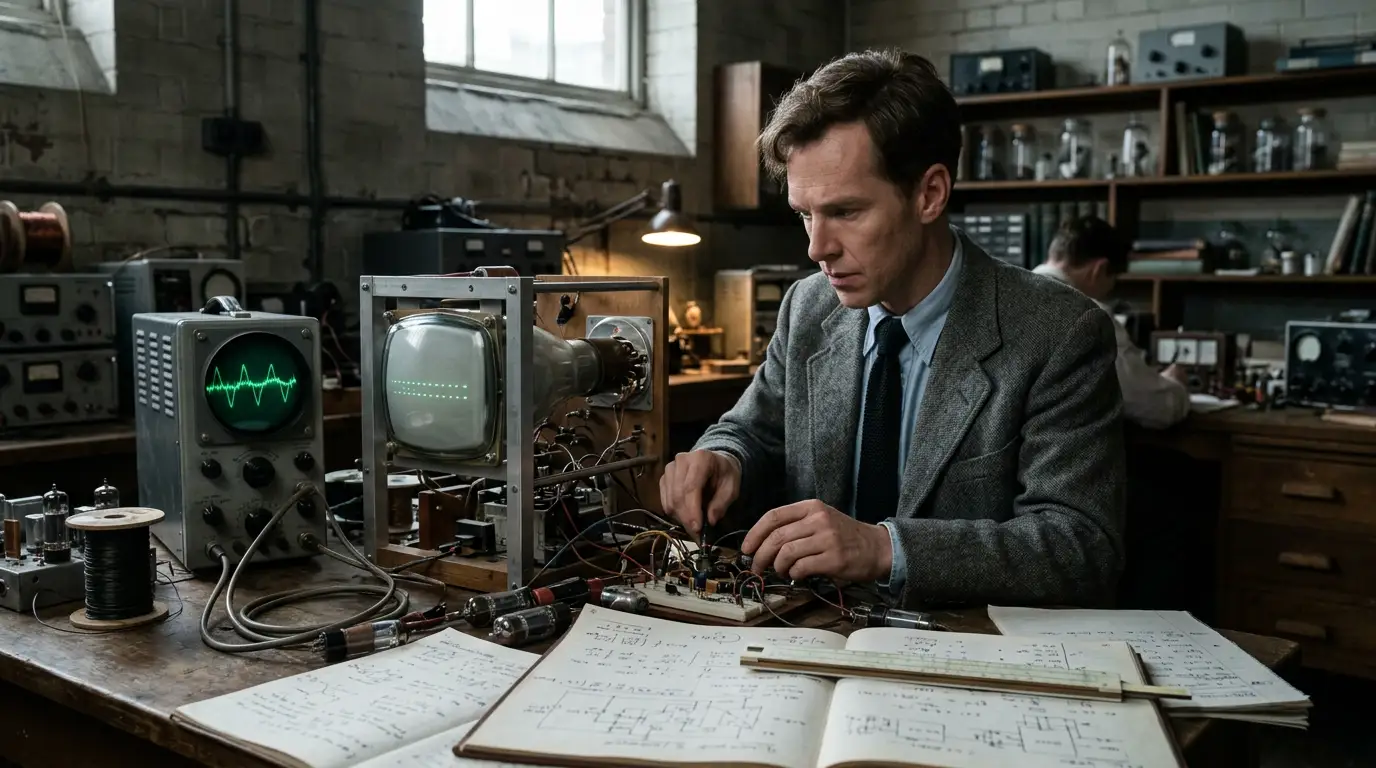
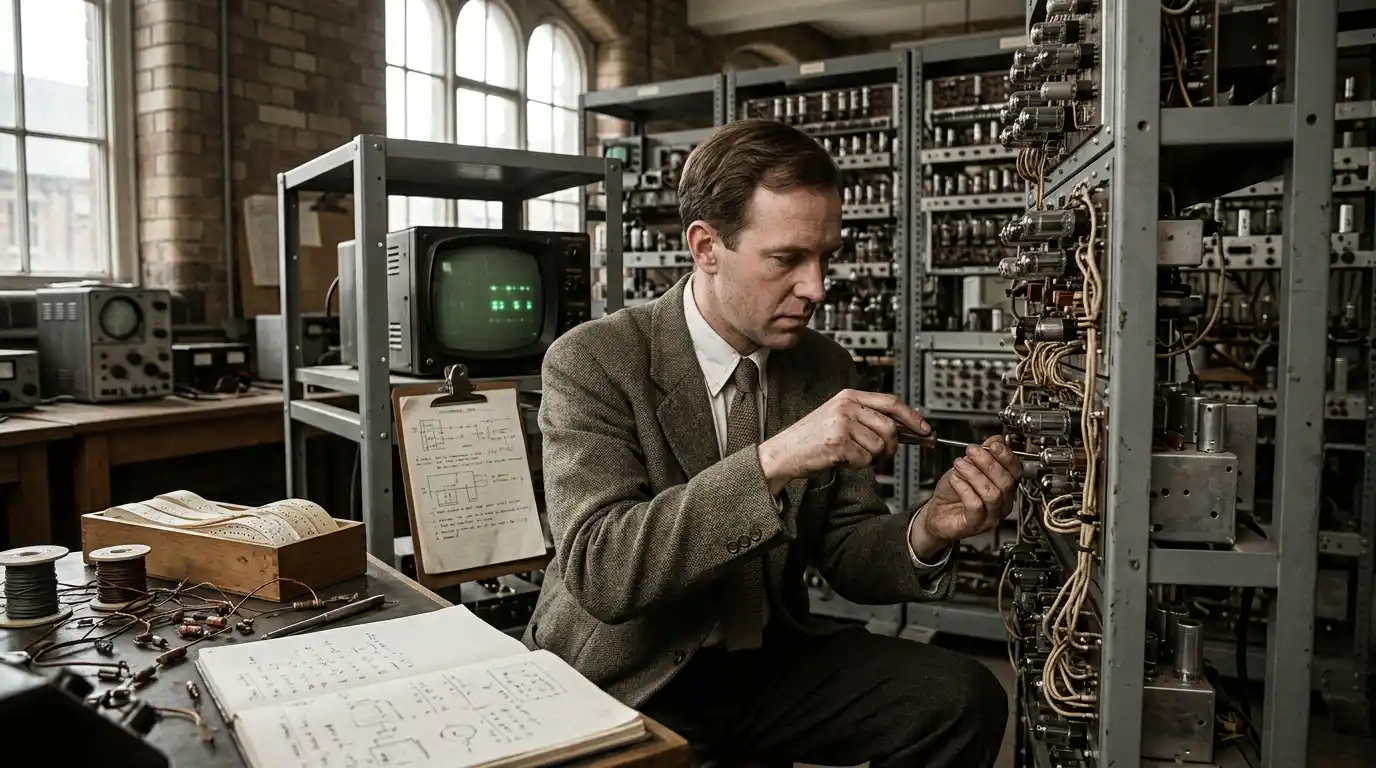
After the war, engineers Frederic Williams and Tom Kilburn were developing a way to store digital information electronically using a cathode-ray tube. With Geoff Tootill, they built a small experimental computer specifically to test whether the memory system would work.
It became known as the Manchester Small-Scale Experimental Machine, or simply the Baby.
On 21 June 1948, the Baby successfully ran a program stored electronically in its own memory.
That sounds unremarkable today because it is how we expect computers to work.
At the time, it was a breakthrough.
Earlier electronic machines could perform calculations extremely quickly, but changing what they did could require switches to be altered, cables to be reconnected or instructions to be supplied separately. A stored-program computer could hold its instructions in the same kind of memory used for data.
Change the instructions and the same physical machine could do something different.
The Baby itself was tiny in capability and was never intended to become a useful commercial computer. Its job was to prove that electronic stored-program computing worked.
It did.
Manchester's team rapidly developed the idea into larger machines. The stored-program principle became fundamental to almost every general-purpose computer that followed.
So Who Invented the Computer?
There is no single satisfactory answer.
If the question is about the first design for a general-purpose programmable machine, Charles Babbage has a powerful claim.
If it is about recognising that such a machine could manipulate symbols rather than merely calculate numbers, Ada Lovelace made an extraordinary early contribution.
If it is about defining universal computation mathematically, Alan Turing transformed the idea.
If the question concerns programmable electronic hardware, Colossus belongs in the story.
If it concerns the first electronic digital computer to run a program stored in its own memory, the Manchester Baby marks a decisive moment.
These achievements solved different problems.
That is why arguments over the "first computer" can become misleading. Historians can reasonably identify several firsts depending on whether they are talking about mechanical machines, programmability, electronics, general-purpose operation or stored programs.
Modern computing emerged when those different ideas finally converged.
A machine could process information electronically at enormous speed. Its instructions could be stored in memory. The same hardware could perform many different tasks simply by running different programs.
Babbage imagined parts of that future in brass and gears.
Lovelace saw what a programmable machine might become.
Turing described the underlying logic.
Wartime engineers showed that electronic computation could work.
And in Manchester in 1948, a tiny experimental machine demonstrated one of the last essential ideas needed for the modern computer.
The computer was not born in a single flash of invention.
It was assembled from ideas developed across more than a century.