_(2).jpg)
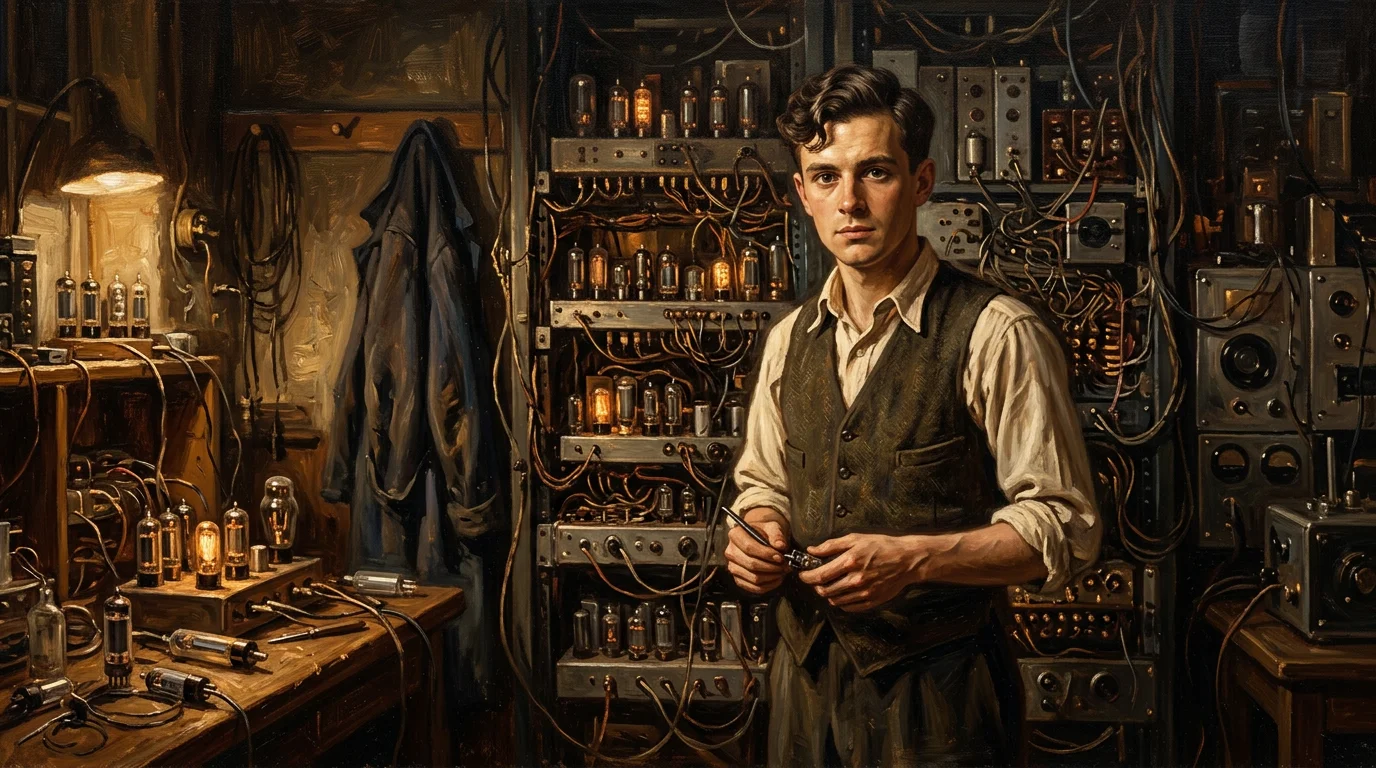
Geoff Tootill
1922–2017 · Computer Engineer
Geoff Tootill was a British computer engineer who was one of the three core members of the team that built the Manchester Baby in 1948. He worked closely with Tom Kilburn on the CRT memory and the Baby's design, and kept an important laboratory notebook documenting its development.
“The best way to predict the future is to invent it.”
Why is this scientist famous?
Being one of the three core engineers who built the Manchester Baby, the first electronic stored-program digital computer to run a program from electronic read-write memory.
Geoff's story
A Boy Who Built Radios
Geoffrey Colin Tootill — known as Geoff — was born on 4 March 1922 in Chadderton, Lancashire, England. He grew up in Birmingham, where as a boy he built radio sets and experimented with electronics.
Tootill won a scholarship to Christ's College, Cambridge, and began studying mathematics in 1940. During his studies he realised that engineering suited him better than pure mathematics. After graduating during the war, he entered government scientific work — a path that would lead him into the heart of early computing.
Wartime Radar at TRE
Tootill initially worked in operational research connected with Fighter and Bomber Commands. In 1943 he transferred to the Telecommunications Research Establishment (TRE) at Malvern, where he worked on airborne radar.
Frederic Williams and Tom Kilburn were already at TRE. The three men who would later build the Manchester Baby were working in the same wartime research establishment, though they did not yet know what they would achieve together.
The Manchester Team
After the war, Williams moved to the University of Manchester. Tootill joined the Manchester work in 1947 and worked closely with Tom Kilburn on the Williams-Kilburn CRT memory and on designing and building the Small-Scale Experimental Machine — the Baby.
The core Baby team was three people: Frederic Williams headed the wider research project, Tom Kilburn led the detailed computer design and wrote the first program, and Geoff Tootill made substantial engineering contributions and wrote another early program. Tootill was not merely an assistant — he was a core member of the development team.
On 21 June 1948 the Baby ran Kilburn's first program successfully. Tootill also kept an important laboratory notebook documenting the machine's development, which became a vital historical record.
The Human Side of the Lab
The Science Museum preserves Tootill's laboratory coat and a small homemade capacitor he used while working on the Baby. The lab coat has a burn hole — a mark of the fast-moving, hands-on practical electronics work that took place in the Manchester laboratory.
A small capacitor he had made for testing the Baby was found years later in one of his old lab coats. These small, tangible remnants bring the reality of early computing to life: three engineers working with valves, wires and cathode-ray tubes in a university laboratory, building something the world had never seen before.
From Baby to Space and Standards
Soon after the Baby succeeded, Tootill spent several months in 1949 at Ferranti helping transfer Manchester's ideas toward a full-scale commercial computer. His later career was unusually varied.
He taught computing, worked at the Royal Aircraft Establishment, contributed to information-processing terminology and standards, and became involved in European space and computing projects. From 1963 to 1969 he worked on the control centre and ground-station network for the European Space Research Organisation.
Tootill retired in 1982 but remained interested in computing. In 1998 he and Tom Kilburn took part in the Baby's 50th-anniversary celebrations using a working replica. He died on 26 October 2017, aged 95.
What did they discover?
The Manchester Baby
Tootill was one of the three core engineers who built the Manchester Baby. He worked closely with Kilburn on the CRT memory and the Baby's design, and wrote an early program for the machine.
Laboratory Notebook
Tootill kept an important laboratory notebook documenting the Baby's development, which became a vital historical record of the project.
Amazing facts
He built radios and experimented with electronics when young.
He began university as a mathematician but realised he preferred engineering.
His original lab coat from the Baby project survives in the Science Museum Group collection.
A small capacitor he made for testing the Baby was found years later in one of his old lab coats.
His laboratory notebook became an important historical record of the Baby.
He later worked on European space-programme ground-control systems.
In 1998 he and Tom Kilburn helped celebrate the Baby's 50th anniversary using a working replica.
Timeline
Born in Chadderton, Lancashire, England.
Entered Christ's College, Cambridge, to study mathematics.
Graduated during the war.
Joined TRE at Malvern; worked on airborne radar.
Joined the Manchester computer-memory project.
Manchester Baby ran its first stored program.
Worked briefly at Ferranti, helping transfer Manchester's computer design toward a full-scale commercial machine.
Moved to the Military College of Science.
Began work on European Space Research Organisation control systems.
Ended work on ESRO control systems.
Retired.
Took part in the Baby's 50th-anniversary celebrations.
Died aged 95.
Related Super Scientists
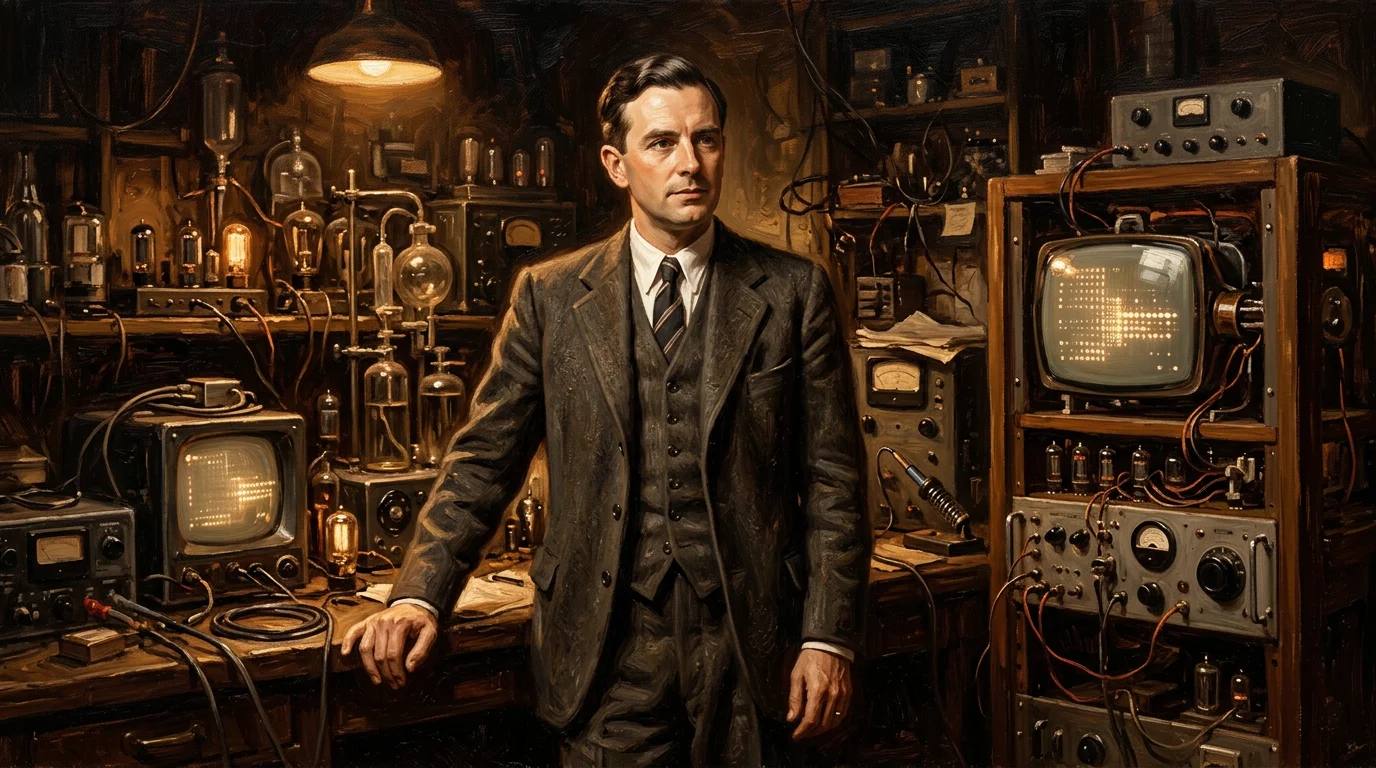
Frederic C. Williams
1911–1977 · Electrical Engineer
Developing, with Tom Kilburn, an early practical cathode-ray-tube electronic computer memory and leading the Manchester team in which the Manchester Baby was created.
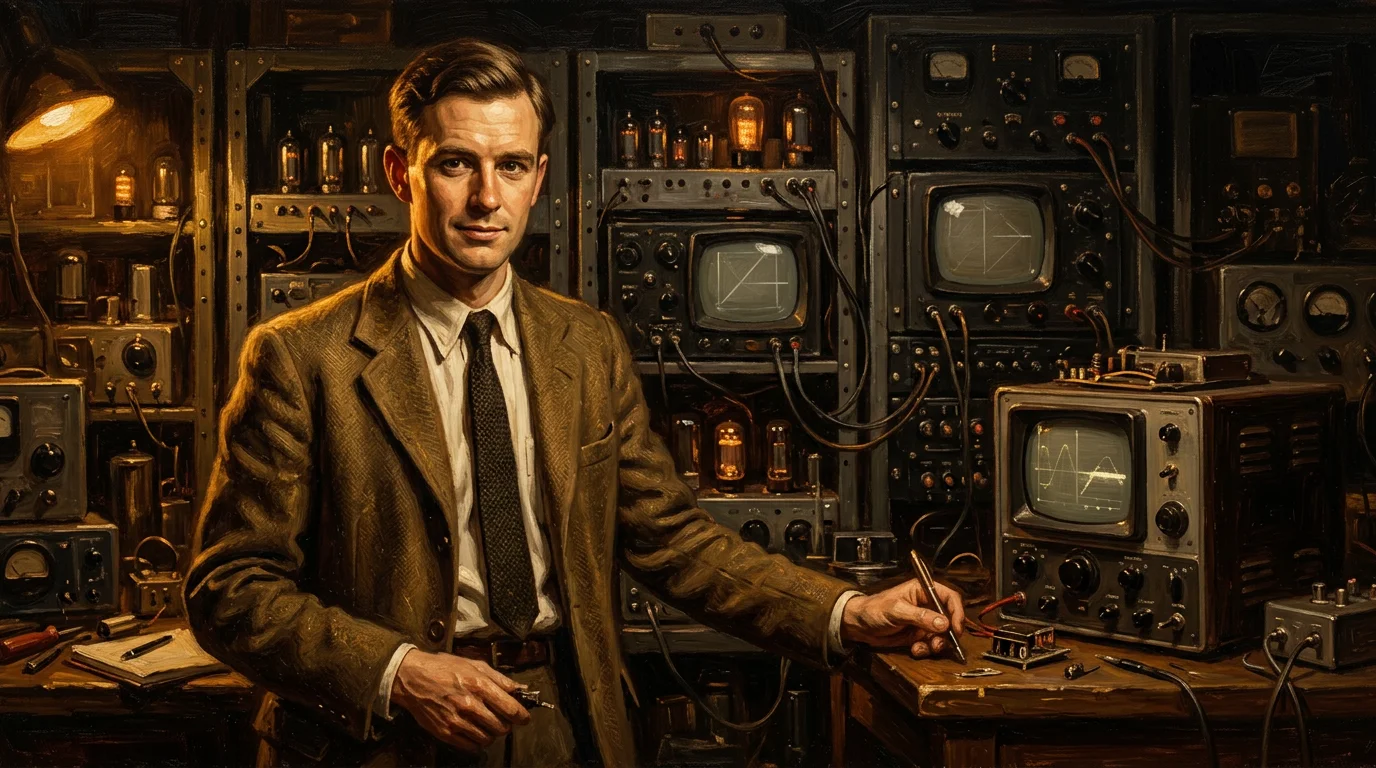
Tom Kilburn
1921–2001 · Computer Engineer
Co-developing the Williams-Kilburn electronic memory, leading the design and construction of the Manchester Baby, writing its first program, and later leading major Manchester computer projects including Atlas.
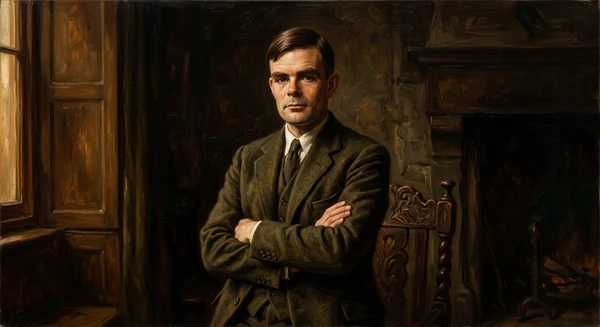
Alan Turing
1912–1954 · Mathematician & Computer Scientist
Making foundational contributions to theoretical computer science and artificial intelligence, and playing a major role in Allied codebreaking during the Second World War.