_(2).jpg)
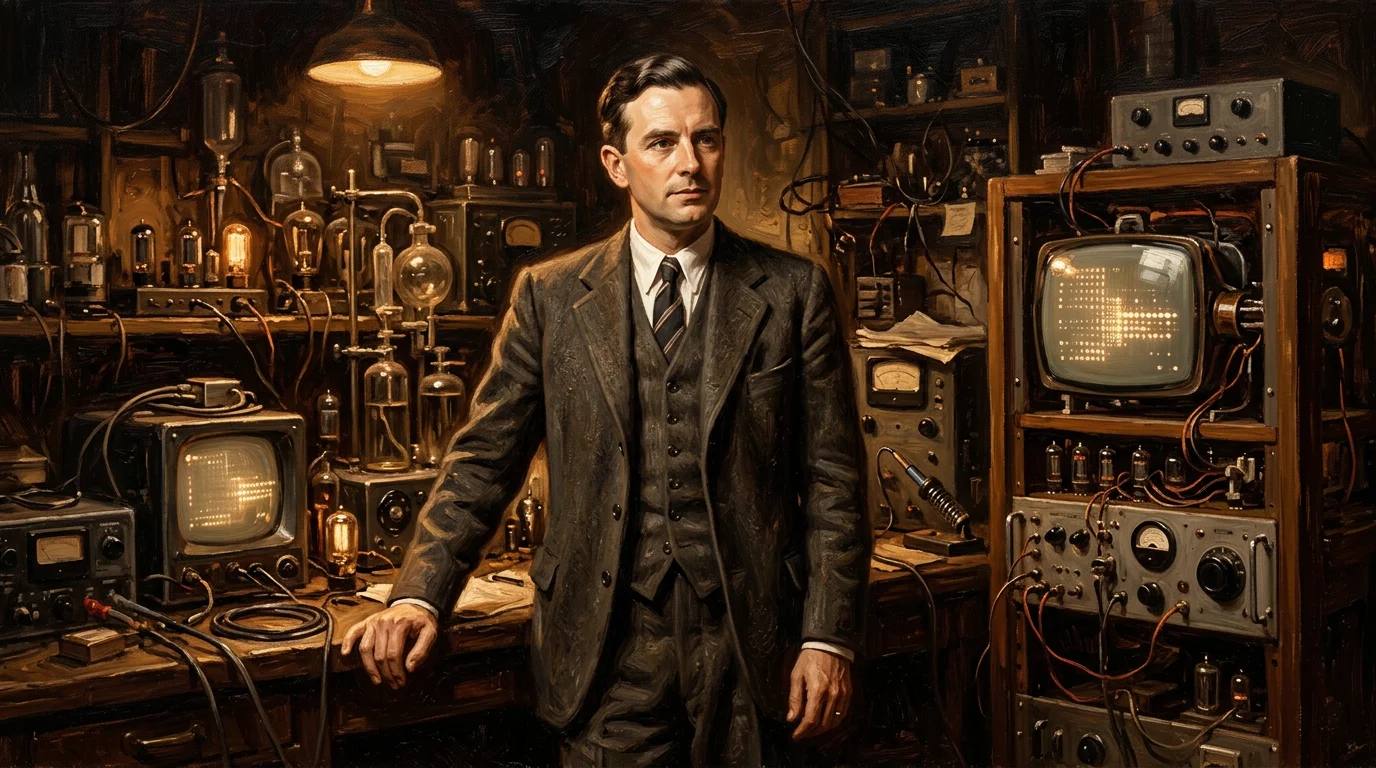
Frederic C. Williams
1911–1977 · Electrical Engineer
Frederic C. Williams was a British electrical engineer who, with Tom Kilburn, developed the Williams-Kilburn tube — an early electronic random-access memory — and led the Manchester team that created the Manchester Baby, the first stored-program computer.
“The computer was not the first automatic machine. The first automatic machine was the loom.”
Why is this scientist famous?
Developing, with Tom Kilburn, an early practical cathode-ray-tube electronic computer memory and leading the Manchester team in which the Manchester Baby was created.
Frederic's story
From Engineering to Oxford
Frederic Calland Williams — known to colleagues as Freddie — was born on 26 June 1911 in Romiley, near Stockport in Cheshire, England. He studied engineering at the University of Manchester, receiving his BSc in Engineering in 1932 and his MSc in Engineering in 1933.
He then moved to Oxford for doctoral research and received a DPhil in 1936 for work involving electrical circuits and valve noise. Before the war he taught at Manchester. His early career established him as a talented practical engineer with a deep understanding of electronic circuits.
Wartime Radar at TRE
During the Second World War, Williams worked at the Telecommunications Research Establishment (TRE), the secret British radar research centre. He made important contributions to radar and electronic circuitry, working with high-speed electronics and cathode-ray tubes.
This wartime expertise in high-speed electronics fed directly into his post-war computing work. The techniques he had mastered for radar — particularly his familiarity with cathode-ray tubes — would soon be turned to a completely different purpose.
The Memory Problem
After the war, one of the major obstacles to practical electronic computers was memory. Existing storage methods were too slow or too unreliable for a machine that needed to access data at electronic speeds.
Williams investigated whether a cathode-ray tube — the same technology used in radar displays and television sets — could store digital information electronically. By late 1946 he had demonstrated the storage of a single binary digit on a CRT.
Williams moved back to the University of Manchester, and Tom Kilburn continued working closely with him. During 1947 the system developed into a workable electronic random-access memory. It is commonly called the Williams tube, but Williams-Kilburn tube more accurately acknowledges Kilburn's major contribution. The storage system could access different memory locations electronically rather than sequentially — a significant advance, though it was not modern semiconductor RAM.
The Manchester Baby
The CRT memory needed to be tested under realistic conditions. A small experimental computer was therefore built around it: the Manchester Small-Scale Experimental Machine, known as the Baby.
Frederic Williams headed the wider research project. Tom Kilburn became the main driving force in the detailed computer design and wrote the first program. Geoff Tootill was the third central member of the small development team.
On 21 June 1948 the Baby successfully ran a program stored electronically in its own memory — the first time any electronic digital computer had done so. The Baby existed primarily to prove that the new memory worked. The achievement was a team effort, not the work of any single person.
From Baby to Ferranti and Beyond
Manchester rapidly developed the experimental machine into the Manchester Mark 1, and the engineering firm Ferranti then developed the design commercially into the Ferranti Mark 1 — one of the first commercially available computers.
Williams subsequently returned much of his attention to wider electrical engineering, while Kilburn increasingly led Manchester's computer development. Williams remained an inventive engineer and department leader. He was known as an intensely practical engineer interested in solving real engineering problems — he later installed an experimental automatic transmission he had developed in his own car.
Williams was elected a Fellow of the Royal Society in 1950, received a CBE in 1961, the Faraday Medal in 1972, and was knighted in 1976. He died on 11 August 1977 in Manchester.
What did they discover?
Williams-Kilburn CRT Memory
With Tom Kilburn, Williams developed an early practical electronic random-access memory using cathode-ray tubes. The Williams-Kilburn tube could access different memory locations electronically rather than sequentially.
The Manchester Baby — First Stored-Program Computer
Williams headed the wider project in which the Manchester Baby was built. On 21 June 1948 it became the first electronic digital computer to run a program stored electronically in its own memory.
Fellow of the Royal Society, 1950
Williams was elected a Fellow of the Royal Society in 1950 for his contributions to electronic engineering and computing.
Amazing facts
His computer-memory work grew directly from wartime radar electronics.
The storage system could access different memory locations electronically rather than sequentially.
Williams-Kilburn tube better reflects the collaborative development than simply Williams tube.
The Baby existed primarily to prove that the new memory worked.
Williams later returned his main attention to wider electrical engineering.
He experimented with an automatic transmission in his own car.
Timeline
Born in Romiley near Stockport, England.
Received BSc in Engineering from the University of Manchester.
Received MSc in Engineering from the University of Manchester.
Received DPhil from Oxford.
Began wartime radar and electronics research at TRE.
Demonstrated single-bit CRT storage; returned to the University of Manchester.
Williams-Kilburn CRT memory developed further.
Manchester Baby successfully ran its first stored program.
Elected Fellow of the Royal Society.
Appointed CBE.
Received the Faraday Medal.
Knighted.
Died in Manchester, England.
Awards & honours
Related Super Scientists
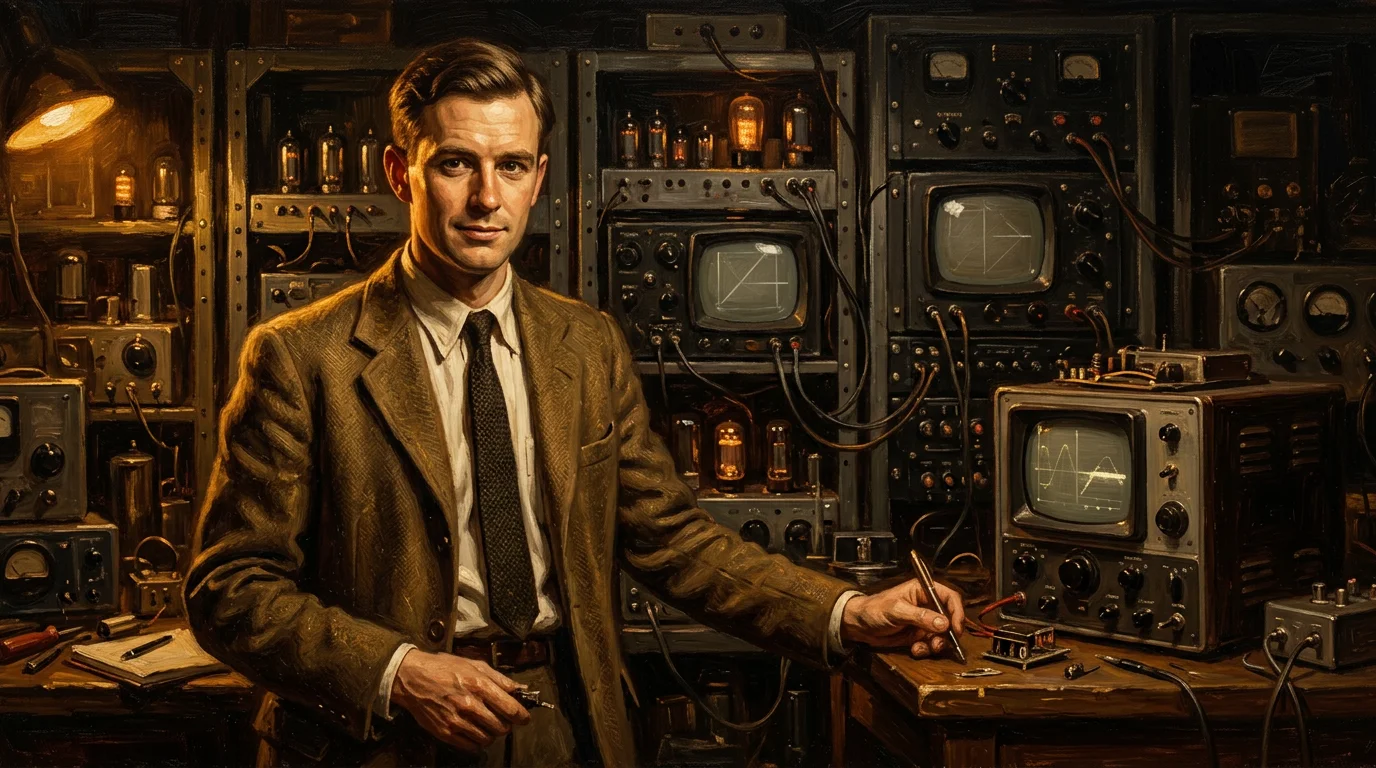
Tom Kilburn
1921–2001 · Computer Engineer
Co-developing the Williams-Kilburn electronic memory, leading the design and construction of the Manchester Baby, writing its first program, and later leading major Manchester computer projects including Atlas.
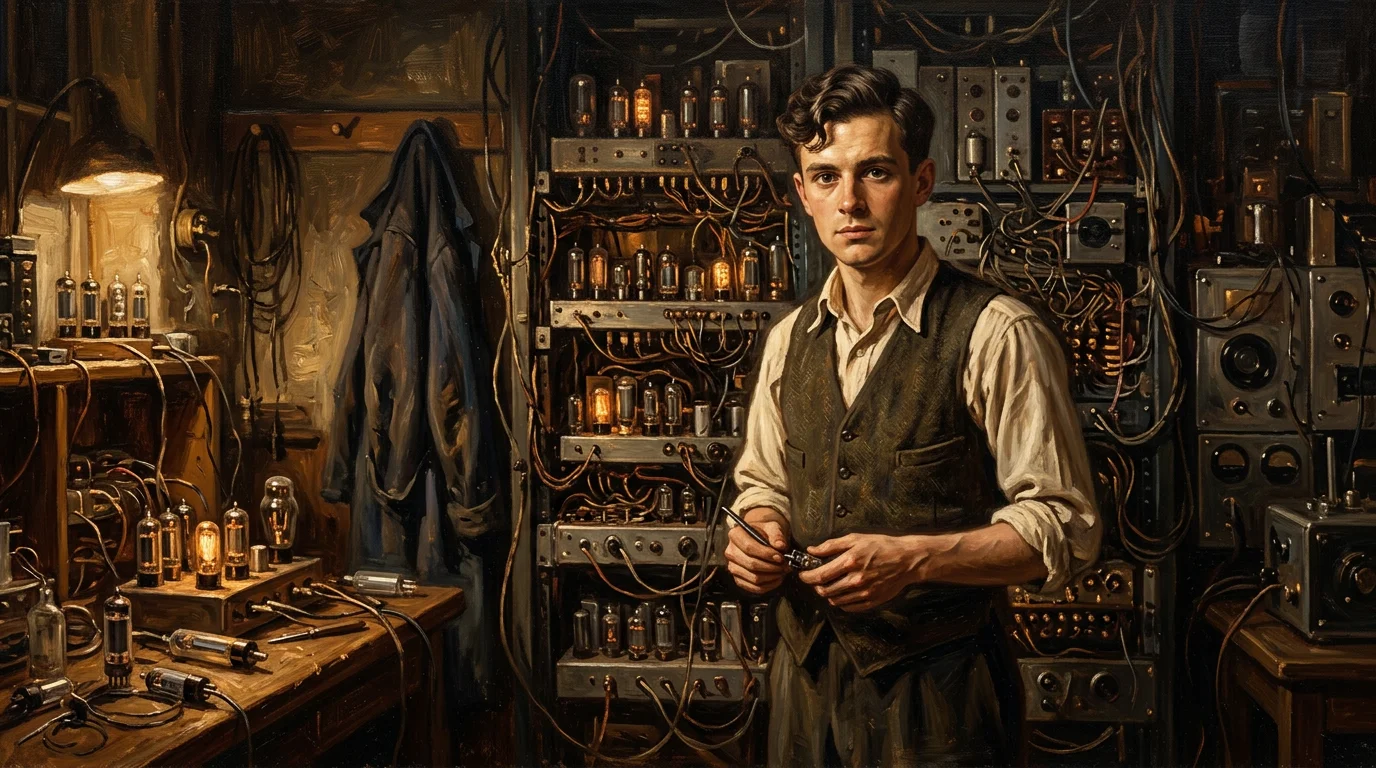
Geoff Tootill
1922–2017 · Computer Engineer
Being one of the three core engineers who built the Manchester Baby, the first electronic stored-program digital computer to run a program from electronic read-write memory.
Alan Turing
1912–1954 · Mathematician & Computer Scientist
Making foundational contributions to theoretical computer science and artificial intelligence, and playing a major role in Allied codebreaking during the Second World War.