_(2).jpg)
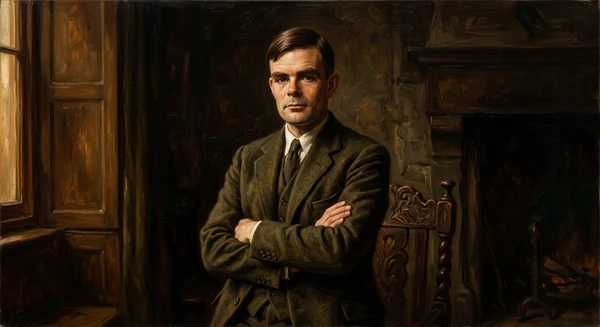
Tommy Flowers
1905–1998 · Electrical Engineer
Tommy Flowers was a British electrical engineer who designed Colossus, the first digital programmable electronic computer, for wartime cryptanalysis at Bletchley Park. His telecommunications background was crucial to its creation.
“I was always interested in the design of things, and I was always interested in how things worked.”
Why is this scientist famous?
Designing Colossus and leading the engineering team that built it for wartime cryptanalysis at Bletchley Park.
Tommy's story
From the East End to Dollis Hill
Thomas Harold Flowers — known as Tommy — was born on 22 December 1905 in Poplar, in London's East End. He grew up in a working-class area and began his engineering career as an apprentice at the Royal Arsenal in Woolwich.
Flowers studied engineering part-time while working and eventually gained an engineering degree through the University of London. In 1926 he joined the General Post Office telecommunications service, and he later worked at the Post Office Research Station at Dollis Hill in north-west London.
His years of experience with telephone switching systems and large numbers of electronic valves would prove crucial when war came.
The Lorenz Problem
During the Second World War, Bletchley Park was attempting to read high-level German teleprinter traffic encrypted using the Lorenz system — known to British codebreakers as Tunny. This was not the Enigma cipher. Lorenz was used for strategic communications between German high command and field headquarters.
The mathematician Bill Tutte had made the fundamental cryptanalytic breakthrough, discovering the logical structure of the Lorenz system. Max Newman's team then sought ways to automate parts of the enormous calculation involved. Earlier machines known as Heath Robinsons used two synchronised paper tapes but had practical limitations with reliability and speed.
Building Colossus
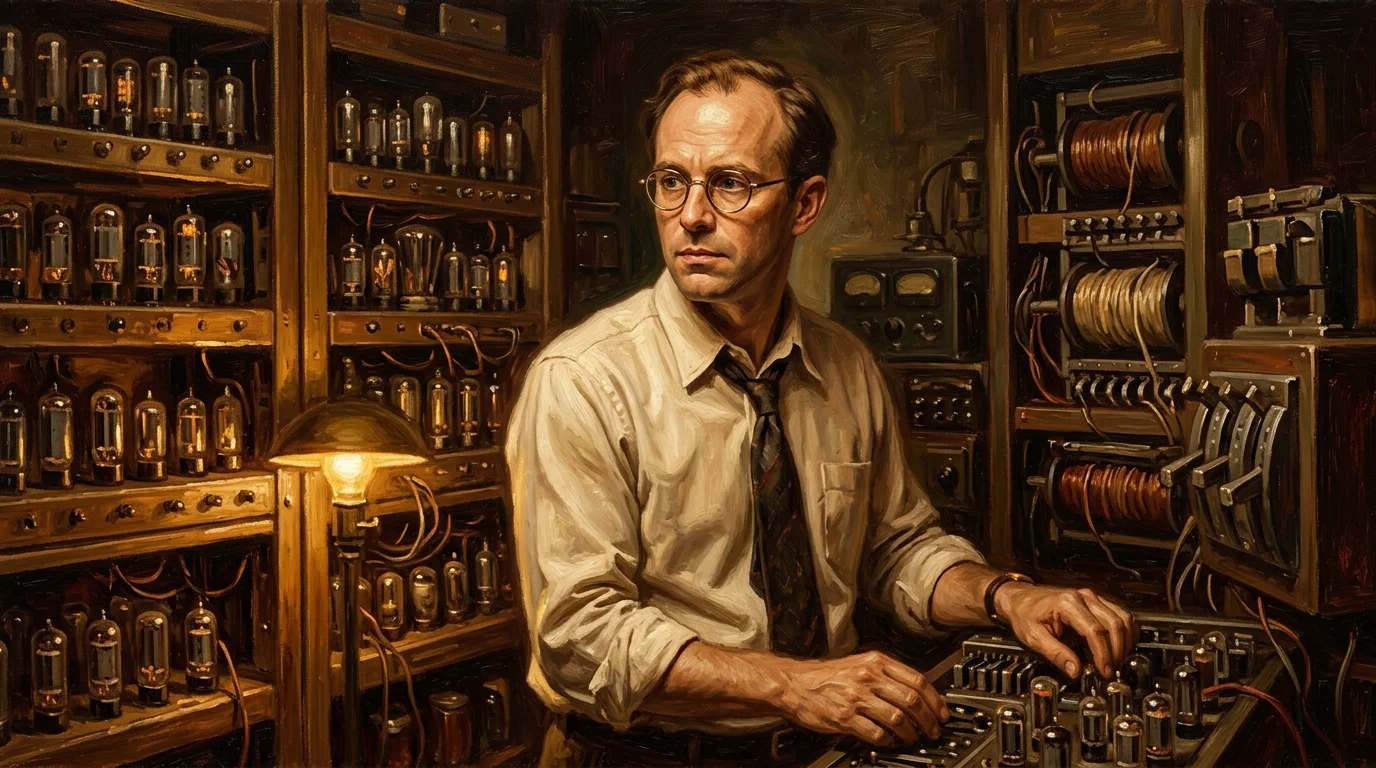
Flowers proposed replacing much of the troublesome mechanical synchronisation with electronics. He designed Colossus at the Post Office Research Station at Dollis Hill and led the engineering team that built it.
Colossus used large numbers of thermionic valves — about 1,800 in the first machine. Many people doubted that so many valves could operate reliably, but Flowers's years of telecommunications experience had convinced him that valves could work dependably if they were never switched off and handled appropriately. He was right.
The first Colossus was delivered to Bletchley Park around the turn of 1943–44 and was operating in February 1944. Later Colossus machines were faster and contributed to processing Lorenz-encrypted German communications for the remainder of the war.
Computing Significance
Colossus was the first digital programmable electronic computer, although it was specialised for cryptanalysis rather than a general-purpose stored-program computer. It was not a general-purpose machine, and it should not be called the first modern computer. But it was a landmark in the history of electronic computing — a machine that processed information electronically and could be reconfigured for different tasks through switches and plug boards.
Flowers was the principal engineering designer of Colossus and led the team that built it. Bill Tutte had made the cryptanalytic breakthrough, Max Newman led the section that commissioned the machines, and a wider team of Bletchley Park and Post Office engineers contributed. The achievement was collective.
Secrecy and Return to Telecommunications
Colossus remained secret for decades after the war. Most of the wartime Colossus machines were destroyed, and much of Flowers's contribution received little public recognition at the time.
He returned to telecommunications engineering and played an important role in the development of electronic telephone switching. The secrecy around Colossus delayed recognition of its place in computing history, and Flowers's work was not widely celebrated until that secrecy began to lift decades later.
Flowers received an MBE for his wartime service. He died on 28 October 1998 in London, aged 92.
What did they discover?
Designing Colossus
Flowers designed Colossus at the Post Office Research Station and led the engineering team that built it. The first machine began operational work at Bletchley Park in February 1944, using about 1,800 thermionic valves.
First Digital Programmable Electronic Computer
Colossus was the first digital programmable electronic computer, though it was specialised for cryptanalysis rather than a general-purpose stored-program computer.
Amazing facts
His professional background was telephone engineering rather than academic mathematics.
Knowledge gained from electronic telephone systems helped him trust large numbers of valves to operate reliably.
Colossus was kept secret for decades after the war.
Most of the wartime Colossus machines were destroyed after the war.
His work was not widely celebrated until secrecy surrounding Colossus began to lift decades later.
In 1934, Flowers designed a voice-frequency signalling system that helped lay the foundations for operator-free trunk telephone dialling.
Colossus Mark II used about 2,400 valves and entered operation just five days before D-Day in June 1944.
In 1957, Flowers created the first ERNIE electronic random-number generator used to select Premium Bond winners.
Timeline
Born in Poplar, London, England.
Joined the General Post Office telecommunications service.
Awarded the MBE.
Designed and built Colossus with his team at Dollis Hill.
Colossus began working on its first Lorenz-encrypted message at Bletchley Park.
Improved Colossus machines entered service.
Returned to electronic telecommunications and switching work after the war.
Died in London, aged 92.