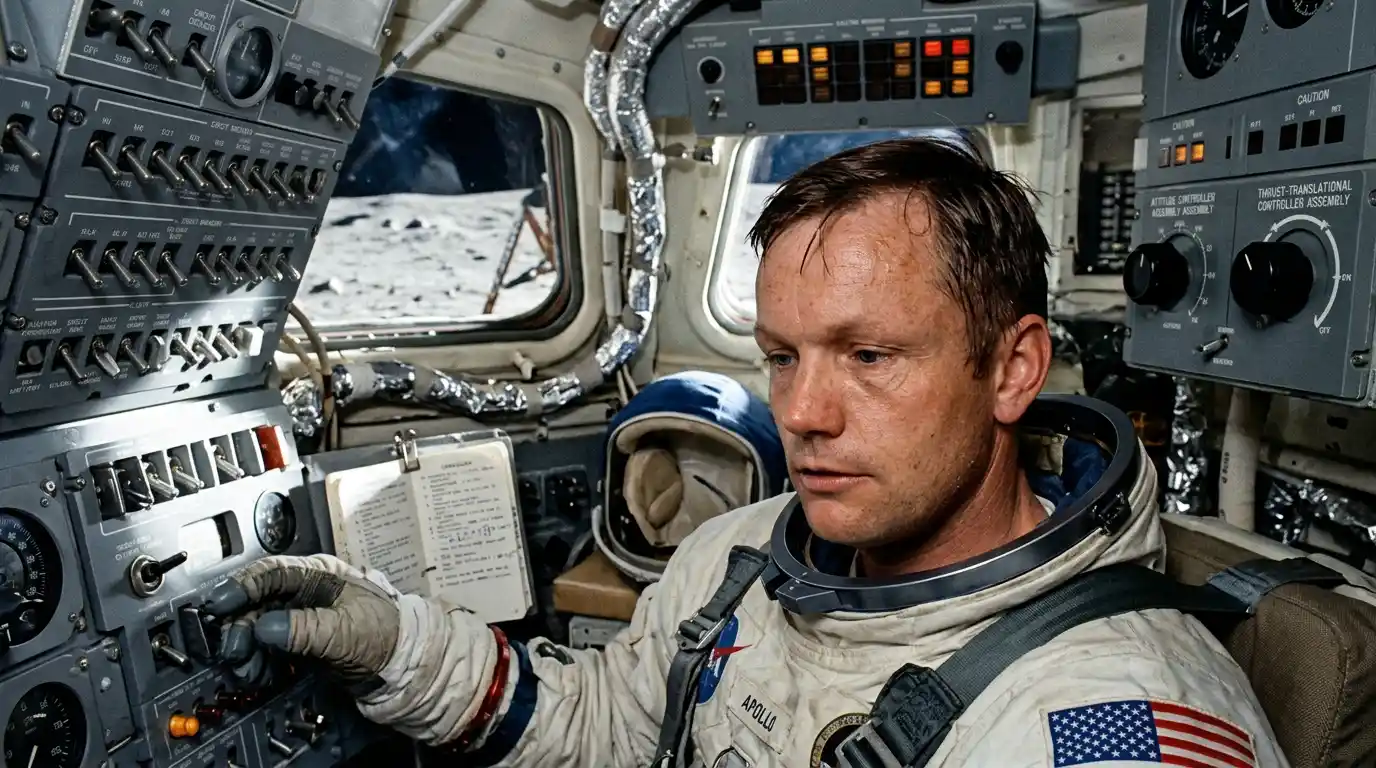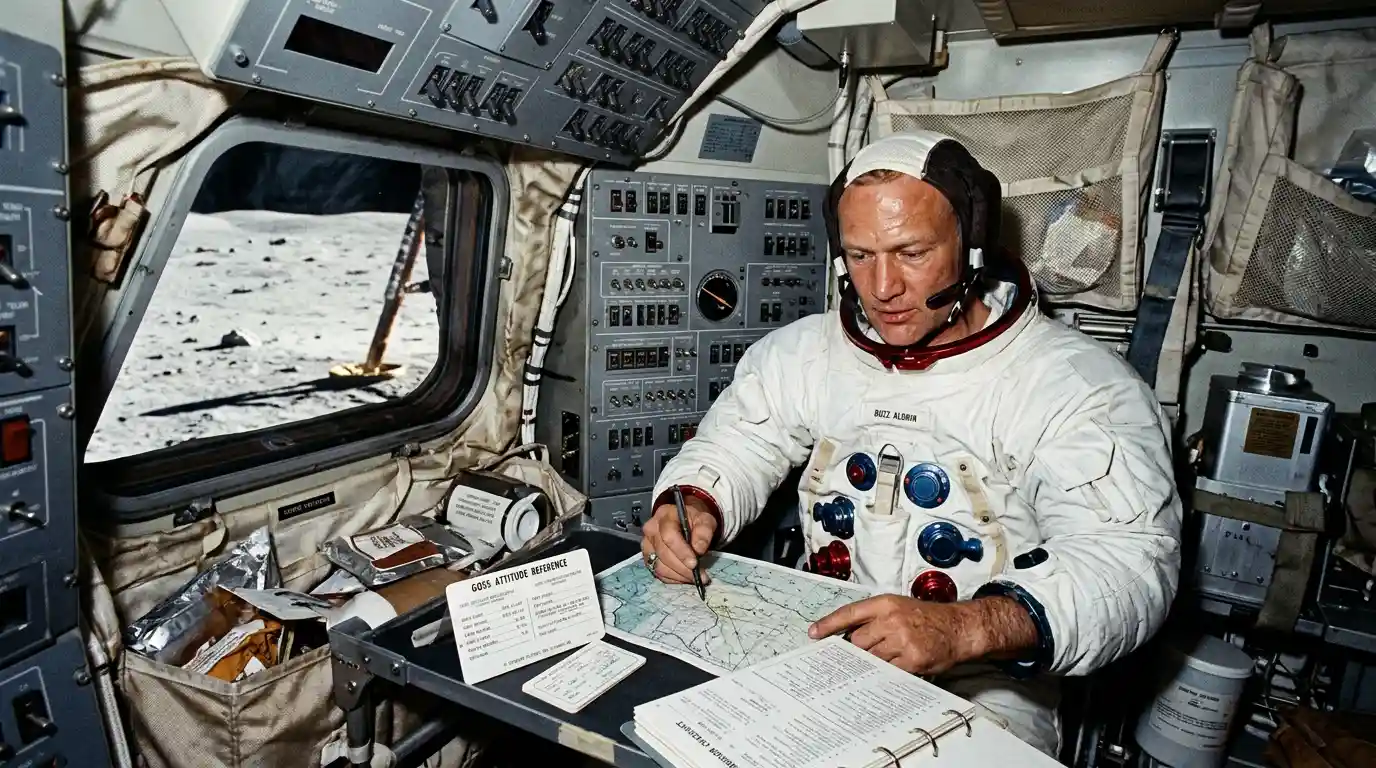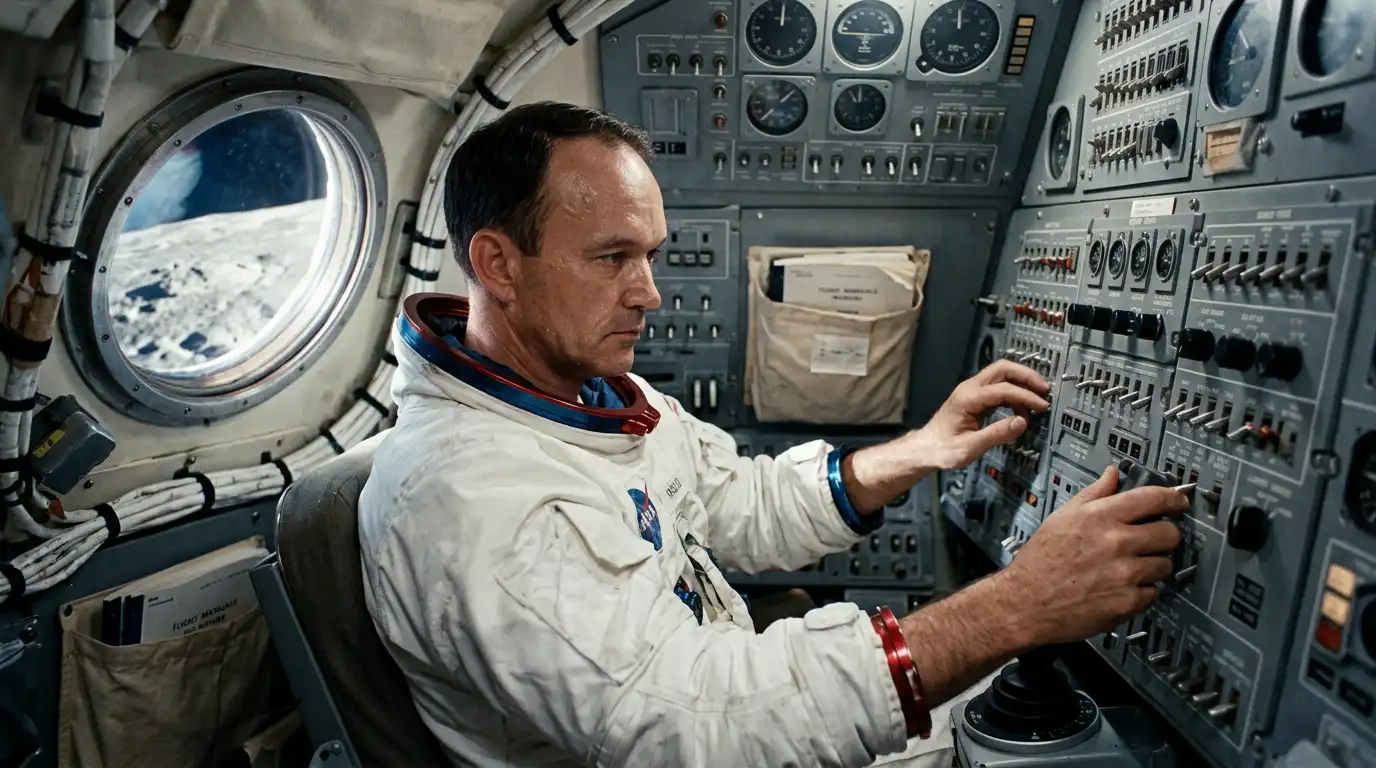
Apollo 11 is remembered through three astronauts, but reaching the Moon depended on hundreds of thousands of people solving problems in rocketry, mathematics, navigation and software — often for the first time.
A Race With a Deadline
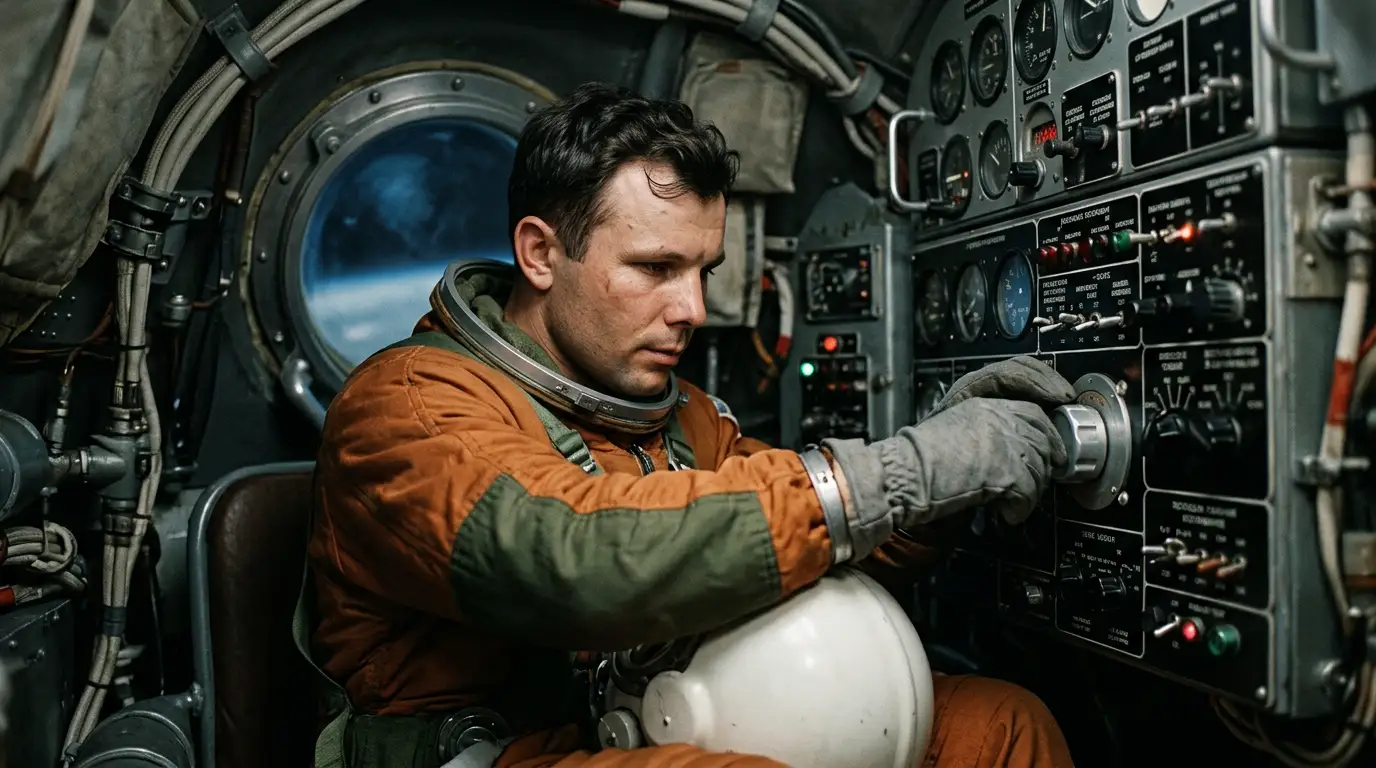
When the Soviet Union launched Sputnik in 1957, the United States suddenly found itself behind in a new kind of competition. Then, in April 1961, Soviet cosmonaut Yuri Gagarin became the first human to orbit Earth.
The American response was extraordinarily ambitious.
On 25 May 1961, President John F. Kennedy challenged the United States to land a person on the Moon and return them safely to Earth before the end of the decade.
At that point, the United States had sent just one astronaut into space, and only on a short suborbital flight. NASA still had to learn how people could live and work in space, how two spacecraft could meet and dock in orbit, how to navigate hundreds of thousands of kilometres from Earth and how to land a spacecraft on another world.
There was another problem.
NASA had not yet decided how the Moon landing itself would work.
The deadline came before the complete solution.
First Work Out How to Get There
NASA considered several ways of reaching the Moon.
One was direct ascent: launch a very large spacecraft from Earth, land the whole vehicle on the Moon and then launch it back towards Earth. Another involved assembling a lunar spacecraft in Earth orbit before sending it onwards.
The third idea was lunar orbit rendezvous.
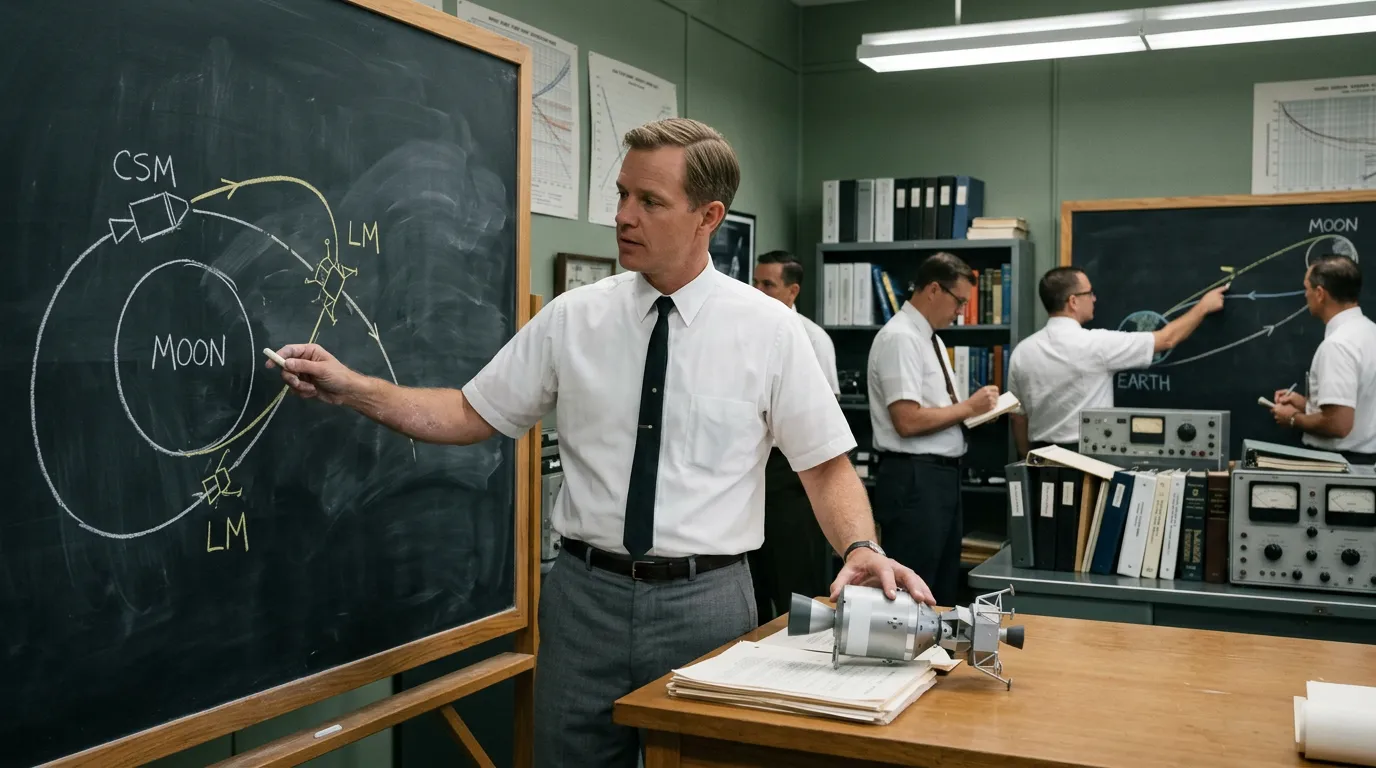
With this method, the main spacecraft would remain in orbit around the Moon while a much smaller lunar module carried two astronauts down to the surface. After the landing, the upper part of the lunar module would launch back into lunar orbit and rendezvous with the command module for the journey home.
It sounded risky. If the two spacecraft failed to meet again in lunar orbit, the astronauts in the lunar module would be stranded far from Earth.
Engineer John C. Houbolt became one of the strongest advocates for lunar orbit rendezvous inside NASA. He did not invent the idea alone, but he argued persistently that it offered a practical route to the Moon while avoiding the enormous mass required by direct ascent.
NASA formally selected lunar orbit rendezvous in July 1962.
That decision shaped Apollo 11.
Neil Armstrong and Buzz Aldrin would descend to the Moon in the Lunar Module Eagle. Michael Collins would remain in lunar orbit aboard the Command Module Columbia.
To get home, Eagle would have to find Columbia again.
The Numbers Had to Meet in Space
Apollo depended on machines of astonishing complexity, but it also depended on mathematics.
Every stage of a lunar mission involved trajectories: leaving Earth, entering lunar orbit, descending towards the Moon, launching from its surface and bringing two spacecraft back together while both were travelling around another world.
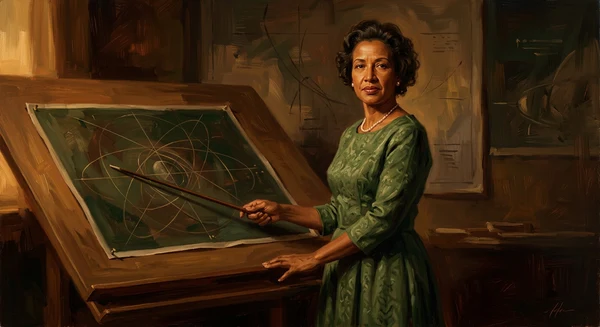
Katherine Johnson was one of the NASA mathematicians who worked on those problems.
Johnson had already become known for her trajectory work during the Mercury programme. For Apollo, she calculated the trajectory for the 1969 Apollo 11 flight and prepared backup navigation charts that astronauts could use if electronic systems failed.
She also worked on calculations for synchronising the lunar lander with the Command and Service Module orbiting above the Moon.
Johnson was not the person who single-handedly calculated Apollo 11. Flight dynamics, navigation and mission planning involved large teams across NASA and its contractors.
Her contribution matters precisely because Apollo was a team achievement.
A Moon landing was useless if the astronauts could not leave again, meet the spacecraft waiting above them and find the correct path back to Earth.
The mathematics had to work all the way home.
Software for a Journey Nobody Had Made
Apollo also required something that was still relatively new: sophisticated computer software running aboard a spacecraft.
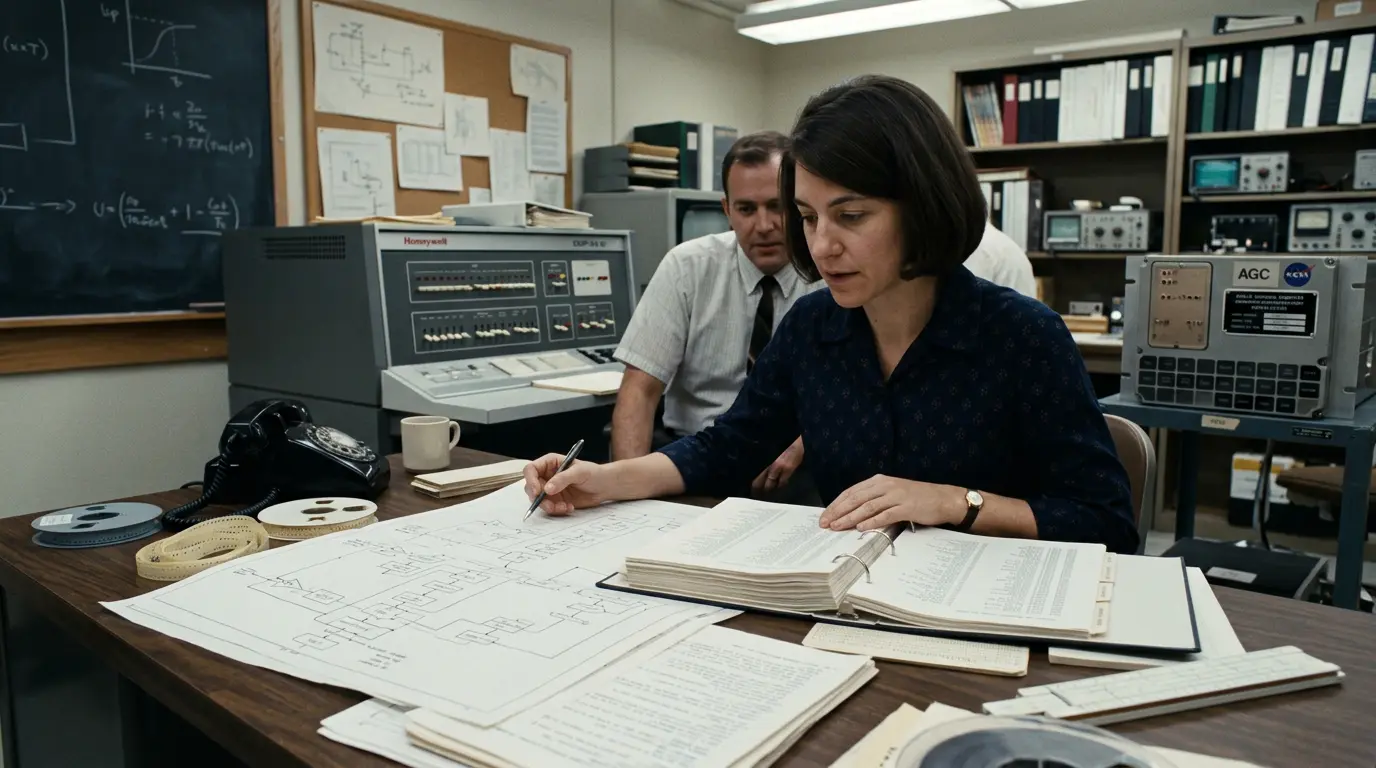
NASA contracted the Massachusetts Institute of Technology (MIT) Instrumentation Laboratory to develop the Apollo guidance and navigation system. Margaret Hamilton became director of the laboratory's Software Engineering Division and led a team responsible for the onboard flight software.
The Apollo Guidance Computer could not simply stop everything whenever something unexpected happened. During a landing, some jobs were far more important than others.
The software was therefore designed with priority handling and error-recovery mechanisms. If the computer became overloaded, it could discard or postpone less important work and concentrate on the tasks essential to keeping the spacecraft flying.
Hamilton's team spent years designing, testing and trying to anticipate failures that might occur hundreds of thousands of kilometres from Earth.
Then, during the first attempted Moon landing, exactly that kind of resilience was needed.
1202
On 20 July 1969, Eagle separated from Columbia and began its descent towards the lunar surface.
Then the computer started sounding alarms.
The astronauts reported program alarms numbered 1201 and 1202. The guidance computer was being overloaded with more work than it had time to complete.
This could have ended the landing.
Instead, the software's recovery system cleared less important work and kept the highest-priority landing functions running. Engineers in Mission Control and at MIT recognised that the computer was still performing the essential calculations, and the crew was given permission to continue.
The alarms were later traced to extra demands associated with the rendezvous radar system. The software had encountered a condition it had never faced during the mission before, but its priority system behaved as its designers intended.
That did not mean the danger was over.
As Eagle approached the planned landing area, Armstrong could see that the spacecraft was heading towards rough terrain containing a large crater and boulders. He took greater manual control of the descent and flew onwards looking for a safer place to land, while the guidance system continued assisting him.
Fuel was disappearing rapidly.
When Eagle finally touched down in the Sea of Tranquility, only a small reserve remained — roughly enough for tens of seconds more powered flight.
The landing succeeded because many parts of the system worked together: astronauts, software, computers, engineers on Earth and years of testing before the mission ever left the ground.
One Footprint, Hundreds of Thousands of People
Eagle landed on the Moon on 20 July 1969. Several hours later, at 02:56 UTC on 21 July — still the evening of 20 July in the United States — Neil Armstrong became the first human to step onto the lunar surface.
Buzz Aldrin followed him soon afterwards.
Michael Collins remained alone in Columbia, orbiting the Moon and waiting for Eagle to return.
Armstrong and Aldrin collected lunar samples, photographed the landscape and deployed scientific experiments before climbing back into the lunar module. Eagle's ascent stage then launched from the surface and successfully rendezvoused with Collins in orbit.
On 24 July, all three astronauts returned safely to Earth.
Those three names became famous, but Apollo was vastly larger than its flight crew. At its peak, the programme employed about 400,000 Americans and depended on more than 20,000 industrial firms and universities.
Engineers designed engines and spacecraft. Seamstresses assembled spacesuits. Programmers wrote flight software. Mathematicians calculated trajectories. Technicians tested components. Mission controllers watched spacecraft systems from Earth. Factories produced millions of individual parts that all had to work together.
Apollo continued after the first landing. Six Apollo missions ultimately landed astronauts on the Moon, and twelve people walked on its surface between 1969 and 1972.
That is why the Moon landing is more interesting than a story about one heroic astronaut.
Armstrong's footprint became its symbol, but no single person could have created the rocket, calculated the journey, written the software, flown the spacecraft, controlled the mission and brought the crew home.
Reaching the Moon was one of history's greatest examples of science and engineering working as a system.
The first step belonged to one astronaut.
Getting him there belonged to hundreds of thousands of people.