_(2).jpg)
Neil Armstrong
1930–2012 · Astronaut
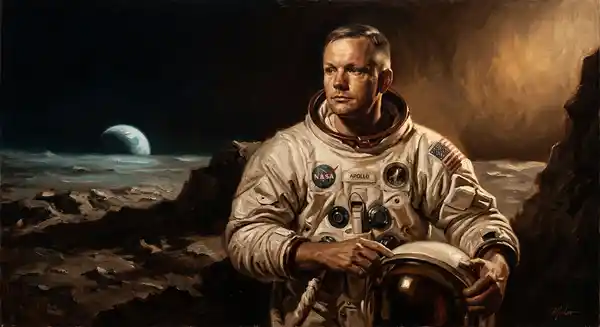
Neil Armstrong was an American astronaut and aeronautical engineer who commanded Apollo 11 and became the first human to walk on the Moon in July 1969.
“That's one small step for a man, one giant leap for mankind.”
Why is this scientist famous?
Commanding Apollo 11 and becoming the first human to walk on the Moon in July 1969.
Neil's story
Pilot, Engineer, Astronaut
Neil Alden Armstrong was born on 5 August 1930, near Wapakoneta, Ohio, USA. He began studying aeronautical engineering at Purdue University, but his studies were interrupted by US Navy service.
Armstrong began US Navy flight training in 1949 and qualified as a naval aviator in August 1950. He later flew 78 combat missions during the Korean War. He then returned to Purdue and received his BS in Aeronautical Engineering in 1955.
Test Pilot
In 1955, Armstrong joined NACA as an engineer and test pilot. He flew experimental aircraft including the X-15, one of the most demanding test programmes in aviation history.
Armstrong was selected as a NASA astronaut in 1962.
Gemini VIII
In March 1966, Armstrong served as command pilot of Gemini VIII, with David Scott as pilot. Armstrong and Scott completed the first successful docking of two vehicles in space.
A stuck thruster then caused a dangerous uncontrolled roll. Armstrong brought the spacecraft under control, and the mission was ended early. His calm handling of the emergency demonstrated the skills that would later be called upon during Apollo 11.
Apollo 11
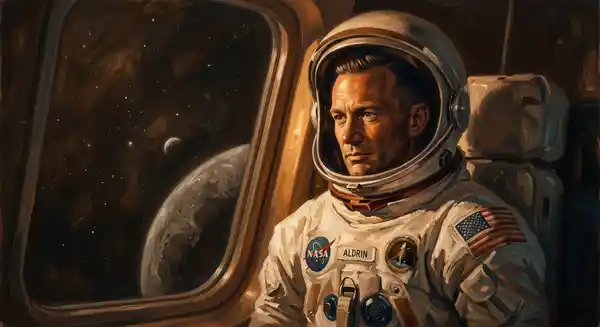
In July 1969, Armstrong commanded Apollo 11. Buzz Aldrin served as lunar module pilot and Michael Collins as command module pilot.
Armstrong and Aldrin landed in the lunar module Eagle, while Collins remained in lunar orbit aboard the command module Columbia. Armstrong became the first human to step onto the Moon, followed by Aldrin.
Apollo 11 was not one person's achievement. It depended on the three-person crew and the enormous NASA and contractor workforce behind the Apollo programme. Armstrong received the Presidential Medal of Freedom in 1969 and the Congressional Space Medal of Honor in 1978.
Armstrong later earned an MS in Aerospace Engineering from the University of Southern California in 1970 and served as Professor of Engineering at the University of Cincinnati from 1971 to 1979. He died on 25 August 2012 in Cincinnati, Ohio.
What did they discover?
First Successful Space Docking — Gemini VIII
On 16 March 1966, Armstrong and David Scott completed the first successful docking of two vehicles in space. A stuck thruster caused a dangerous roll, which Armstrong brought under control.
First Human to Walk on the Moon — Apollo 11
In July 1969, Armstrong commanded Apollo 11 and became the first human to step onto the lunar surface. Buzz Aldrin followed, while Michael Collins remained in lunar orbit.
Presidential Medal of Freedom, 1969
Armstrong received the Presidential Medal of Freedom in 1969 following the Apollo 11 mission.
Amazing facts
Armstrong flew 78 combat missions during the Korean War before becoming a test pilot.
He flew experimental aircraft including the X-15 for NACA.
He and David Scott completed the first successful docking of two vehicles in space on Gemini VIII in 1966.
He served as Professor of Engineering at the University of Cincinnati from 1971 to 1979.
He received the Congressional Space Medal of Honor in 1978.
Timeline
Born near Wapakoneta, Ohio, USA.
Began US Navy flight training.
Flew 78 combat missions during the Korean War.
Received BS in Aeronautical Engineering from Purdue; joined NACA as engineer and test pilot.
Selected as a NASA astronaut.
Gemini VIII — first successful docking of two vehicles in space.
Commanded Apollo 11; first human to walk on the Moon.
Received MS in Aerospace Engineering from the University of Southern California.
Joined the University of Cincinnati faculty as Professor of Engineering.
Left the University of Cincinnati.
Died in Cincinnati, Ohio, USA.