_(2).jpg)
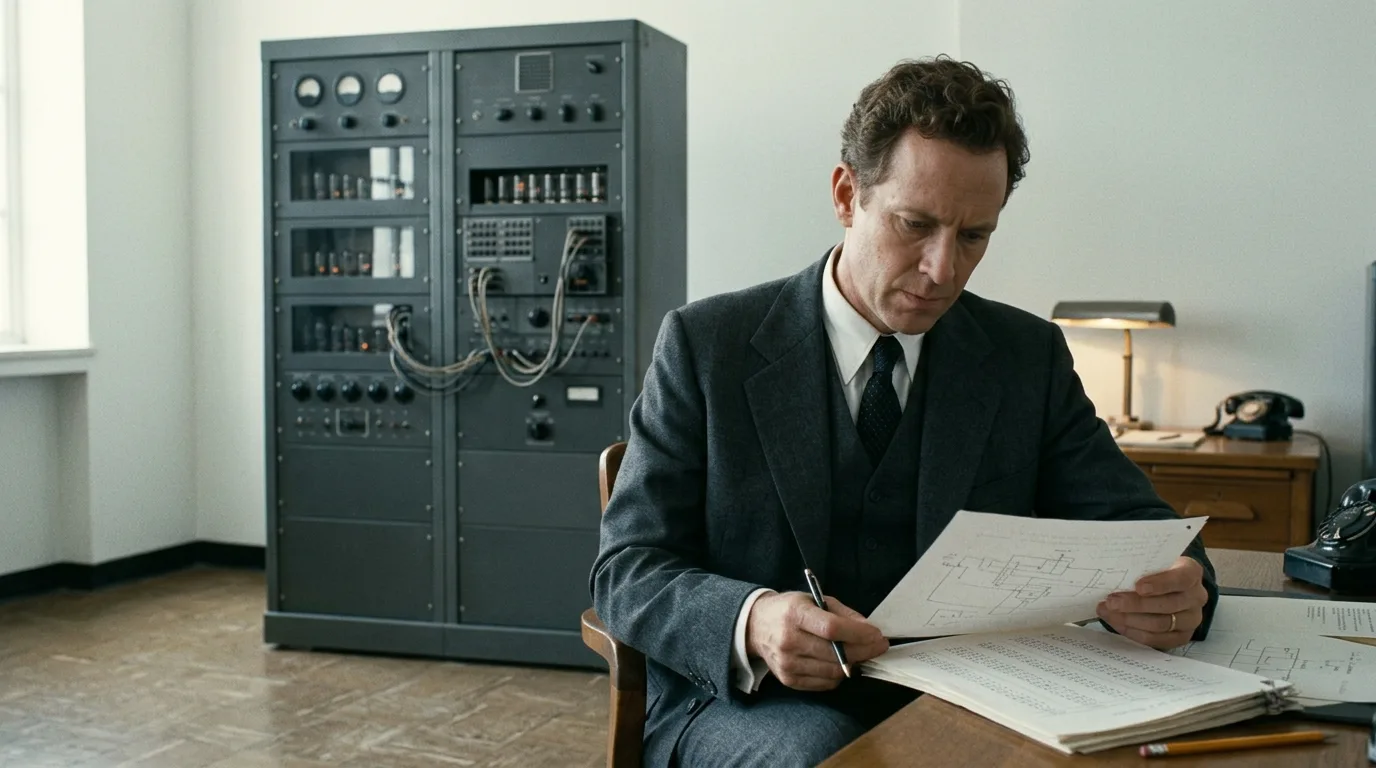
John Mauchly
1907–1980 · Physics, electronic computing and computer design
John Mauchly was a physicist whose partnership with J. Presper Eckert produced ENIAC and later UNIVAC I, bringing electronic computing into commercial use.
Why is this scientist famous?
A physicist who co-designed ENIAC with J. Presper Eckert and helped launch commercial electronic computing.
Mauchly helped turn electronic digital calculation into a practical, programmable technology, and his partnership with Eckert connects wartime ENIAC to early commercial computing.
John's story
From physics to faster calculation
John William Mauchly was born in Cincinnati, Ohio, on 30 August 1907. He entered Johns Hopkins University in 1925, initially studying electrical engineering before switching to physics. He completed his doctorate in physics at Johns Hopkins in 1932. During the 1930s he taught physics at Ursinus College in Pennsylvania, where he became interested in faster methods of calculation because scientific work could require huge amounts of arithmetic.
The ENIAC partnership
In 1941 Mauchly attended a wartime electronics course at the University of Pennsylvania’s Moore School of Electrical Engineering and then joined the Moore School staff. In 1942 he drafted a memorandum outlining an electronic calculating machine for large-scale numerical work. He and J. Presper Eckert became the central design partnership behind ENIAC, the Electronic Numerical Integrator and Computer. ENIAC was a landmark large-scale, general-purpose electronic digital computing machine. Mauchly’s role was especially important in the overall conceptual design and the use of electronic computation, while Eckert was the project’s leading hardware engineer. The project was a team achievement supported by engineers, programmers, mathematicians and the U.S. Army.
From wartime to commercial computing
After ENIAC was publicly unveiled in 1946, Mauchly and Eckert left the Moore School and formed their own company, later known as the Eckert-Mauchly Computer Corporation. They went on to develop BINAC and UNIVAC I, which was delivered in 1951. UNIVAC helped demonstrate that electronic computers could be useful outside specialist military and scientific calculations, bringing computing into commercial and business applications.
A collaborative legacy
Mauchly received the Harry H. Goode Memorial Award in 1966 and was later recognised by the IEEE Computer Society as a Computer Pioneer. He was posthumously inducted into the National Inventors Hall of Fame in 2002 for ENIAC. The ACM/IEEE computer-architecture award known as the Eckert-Mauchly Award was named after the two collaborators. Mauchly’s story is one of partnership rather than lone invention — his work with Eckert and the wider ENIAC team helped launch the electronic computing age.
What did they discover?
Co-designing ENIAC
Mauchly and J. Presper Eckert led the design of ENIAC, a landmark large-scale general-purpose electronic digital computer, as part of a larger team at the Moore School.
Proposing electronic calculation
His 1942 memorandum proposing a large electronic calculating machine helped set the conceptual direction for using electronic circuits for high-speed numerical computation.
Early commercial computing
Mauchly and Eckert’s company developed BINAC and UNIVAC I, helping take electronic computing from wartime calculation into commercial and scientific applications.
Amazing facts
Mauchly trained as a physicist before becoming a computer pioneer.
He became interested in faster calculation partly because scientific work could require huge amounts of arithmetic.
In 1942 he wrote down a proposal for a large electronic calculating machine.
He and J. Presper Eckert became the central design partnership behind ENIAC.
ENIAC used electronic circuits to perform numerical calculations far faster than human computers could.
Mauchly and Eckert later founded one of the earliest computer companies.
Their later UNIVAC work helped take electronic computing into commercial use.
The ACM/IEEE computer-architecture award known as the Eckert-Mauchly Award was later named after the two collaborators.
Timeline
Born in Cincinnati, Ohio
Entered Johns Hopkins University
Completed a doctorate in physics at Johns Hopkins University
Began teaching physics at Ursinus College
Joined the Moore School of Electrical Engineering
Drafted a memorandum proposing a large-scale electronic calculating machine
U.S. Army contract launched the ENIAC project
ENIAC publicly unveiled; Mauchly and Eckert left the Moore School and began their own company
BINAC completed
UNIVAC I delivered
Received the Harry H. Goode Memorial Award
Died on 8 January 1980
Posthumously inducted into the National Inventors Hall of Fame
Awards & honours
Related Super Scientists
J. Presper Eckert
1919–1995 · Electrical engineering, computing and invention
Co-designing ENIAC, helping create EDVAC, BINAC and UNIVAC, and making major engineering advances in early electronic computing.
Jean Bartik
1924–2011 · Computer programming and early computing
Being one of the original programmers of ENIAC and helping establish programming as a real technical discipline.
John von Neumann
1903–1957 · Mathematics, physics, computing, game theory and applied science
Playing a decisive role in shaping the stored-program computer model and the architecture commonly associated with his name.
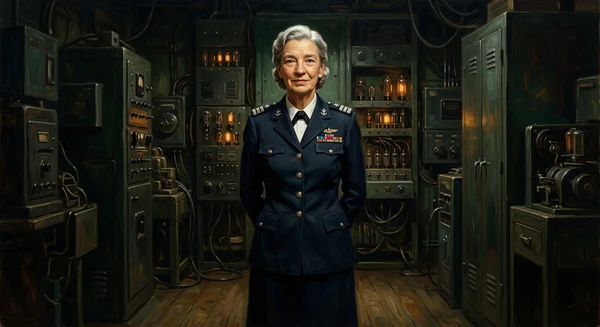
Grace Hopper
1906–1992 · Computer Scientist & Naval Admiral
Developing one of the earliest compilers and pioneering word-based programming languages that helped make computers easier to program.
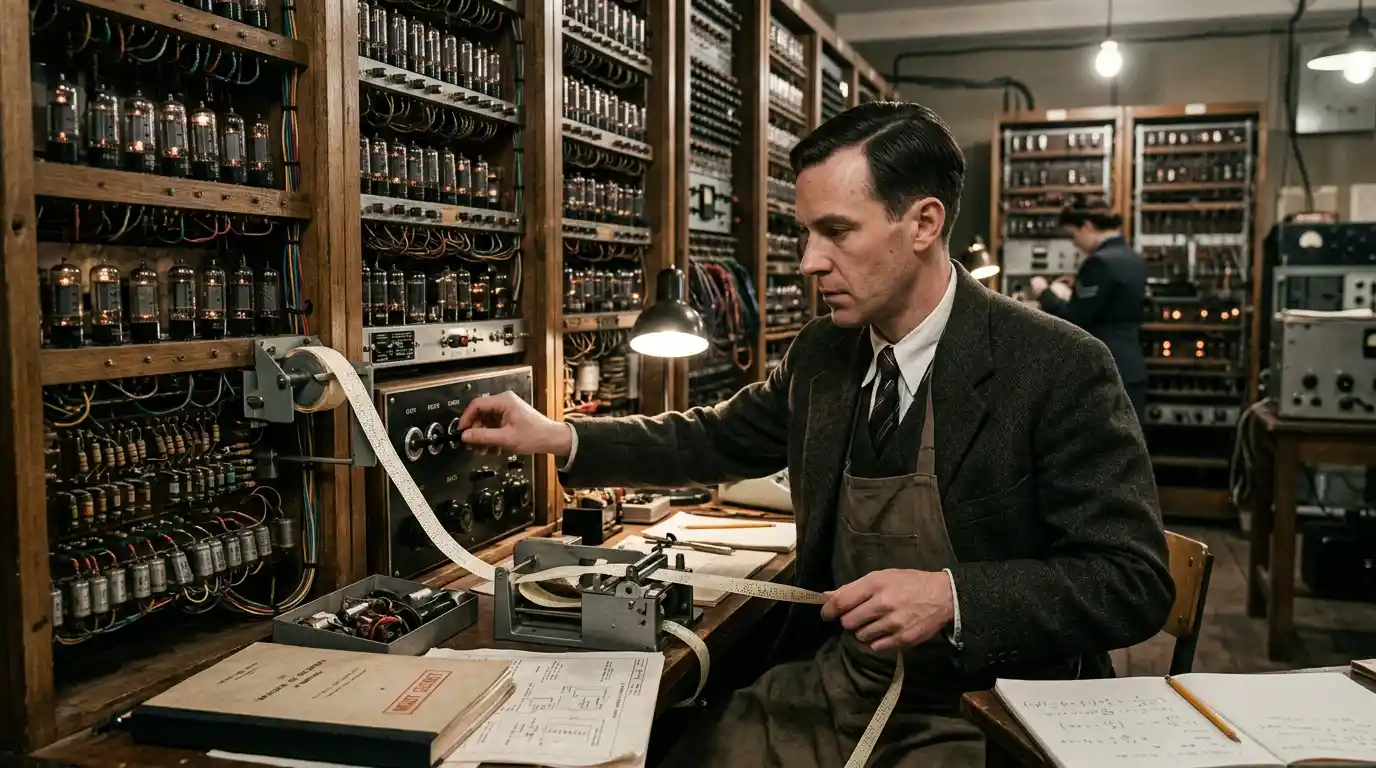
Tommy Flowers
1905–1998 · Electrical Engineer
Designing Colossus and leading the engineering team that built it for wartime cryptanalysis at Bletchley Park.