_(2).jpg)
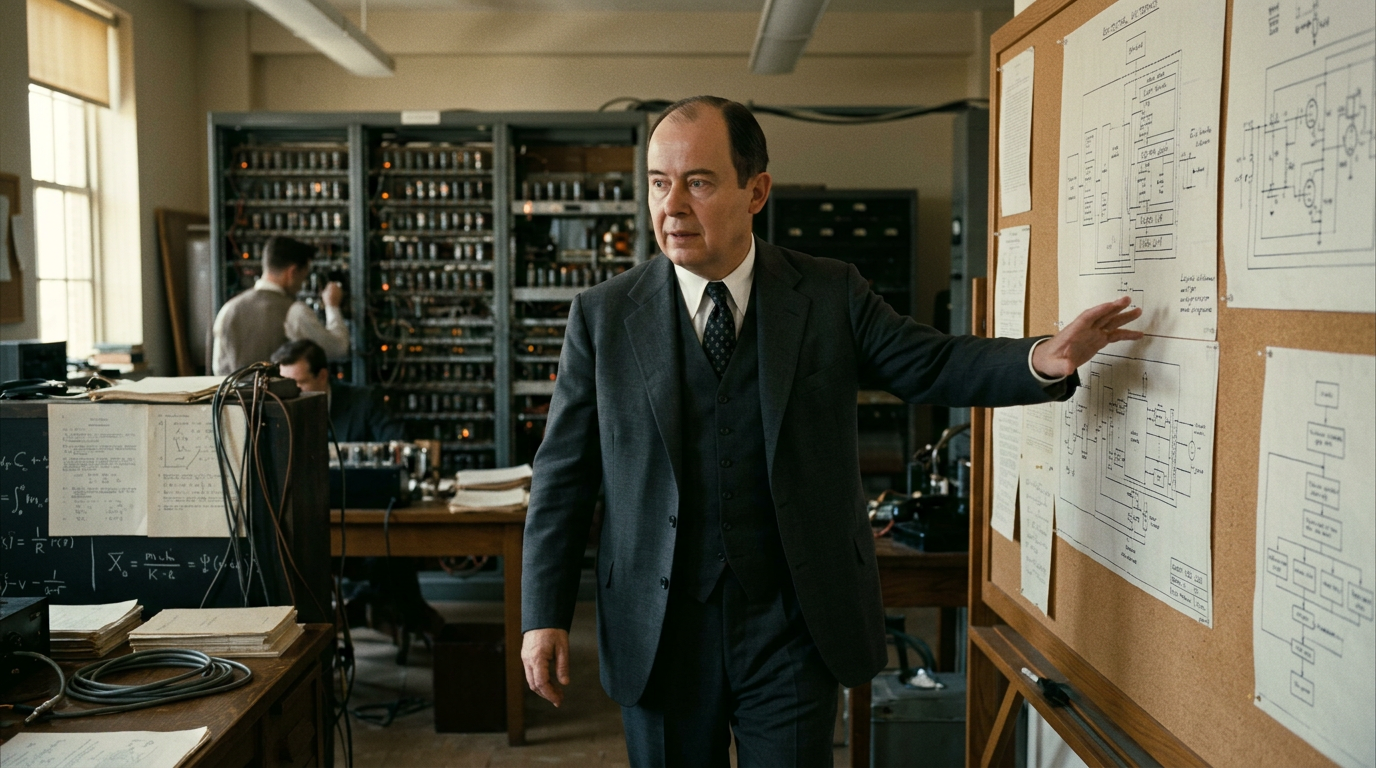
John von Neumann
1903–1957 · Mathematics, physics, computing, game theory and applied science
John von Neumann shaped the stored-program computer model and the architecture that bears his name, bridging abstract mathematics and powerful real-world technology.
“If people do not believe that mathematics is simple, it is only because they do not realize how complicated life is.”
Why is this scientist famous?
Playing a decisive role in shaping the stored-program computer model and the architecture commonly associated with his name.
John von Neumann's ideas helped shape the architecture of many modern computers. His influence also extends into economics, mathematics and physics. He was an important bridge between abstract theory and practical technology.
John's story
A Remarkable Mind
John von Neumann was born in Budapest, Hungary, on 28 December 1903. He was famous as a child prodigy. He studied at the University of Budapest, the University of Berlin, and ETH Zurich. He completed a degree in chemical engineering at ETH Zurich in 1925 and his doctorate in mathematics at the University of Budapest in 1926. He made important contributions to pure mathematics as well as applied science.
Coming to America
Von Neumann held early academic positions in Europe before moving to the United States in 1930. He lectured at Princeton and in 1933 joined the Institute for Advanced Study (IAS). During and after the Second World War, he worked on many practical and theoretical problems in science and mathematics. He worked on the Manhattan Project and later served on government advisory bodies.
Game Theory
Von Neumann made foundational contributions to game theory, especially through work with Oskar Morgenstern. In 1944 they published Theory of Games and Economic Behavior, which helped establish game theory as an important field with applications in economics, strategy and decision-making.
The Stored-Program Computer
In the mid-1940s, von Neumann became deeply involved in computer development and initiated the IAS Electronic Computer Project. He played a decisive role in shaping and promoting the stored-program computer model. The computer architecture commonly called the von Neumann architecture describes a machine in which instructions and data are stored in memory and processed in a general-purpose way. This became one of the most influential models in computing history. The IAS machine influenced many later computers. He died in Washington, D.C., on 8 February 1957.
What did they discover?
The Stored-Program Computer Model
He played a decisive role in shaping and promoting the stored-program computer model, especially through the IAS project and the architectural ideas that came to bear his name.
Game Theory
He made foundational contributions to game theory, especially through work with Oskar Morgenstern published in 1944.
The IAS Machine
He initiated the IAS Electronic Computer Project, which influenced many later computers around the world.
Bridging Theory and Technology
He helped show how abstract mathematics could shape powerful real-world technology across mathematics, physics, economics and computing.
Amazing facts
Von Neumann was famous as a child prodigy.
He studied both engineering and mathematics.
He made important contributions to pure mathematics as well as applied science.
He helped shape game theory.
His name is strongly associated with the stored-program computer.
The IAS machine influenced many later computers.
He worked across mathematics, physics, economics and computing.
He helped show how abstract mathematics could shape powerful real-world technology.
Timeline
Born in Budapest
Completed his chemical engineering degree at ETH Zurich
Completed his mathematics doctorate in Budapest
Arrived in the United States
Joined the Institute for Advanced Study
Published Theory of Games and Economic Behavior with Oskar Morgenstern
Became deeply involved in computer development and the IAS Electronic Computer Project
Received the Presidential Medal for Merit
Appointed to the U.S. Atomic Energy Commission
Received the Presidential Medal of Freedom and the Enrico Fermi Award
Died in Washington, D.C.
Awards & honours
Related Super Scientists
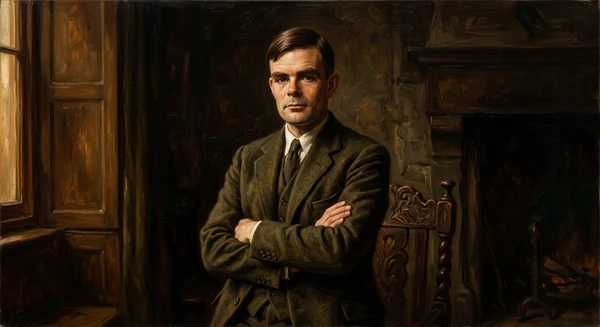
Alan Turing
1912–1954 · Mathematician & Computer Scientist
Making foundational contributions to theoretical computer science and artificial intelligence, and playing a major role in Allied codebreaking during the Second World War.
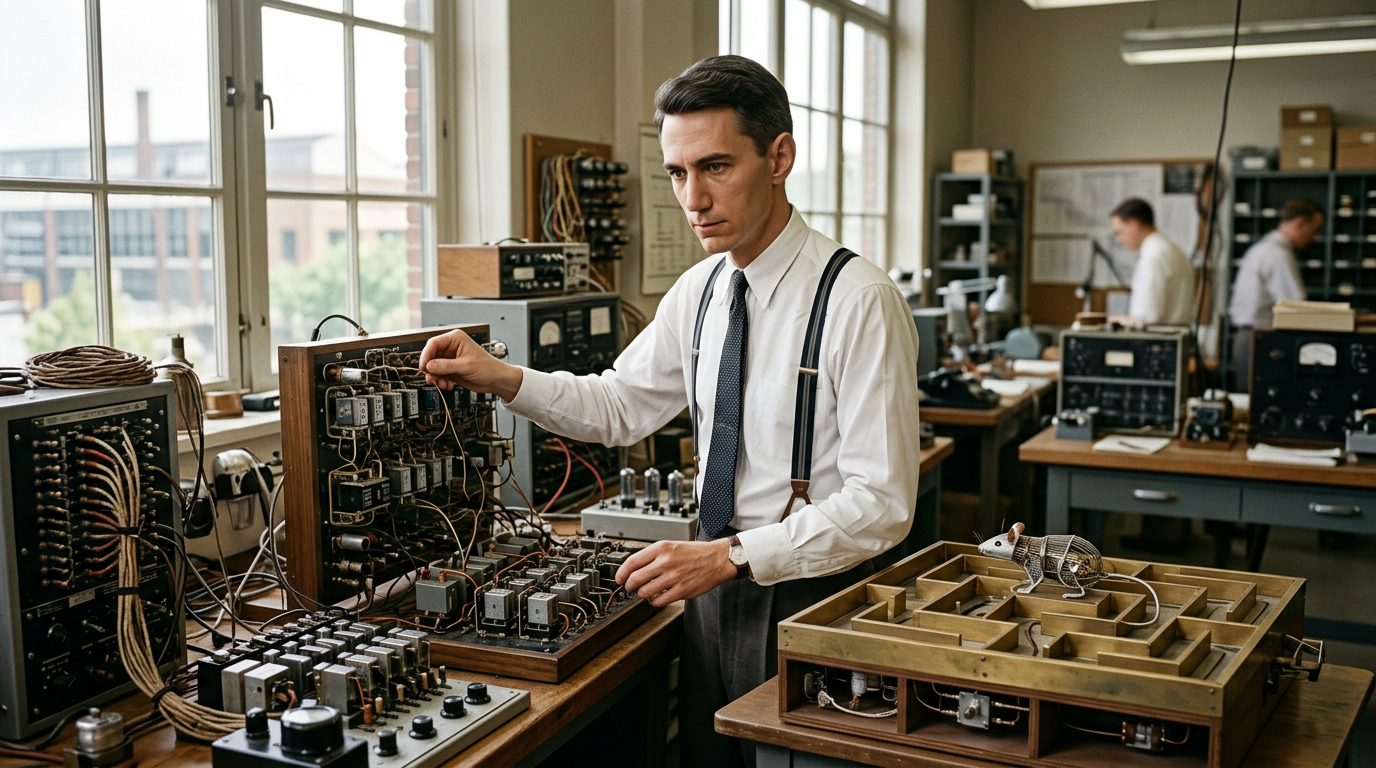
Claude Shannon
1916–2001 · Mathematics, electrical engineering, information theory, cryptography and computing
Founding information theory and making a landmark contribution to digital circuit design.
Grace Hopper
1906–1992 · Computer Scientist & Naval Admiral
Developing one of the earliest compilers and pioneering word-based programming languages that helped make computers easier to program.