_(2).jpg)
Claude Shannon
1916–2001 · Mathematics, electrical engineering, information theory, cryptography and computing
Claude Shannon founded information theory and showed how mathematical logic could design digital circuits, helping create the intellectual foundation of the digital age.
“I wanted to work on information, the measurement of information.”
Why is this scientist famous?
Founding information theory and making a landmark contribution to digital circuit design.
Shannon's work underlies modern digital communication, data compression, error correction, computing and cryptography. He connected mathematics, engineering and information in a way that transformed technology and helped shape the digital age.
Claude's story
Education and the Differential Analyzer
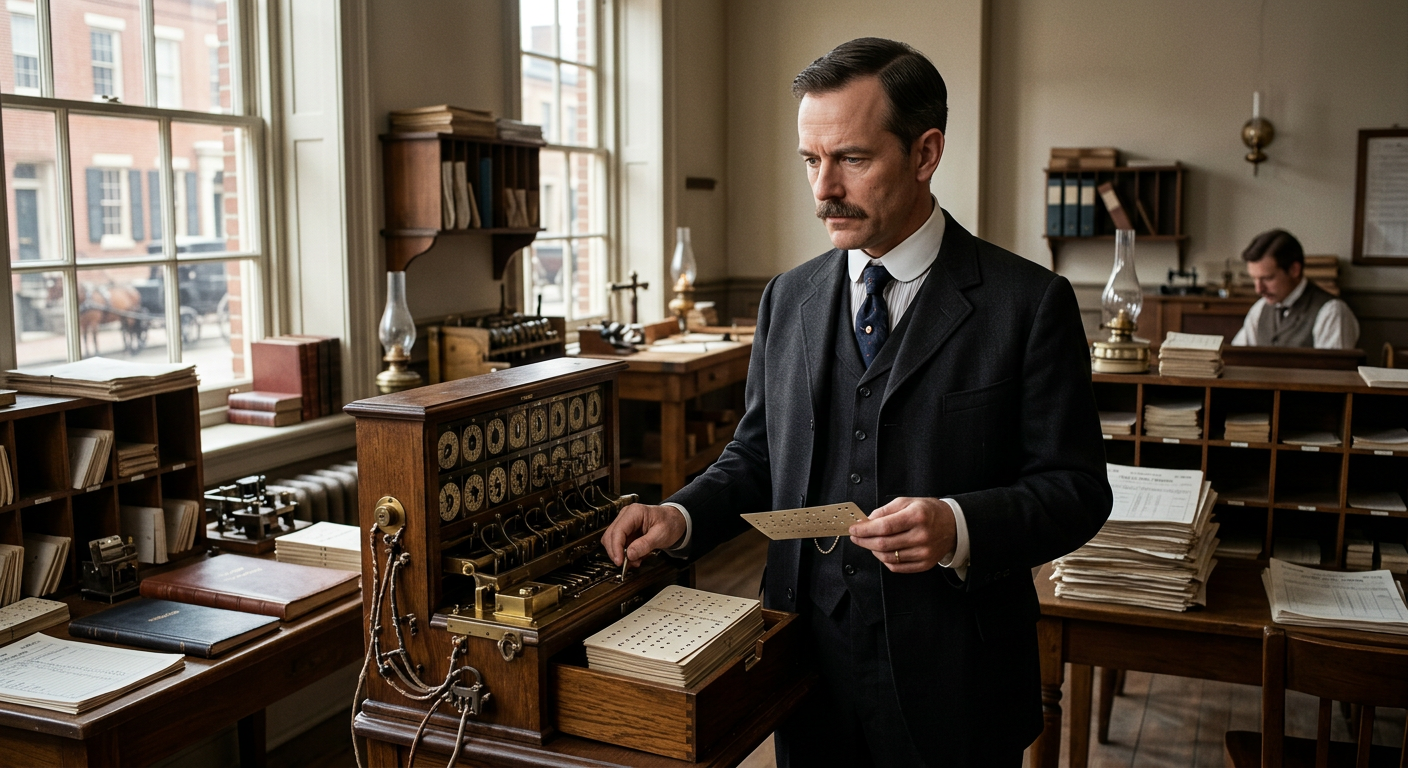
Claude Elwood Shannon was born in Petoskey, Michigan, on 30 April 1916. He studied at the University of Michigan, where he completed undergraduate studies in mathematics and electrical engineering in 1936. He then moved to MIT, where he worked with Vannevar Bush on the differential analyzer, an early mechanical calculating machine.
Boolean Algebra and Switching Circuits
At MIT, Shannon completed a master's degree in electrical engineering and a doctorate in mathematics, both in 1940. His famous master's work showed how Boolean algebra, the logic of true and false, could be applied to relay and switching circuits. This was a landmark in the development of digital circuit design, showing that circuit design could become a more rigorous science.
Bell Laboratories and Information Theory
In 1941, Shannon joined Bell Laboratories. There he carried out major work in communications, cryptography and information. In 1948 he published A Mathematical Theory of Communication, the landmark work that founded information theory. He showed that information could be measured mathematically and transmitted efficiently and reliably within certain limits. He helped establish the central importance of the bit in digital information. His work also had a major impact on cryptography, and in 1949 he published Communication Theory of Secrecy Systems.
Theseus, MIT and Legacy
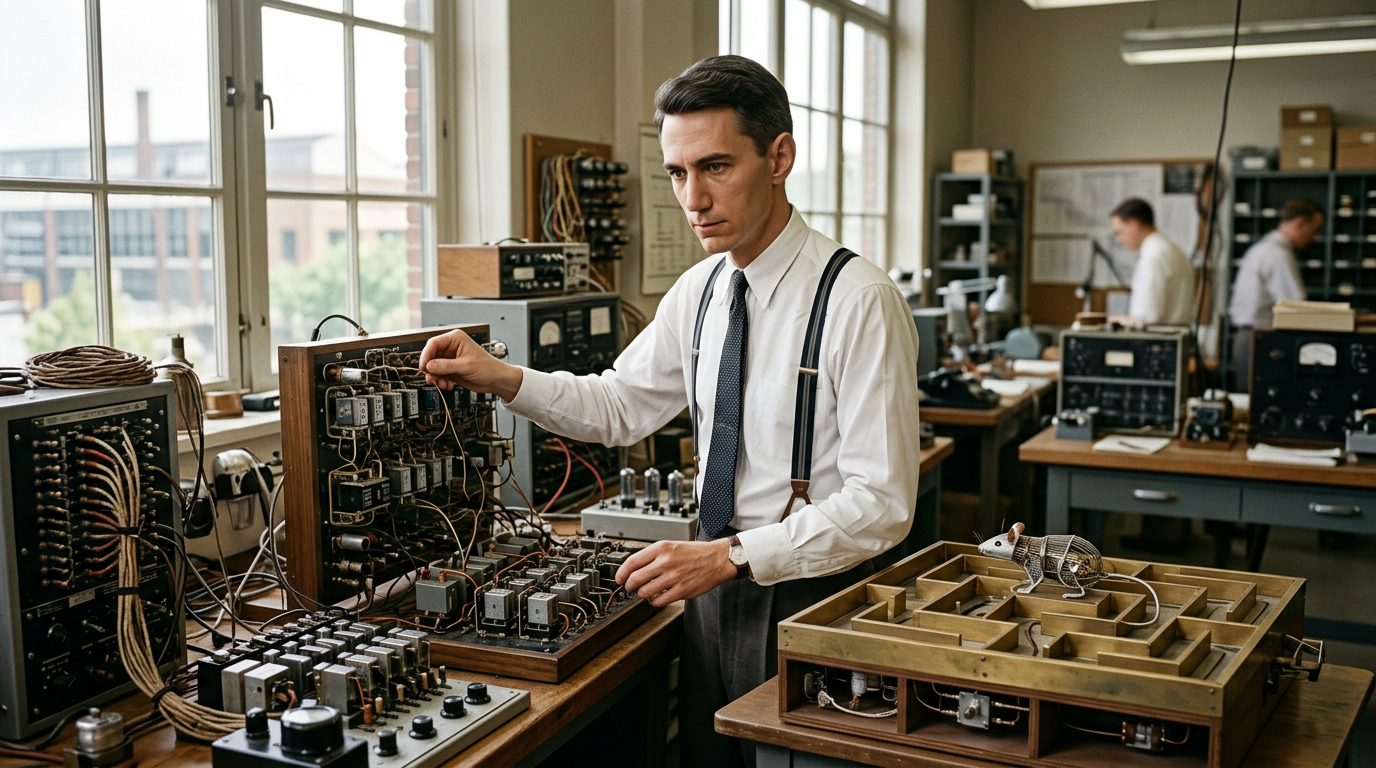
In 1950, Shannon demonstrated Theseus, a maze-solving electromechanical mouse. Theseus was an early electromechanical learning demonstration, not modern AI in the contemporary sense. Later Shannon returned to MIT, where he became a professor. He enjoyed building unusual gadgets and machines throughout his life. His ideas helped shape communications, computing and cryptography, and his work underlies modern digital communication, data compression, error correction, computing and cryptography.
What did they discover?
Digital Circuit Design from Boolean Algebra
His master's work showed that symbolic logic could be used to analyse and design switching circuits, a landmark in digital circuit design.
Information Theory
His 1948 paper A Mathematical Theory of Communication founded information theory, showing information could be measured and transmitted efficiently.
The Bit
He helped establish the central importance of the bit in digital information.
Cryptography
His 1949 paper Communication Theory of Secrecy Systems made a major contribution to the theoretical understanding of secret communications.
Amazing facts
Shannon studied both mathematics and electrical engineering.
His work helped turn circuit design into a more rigorous science.
His 1948 paper founded information theory.
The bit became central to digital technology through ideas strongly associated with Shannon's work.
He did important research on secret communications.
He built Theseus, a mouse that could solve a maze.
He enjoyed building unusual gadgets and machines.
His ideas helped shape communications, computing and cryptography.
Timeline
Born in Petoskey, Michigan
Completed undergraduate study at the University of Michigan
Completed his MIT master's degree and doctorate
Joined Bell Laboratories
Published A Mathematical Theory of Communication
Published Communication Theory of Secrecy Systems
Demonstrated Theseus, the maze-solving mouse
Received the National Medal of Science and the IEEE Medal of Honor
Received the Kyoto Prize
Died in Medford, Massachusetts
Awards & honours
Related Super Scientists
Alan Turing
1912–1954 · Mathematician & Computer Scientist
Making foundational contributions to theoretical computer science and artificial intelligence, and playing a major role in Allied codebreaking during the Second World War.
John von Neumann
1903–1957 · Mathematics, physics, computing, game theory and applied science
Playing a decisive role in shaping the stored-program computer model and the architecture commonly associated with his name.
Grace Hopper
1906–1992 · Computer Scientist & Naval Admiral
Developing one of the earliest compilers and pioneering word-based programming languages that helped make computers easier to program.