_(2).jpg)
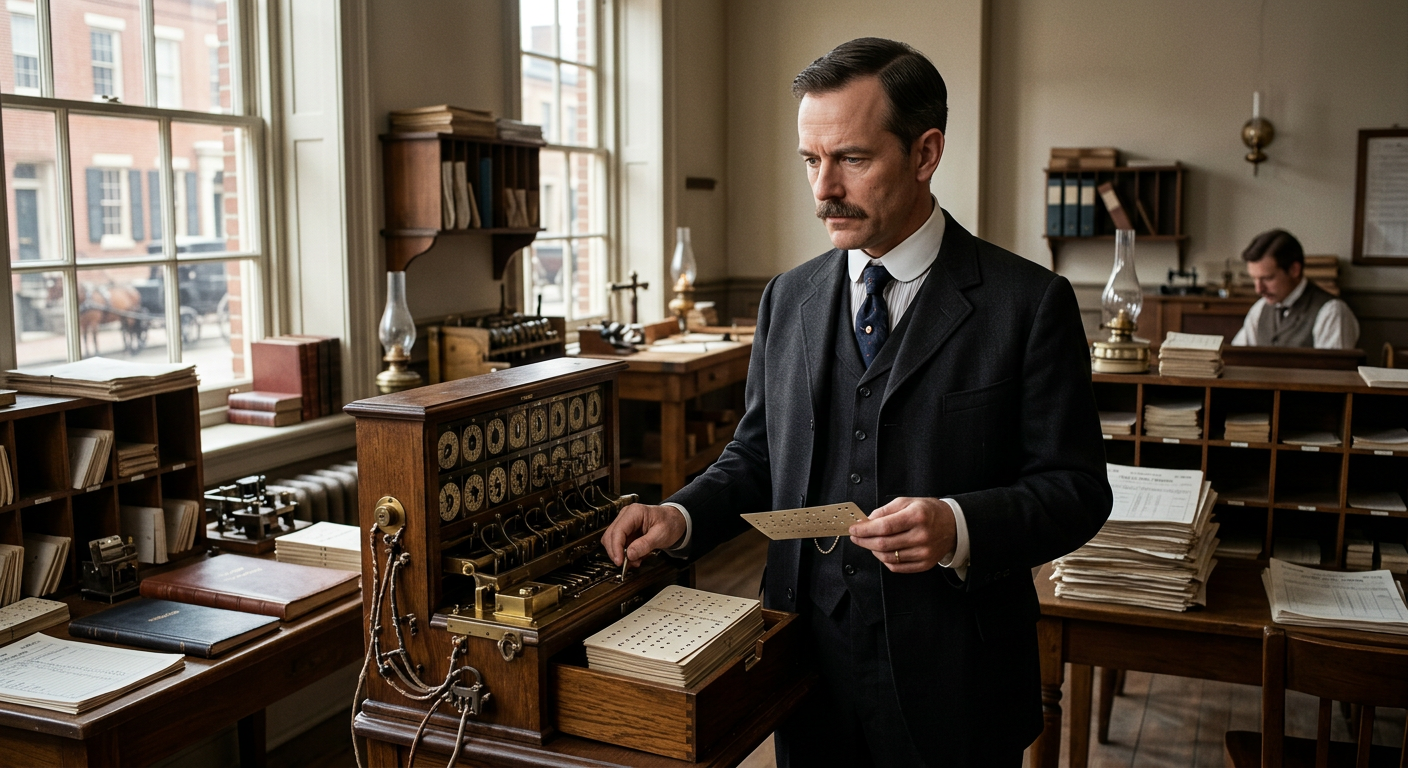
Herman Hollerith
1860–1929 · Engineering, statistics, invention and data processing
Herman Hollerith developed a punched-card tabulating system that helped process the 1890 U.S. Census and shaped the future of mechanised data processing.
“In place of these methods it is suggested that the work be done so far as possible by mechanical means.”
Why is this scientist famous?
Developing the punched-card tabulating system used to process the 1890 United States Census and helping establish mechanised data processing.
Hollerith helped change information processing from a slow manual task into something that machines could perform. His system connected the ideas that information could be encoded, stored and processed automatically, creating an important link between nineteenth-century mechanical and electrical technology and modern computing.
Herman's story
Education and Census Work
Herman Hollerith was born in Buffalo, New York, on 29 February 1860. He studied at the Columbia School of Mines and graduated in 1879 with an engineering degree. After graduating, he worked in connection with the 1880 United States Census. The enormous amount of information produced by the census convinced him that a faster method of processing data was needed.
A Faster Way to Count Information
Hollerith developed machines that could record information on punched cards and then electrically count and tabulate the holes. Information about each person in a census could be represented by holes punched in particular positions on a card. His tabulating machine used electrical contacts to detect those holes and operate counters, allowing huge quantities of information to be counted and sorted much faster than was possible by hand.
The 1890 Census
In 1888, Hollerith took part in and won a Census Office competition to find a faster method of processing census data. The Census Bureau's historical account records that his system handled the test information far faster than the competing methods. His punched-card tabulating system was then chosen for the 1890 United States Census. Columbia later awarded Hollerith a PhD in 1890 for work connected with his tabulating system.
From Tabulating Machines to Computing
In 1896, Hollerith founded the Tabulating Machine Company. In 1911, this company became part of the Computing-Tabulating-Recording Company, which was renamed International Business Machines Corporation, or IBM, in 1924. Hollerith's system showed that large collections of information could be represented in a machine-readable form and processed automatically. Punched-card systems descended from his work were later used by businesses, governments and computing systems for many decades, forming an important link between nineteenth-century mechanical and electrical technology and modern computing.
What did they discover?
Punched-Card Data Processing
Hollerith developed an effective system in which information could be represented by holes punched in particular positions on a card.
Electrical Tabulation
His tabulating machine used electrical contacts to detect holes in punched cards and operate mechanical counters.
The 1890 Census System
His system processed the United States Census information much faster than the competing methods and was chosen for the 1890 Census.
A Foundation for Mechanised Data Processing
His work showed that large collections of information could be encoded, stored and processed automatically, influencing data processing and later computing.
Amazing facts
Hollerith was born on 29 February, so his birthday only appears on the calendar in leap years.
He became involved with census work when enormous amounts of information were still being counted largely by hand.
In an 1888 Census Office test, Hollerith's system processed the trial data considerably faster than the competing methods.
His punched cards stored information using the position of holes in the card.
His tabulator detected those holes using electrical circuits connected to mechanical counters.
Hollerith's original punched card was approximately the size of a U.S. dollar bill of the period.
He founded the Tabulating Machine Company in 1896.
That company eventually became part of the business that developed into IBM.
Timeline
Born in Buffalo, New York
Graduated from the Columbia School of Mines
Worked in connection with the United States Census
Took part in and won the Census Office competition to find a faster method of processing census data
His punched-card tabulating system was used for the United States Census
Received his PhD from Columbia
Founded the Tabulating Machine Company
The Tabulating Machine Company became part of the Computing-Tabulating-Recording Company; in 1924 it was renamed IBM
Died on 17 November, aged 69
Awards & honours
Related Super Scientists
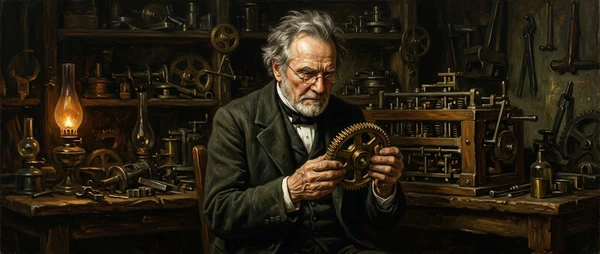
Charles Babbage
1791–1871 · Mathematician & Inventor
Designing the Difference Engine, an automatic mechanical calculator, and the Analytical Engine, an early design for a general-purpose programmable computer.
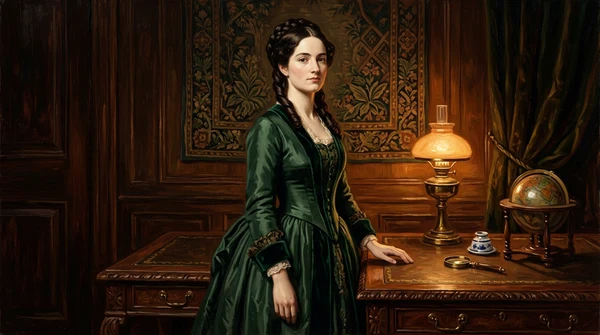
Ada Lovelace
1815–1852 · Mathematician
Publishing influential 1843 Notes on Charles Babbage's Analytical Engine, including a detailed algorithm for calculating Bernoulli numbers and a visionary description of uses beyond arithmetic.

Alan Turing
1912–1954 · Mathematician & Computer Scientist
Making foundational contributions to theoretical computer science and artificial intelligence, and playing a major role in Allied codebreaking during the Second World War.