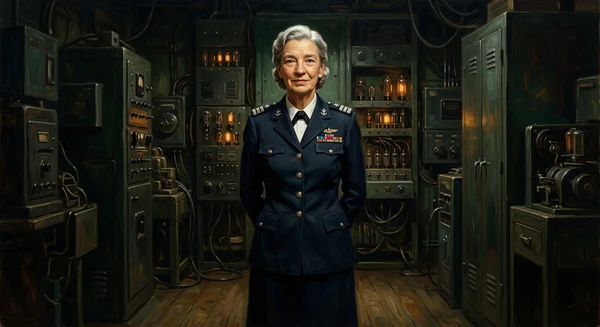
_(2).jpg)
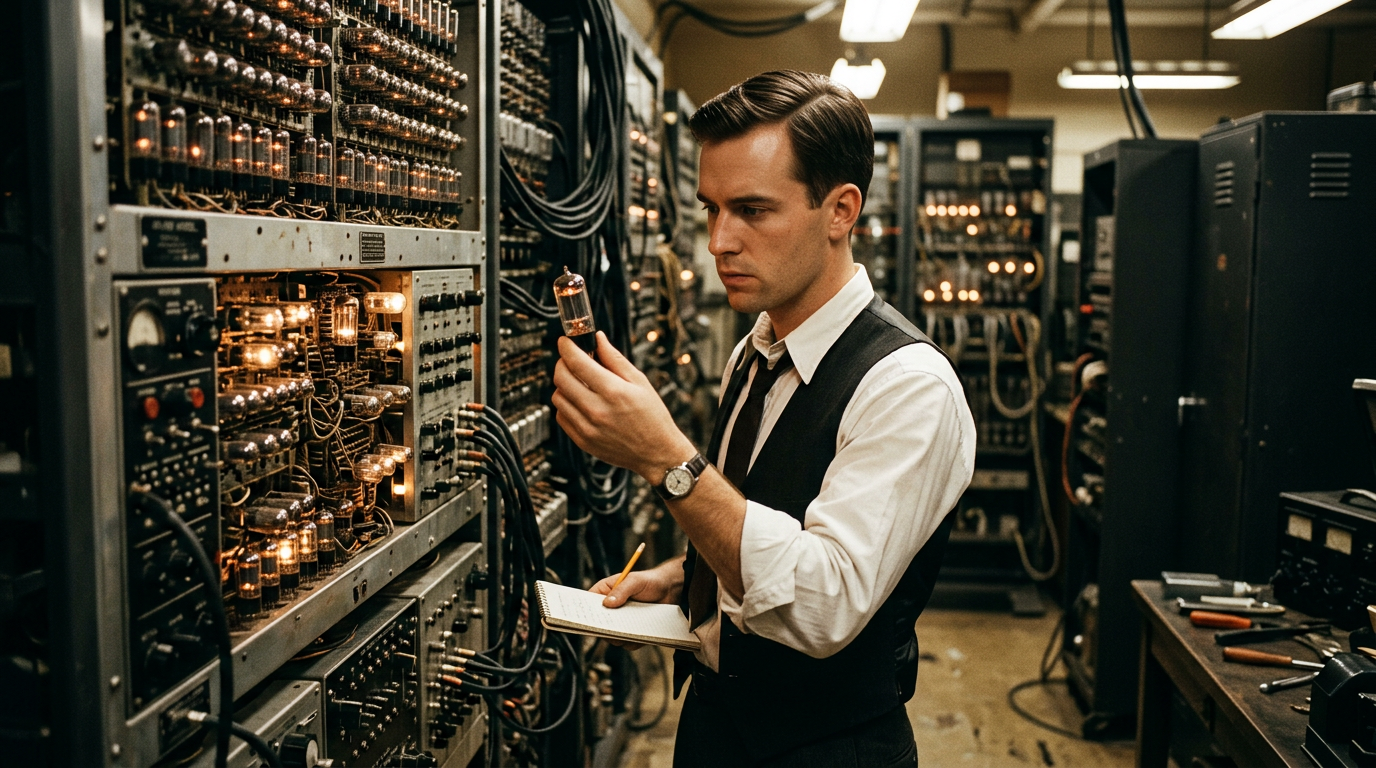
J. Presper Eckert
1919–1995 · Electrical engineering, computing and invention
J. Presper Eckert co-designed ENIAC with John Mauchly and solved vacuum-tube reliability problems that made early electronic computers possible.
“So the machine that does the work … was called a computer.”
Why is this scientist famous?
Co-designing ENIAC, helping create EDVAC, BINAC and UNIVAC, and making major engineering advances in early electronic computing.
J. Presper Eckert was one of the great engineering pioneers of electronic computing. He helped solve the practical hardware problems that made early electronic computers possible, and his work connects the birth of electronic computing to the rise of the computer industry.
Presper's story
A Young Engineer at the Moore School
John Adam Presper Eckert Jr. was born in Philadelphia, Pennsylvania, on 9 April 1919. He was fascinated by electronics from a young age. He studied at the Moore School of Electrical Engineering at the University of Pennsylvania, receiving a BS in 1941 and an MS in 1943. He became deeply involved in electronics and computing while at the Moore School.
Building ENIAC
From 1943 to 1946, Eckert served as chief engineer of the ENIAC project. He co-designed ENIAC with John Mauchly. A major part of his achievement was making large numbers of vacuum tubes reliable enough for computing, which was a key technical challenge. ENIAC was unveiled to the public in 1946 and became one of the most important machines in computing history.
From ENIAC to a Computer Company
In 1946, Eckert and Mauchly founded a company that became the Eckert-Mauchly Computer Corporation, one of the earliest commercial computer companies. BINAC was completed in 1949, and UNIVAC I was delivered in 1951. Eckert also contributed to EDVAC. He later worked with Remington Rand and UNIVAC. He helped move computing from experimental wartime hardware toward practical commercial systems.
Legacy
Eckert's great importance lies in the practical engineering of early electronic computers. He helped solve the practical hardware problems that made early electronic computers possible. In 1968 he received the National Medal of Science, and in 1980 he received the IEEE Computer Society Pioneer Award. He died in Bryn Mawr, Pennsylvania, on 3 June 1995. His work connects the birth of electronic computing to the rise of the computer industry.
What did they discover?
Co-Designing ENIAC
He co-designed ENIAC with John Mauchly and served as chief engineer of the project, solving difficult vacuum-tube reliability problems.
Vacuum-Tube Reliability
He solved the difficult technical challenge of making large numbers of vacuum tubes reliable enough for computing, a key breakthrough.
EDVAC, BINAC and UNIVAC
He contributed to later machines including EDVAC, BINAC and UNIVAC I, helping advance computing beyond the first experimental machines.
Early Commercial Computing
He co-founded the Eckert-Mauchly Computer Corporation, one of the earliest commercial computer companies, helping move computing toward an industry.
Amazing facts
Eckert was fascinated by electronics from a young age.
He studied at the Moore School of Electrical Engineering.
He became chief engineer of the ENIAC project.
A major part of his achievement was making large numbers of vacuum tubes reliable enough for computing.
He co-designed ENIAC with John Mauchly.
He later worked on EDVAC, BINAC and UNIVAC.
He helped found one of the earliest commercial computer companies.
His work helped move computing from wartime experiment to practical commercial technology.
Timeline
Born in Philadelphia
Received his BS from the University of Pennsylvania
Received his MS from the University of Pennsylvania
Became chief engineer of the ENIAC project
ENIAC was unveiled to the public
Founded the company later known as the Eckert-Mauchly Computer Corporation with John Mauchly
BINAC was completed
UNIVAC I was delivered
Received the National Medal of Science
Died in Bryn Mawr, Pennsylvania
Awards & honours
Related Super Scientists
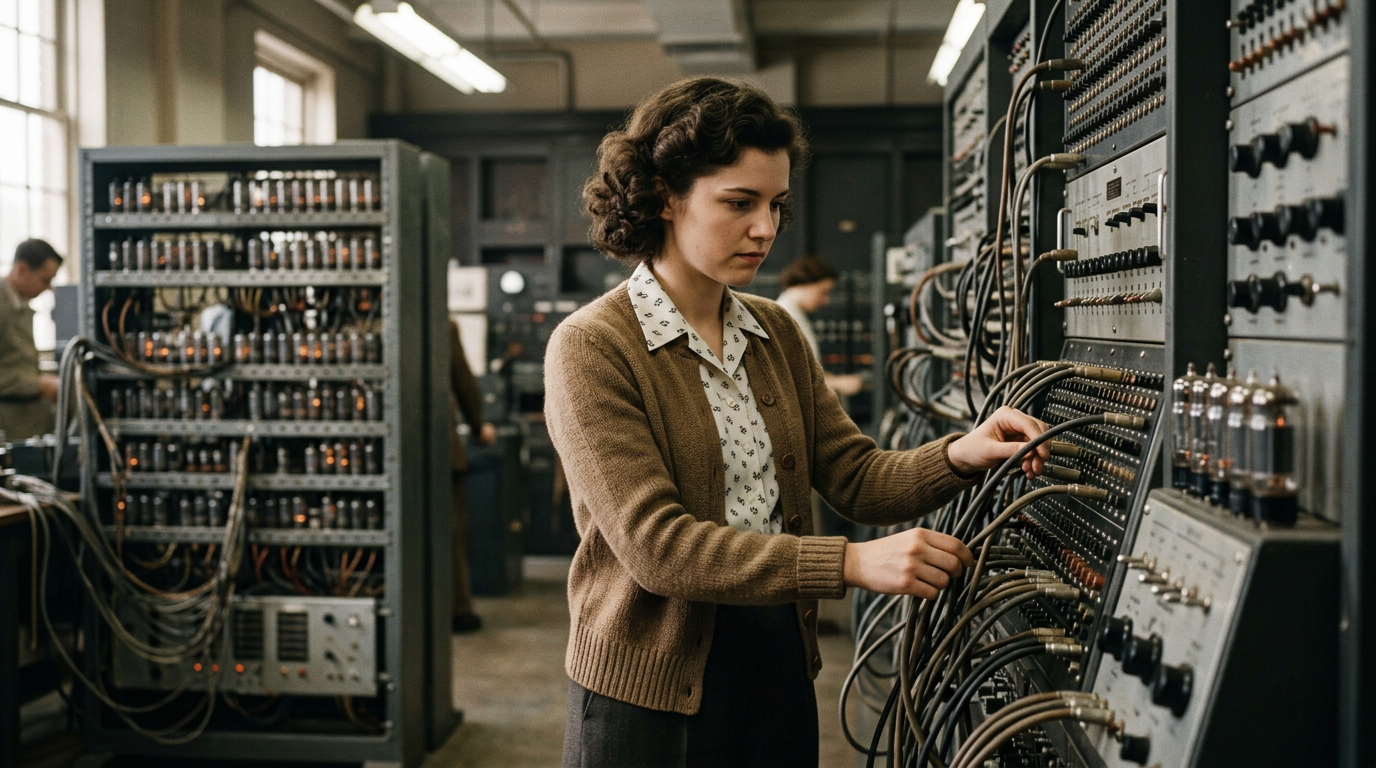
Jean Bartik
1924–2011 · Computer programming and early computing
Being one of the original programmers of ENIAC and helping establish programming as a real technical discipline.
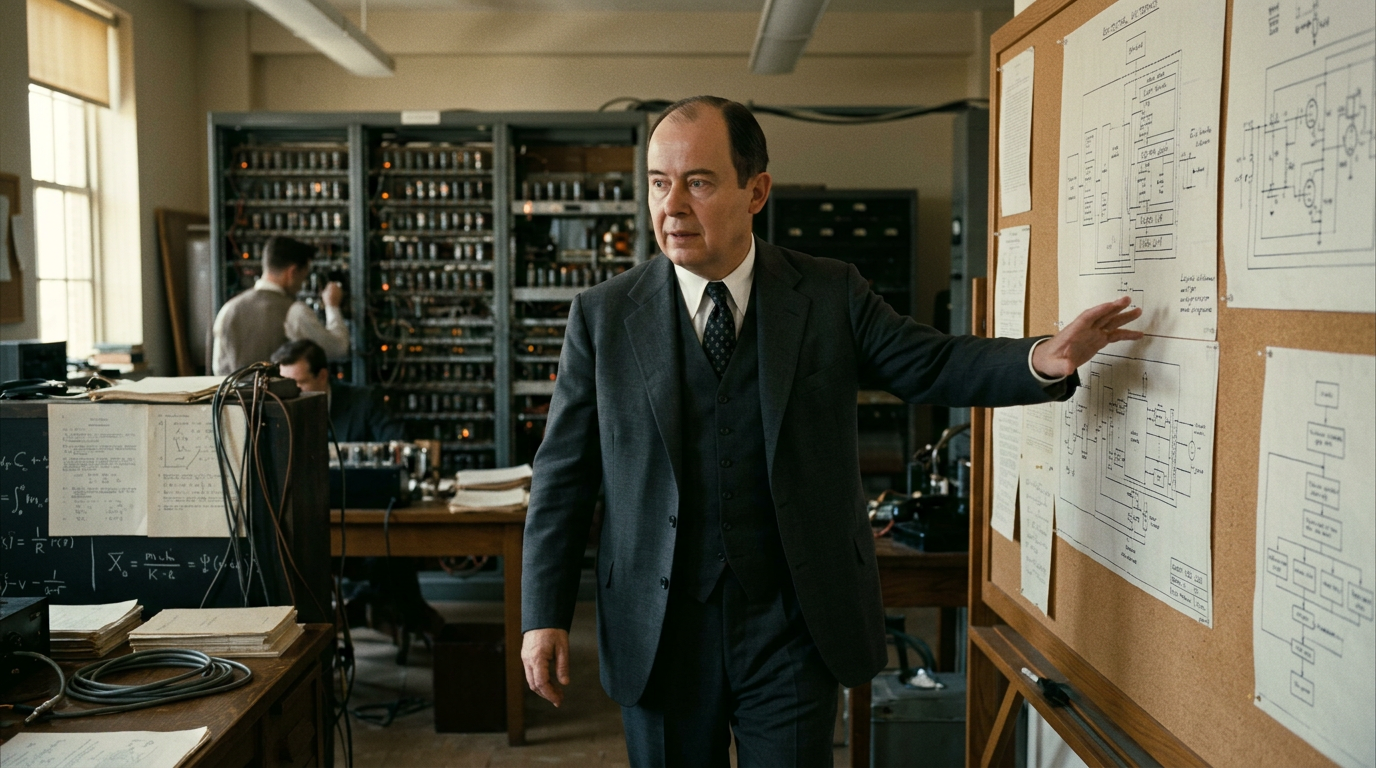
John von Neumann
1903–1957 · Mathematics, physics, computing, game theory and applied science
Playing a decisive role in shaping the stored-program computer model and the architecture commonly associated with his name.
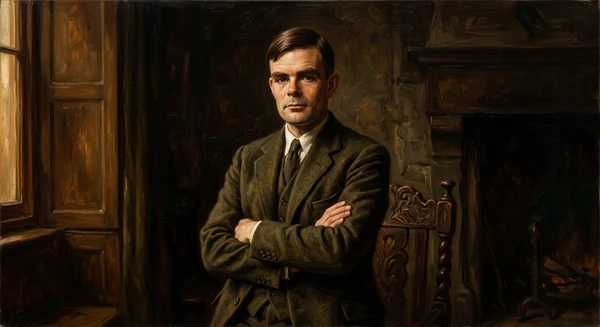
Alan Turing
1912–1954 · Mathematician & Computer Scientist
Making foundational contributions to theoretical computer science and artificial intelligence, and playing a major role in Allied codebreaking during the Second World War.