_(2).jpg)
Enrico Fermi
1901–1954 · Physics — theoretical and experimental
Enrico Fermi was an Italian-American physicist renowned for both theory and experiment, from Fermi-Dirac statistics to the first controlled nuclear chain reaction.
“It was with some trepidation that the order was given to remove one more foot and a half of the strip.”
Why is this scientist famous?
An Italian-American physicist who led the first controlled nuclear chain reaction and developed Fermi-Dirac statistics.
Fermi’s rare mastery of both theoretical and experimental physics, from Fermi-Dirac statistics to slow-neutron physics and the first controlled nuclear chain reaction, gave him enormous influence on later particle and nuclear physics.
Enrico's story
A physicist of theory and experiment
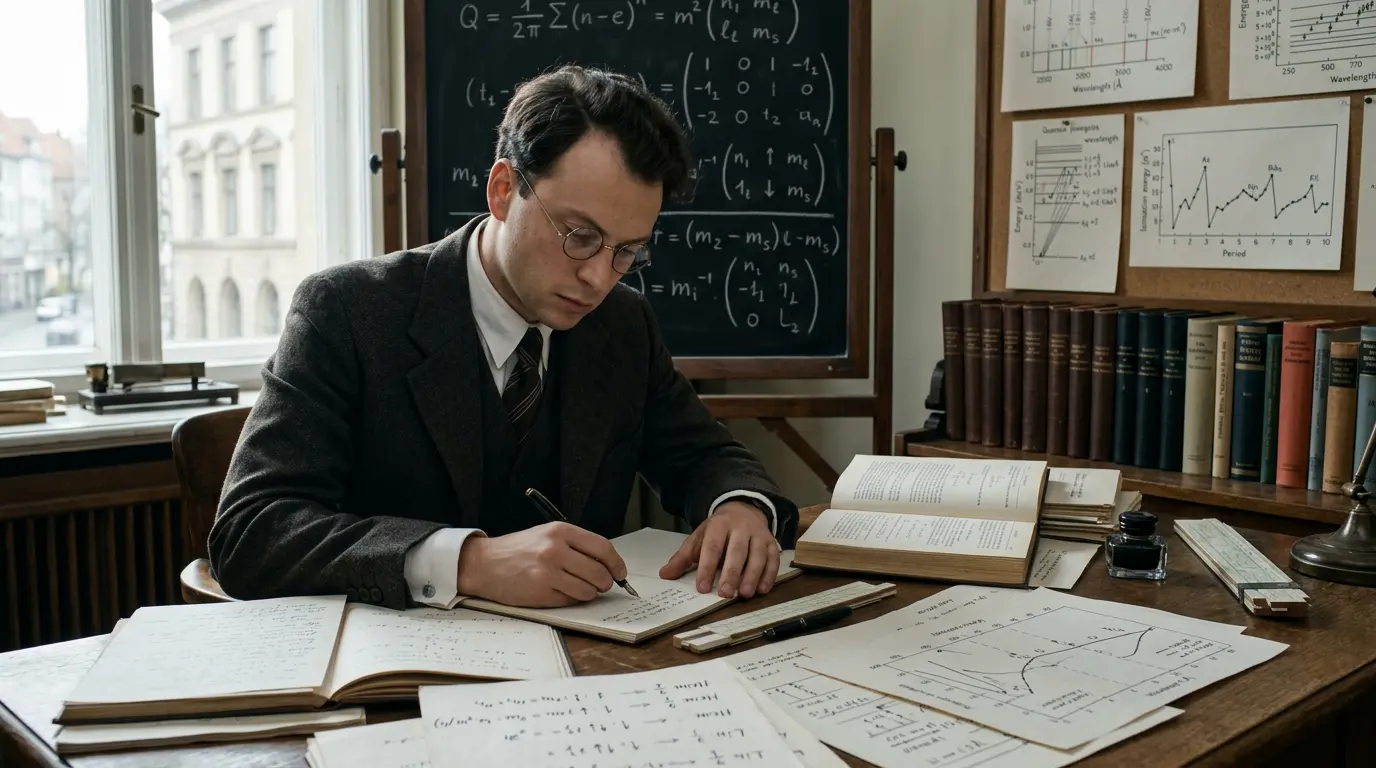
Enrico Fermi was born on 29 September 1901 in Rome, Italy. He entered the Scuola Normale Superiore in Pisa, studied at the University of Pisa, and received his doctorate in physics in 1922. He spent time in Göttingen in 1923 working in Max Born’s institute and worked with Paul Ehrenfest in Leiden in 1924. Fermi became famous for being exceptionally accomplished in both theoretical and experimental physics — a rare combination.
Fermi-Dirac statistics and the Rome group
From 1924 to 1926 Fermi was a lecturer in mathematical physics and mechanics at the University of Florence. In 1926 he developed statistical laws governing particles that obey the Pauli exclusion principle. The statistics became known as Fermi-Dirac statistics after related work by Paul Dirac, and particles that obey these statistics are now called fermions. That same year Fermi was appointed professor of theoretical physics at the University of Rome, where he built a major research group.
Slow neutrons and the Nobel Prize
In 1934 Fermi and his colleagues investigated neutron bombardment of atomic nuclei. They discovered that slowing neutrons — using materials such as paraffin — could greatly increase the probability of some nuclear reactions. This work led to the production of many radioactive isotopes. Fermi received the 1938 Nobel Prize in Physics for his work on radioactive substances produced by neutron irradiation and nuclear reactions caused by slow neutrons. After receiving the Nobel Prize in Stockholm, Fermi and his family left Fascist Italy rather than return permanently; the racial laws endangered his Jewish wife Laura and their family.
Chicago Pile-1 and the Manhattan Project
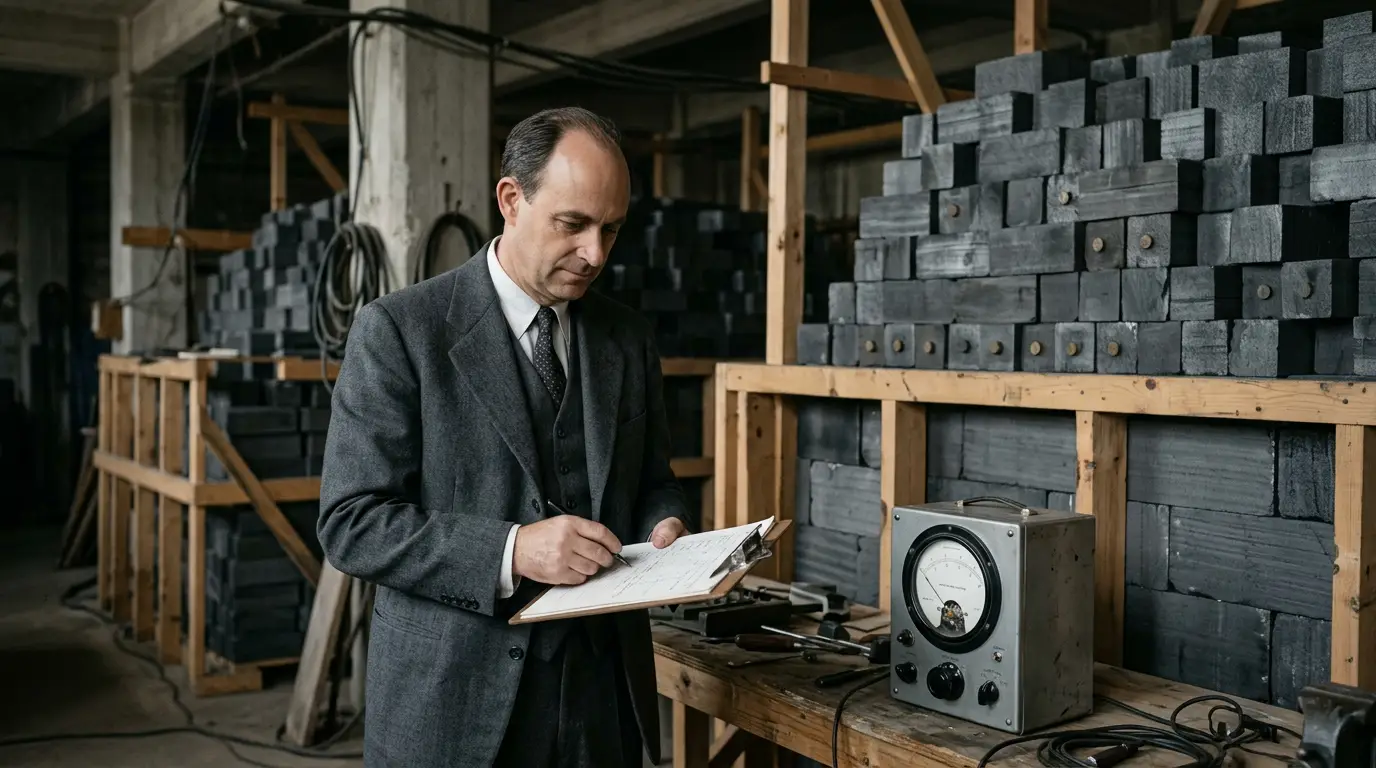
Fermi worked at Columbia University in the United States from 1939. On 2 December 1942 he led the Chicago team that achieved the world’s first controlled, self-sustaining nuclear fission chain reaction beneath the west stands of the University of Chicago’s Stagg Field. Chicago Pile-1 (CP-1) used graphite and uranium, and control was achieved using neutron-absorbing cadmium control rods. Fermi became a United States citizen in 1944 and later worked at Los Alamos during the Manhattan Project. After the war he returned to the University of Chicago. He died in Chicago on 28 November 1954. Fermi National Accelerator Laboratory — Fermilab — was later named in his honour.
What did they discover?
Fermi-Dirac statistics
In 1926 Fermi developed statistical laws governing particles that obey the Pauli exclusion principle; the statistics became known as Fermi-Dirac statistics after related work by Paul Dirac, and the particles are now called fermions.
Slow-neutron physics
In 1934 Fermi and his Rome group discovered that slowing neutrons could greatly increase the probability of some nuclear reactions, leading to the production of many radioactive isotopes.
Chicago Pile-1 and the first controlled chain reaction
On 2 December 1942 Fermi led the team that achieved the world’s first controlled, self-sustaining nuclear fission chain reaction beneath the stands of Stagg Field at the University of Chicago.
Amazing facts
Fermi became famous for being exceptionally accomplished in both theoretical and experimental physics.
The particle family called fermions is named after him.
Fermi-Dirac statistics remains fundamental to modern quantum physics.
His Rome group discovered that slowing neutrons could make certain nuclear reactions much more likely.
He received the 1938 Nobel Prize in Physics for his neutron-irradiation and slow-neutron research.
After collecting his Nobel Prize in Stockholm, he and his family travelled to the United States rather than return permanently to Fascist Italy.
Chicago Pile-1 achieved its historic chain reaction beneath the stands of a University of Chicago football stadium.
Fermi National Accelerator Laboratory — Fermilab — was later named in his honour.
Timeline
Born in Rome
Received his doctorate in physics from the University of Pisa
Worked at Max Born’s institute in Göttingen
Worked with Paul Ehrenfest in Leiden and began teaching in Florence
Developed Fermi statistics and became professor of theoretical physics in Rome
Carried out major neutron-irradiation and slow-neutron research with his Rome group
Received the Nobel Prize in Physics and left Fascist Italy with his family
Began work at Columbia University in the United States
Led the Chicago team that achieved the first controlled, self-sustaining nuclear chain reaction
Became a United States citizen and later worked at Los Alamos
Died in Chicago
Awards & honours
Related Super Scientists
James Chadwick
1891–1974 · Nuclear physics
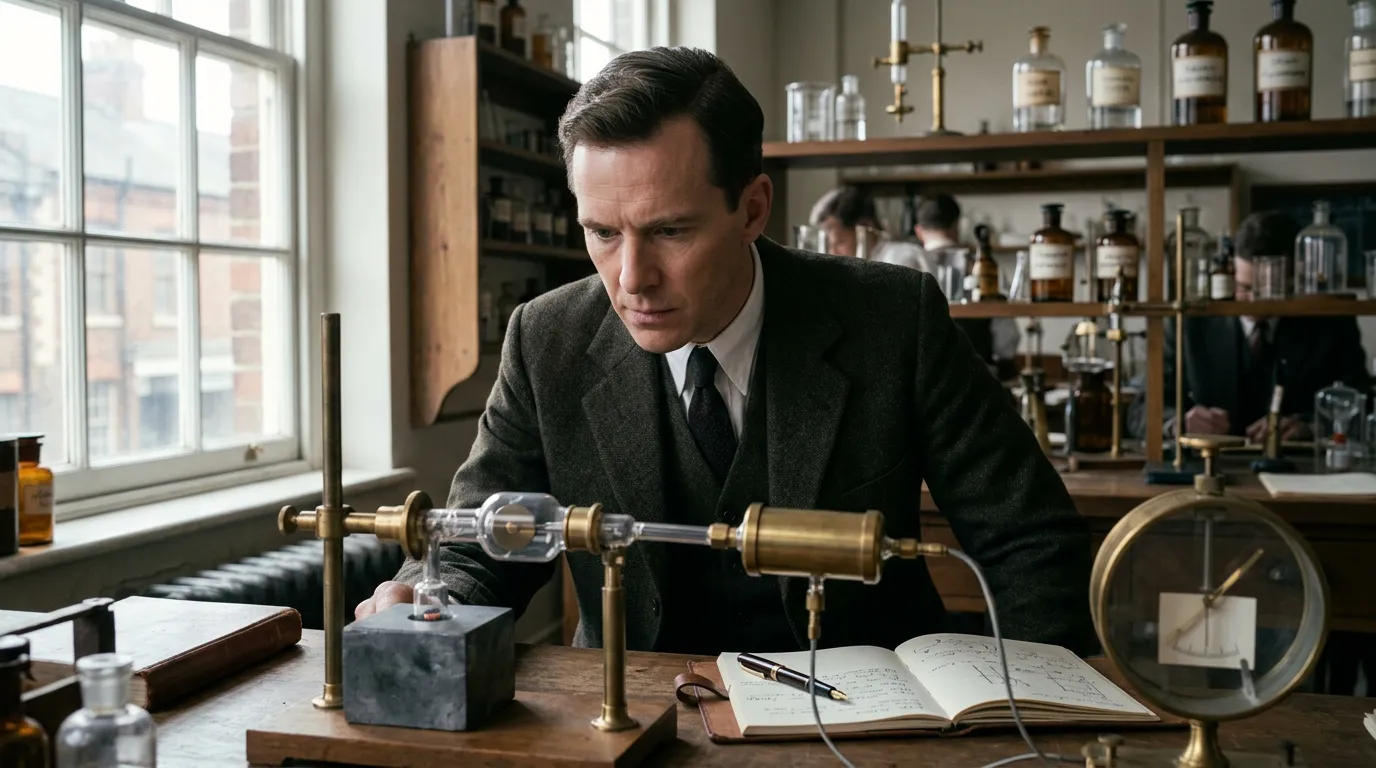
A British physicist who discovered the neutron in 1932 at the Cavendish Laboratory.
Max Born
1882–1970 · Theoretical Physicist
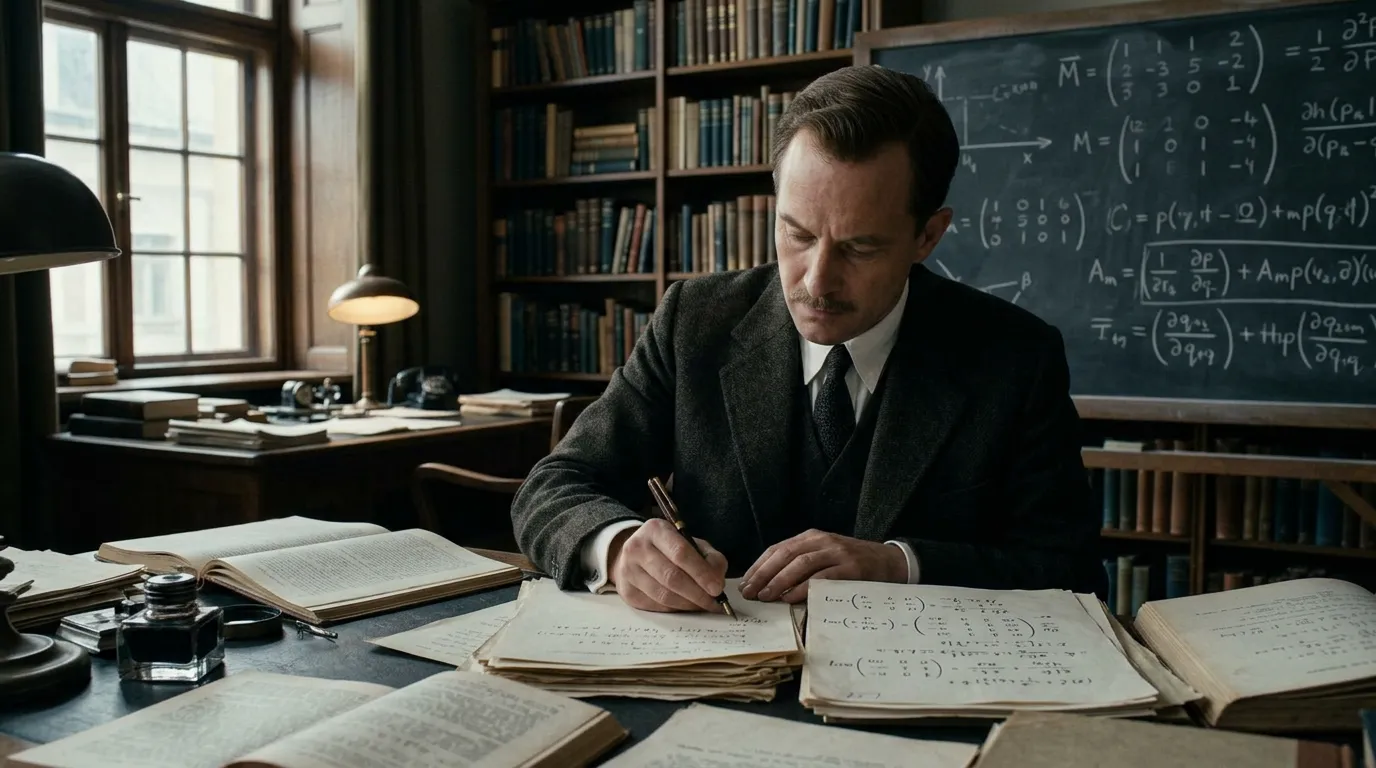
Making fundamental contributions to quantum mechanics, including the probabilistic interpretation of the wavefunction known as the Born rule, and helping develop matrix mechanics. He received the 1954 Nobel Prize in Physics.
Werner Heisenberg
1901–1976 · Theoretical Physicist
Initiating matrix mechanics in 1925 and formulating the uncertainty principle in 1927. He received the 1932 Nobel Prize in Physics.