_(2).jpg)
James Chadwick
1891–1974 · Nuclear physics
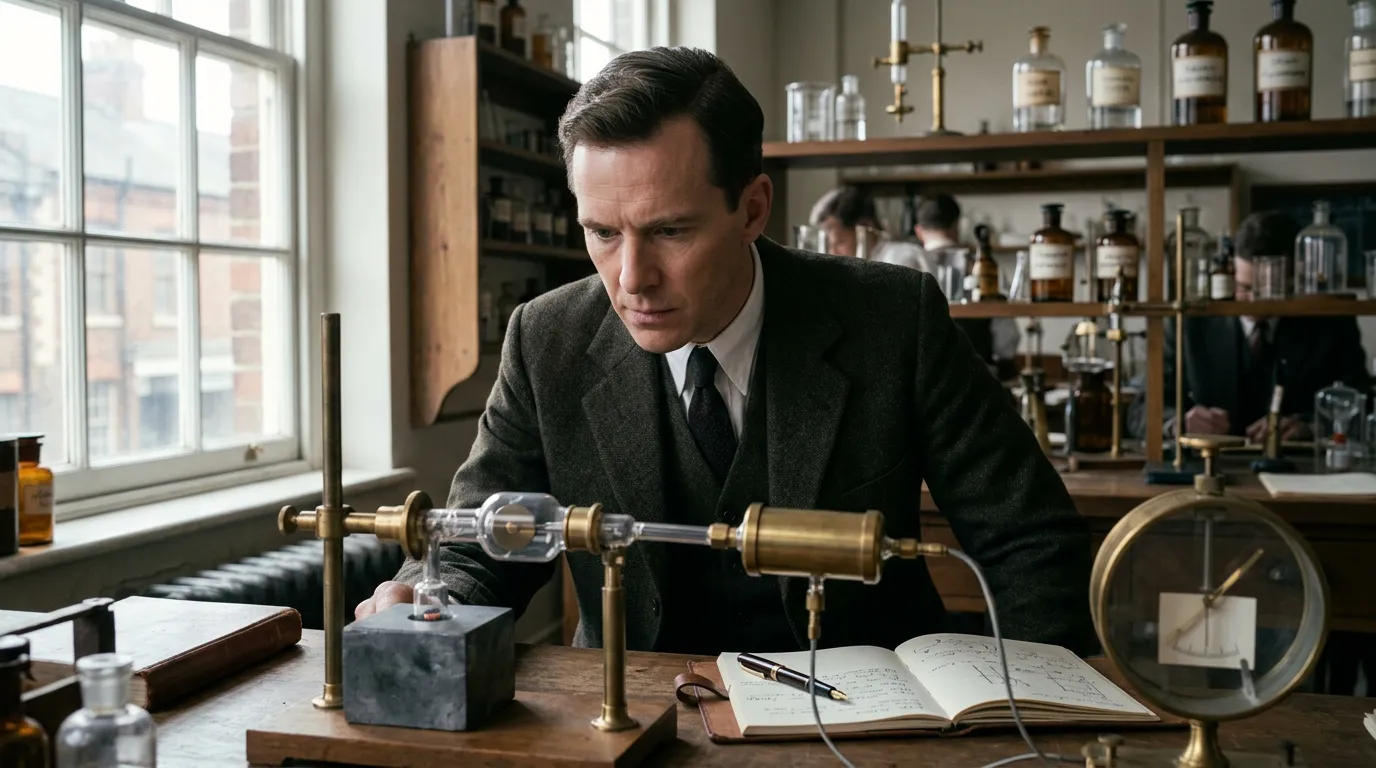
James Chadwick was a British physicist whose 1932 discovery of the neutron completed a crucial part of the picture of the atomic nucleus.
Why is this scientist famous?
A British physicist who discovered the neutron in 1932 at the Cavendish Laboratory.
The discovery of the neutron completed a crucial part of the basic picture of the atomic nucleus, and neutrons became essential tools for studying nuclei in later nuclear physics.
James's story
From scholarships to Berlin
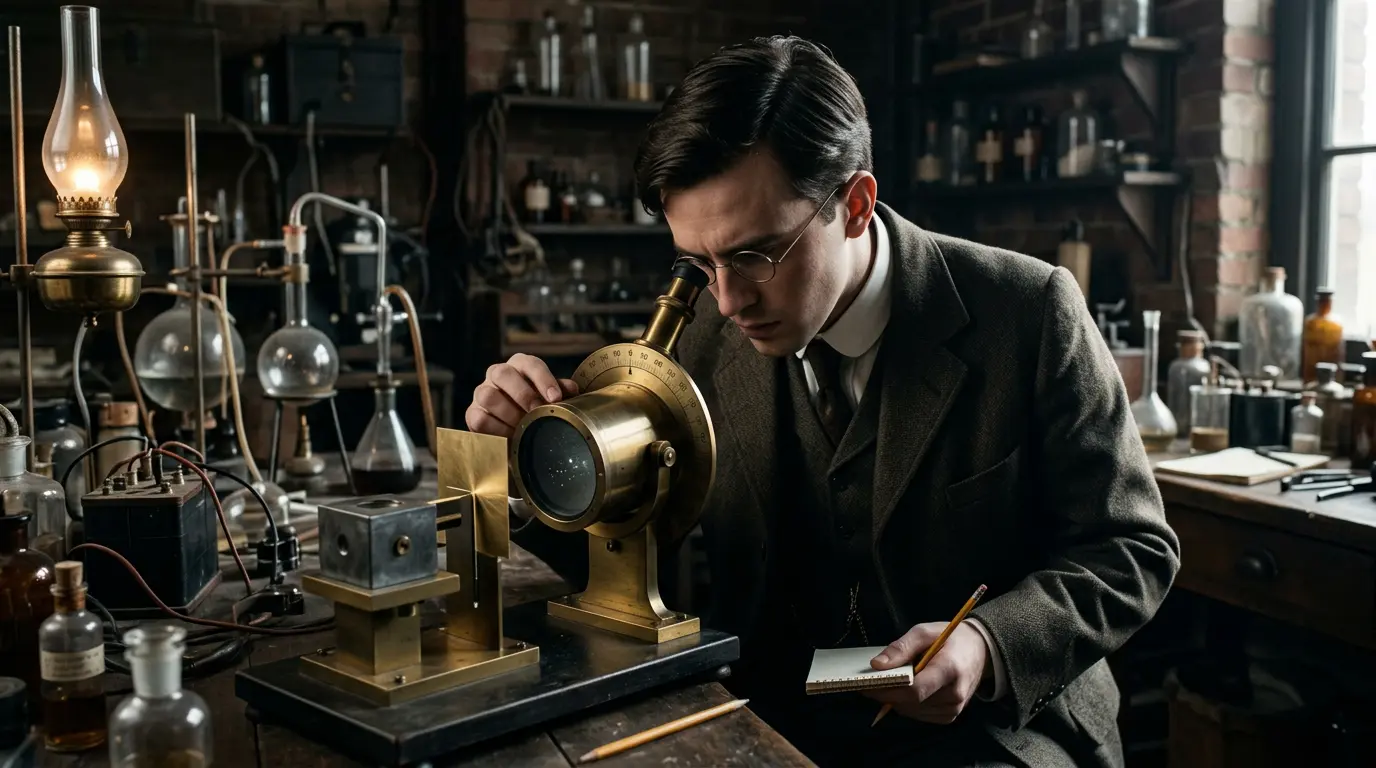
James Chadwick was born on 20 October 1891 in Bollington, near Macclesfield, Cheshire, England. He won a scholarship to study physics at the University of Manchester while still a teenager and studied under Ernest Rutherford, one of the central figures in the discovery of the atomic nucleus. He graduated from Manchester in 1911 and completed a master’s degree there in 1913. He then won a scholarship that took him to Berlin to work with Hans Geiger.
Interned during the First World War
When the First World War began in 1914, Chadwick was in Germany and was interned at the Ruhleben civilian detention camp for the duration of the war. Even with very limited equipment, he and other prisoners organised scientific activities. After the war he returned to research with Rutherford, completed a doctorate at Cambridge in 1921, and became a Fellow of Gonville and Caius College and Assistant Director of Research at the Cavendish Laboratory.
Discovering the neutron
Rutherford had earlier proposed that a neutral nuclear particle might exist. In 1930 Walter Bothe and Herbert Becker observed penetrating radiation when beryllium was bombarded with alpha particles, and Irène Joliot-Curie and Frédéric Joliot carried out further work on this radiation. In 1932 Chadwick performed experiments showing that the radiation could be explained by a new neutral particle with a mass similar to the proton. This particle was the neutron. Because neutrons have no electric charge, they can penetrate nuclei differently from charged particles, which made them especially important in later nuclear research.
From Cambridge to Liverpool and beyond
Chadwick received the Nobel Prize in Physics in 1935 for the discovery of the neutron and moved to the University of Liverpool as professor and chair of physics that same year. At Liverpool he helped build a major centre for nuclear physics. During the Second World War he became involved in Britain’s atomic-bomb research and later led the British Mission working with the Manhattan Project. He was knighted in 1945 and later became Master of Gonville and Caius College, Cambridge. He died in Cambridge on 24 July 1974.
What did they discover?
Discovering the neutron
In 1932 Chadwick performed experiments showing that mysterious radiation from beryllium could be explained by a new neutral particle with a mass similar to the proton, which he identified as the neutron.
Building nuclear physics at Liverpool
As professor and chair of physics at Liverpool from 1935, he helped build a major centre for nuclear physics research.
The British Mission and the Manhattan Project
During the Second World War he became an important scientific link between the British atomic programme and the Manhattan Project.
Amazing facts
Chadwick won a scholarship to study physics while still a teenager.
He studied under Ernest Rutherford, one of the central figures in the discovery of the atomic nucleus.
When the First World War began, Chadwick was working in Germany and was interned for the duration of the war.
Even while interned at Ruhleben, he and other prisoners organised scientific activities with very limited equipment.
In 1932 he showed that mysterious radiation from beryllium contained a new neutral particle: the neutron.
He received the Nobel Prize only three years after the neutron discovery.
At Liverpool he helped build a major centre for nuclear physics.
During the Second World War he became an important scientific link between the British atomic programme and the Manhattan Project.
Timeline
Born in Bollington, Cheshire
Graduated from the University of Manchester
Completed a master’s degree at Manchester and went to Berlin to work with Hans Geiger
Interned at Ruhleben in Germany during the First World War
Obtained a doctorate at Cambridge
Elected Fellow of the Royal Society
Discovered the neutron at the Cavendish Laboratory
Received the Hughes Medal of the Royal Society
Awarded the Nobel Prize in Physics and moved to the University of Liverpool as professor of physics
Knighted
Received the Copley Medal of the Royal Society
Died in Cambridge
Awards & honours
Related Super Scientists
Ernest Rutherford
1871–1937 · Physicist
Discovering the nuclear structure of the atom and pioneering the field of nuclear physics.
Hans Geiger
1882–1945 · Experimental physicist
Hans Geiger developed methods for detecting and counting ionising radiation, participated in the Geiger–Marsden scattering experiments that helped reveal the atomic nucleus, and later developed the Geiger–Müller counter with Walther Müller.
Niels Bohr
1885–1962 · Physicist
Developed the Bohr model of the atom and made foundational contributions to quantum mechanics.