_(2).jpg)
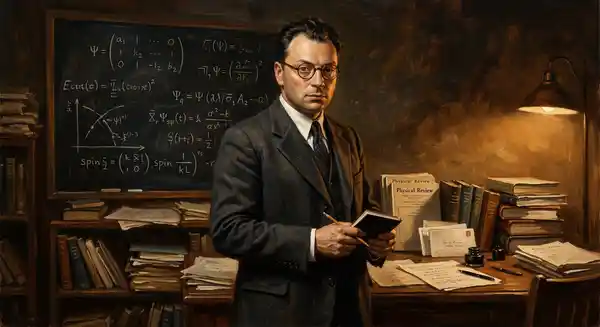
Wolfgang Pauli
1900–1958 · Theoretical Physicist
Wolfgang Pauli was an Austrian-born theoretical physicist who formulated the exclusion principle and proposed the neutrino. He received the 1945 Nobel Prize in Physics.
“The surface of the Earth is not simply a stage on which the history of life is acted out, but it is itself a part of the drama.”
Why is this scientist famous?
Formulating the Pauli exclusion principle and proposing the existence of the neutral particle later called the neutrino. He received the 1945 Nobel Prize in Physics.
Wolfgang's story
A Young Prodigy in Physics
Wolfgang Ernst Pauli was born on 25 April 1900 in Vienna, Austria. He finished school in Vienna in 1918 and began studying physics at the University of Munich that same year, studying under Arnold Sommerfeld.
Pauli showed extraordinary ability from the start. He received his doctorate in 1921 at only 21 and wrote an influential account of relativity while still very young. Einstein praised his scientific ability.
The Exclusion Principle
After his doctorate, Pauli worked as an assistant at Göttingen in 1921–1922 and then spent time with Niels Bohr in Copenhagen in 1922–1923. He worked at Hamburg during the 1920s and completed his habilitation there in 1924.
During 1924, Pauli developed the principle that would bear his name. Published in 1925, the exclusion principle states that identical fermions cannot occupy the same quantum state. Pauli originally developed it in connection with electrons in atoms, and it became essential to understanding atomic structure and the periodic table.
Pauli received the 1945 Nobel Prize in Physics for the discovery of the exclusion principle.
The Neutrino Proposal
In December 1930, Pauli proposed a new neutral particle to account for missing energy in beta decay — a process in which some energy seemed to disappear. He described the idea in his famous open letter to 'radioactive ladies and gentlemen'.
Enrico Fermi later developed beta-decay theory and popularised the name 'neutrino'. The neutrino was experimentally detected much later by Clyde Cowan and Frederick Reines. Pauli proposed its existence years before it was detected.
Zurich, Princeton and Legacy
In 1928, Pauli became professor of theoretical physics at ETH Zurich. In 1940, he moved temporarily to the United States and worked at the Institute for Advanced Study in Princeton. He returned to ETH Zurich in 1946.
Pauli became an American citizen in 1946 and a Swiss citizen in 1949. He died on 15 December 1958 in Zurich, Switzerland.
The exclusion principle remains one of the most important rules in quantum physics. It helps explain why electrons occupy different atomic shells, which in turn explains the structure of the periodic table and the chemical behaviour of the elements.
What did they discover?
The Pauli Exclusion Principle
Published in 1925, the exclusion principle states that identical fermions cannot occupy the same quantum state. It became essential to understanding atomic structure and the periodic table.
The Neutrino Proposal
In December 1930, Pauli proposed a new neutral particle to account for missing energy in beta decay. Enrico Fermi later developed the theory and popularised the name 'neutrino'.
Nobel Prize in Physics, 1945
Pauli received the 1945 Nobel Prize in Physics for the discovery of the exclusion principle.
Amazing facts
Pauli completed his doctorate at only 21.
He wrote an influential account of relativity while still very young.
Einstein praised his scientific ability.
He proposed the neutrino years before it was experimentally detected.
The exclusion principle helps explain why electrons occupy different atomic shells.
Timeline
Born in Vienna, Austria.
Received his doctorate from the University of Munich.
Published the exclusion principle.
Became professor of theoretical physics at ETH Zurich.
Proposed the existence of a new neutral particle later called the neutrino.
Awarded the Nobel Prize in Physics for the exclusion principle.
Returned to ETH Zurich.
Became a Swiss citizen.
Died in Zurich, Switzerland.
Awards & honours
Related Super Scientists
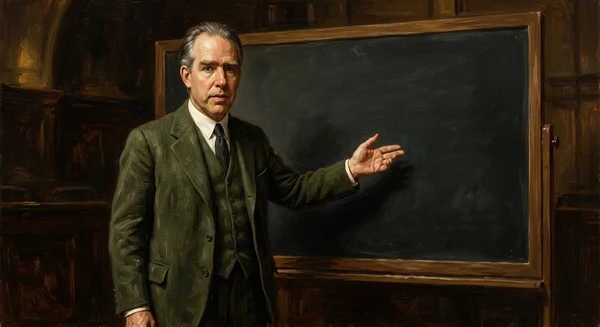
Niels Bohr
1885–1962 · Physicist
Developed the Bohr model of the atom and made foundational contributions to quantum mechanics.
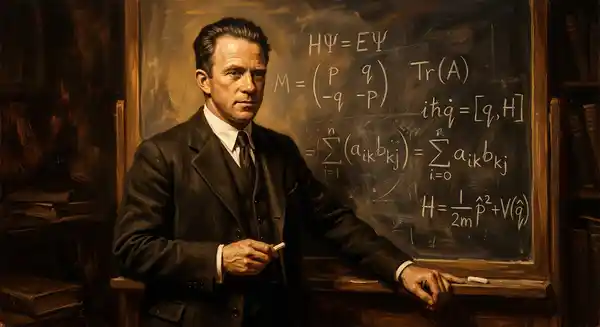
Werner Heisenberg
1901–1976 · Theoretical Physicist
Initiating matrix mechanics in 1925 and formulating the uncertainty principle in 1927. He received the 1932 Nobel Prize in Physics.
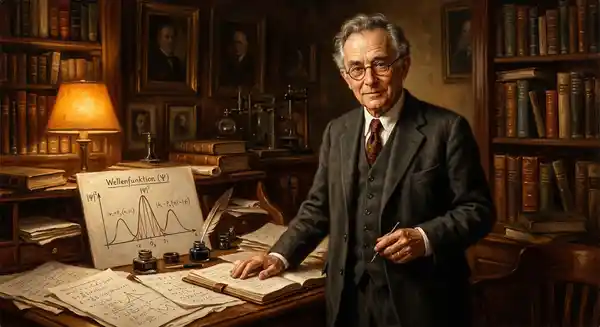
Max Born
1882–1970 · Theoretical Physicist
Making fundamental contributions to quantum mechanics, including the probabilistic interpretation of the wavefunction known as the Born rule, and helping develop matrix mechanics. He received the 1954 Nobel Prize in Physics.