_(2).jpg)
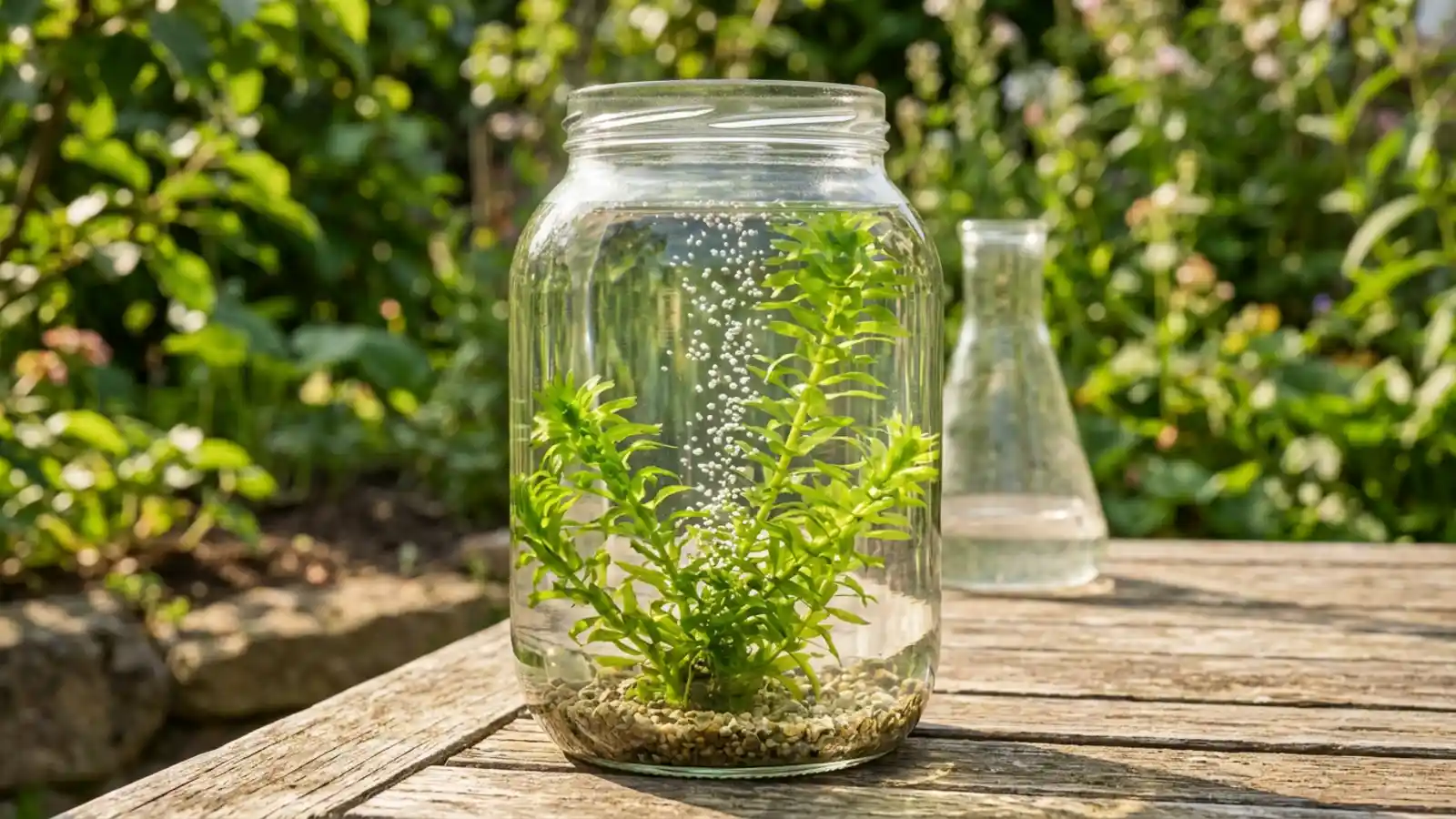
Discover how experiments with plants, light, gases and carbon revealed photosynthesis and how plants use sunlight to build the molecules they need.
Plants do something that animals cannot.
They take simple materials from their surroundings and, using energy from light, build the organic molecules they need to grow.
In the process, green plants also release oxygen.
Today we call this **photosynthesis**.
At school, it can look wonderfully neat:
**carbon dioxide + water → glucose + oxygen**
with light providing the energy.
But scientists did not discover that equation all at once.
What does a plant actually take from the air?
During the eighteenth century, scientists were beginning to realise that air was not one single substance.
Different gases could behave very differently.
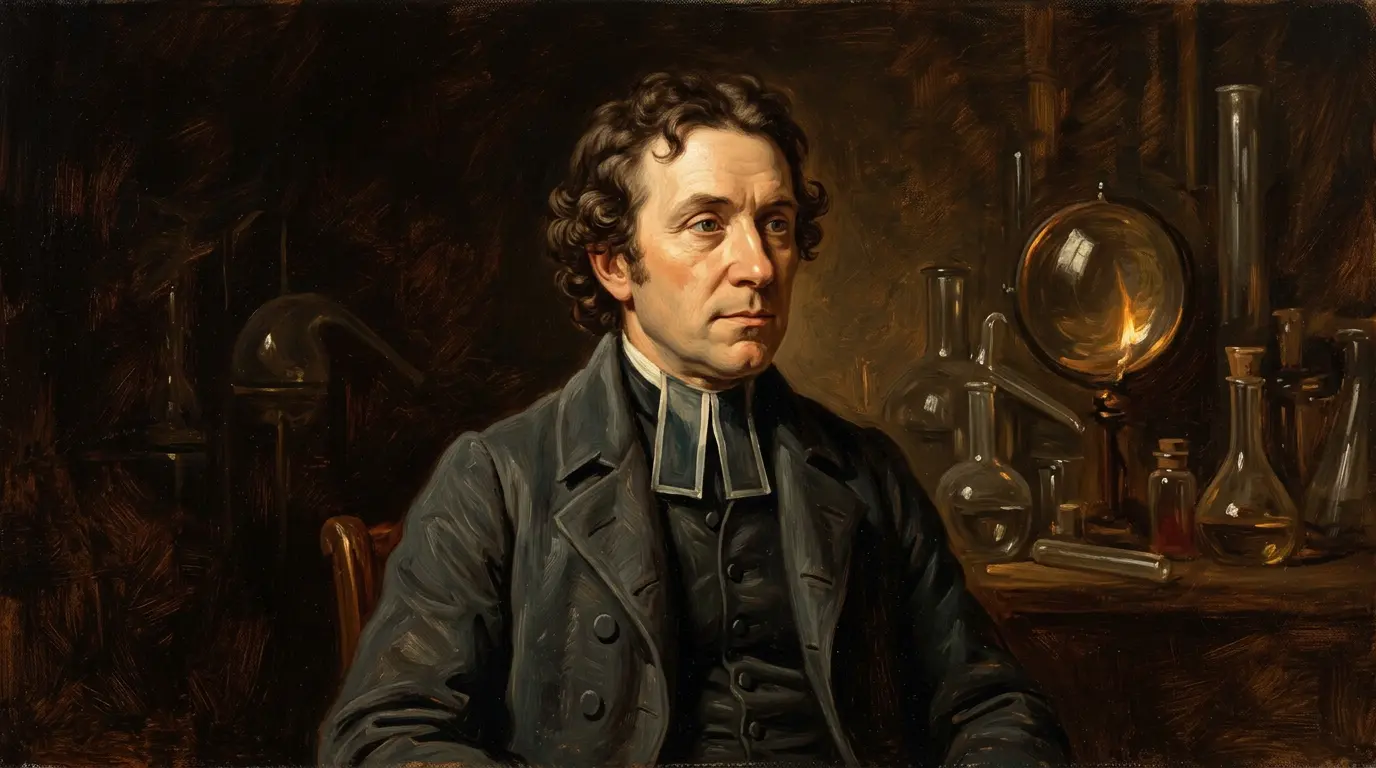
One of the leading experimenters was **Joseph Priestley**.
Priestley investigated combustion, gases and the ability of air to support life. In experiments during the 1770s, he found that a plant could restore air that had been made unsuitable for burning or breathing.
He did not understand this using our modern chemistry, and he worked within an older theory of combustion that was later abandoned.
But the observation mattered enormously.
Plants were clearly changing the air around them.
That raised a new question.
**What were plants doing to it?**
Ingenhousz discovers the importance of light
Dutch physician and scientist **Jan Ingenhousz** investigated Priestley's findings more closely.
In 1779 he showed something Priestley's experiments had not established clearly:
Plants do not improve the air all the time.
The air-restoring effect happened in **light**.
In darkness, plants did not simply continue releasing oxygen.
This was a major step towards the modern idea of photosynthesis.
The process was connected with green plant tissue and depended on light.
Sunlight was not merely helping plants stay warm.
It was involved directly in their chemistry.
Carbon dioxide enters the story
Scientists still needed to discover which material from the air plants were using.
Swiss researcher **Jean Senebier** showed during the late eighteenth century that plants take up what was then called fixed air, which we now know as **carbon dioxide**, during the light-dependent process.
Another Swiss scientist, **Nicolas-Théodore de Saussure**, developed the picture further.
By the early nineteenth century, careful measurements showed that plant growth could not be explained by carbon dioxide alone. Water also contributed material.
This was crucial.
Plants were not simply pulling ready-made food from the soil.
The carbon in plant material could come from carbon dioxide in the atmosphere, while water supplied another essential reactant.
Slowly, scientists were identifying the ingredients of the process.
But they still had to find out what the plant made with them.
Sachs finds food being stored
During the nineteenth century, microscopes and plant experiments became increasingly powerful.
German botanist **Julius von Sachs** helped turn plant physiology into an experimental science.
Among his important observations was the accumulation of **starch** in green plant tissues exposed to light.
Starch is a carbohydrate.
This connected light with the production and storage of chemical material inside leaves.
The familiar school experiment in which part of a leaf is covered, the plant is exposed to light and the leaf is later tested for starch is rooted in this period of plant physiology.
The experiment demonstrates an important principle:
Light is needed for a green leaf to build up starch under suitable conditions.
Scientists were moving beyond the discovery that plants altered gases.
They were beginning to understand that light energy was being converted into stored chemical energy.
What chlorophyll is doing
The green colour of leaves comes mainly from pigments called **chlorophylls** inside chloroplasts.
These pigments absorb particular wavelengths of visible light.
That energy powers a series of reactions rather than directly turning sunlight into sugar in a single step.
Modern photosynthesis has two closely linked parts.
The **light-dependent reactions** use absorbed light energy. They drive electron transfers, help make energy-carrying molecules and split water, releasing oxygen.
Another set of reactions uses carbon dioxide to build carbon-containing molecules.
This second part does not mean that plants only make sugars in darkness. The older phrase “dark reactions” can be misleading because the whole process depends on products generated using light.
Finding the detailed carbon pathway required twentieth-century technology.
Following radioactive carbon
In the years after the Second World War, **Melvin Calvin**, **Andrew Benson** and their colleagues at the University of California, Berkeley studied what happened to carbon dioxide after it entered photosynthesising organisms.
They used algae and carbon dioxide containing **carbon-14**, a radioactive isotope of carbon.
The radioactive carbon acted like a tracer.
Researchers could allow photosynthesis to run for very short periods, stop the process and determine which compounds had acquired the labelled carbon.
By repeating this at different times, they reconstructed the pathway through which carbon dioxide becomes incorporated into organic molecules.
This work revealed the cyclic series of reactions now usually called the **Calvin-Benson cycle**.
Calvin received the 1961 Nobel Prize in Chemistry for research on carbon dioxide assimilation in plants.
The discovery connected the simple school equation with the detailed chemistry happening inside cells.
The school science behind the story
Photosynthesis can be summarised as:
**carbon dioxide + water → glucose + oxygen**
using energy transferred by light.
That simple equation hides many stages.
Carbon dioxide enters a leaf mainly through tiny pores called **stomata**.
Water reaches leaves through the plant's transport tissues.
Chlorophyll absorbs light.
Light-dependent reactions help provide the energy and chemical reducing power required for carbon fixation.
Carbon atoms from carbon dioxide are incorporated into organic molecules.
Plants can use the products to make carbohydrates and, with other nutrients, the enormous variety of substances required for life.
Oxygen released during oxygenic photosynthesis ultimately comes from water.
That final detail is something the early experimenters could not have known.
Photosynthesis changed the planet
Photosynthesis is not simply a way for individual plants to grow.
It is one of the fundamental energy-conversion processes of Earth's biosphere.
Plants, algae and cyanobacteria capture light energy and use it to build organic matter.
That organic matter supports food webs.
Photosynthesis also removes carbon dioxide and, in its oxygen-producing form, releases oxygen.
Long before animals or land plants existed, photosynthetic microorganisms helped transform Earth's atmosphere.
Today, photosynthesis continues to connect the carbon cycle, oxygen cycle, ecosystems, agriculture and climate.
Nearly every meal contains chemical energy that can ultimately be traced back to photosynthesis.
Even fossil fuels contain energy originally captured by ancient photosynthetic organisms.
A discovery assembled over centuries
No one person discovered photosynthesis.
Priestley showed that plants could change air.
Ingenhousz established the importance of light and green tissue.
Senebier connected the process with carbon dioxide.
De Saussure helped establish the contribution of water and carbon dioxide to plant material.
Sachs connected light with carbohydrate storage in green plant tissue.
Calvin, Benson and their colleagues traced carbon through the biochemical pathway.
Each generation worked with different tools.
Together they turned a mysterious property of plants into one of the best-understood energy processes in biology.