Walter Heitler
1904–1981 · Quantum mechanics, chemical bonding and theoretical physics
Walter Heitler and Fritz London explained the hydrogen molecule’s covalent bond using quantum mechanics in 1927, transforming molecular theory.
Why is this scientist famous?
Walter Heitler and Fritz London used quantum mechanics in 1927 to explain a covalent bond in hydrogen, establishing a foundation of modern quantum chemistry.
The Heitler–London approach helped found valence-bond theory, giving chemistry a quantum foundation for understanding shared-electron bonds in molecules.
Walter's story
An ambitious young scientist in Karlsruhe
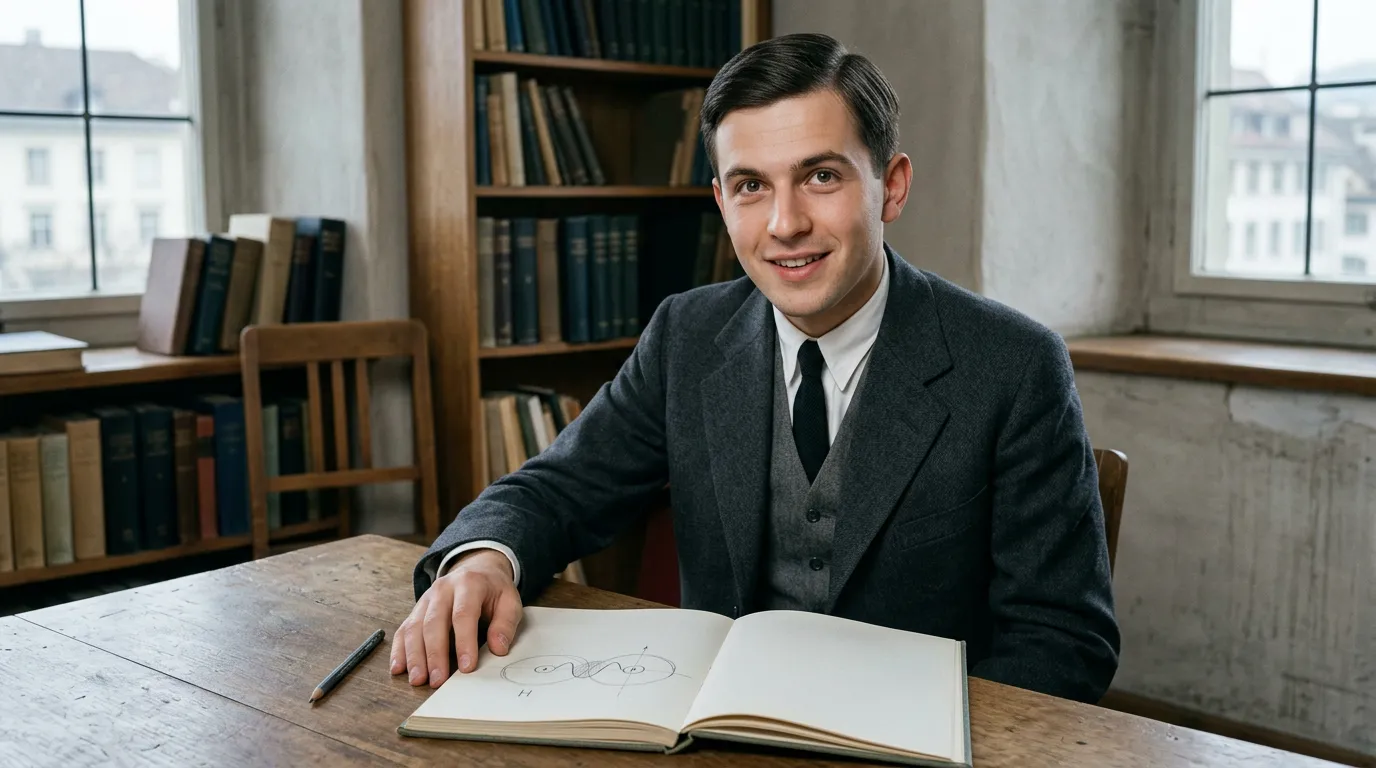
Walter Heinrich Heitler was born on 2 January 1904 in Karlsruhe, Germany. He was interested in science long before choosing it as a career: as a child he built a telescope and even set up a small chemistry laboratory at home. He first studied in Karlsruhe and then continued his scientific education in Berlin and Munich, where he carried out doctoral research in physical chemistry under Karl Herzfeld. The new quantum theories of atoms were developing rapidly around him. Heitler wanted to discover how the strange rules governing electrons could explain familiar features of the world, including why two atoms stay together to make a molecule.
Two physicists and the simplest molecule
In 1927 Heitler moved to Zürich, where he worked with the physicist Fritz London. They applied the new wave mechanics associated with Erwin Schrödinger to the hydrogen molecule, which consists of two hydrogen atoms bonded together. Earlier chemists, especially Gilbert Newton Lewis, had described covalent bonds in terms of shared electrons. What remained difficult was explaining that bond using the new laws of physics. Heitler and London treated the electrons as quantum particles whose wave-like behaviour and exchange symmetry matter. Their calculations helped show why a particular paired-electron state can hold two hydrogen nuclei together. The paper became a landmark in what is now called valence-bond theory.
A discovery with two names
The theory is known as the Heitler–London approach because it was a joint achievement, not the work of one scientist. Their 1927 result was a major step in connecting chemistry to quantum mechanics, although it did not solve every chemical bond or replace every other bonding model. More complex molecules would require further research by many scientists, including Linus Pauling and developers of molecular-orbital theory. Heitler went on to study quantum electrodynamics, the quantum theory of light interacting with electrically charged matter. His book The Quantum Theory of Radiation appeared in 1936 and became an important reference in the subject.
Forced from Germany, building physics in Ireland
Heitler worked at Göttingen until 1933, when Nazi persecution forced him out of his university position because of his Jewish ancestry. He moved to the University of Bristol in Britain. In 1941 he joined the newly established Dublin Institute for Advanced Studies, where Erwin Schrödinger had also taken a leading role. He became a professor in 1943 and directed its theoretical physics school from 1945 to 1949. His later work included cosmic rays and high-energy particles, and he helped establish an active community of theoretical physicists in Dublin. In 1946 he became an Irish citizen, giving his scientific life a lasting connection with Ireland.
From molecules to a wider view of nature
In 1949 Heitler became professor of theoretical physics at the University of Zürich. He continued research and later wrote more about philosophy and the limits of what physics alone can explain. He was elected a Fellow of the Royal Society in 1948 and received the Max Planck Medal in 1968. He died in Zürich on 15 November 1981. His best-known result remains the one he shared with Fritz London: a convincing early quantum explanation of why atoms can form a covalent bond. That breakthrough showed that the chemistry of everyday molecules and the physics of the tiniest particles belong to the same scientific story.
What did they discover?
Heitler–London covalent bond theory (1927)
Jointly with Fritz London, used quantum wave mechanics and electron exchange to explain bonding in the hydrogen molecule.
Early valence-bond theory
Helped establish the quantum-mechanical foundations of the shared-electron bond later extended to complex molecules.
Quantum theory of radiation
Wrote an important 1936 book and contributed to the theory of light and charged particles.
Theoretical physics in Dublin
Helped develop the Dublin Institute for Advanced Studies as a research centre for quantum theory and cosmic-ray physics.
Amazing facts
Heitler built a telescope when he was around twelve years old.
He later created a small chemistry laboratory in the family bathroom.
His early doctoral research dealt with concentrated chemical solutions, not directly with chemical bonds.
His most famous research was completed with Fritz London in Zürich when Heitler was just 23 years old.
Their 1927 paper explained a chemical bond using wave mechanics applied to two hydrogen atoms.
Nazi persecution drove him from his Göttingen post in 1933; he continued research in Bristol.
He became an Irish citizen in 1946 after helping build theoretical physics research in Dublin.
He received the Max Planck Medal in 1968, decades after his famous chemical-bonding paper.
Timeline
Born in Karlsruhe, Germany.
Held a Rockefeller fellowship in Copenhagen.
Worked with Fritz London in Zürich on a quantum explanation of the hydrogen molecule bond.
Joined the research circle of Max Born at Göttingen.
Left Germany after Nazi persecution ended his Göttingen position; moved to Bristol.
Published The Quantum Theory of Radiation.
Joined the Dublin Institute for Advanced Studies.
Became director of its theoretical physics school.
Became an Irish citizen.
Elected Fellow of the Royal Society.
Became professor of theoretical physics in Zürich.
Received the Max Planck Medal.
Died in Zürich, Switzerland.
Awards & honours
Related Super Scientists
Erwin Schrödinger
1887–1961 · Theoretical Physicist
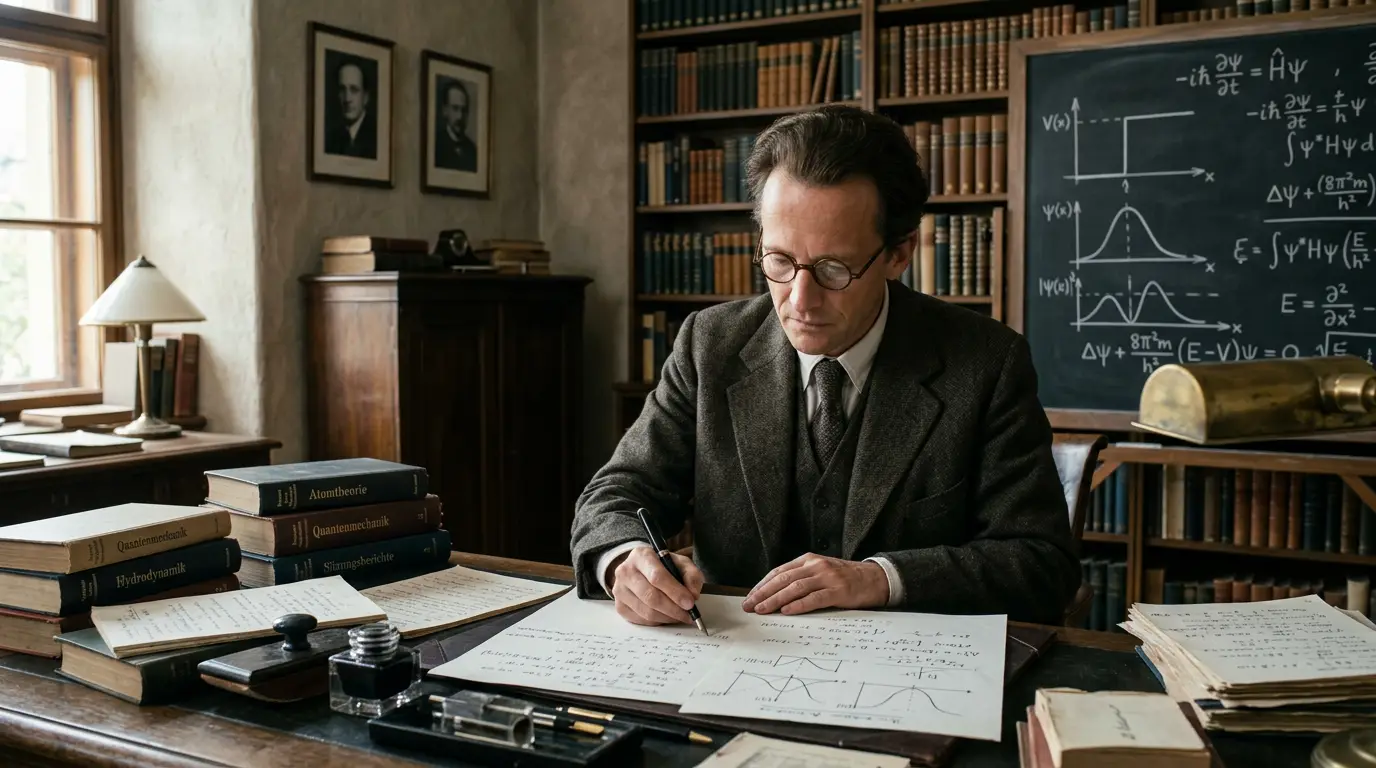
Developing wave mechanics and formulating the Schrödinger equation in 1926. He shared the 1933 Nobel Prize in Physics with Paul Dirac.
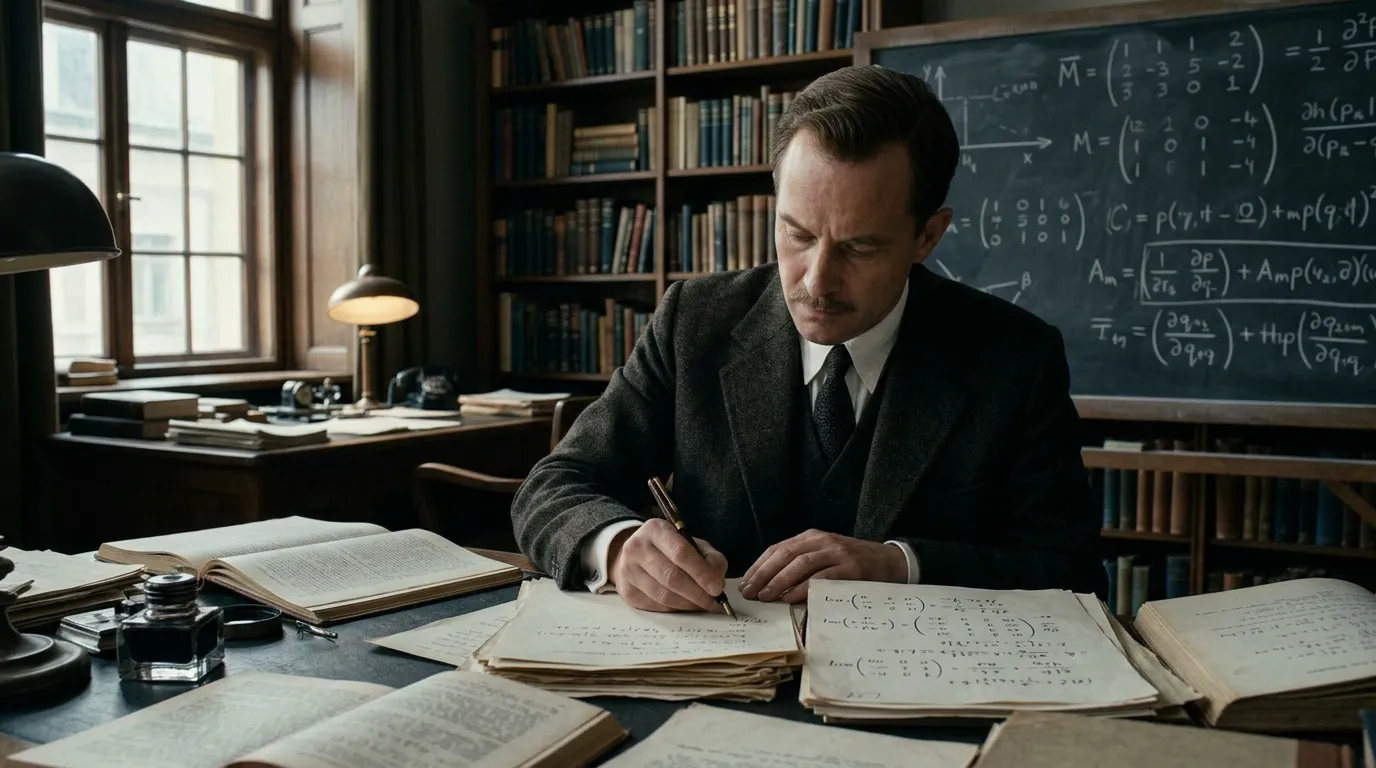
Max Born
1882–1970 · Theoretical Physicist
Making fundamental contributions to quantum mechanics, including the probabilistic interpretation of the wavefunction known as the Born rule, and helping develop matrix mechanics. He received the 1954 Nobel Prize in Physics.
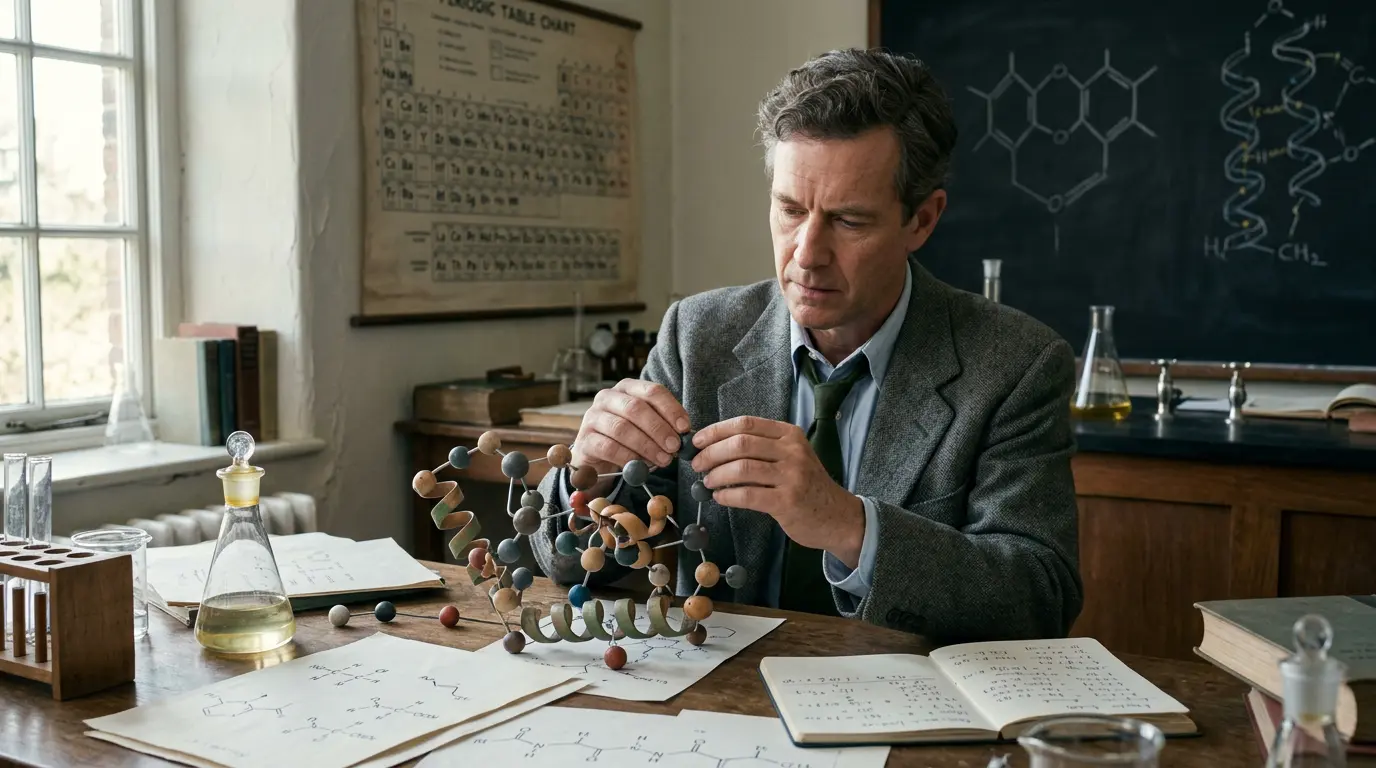
Linus Pauling
1901–1994 · Chemist
Transforming understanding of chemical bonding and molecular structure, major work on protein structure, and winning both the 1954 Nobel Prize in Chemistry and the 1962 Nobel Peace Prize.