_(2).jpg)
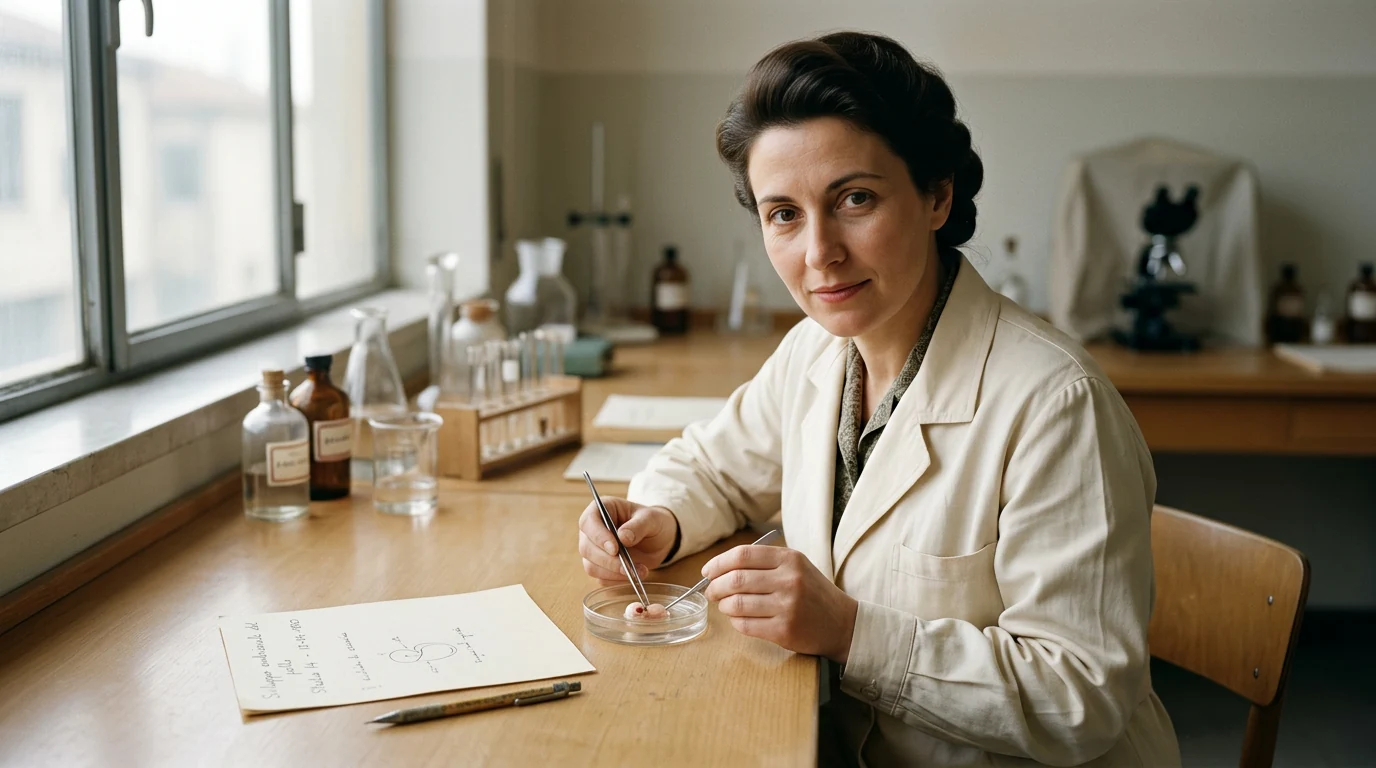
Rita Levi-Montalcini
1909–2012 · Neuroscience and nerve growth factor
Rita Levi-Montalcini investigated nerve growth factor, helping explain how nerves grow and winning the 1986 Nobel Prize in Medicine.
“I then decided to build a small research unit at home and installed it in my bedroom.”
Why is this scientist famous?
Rita Levi-Montalcini discovered how nerve growth factor supports developing neurons, continuing scientific work despite wartime persecution and later sharing a Nobel Prize.
Research into growth factors helps scientists understand nerve development and the signals that guide cells as living organisms grow.
Rita's story
A determination to study medicine
Rita Levi-Montalcini was born in Turin, Italy, on 22 April 1909. She trained in medicine at the University of Turin and graduated in 1936. Her interest in the nervous system developed while working with anatomist Giuseppe Levi. Under Fascist anti-Jewish laws, she was barred from continuing ordinary academic research. Instead of abandoning science, she built a small laboratory at home and carried out difficult experiments with chick embryos.
Research from a makeshift laboratory
With simple tools, some adapted from everyday objects, Levi-Montalcini examined how nerve cells develop in early embryos. During the war she and her family were forced to move for safety, and she rebuilt her research setup outside Turin. Those experiments developed her skill in studying nerve fibres as they appeared and grew. They were scientifically meaningful investigations, not merely a dramatic story of working in unusual conditions.
A mysterious nerve-growth signal
After the war Levi-Montalcini joined the laboratory of Viktor Hamburger at Washington University in St. Louis. In the early 1950s she investigated why transplanted mouse tumours caused extra growth of nerve fibres in chick embryos. She inferred that the tumours released a substance that encouraged nearby nerve growth. The idea led to the identification of nerve growth factor, now shortened to NGF. Stanley Cohen made important complementary biochemical contributions, and Hamburger’s research context mattered too.
How cells receive instructions
Nerve growth factor is a signalling protein that influences the survival and development of particular nerve cells. Its discovery showed that growing tissues do not simply follow an internal clock; signals from their surroundings help determine what happens. Scientists later found other growth factors and signalling systems. The original experiments were not a cure for neurological disease, but they opened new ways to investigate how cells grow, survive and communicate.
Recognition after long persistence
Levi-Montalcini became a professor at Washington University and continued building scientific links with Italy. In 1986 she shared the Nobel Prize in Physiology or Medicine with Stanley Cohen for discoveries concerning growth factors. She also supported opportunities for women in science and education. She died in Rome on 30 December 2012, aged 103. Her life demonstrates how experimental care, persistence and collaboration can transform understanding of the developing body.
What did they discover?
Nerve growth factor
Discovered a signalling activity that stimulates development of particular nerve cells.
Embryonic nerve development
Used chick embryos to investigate how nerve fibres grow.
Cell growth signalling
Helped establish the importance of growth factors as instructions for developing tissues.
Experimental perseverance
Carried out productive research despite discriminatory wartime restrictions.
Amazing facts
She graduated in medicine from the University of Turin in 1936.
Anti-Jewish laws forced her out of regular Italian university research.
She built a small bedroom laboratory for experiments on developing chick nerves.
She continued her research after moving to escape wartime danger.
She joined Viktor Hamburger’s research programme at Washington University in St. Louis.
Her chick-embryo studies showed that mouse tumours could stimulate the growth of nerve fibres.
She shared the 1986 Nobel Prize in Physiology or Medicine with Stanley Cohen.
She lived to age 103 and continued supporting scientific education.
Timeline
Born in Turin, Italy.
Graduated in medicine from the University of Turin.
Set up a home laboratory after exclusion from university research.
Joined Viktor Hamburger’s Washington University laboratory.
Reported crucial evidence for a nerve-growth promoting factor.
Became a full professor at Washington University.
Shared the Nobel Prize in Physiology or Medicine with Stanley Cohen.
Died in Rome, Italy.
Awards & honours
Related Super Scientists
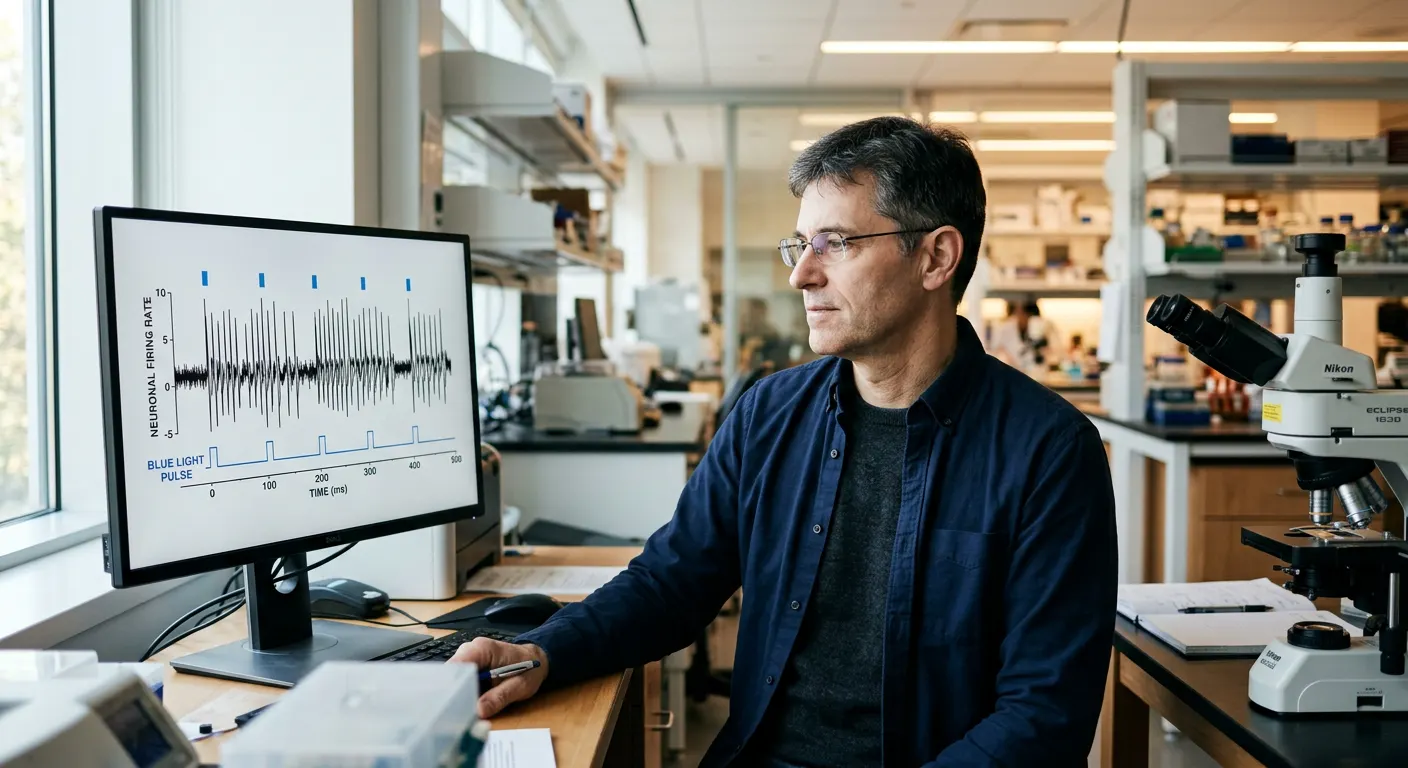
Karl Deisseroth
1971–present · Neuroscience, psychiatry and bioengineering
Deisseroth helped turn light-sensitive proteins from microbes into precise tools for studying brain circuits. His work connects engineering, neuroscience and the care of people with mental health conditions.
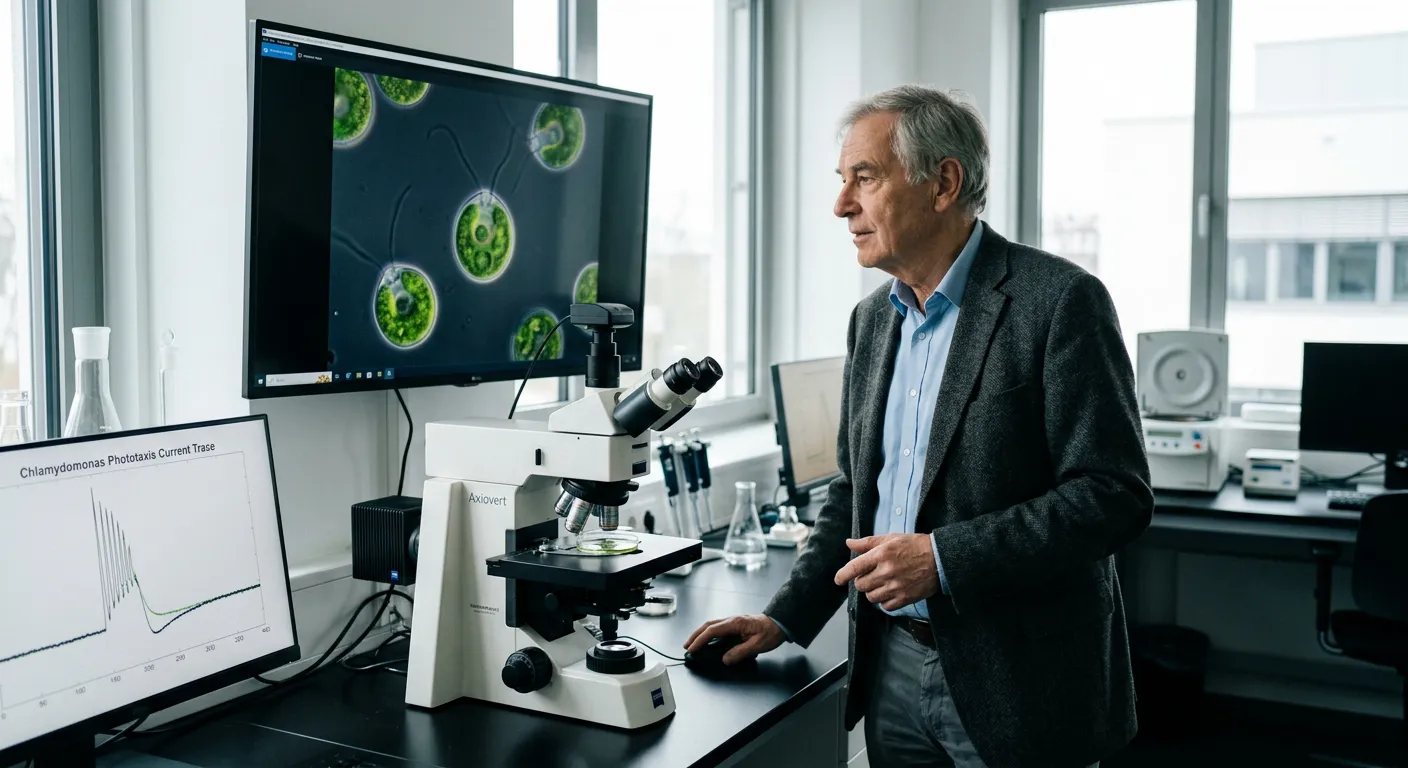
Peter Hegemann
1954–present · Biophysics and light-sensitive proteins
Hegemann investigated how algae respond to light and helped identify channelrhodopsins, proteins that open pathways for electrically charged particles across cell membranes.
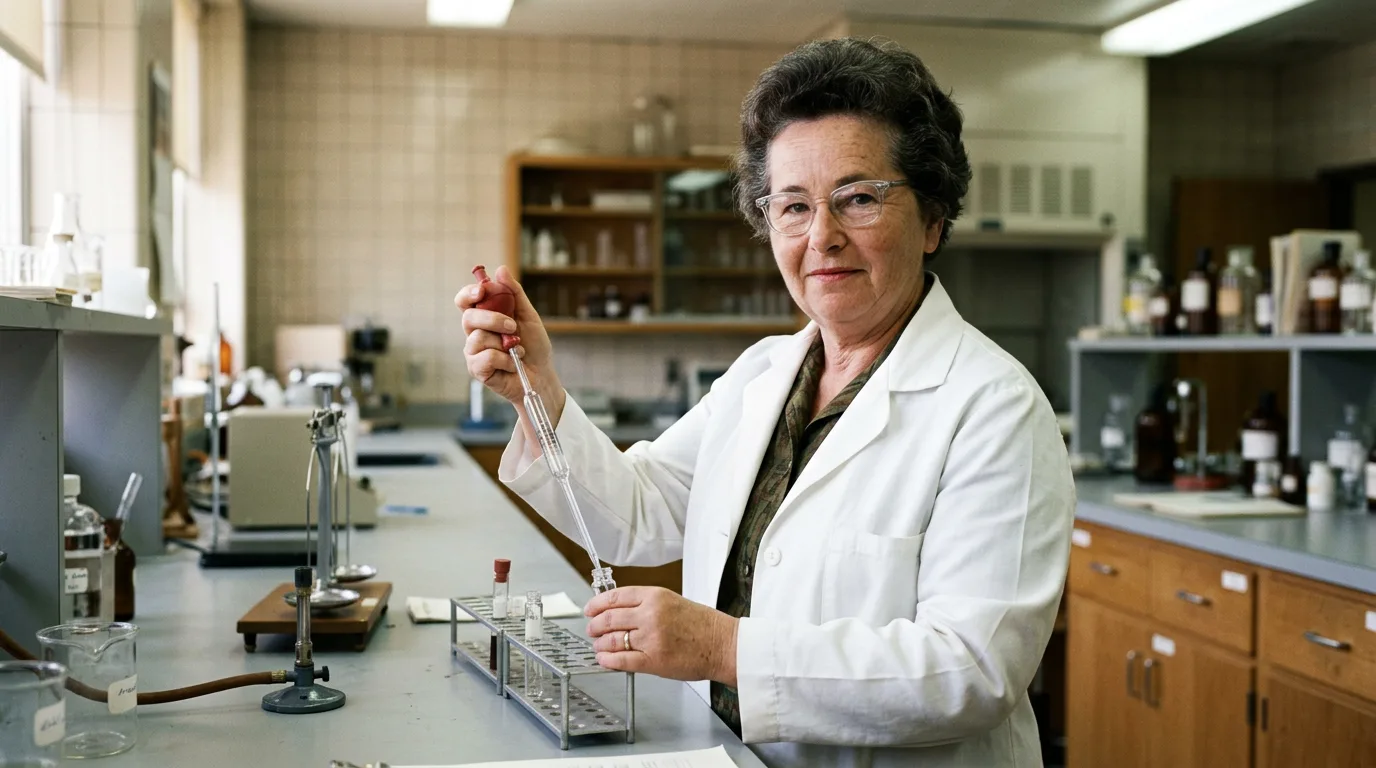
Gertrude Belle Elion
1918–1999 · Pharmacology and medicinal chemistry
Helped pioneer rational drug design and developed important medicines for leukemia, organ transplantation, gout and viral infections.