_(2).jpg)
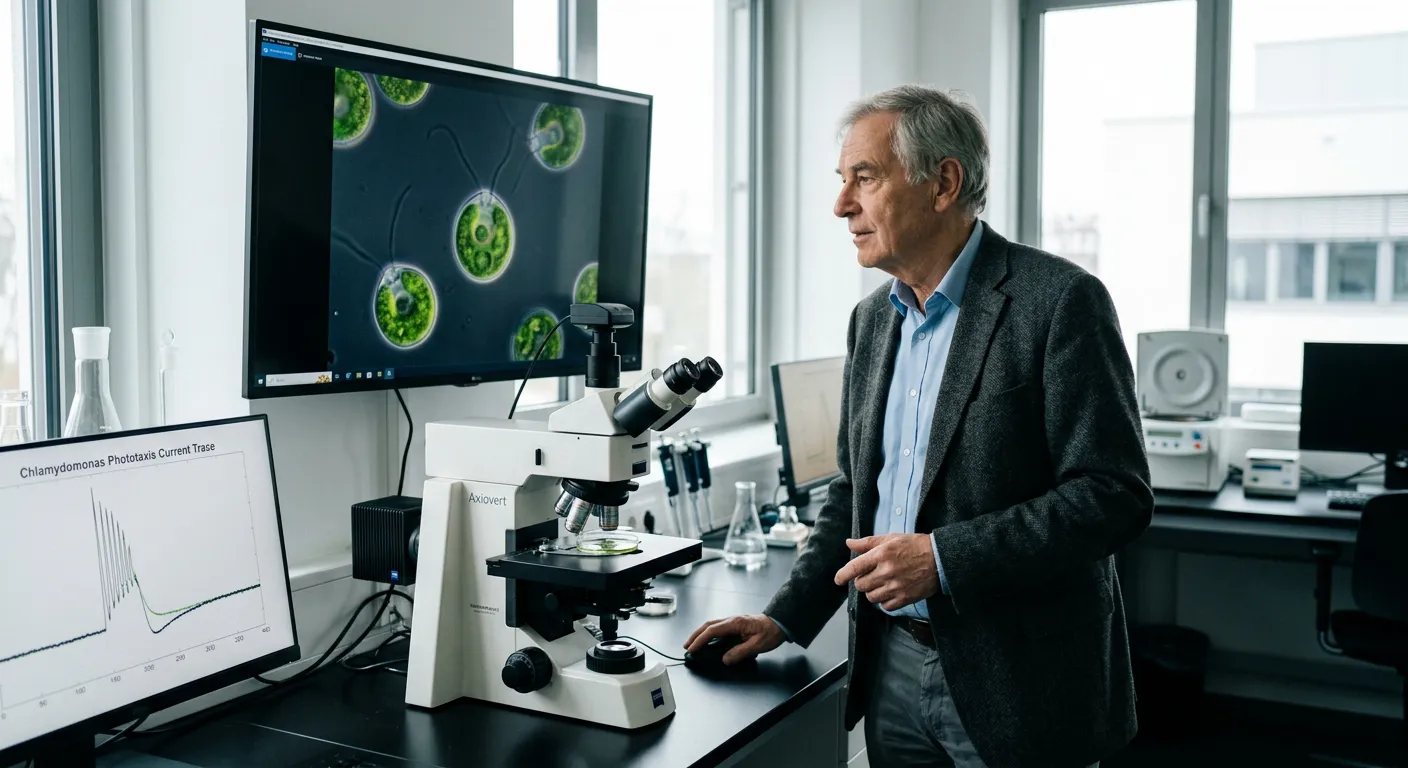
Peter Hegemann
1954–present · Biophysics and light-sensitive proteins
Peter Hegemann helped discover light-sensitive channels in algae, providing molecular tools that became central to optogenetics and modern brain research.
Why is this scientist famous?
Hegemann investigated how algae respond to light and helped identify channelrhodopsins, proteins that open pathways for electrically charged particles across cell membranes.
Hegemann's research helped supply a family of tools for investigating the roles of electrically active cells. It also shows the value of understanding natural molecules before adapting them for new scientific purposes.
Peter's story
A question about a tiny organism
How does a single-celled alga respond to light? Peter Hegemann's work on this question helped reveal molecular mechanisms that would later become valuable to neuroscientists.
Hegemann was born in Münster in 1954 and grew up in Aachen. He studied chemistry in Münster and Munich, carrying out doctoral research in Dieter Oesterhelt's group at the Max Planck Institute of Biochemistry and completing his doctorate in 1984. Postdoctoral work with Kenneth Foster at Syracuse University was followed by a research-group position at the Max Planck Institute. He became a professor at Regensburg in 1993 and moved to Humboldt University of Berlin in 2004.
Light opens a molecular gate
Hegemann and collaborators studied proteins from the green alga Chlamydomonas reinhardtii. Their work helped establish that some of these proteins act as channels controlled directly by light. A channel is a route across a cell membrane through which particular ions, or electrically charged particles, can pass.
In collaboration with Georg Nagel, Ernst Bamberg and other researchers, this work identified channelrhodopsins. Channelrhodopsin-2 was described in 2003. When placed in suitable other cells, the protein could make their electrical state respond to illumination. This suggested a remarkable possibility: a natural light sensor could become an experimental tool.
From algae to neuroscience
Nerve cells communicate through electrical and chemical changes. Light-sensitive channels offered researchers a way to influence selected cells with precise timing. Other scientists, including Karl Deisseroth and his collaborators, helped develop these molecular discoveries into practical methods for studying neural circuits.
This wider approach is called optogenetics. Hegemann's contribution was rooted in understanding the proteins themselves: how light changes their behaviour and how that affects the movement of ions. He helped provide the molecular foundation on which other researchers could build.
Why basic science matters
In 2026, Hegemann shared the Nobel Prize in Physiology or Medicine with Karl Deisseroth and Georg Nagel. The path from algal light responses to neuroscience illustrates why scientists investigate fundamental questions even when the eventual applications are not yet clear. A discovery in a microscopic organism can become useful far beyond the original field.
What did they discover?
Channelrhodopsins
Helped identify and characterise channelrhodopsins, light-sensitive ion channels from green algae, whose discovery provided the molecular foundation for optogenetics.
Channelrhodopsin-2
Co-authored the 2003 description of channelrhodopsin-2, demonstrating it could make cells electrically responsive to light when introduced into them.
Algal light sensing
Established key mechanisms by which single-celled algae detect and respond to light, revealing the biology underlying a class of proteins that later proved transformative for neuroscience.
Amazing facts
His research began with questions about light-sensitive biological molecules.
The alga central to this story is a single-celled organism.
Channelrhodopsins are proteins in cell membranes.
Light can open their ion-conducting pathway.
Channelrhodopsin-2 was tested in cells other than the alga from which it came.
His career connects chemistry, physics, biology and neuroscience.
Timeline
Born in Münster.
Completes his doctorate after research in Oesterhelt's group.
Becomes a professor at the University of Regensburg.
Co-authors the description of channelrhodopsin-2.
Takes up a biophysics professorship at Humboldt University of Berlin.
Becomes a Hertie Professor of Neuroscience.
Shares the Nobel Prize in Physiology or Medicine with Karl Deisseroth and Georg Nagel.
Awards & honours
Related Super Scientists
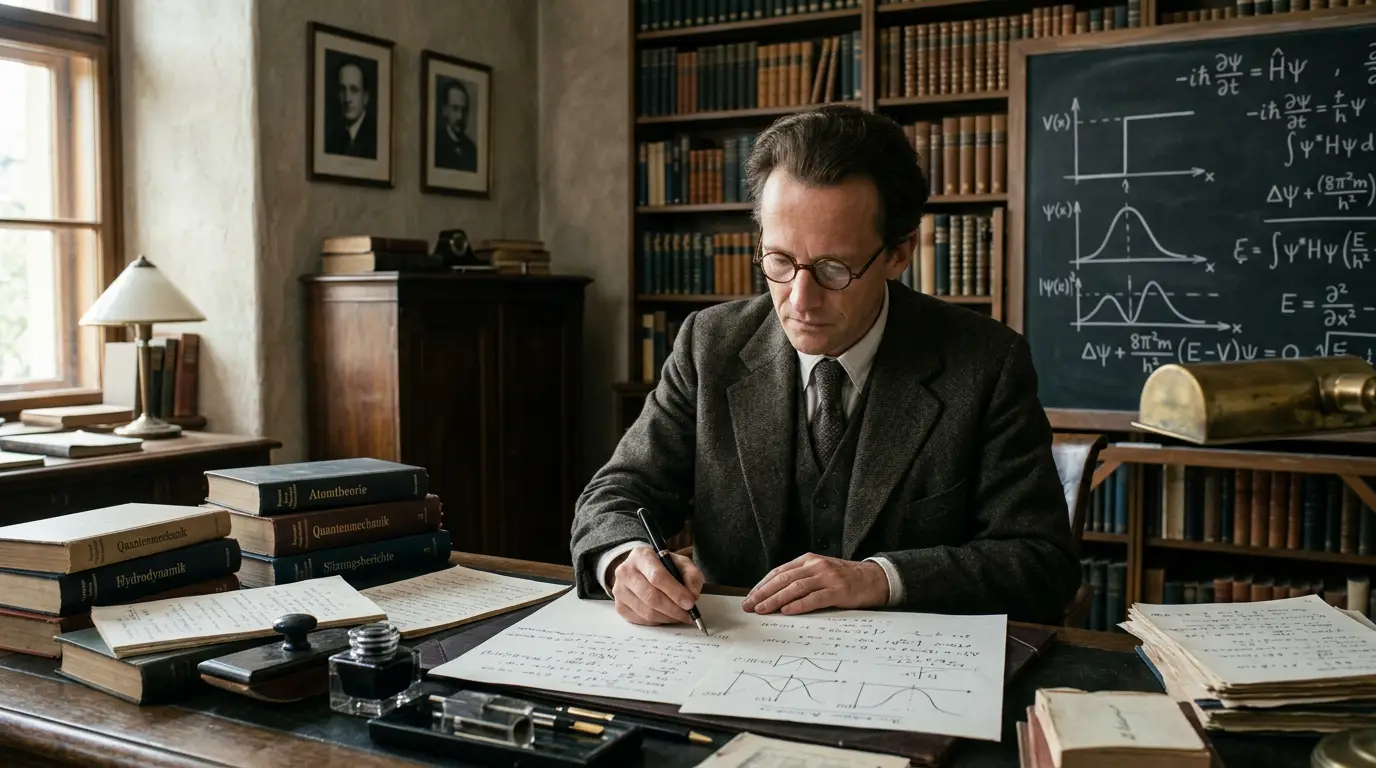
Erwin Schrödinger
1887–1961 · Theoretical Physicist
Developing wave mechanics and formulating the Schrödinger equation in 1926. He shared the 1933 Nobel Prize in Physics with Paul Dirac.
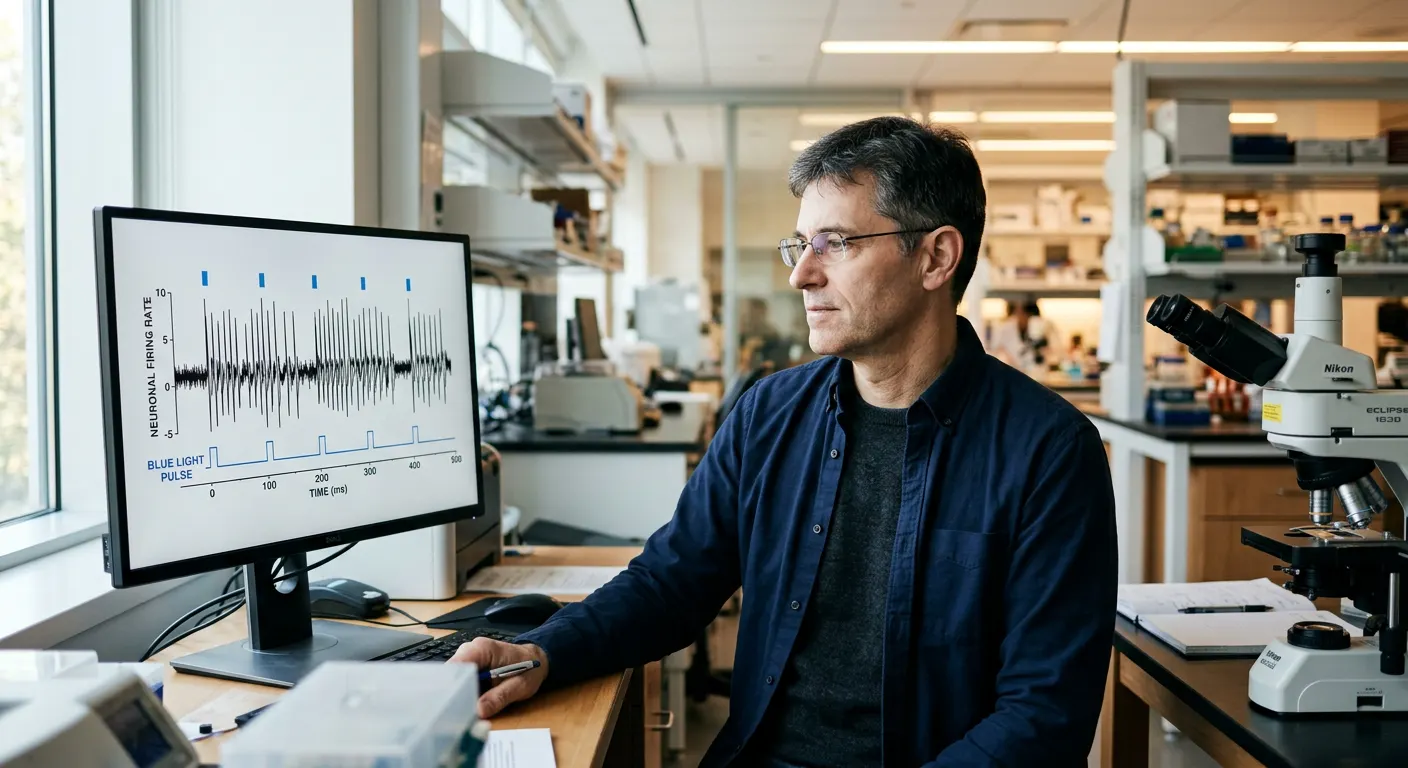
Karl Deisseroth
1971–present · Neuroscience, psychiatry and bioengineering
Deisseroth helped turn light-sensitive proteins from microbes into precise tools for studying brain circuits. His work connects engineering, neuroscience and the care of people with mental health conditions.