_(2).jpg)
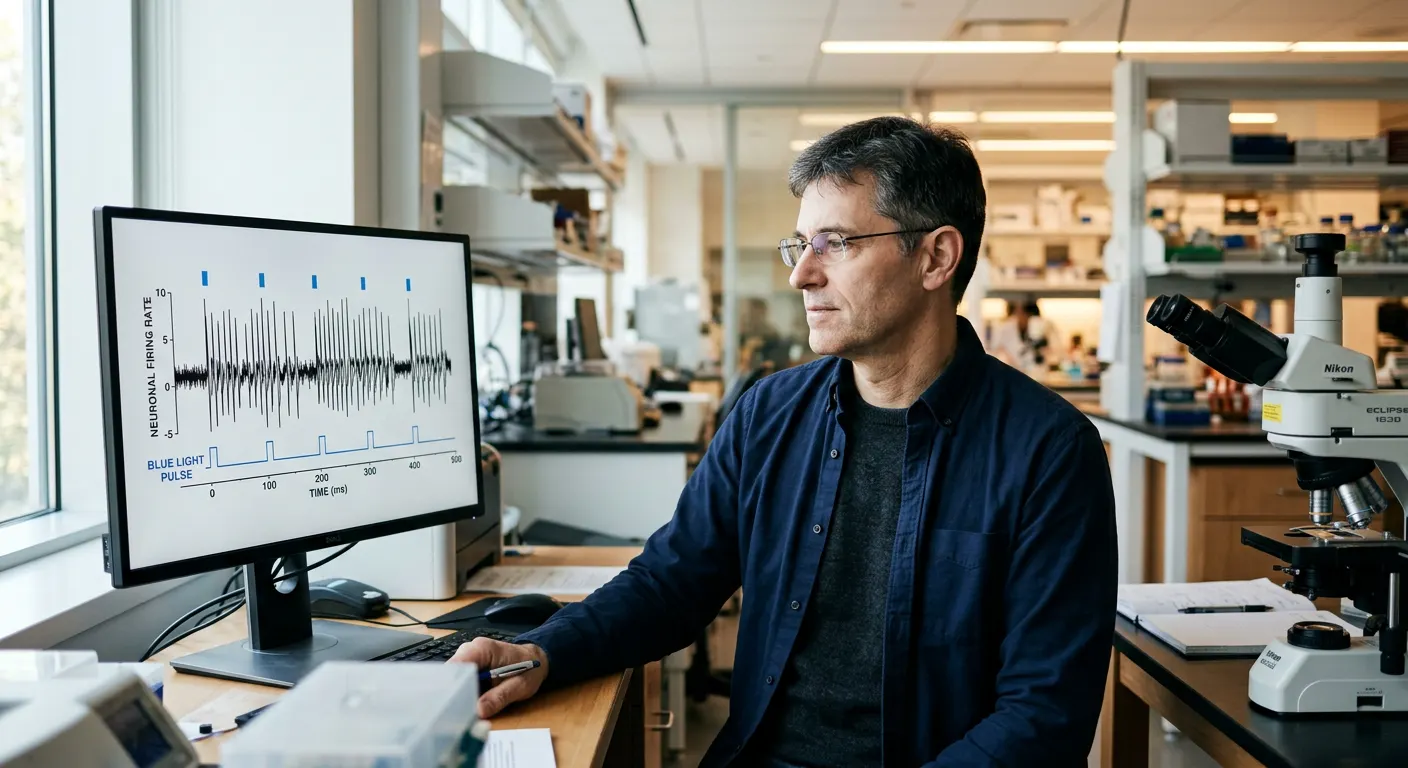
Karl Deisseroth
1971–present · Neuroscience, psychiatry and bioengineering
Karl Deisseroth helped develop optogenetics, which uses light to control selected nerve cells and explore the brain's circuits, connecting engineering with neuroscience.
“Optogenetics is an engine for discovery.”
Why is this scientist famous?
Deisseroth helped turn light-sensitive proteins from microbes into precise tools for studying brain circuits. His work connects engineering, neuroscience and the care of people with mental health conditions.
His research helps scientists test how particular cells contribute to brain activity and behaviour. It provides tools for understanding illness, not proof that every condition studied already has an optogenetic cure.
Karl's story
Understanding the brain
How can scientists find out what a particular group of nerve cells actually does? Watching the cells provides clues, but changing their activity and observing the result can offer stronger evidence about cause and effect. This question lies at the heart of Karl Deisseroth's work.
Deisseroth studied biochemical sciences at Harvard University, graduating in 1992. At Stanford University, he completed a doctorate in neuroscience in 1998 and a medical degree in 2000. He also trained in psychiatry, the branch of medicine concerned with mental health, and completed his residency in 2004. His career brought together the needs of patients and the challenge of understanding the brain's workings.
Using light as a research tool
Optogenetics combines genetic methods with light. Researchers arrange for selected cells to produce a light-sensitive protein. Appropriate light can then change those cells' electrical activity, allowing scientists to test their role in a circuit.
In 2005, Deisseroth, Edward Boyden, Feng Zhang, Georg Nagel and Ernst Bamberg published work showing that a protein called channelrhodopsin-2 could be used to trigger electrical signals in cultured nerve cells. This built on earlier discoveries about microbial proteins. The achievement depended on collaboration rather than one person working alone.
Developing tools others could use
Deisseroth and his colleagues helped extend the approach to living animals and made it available to other laboratories. His laboratory also developed methods for investigating tissue structure, including CLARITY, which makes preserved tissue more transparent so researchers can examine its internal organisation. These tools address different questions: optogenetics changes activity, while tissue-clearing methods help reveal structure.
Recognition and continuing influence
In 2026, Deisseroth shared the Nobel Prize in Physiology or Medicine with Peter Hegemann and Georg Nagel for discoveries leading to optogenetics. Their work shows how research on tiny organisms can eventually provide powerful ways to investigate complex brains. It does not mean that simply shining a light on someone's head can control their thoughts. The technique depends on specific biological preparation and carefully delivered light.
What did they discover?
Optogenetics
Co-developed a method that uses light to trigger or silence selected nerve cells in living tissue, enabling researchers to test the role of specific circuits in behaviour and brain function.
Channelrhodopsin-2 in neurons
Co-authored the 2005 demonstration that channelrhodopsin-2, a microbial light-sensitive protein, could be used to control electrical signals in cultured nerve cells.
CLARITY tissue clearing
Helped develop CLARITY, a technique that makes preserved biological tissue more transparent, allowing researchers to examine its internal structure in three dimensions.
Amazing facts
He trained as both a research scientist and a medical doctor.
His university work spans engineering and psychiatry.
A protein used in his best-known research originally came from a microbe.
Optogenetics can target selected cell types rather than affecting every nearby cell alike.
His laboratory has also developed ways to look inside preserved tissue.
His Nobel Prize recognised work connecting algal biology with neuroscience.
Timeline
Born in the United States.
Graduates from Harvard in biochemical sciences.
Completes his neuroscience doctorate at Stanford.
Completes his medical degree at Stanford.
Co-authors the demonstration of rapid optical control of cultured neurons using channelrhodopsin-2.
Shares the Albert Lasker Basic Medical Research Award with Peter Hegemann and Dieter Oesterhelt.
Receives the Japan Prize in Life Sciences.
Shares the Nobel Prize in Physiology or Medicine with Peter Hegemann and Georg Nagel.
Awards & honours
Related Super Scientists
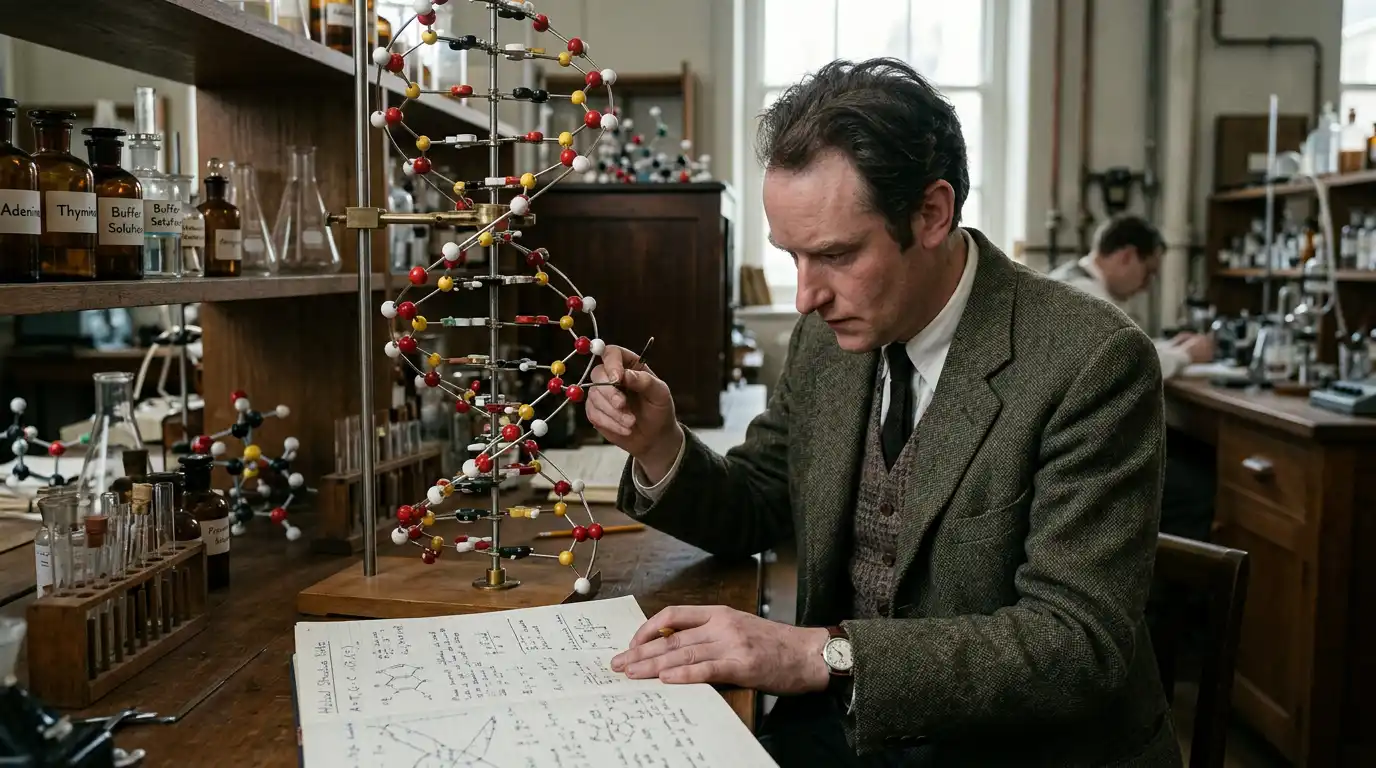
Francis Crick
1916–2004 · Molecular Biologist
Working with James Watson to develop the double-helix model of DNA in 1953 and later making major contributions to understanding genetic information and the genetic code. He shared the 1962 Nobel Prize in Physiology or Medicine with James Watson and Maurice Wilkins.
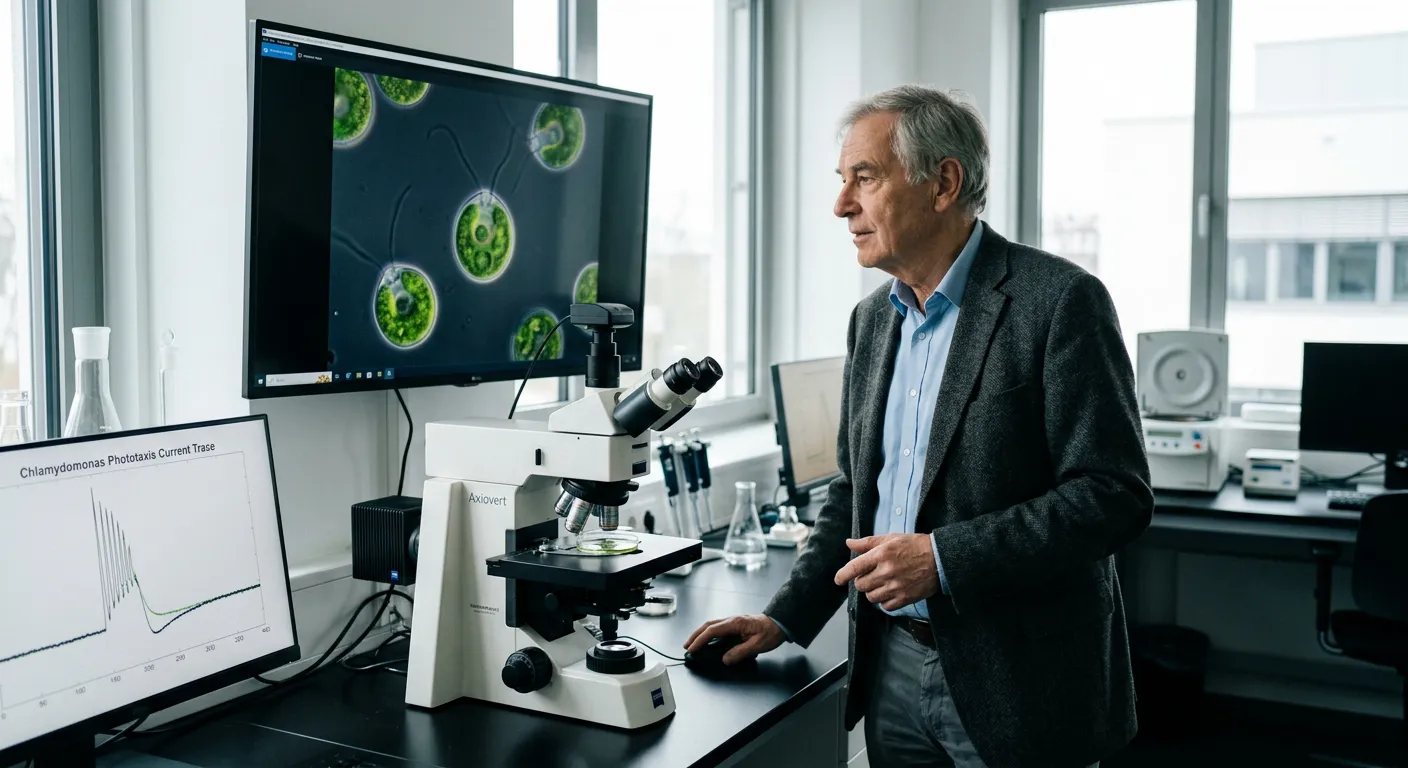
Peter Hegemann
1954–present · Biophysics and light-sensitive proteins
Hegemann investigated how algae respond to light and helped identify channelrhodopsins, proteins that open pathways for electrically charged particles across cell membranes.