_(2).jpg)
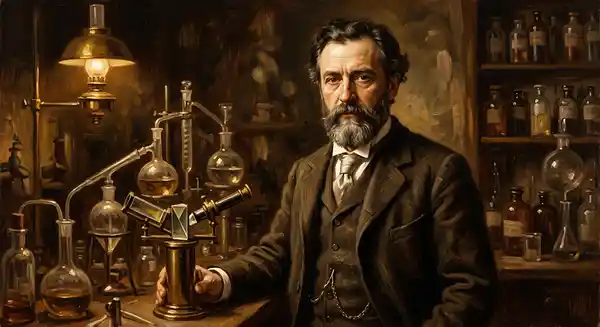
Paul-Émile Lecoq de Boisbaudran
1838–1912 · Chemist
Paul-Émile Lecoq de Boisbaudran was a French chemist who discovered gallium using spectroscopy and later isolated it. The discovery confirmed Mendeleev's prediction of eka-aluminium and provided powerful evidence for the periodic table.
“The most important thing in science is not so much to obtain new facts as to discover new ways of thinking about them.”
Why is this scientist famous?
Discovering gallium in 1875, the element that confirmed Mendeleev's prediction of eka-aluminium, and making important rare-earth discoveries including samarium and dysprosium.
Paul-Émile's story
A Self-Taught Chemist
Paul-Émile Lecoq de Boisbaudran was born on 18 April 1838 in Cognac, France. His family ran a wine business, and much of his scientific education was self-directed. He studied chemistry and physics using advanced scientific texts and École Polytechnique course material and also studied with the chemist Charles-Adolphe Wurtz.
Despite this unconventional path, Lecoq de Boisbaudran became a skilled experimental chemist with a particular talent for spectroscopy — the analysis of light emitted by substances when they are heated. Each element produces a characteristic pattern of spectral lines, and Lecoq de Boisbaudran used these patterns to identify elements with extraordinary precision.
The Discovery of Gallium
In 1875, while examining a zinc ore from a mine in the Pyrenees, Lecoq de Boisbaudran noticed two new spectral lines in the violet part of the spectrum. He had found a previously unknown element. He named it gallium, after Gallia, the Latin name for France.
The discovery was significant on its own, but it became far more important because of its connection to Dmitri Mendeleev. In 1871, Mendeleev had used his periodic table to predict the properties of several then-undiscovered elements. One of these, which he called eka-aluminium, was expected to sit below aluminium in the periodic table.
Lecoq de Boisbaudran measured the properties of gallium and found that they matched Mendeleev's predictions with remarkable accuracy — the density, the melting point, the chemical behaviour. This was striking evidence that the periodic table was not just a convenient arrangement but a system with genuine predictive power.
Rare-Earth Research
Lecoq de Boisbaudran's work extended well beyond gallium. He made important contributions to the study of the rare-earth elements, a group of metals that are chemically similar and notoriously difficult to separate.
In 1879 he discovered samarium, and in 1886 he identified dysprosium. Both discoveries required painstaking separation of mineral ores and careful spectroscopic analysis. The rare earths were among the most challenging elements to work with because their chemical properties are so alike, and Lecoq de Boisbaudran's spectroscopic methods were crucial in distinguishing them.
Legacy
Lecoq de Boisbaudran died on 28 May 1912 in Paris. His discoveries spanned both the confirmation of the periodic table and the expansion of the rare-earth elements.
His most enduring contribution was gallium. The close match between gallium's measured properties and Mendeleev's predictions became one of the most celebrated demonstrations that the periodic table reflected a real underlying order in nature. Lecoq de Boisbaudran's spectroscopic expertise made him one of the few chemists of his era who could identify new elements with such confidence.
What did they discover?
Discovery of Gallium
Using spectroscopic analysis of zinc ore in 1875, Lecoq de Boisbaudran identified gallium and later isolated it. Its properties matched Mendeleev's prediction of eka-aluminium, providing powerful evidence for the periodic table.
Discovery of Samarium
In 1879, he identified samarium from the mineral samarskite using spectroscopic methods, adding to the growing list of known rare-earth elements.
Discovery of Dysprosium
In 1886, he identified dysprosium after painstaking separation of rare-earth minerals, further advancing the understanding of this challenging group of elements.
Amazing facts
Lecoq de Boisbaudran was largely self-taught and came from a wine-making family in Cognac.
He identified gallium by two spectral lines in the violet part of the spectrum before he had enough material to isolate the element.
Gallium's measured density matched Mendeleev's prediction to within a fraction of a gram per cubic centimetre.
He discovered three elements in total: gallium, samarium and dysprosium.
His spectroscopic methods were essential for distinguishing rare-earth elements, which are chemically very similar.
The name gallium comes from Gallia, the Latin name for France.
Timeline
Born in Cognac, France.
Discovered gallium using spectroscopic analysis of zinc ore.
Discovered samarium from the mineral samarskite.
Awarded the Royal Society’s Davy Medal for his discovery of gallium.
Identified dysprosium after separating rare-earth minerals.
Died in Paris, aged 74.
Awards & honours
Related Super Scientists
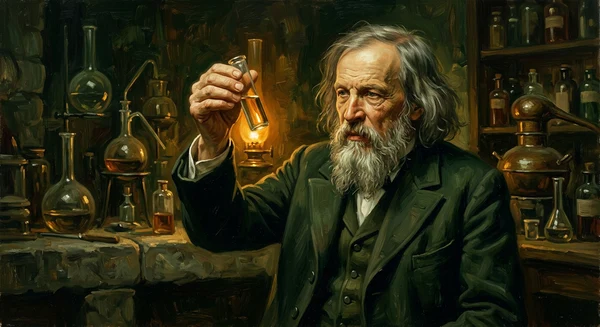
Dmitri Mendeleev
1834–1907 · Chemist & Inventor
Developed an influential periodic table and periodic law, leaving gaps for undiscovered elements and predicting several of their properties.
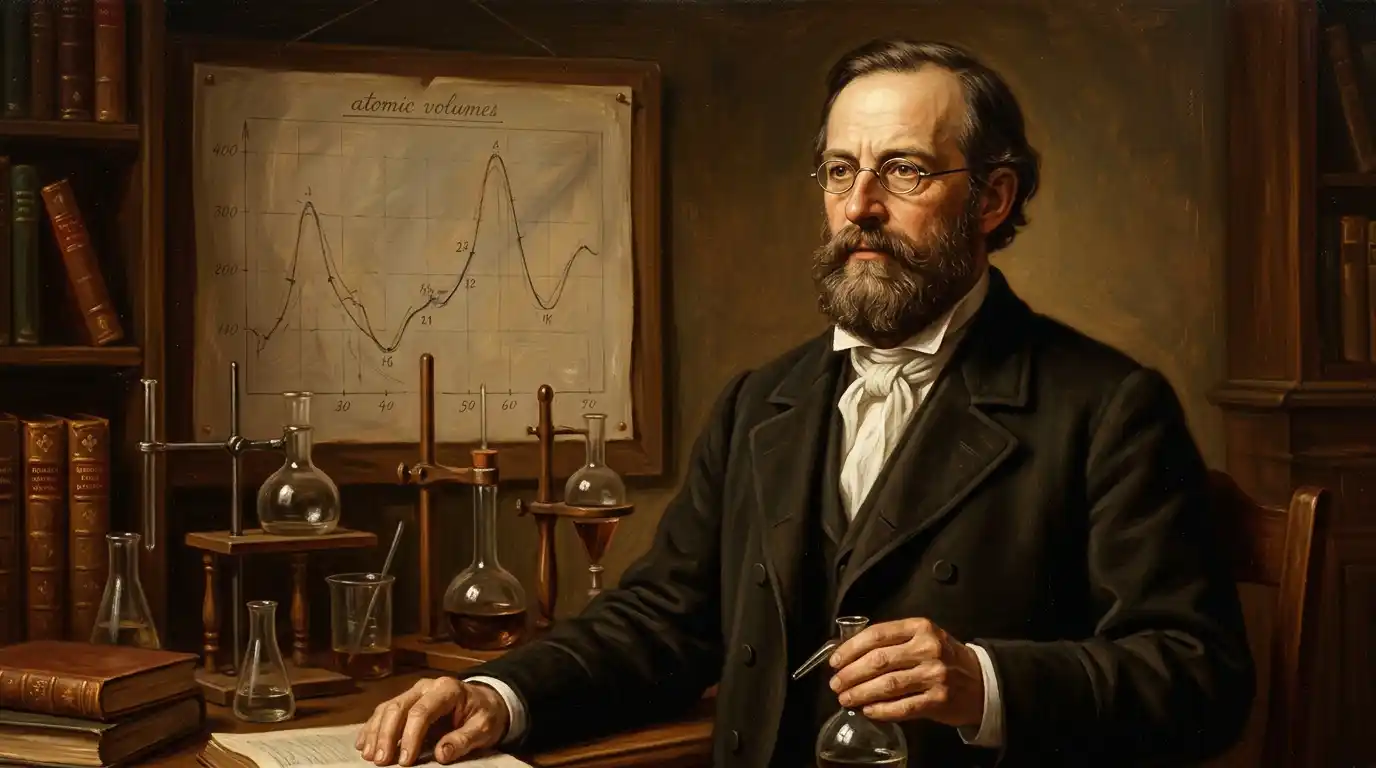
Julius Lothar Meyer
1830–1895 · Chemist
Independently developed periodic arrangements of the elements, organising them using atomic weight and valence. He and Dmitri Mendeleev were jointly awarded the Royal Society's Davy Medal in 1882 for their work on periodic classification.
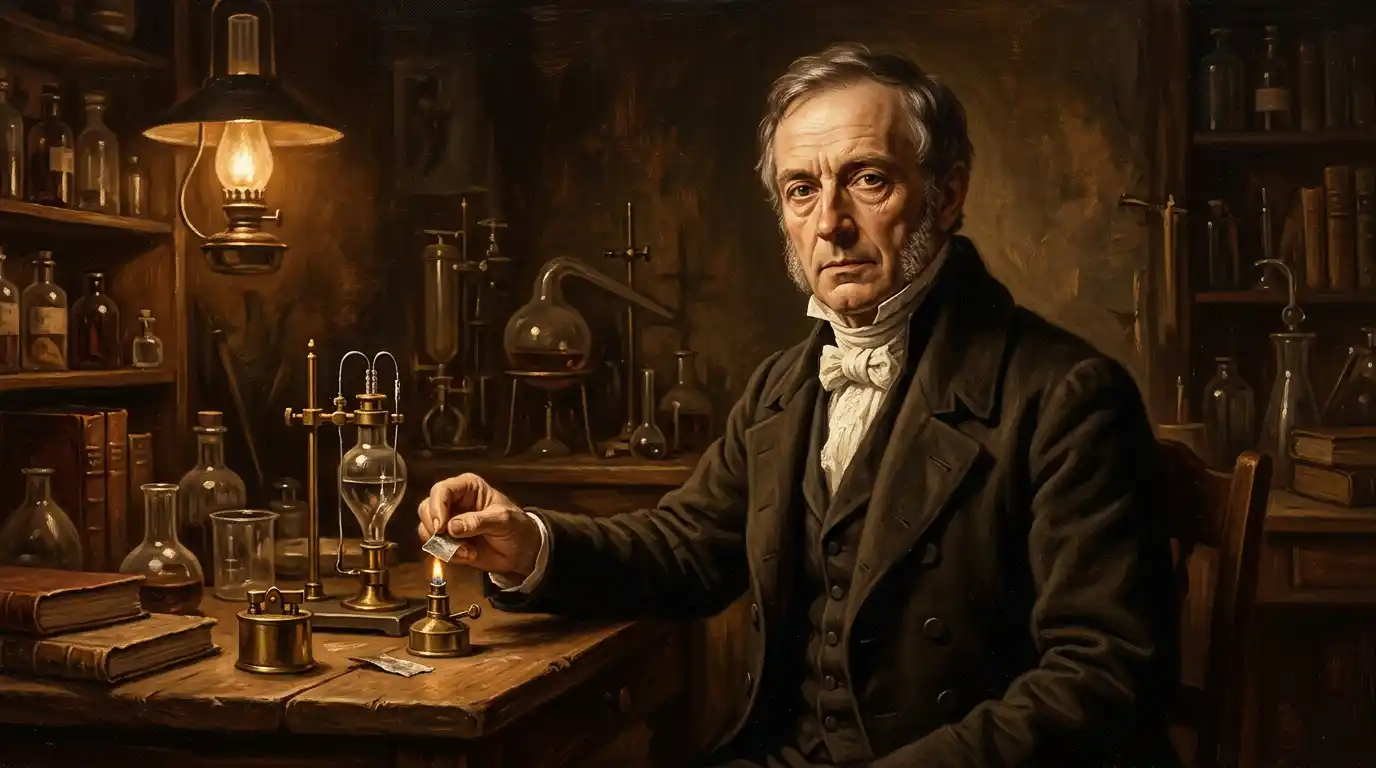
Johann Wolfgang Döbereiner
1780–1849 · Chemist
Identified relationships between groups of three chemically similar elements, later known as Döbereiner's triads — an important early step towards recognising periodic relationships. He also carried out important work on platinum catalysis and developed the Döbereiner lighter.