_(2).jpg)
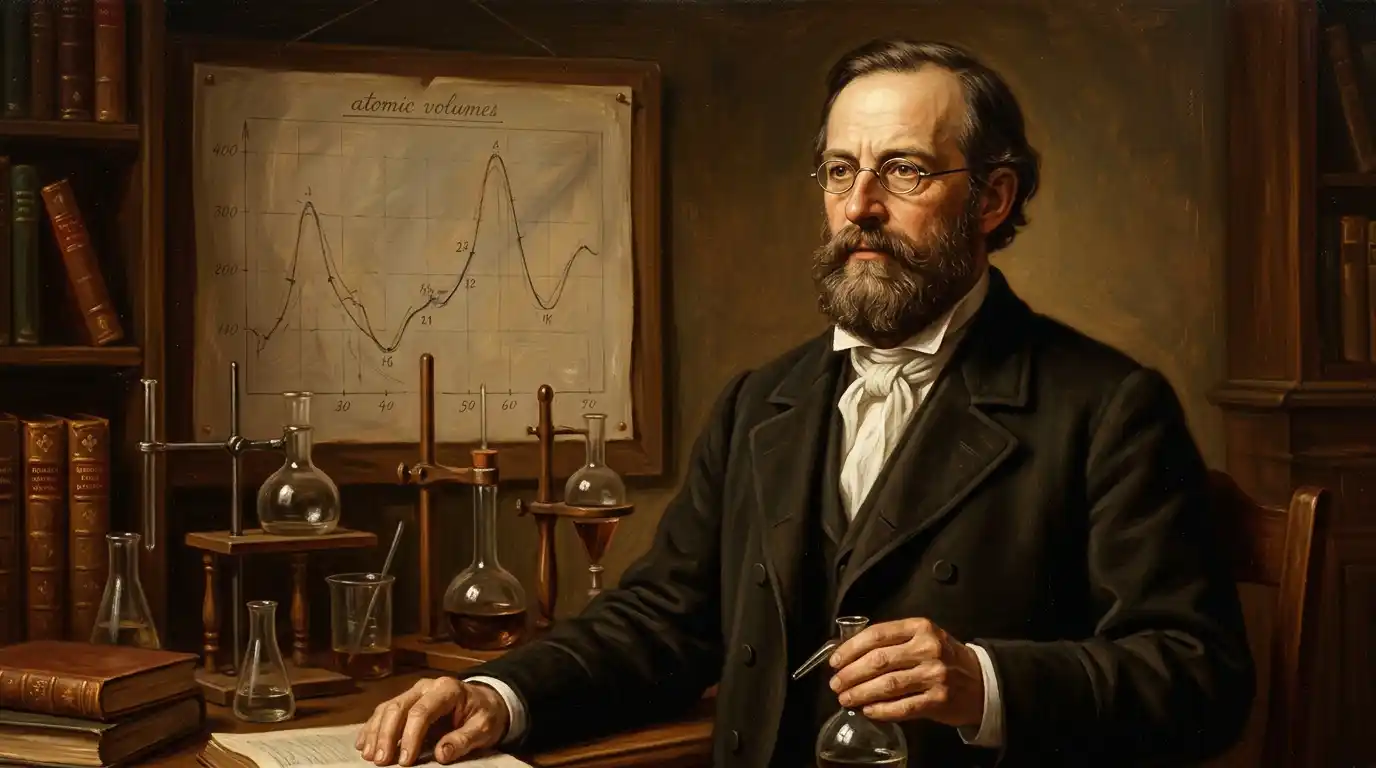
Julius Lothar Meyer
1830–1895 · Chemist
A German chemist who independently developed periodic arrangements of the elements and was jointly awarded the Davy Medal with Mendeleev.
“The arrangement of the elements in the periodic system is the expression of a natural law.”
Why is this scientist famous?
Independently developed periodic arrangements of the elements, organising them using atomic weight and valence. He and Dmitri Mendeleev were jointly awarded the Royal Society's Davy Medal in 1882 for their work on periodic classification.
Julius's story
From Medicine to Chemistry
Julius Lothar Meyer was born on 19 August 1830 in Varel in northern Germany. He initially studied medicine and received his medical doctorate from the University of Würzburg in 1854. He then moved to Heidelberg, where he worked in Robert Bunsen’s laboratory and increasingly turned towards chemistry and physics.
Meyer’s medical background gave him a broad scientific perspective. He was not a narrow specialist but a thinker who saw connections between physical properties and chemical behaviour. This breadth would prove important in his later work on periodic classification.
An Independent Path to Periodicity
In the 1860s, Meyer began organising the known elements into a system based on atomic weight and valence — the combining capacity of elements. He created tables that grouped elements with similar chemical properties together and showed that their properties repeated in a pattern when arranged by atomic weight.
Meyer also produced a graph plotting atomic volume against atomic weight. The graph showed a series of waves, with peaks and troughs repeating at regular intervals. This was powerful visual evidence that a periodic relationship existed among the elements.
His work was developed independently of Dmitri Mendeleev, who was working on similar ideas in Russia at roughly the same time. The two chemists arrived at their systems through different routes, and each made genuine contributions. Meyer’s graph of atomic volumes was particularly distinctive and provided a different kind of evidence for periodicity than Mendeleev’s table.
Mendeleev and Meyer
The question of who deserved credit for the periodic table became a subject of debate. Meyer and Mendeleev had both developed periodic systems, and their work was complementary rather than identical.
Mendeleev’s system became more influential partly because he deliberately used gaps to make detailed predictions about undiscovered elements. Meyer did leave a blank for an unknown element in his 1864 arrangement, but he did not develop the same systematic programme of specific predictions. When several of Mendeleev’s predictions proved correct, his table gained enormous credibility.
In 1882, the Royal Society awarded the Davy Medal jointly to Meyer and Mendeleev, recognising both chemists for their contributions to periodic classification. The joint award was an acknowledgment that the periodic table had emerged from the work of more than one person.
Legacy
Meyer died on 11 April 1895 in Tübingen, where he had been professor of chemistry. His contribution to periodic classification had been recognised by his peers, even though Mendeleev’s name became more closely associated with the periodic table in popular memory.
Meyer’s atomic volume graph remains a striking piece of scientific evidence. It showed that periodicity was not just a matter of arranging elements in a table — it was a physical relationship that could be plotted and visualised. His independent path to periodicity reminds us that major scientific ideas often emerge from multiple thinkers working in parallel.
What did they discover?
Independent Periodic Classification
Meyer independently developed periodic arrangements of the elements using atomic weight and valence, arriving at his system through a different route from Mendeleev.
Atomic Volume Graph
He produced a graph of atomic volumes against atomic weights that revealed a repeating wave pattern, providing visual evidence for the periodic relationship between elements.
Valence-Based Periodic Arrangement
In his 1864 textbook, Meyer arranged 28 elements into six families using atomic weight and valence, helping demonstrate systematic relationships between groups of elements.
Amazing facts
Meyer initially trained in medicine before turning increasingly towards chemistry and physics.
After receiving his medical doctorate at Würzburg in 1854, Meyer moved to Heidelberg and worked in Robert Bunsen’s laboratory.
Meyer and Mendeleev developed their periodic systems independently and at roughly the same time.
His graph of atomic volumes against atomic weights showed a clear repeating wave pattern that visualised periodicity.
Meyer left a blank for an unknown element in his 1864 arrangement, but unlike Mendeleev he did not develop a detailed programme of predictions for undiscovered elements.
The Davy Medal was awarded jointly to Meyer and Mendeleev in 1882, recognising both as independent pioneers.
Meyer spent his later career as professor of chemistry at the University of Tübingen.
Timeline
Born in Varel, northern Germany.
Received his medical doctorate from the University of Würzburg and moved to Heidelberg, where he worked in Robert Bunsen’s laboratory.
Moved to Königsberg to study mathematical physics under Franz Neumann.
Published his first periodic arrangement of elements.
Published his graph of atomic volumes against atomic weights, revealing a repeating pattern.
Appointed professor of chemistry at the University of Tübingen.
Jointly awarded the Davy Medal with Dmitri Mendeleev by the Royal Society.
Died in Tübingen, aged 64.
Awards & honours
Related Super Scientists
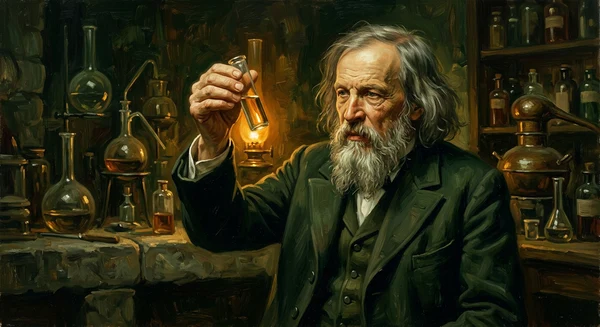
Dmitri Mendeleev
1834–1907 · Chemist & Inventor
Developed an influential periodic table and periodic law, leaving gaps for undiscovered elements and predicting several of their properties.
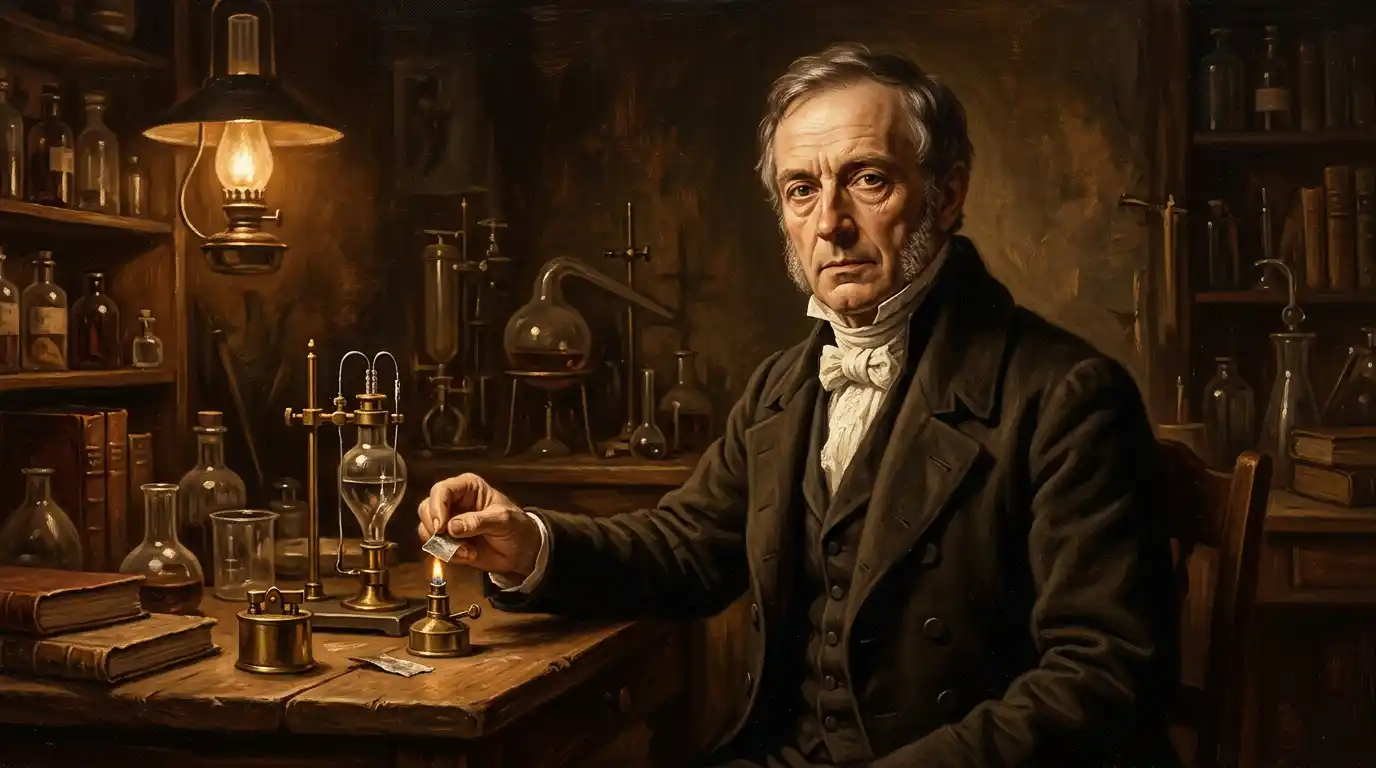
Johann Wolfgang Döbereiner
1780–1849 · Chemist
Identified relationships between groups of three chemically similar elements, later known as Döbereiner's triads — an important early step towards recognising periodic relationships. He also carried out important work on platinum catalysis and developed the Döbereiner lighter.
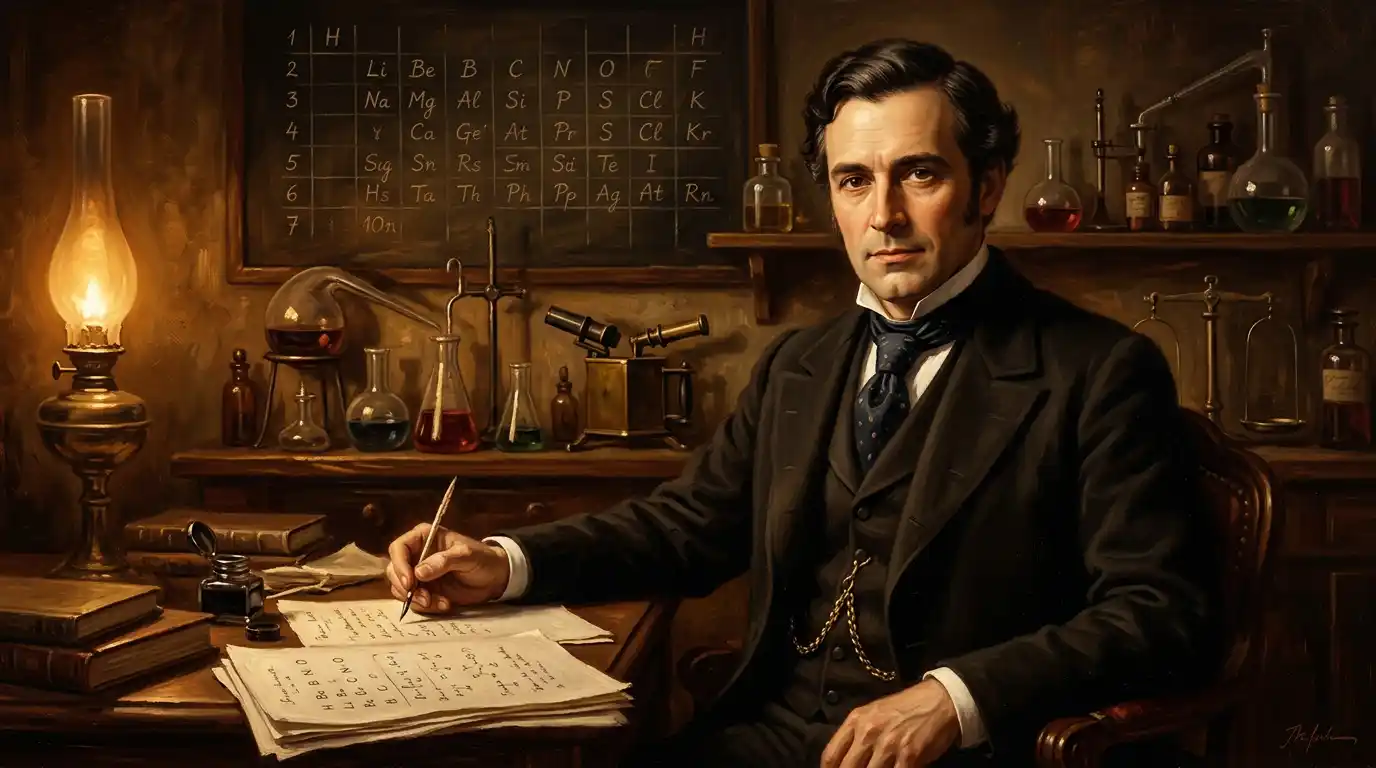
John Alexander Reina Newlands
1837–1898 · Chemist
Arranged elements in order of increasing atomic weight and recognised a repeating pattern he called the Law of Octaves. He was later awarded the Royal Society's Davy Medal in 1887 for his work on the periodic law of the chemical elements.