_(2).jpg)
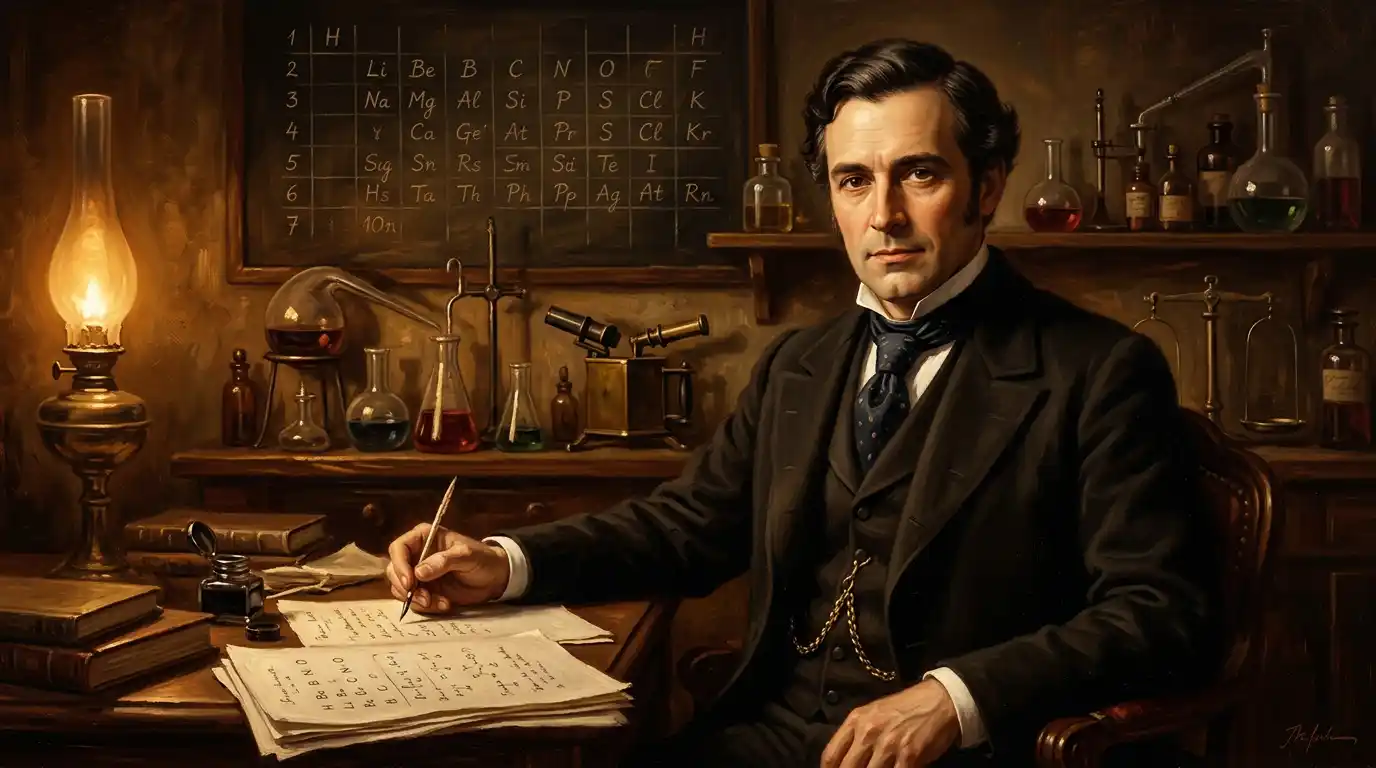
John Alexander Reina Newlands
1837–1898 · Chemist
A British chemist who identified the Law of Octaves, a repeating pattern in elemental properties that was an important precursor to the periodic table.
“The law of nature is the law of God.”
Why is this scientist famous?
Arranged elements in order of increasing atomic weight and recognised a repeating pattern he called the Law of Octaves. He was later awarded the Royal Society's Davy Medal in 1887 for his work on the periodic law of the chemical elements.
John's story
A Chemist in London
John Alexander Reina Newlands was born on 26 November 1837 in London. He was the son of a Scottish clergyman and showed an early interest in chemistry. He studied at the Royal College of Chemistry and later worked in the family business while pursuing his chemical research.
Newlands’s mother, Mary Sarah Reina, was of Italian descent. He pursued much of his later chemical research outside a university position.
The Law of Octaves
In the 1860s, Newlands began arranging the known elements in order of increasing atomic weight. He noticed that elements with similar chemical properties seemed to recur at regular intervals — every eighth element shared characteristics with the first.
Newlands published his Law of Octaves in 1865 and presented the idea to the Chemical Society on 1 March 1866. The name was inspired by music: just as every eighth note in a musical scale is similar to the first, every eighth element in his arrangement resembled the one before the interval.
The reception was not encouraging. Some chemists thought the comparison to music was fanciful, and the idea that elements might follow a repeating pattern was not widely accepted at the time. Newlands’s system also had genuine limitations: it worked better for the lighter elements and became unreliable when extended to heavier ones. Unlike Mendeleev’s later system, Newlands did not deliberately leave predictive gaps for undiscovered elements.
Belated Recognition
Despite the initial dismissal, Newlands continued to defend his work. As other chemists — particularly Mendeleev and Lothar Meyer — developed more comprehensive periodic systems, the underlying idea that Newlands had grasped became widely accepted.
In 1887, the Royal Society awarded Newlands the Davy Medal for his work on the periodic law of the chemical elements. The recognition came more than two decades after his original presentation, and it acknowledged that his Law of Octaves had been a genuine, if incomplete, step towards the periodic table.
Newlands died on 29 July 1898 in London. He did not live to see the full integration of periodic classification into modern chemistry, but his contribution was no longer dismissed.
What did they discover?
The Law of Octaves
Newlands arranged elements by increasing atomic weight and observed that similar properties recurred every eighth element, a pattern he compared to musical octaves. It was an important precursor to the periodic table.
Early Periodic Arrangement
His 1865 presentation was one of the first attempts to systematise the relationship between elemental properties and atomic weight, preceding Mendeleev's more successful table.
Davy Medal
In 1887, the Royal Society awarded Newlands the Davy Medal for his contributions to the periodic law, recognising his work more than two decades after it was first presented.
Amazing facts
Newlands’s mother, Mary Sarah Reina, was of Italian descent.
When he presented the Law of Octaves to the Chemical Society in 1866, the comparison to music was mocked by some chemists.
His system worked well for lighter elements but became unreliable for heavier ones.
Unlike Mendeleev, Newlands did not deliberately leave gaps in his arrangement for undiscovered elements.
The Davy Medal was awarded to Newlands more than two decades after his Law of Octaves work, recognising his contribution to periodic classification.
Newlands pursued much of his chemical research outside a university career.
Timeline
Born in London, England.
Began publishing his arrangements of elements by atomic weight.
Published his Law of Octaves.
Presented the Law of Octaves to the Chemical Society.
Awarded the Davy Medal by the Royal Society for his work on the periodic law.
Died in London, aged 60.
Awards & honours
Related Super Scientists
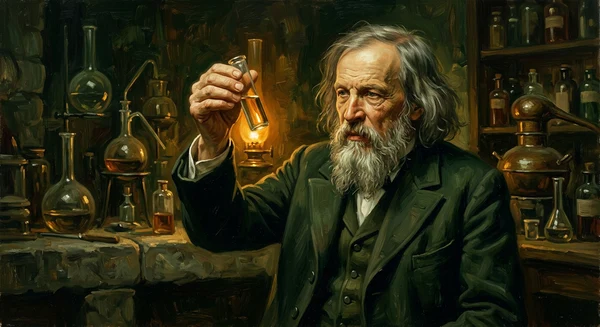
Dmitri Mendeleev
1834–1907 · Chemist & Inventor
Developed an influential periodic table and periodic law, leaving gaps for undiscovered elements and predicting several of their properties.
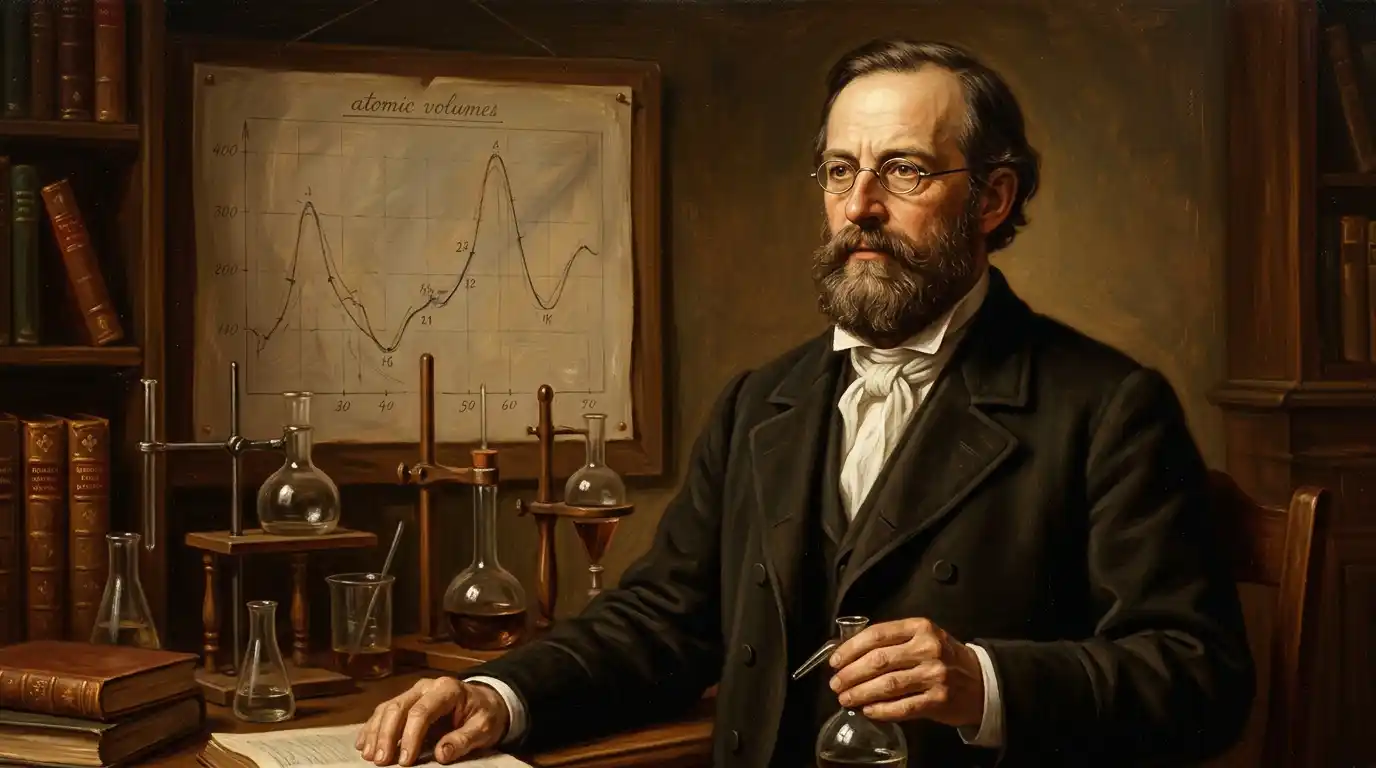
Julius Lothar Meyer
1830–1895 · Chemist
Independently developed periodic arrangements of the elements, organising them using atomic weight and valence. He and Dmitri Mendeleev were jointly awarded the Royal Society's Davy Medal in 1882 for their work on periodic classification.
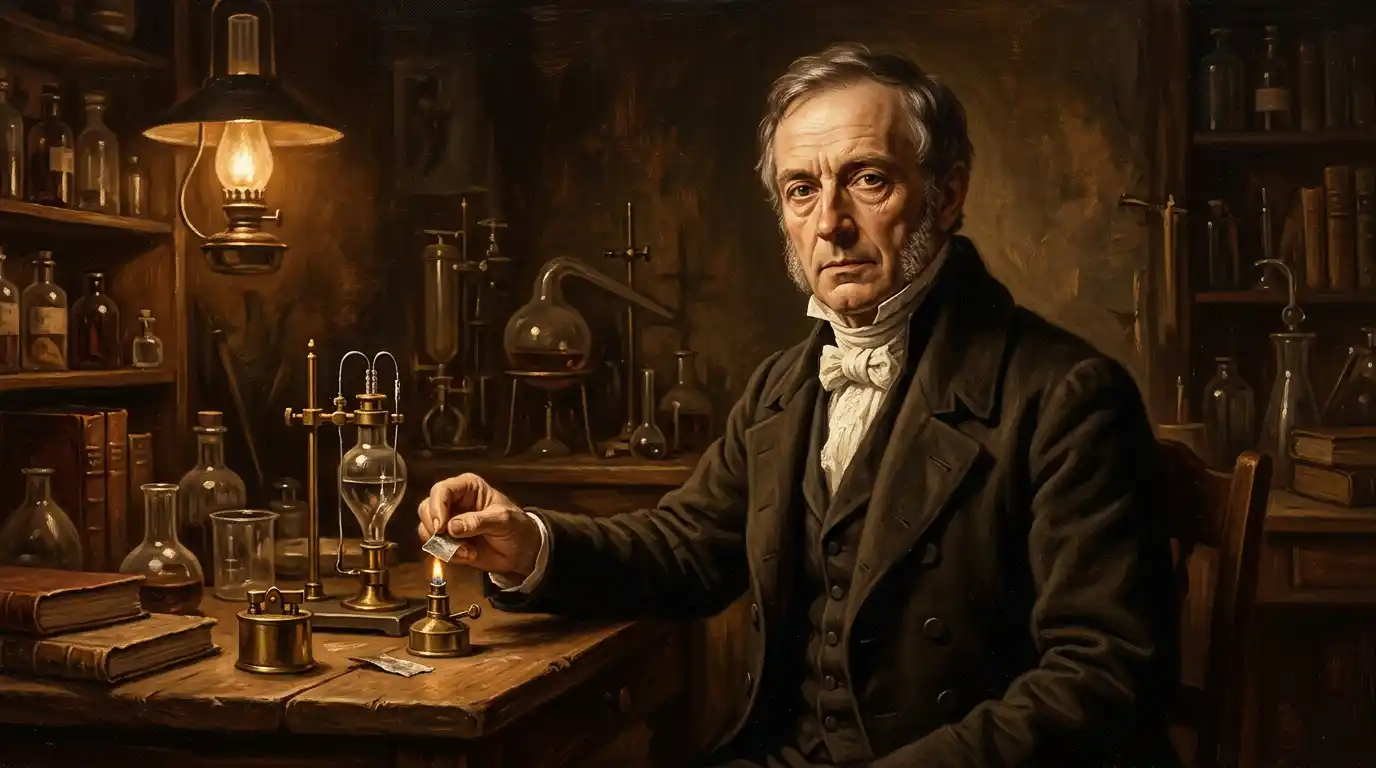
Johann Wolfgang Döbereiner
1780–1849 · Chemist
Identified relationships between groups of three chemically similar elements, later known as Döbereiner's triads — an important early step towards recognising periodic relationships. He also carried out important work on platinum catalysis and developed the Döbereiner lighter.