_(2).jpg)
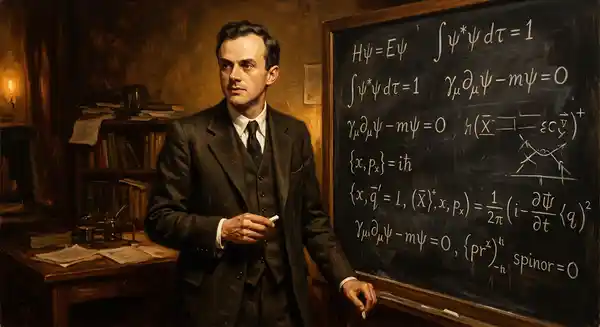
Paul Dirac
1902–1984 · Theoretical Physicist
Paul Dirac was a British theoretical physicist who developed the Dirac equation and produced theory that implied the existence of antimatter. He shared the 1933 Nobel Prize in Physics with Erwin Schrödinger.
“Pick a difficult problem and work it out.”
Why is this scientist famous?
Developing the Dirac equation, one of the foundational equations of relativistic quantum mechanics, and producing theory that implied the existence of antimatter. He shared the 1933 Nobel Prize in Physics with Erwin Schrödinger.
Paul's story
From Engineering to Physics
Paul Adrien Maurice Dirac was born on 8 August 1902 in Bristol, England. He was educated in Bristol and studied electrical engineering at the University of Bristol, receiving his BSc in Engineering in 1921.
Dirac then studied mathematics at Bristol before moving to Cambridge in 1923 as a research student, working under Ralph Fowler. He received his PhD from Cambridge in 1926 and became a Fellow of St John's College, Cambridge, in 1927.
The Dirac Equation
Dirac began working on the new quantum mechanics soon after Heisenberg's 1925 breakthrough. He developed his own powerful mathematical formulation of quantum mechanics.
In 1928, Dirac formulated the relativistic equation now known as the Dirac equation. The equation incorporated quantum mechanics and special relativity for the electron. Its mathematics implied states corresponding to a particle with the same mass as the electron but opposite charge — an antiparticle.
Carl Anderson experimentally discovered the positron in 1932. Dirac had theoretically predicted an electron antiparticle; he did not experimentally discover the positron himself.
Cambridge and the Nobel Prize
Dirac was elected a Fellow of the Royal Society in 1930. In 1932, he became Lucasian Professor of Mathematics at Cambridge — the professorship once held by Isaac Newton. He held the Lucasian chair until 1969.
Dirac shared the 1933 Nobel Prize in Physics with Erwin Schrödinger for the discovery of new productive forms of atomic theory.
Legacy
Dirac's work was foundational to quantum electrodynamics and quantum field theory, though he did not create either field alone. His mathematical style was famously concise, and his equation remains one of the most important in modern physics.
Later in life, Dirac became a professor at Florida State University. He died on 20 October 1984 in Tallahassee, Florida.
What did they discover?
The Dirac Equation
In 1928, Dirac formulated a relativistic equation that incorporated quantum mechanics and special relativity for the electron. Its mathematics implied the existence of an electron antiparticle.
Prediction of Antimatter
Dirac's theory implied states corresponding to a particle with the same mass as the electron but opposite charge. Carl Anderson experimentally discovered the positron in 1932.
Nobel Prize in Physics, 1933
Dirac shared the 1933 Nobel Prize in Physics with Erwin Schrödinger for the discovery of new productive forms of atomic theory.
Amazing facts
Dirac first trained as an electrical engineer.
His mathematical style was famously concise.
His equation combined quantum mechanics and special relativity.
His theory anticipated antimatter before the positron was observed experimentally.
He held the Cambridge professorship once held by Isaac Newton.
Timeline
Born in Bristol, England.
Received BSc in Engineering from the University of Bristol.
Began research at Cambridge under Ralph Fowler.
Received PhD from Cambridge.
Published the Dirac equation.
Elected Fellow of the Royal Society.
Became Lucasian Professor of Mathematics at Cambridge.
Shared the Nobel Prize in Physics with Erwin Schrödinger.
Retired from the Lucasian chair.
Died in Tallahassee, Florida, USA.
Awards & honours
Related Super Scientists
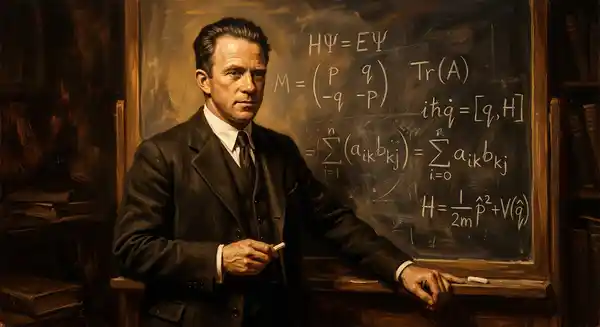
Werner Heisenberg
1901–1976 · Theoretical Physicist
Initiating matrix mechanics in 1925 and formulating the uncertainty principle in 1927. He received the 1932 Nobel Prize in Physics.
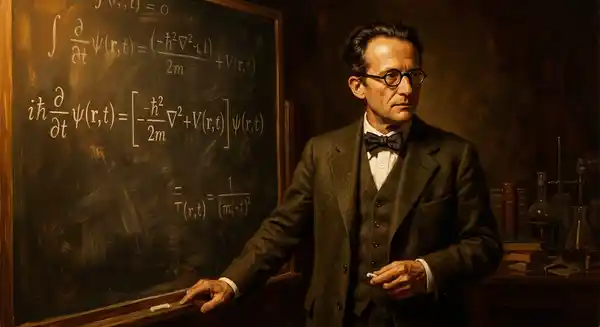
Erwin Schrödinger
1887–1961 · Theoretical Physicist
Developing wave mechanics and formulating the Schrödinger equation in 1926. He shared the 1933 Nobel Prize in Physics with Paul Dirac.
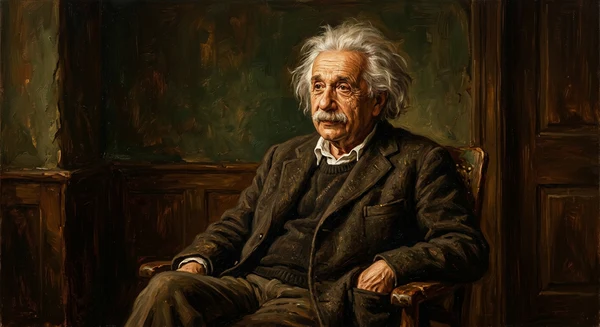
Albert Einstein
1879–1955 · Theoretical Physicist
Developing the theory of relativity and the equation E=mc².