_(2).jpg)
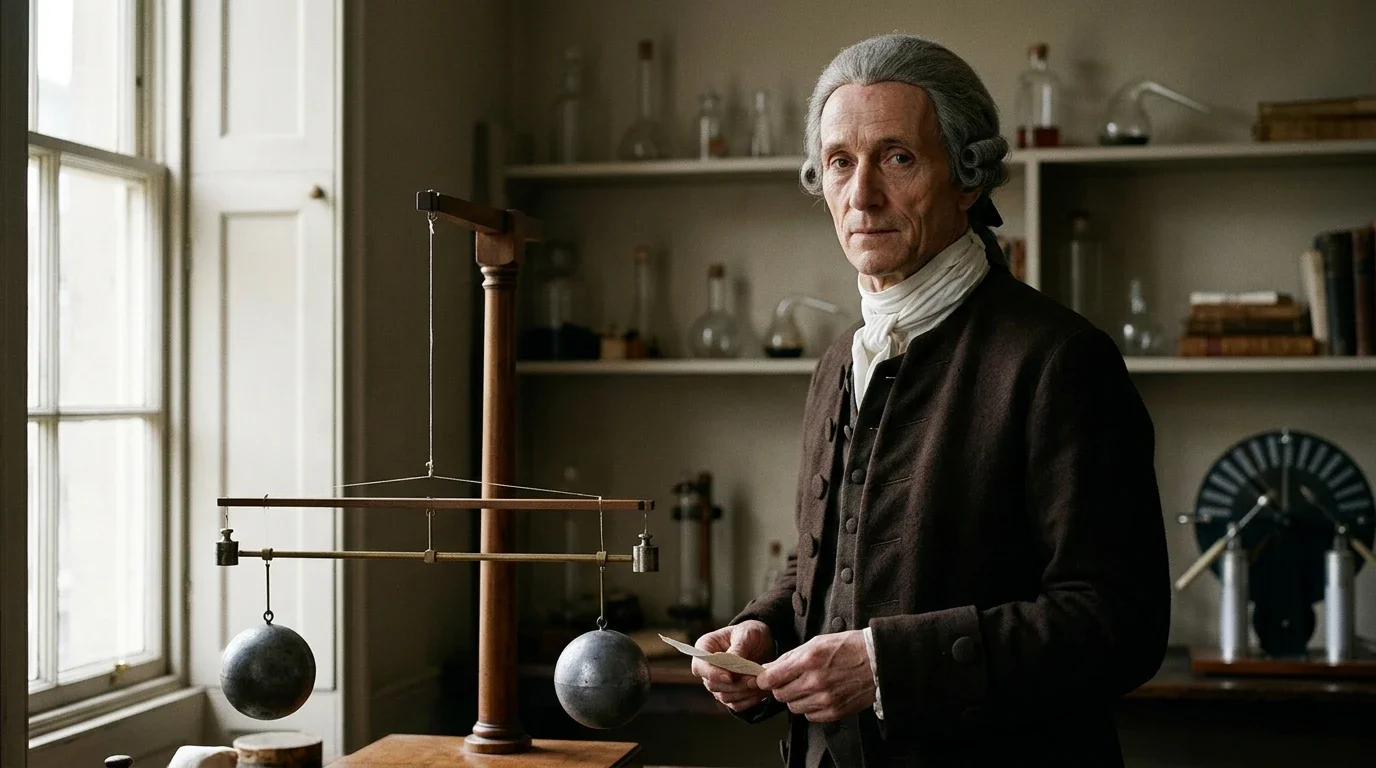
Henry Cavendish
1731–1810 · Experimental chemistry, gases and gravitation
Henry Cavendish studied gases and water and measured the Earth’s density using tiny gravitational forces between carefully arranged masses.
Why is this scientist famous?
Henry Cavendish investigated hydrogen and the composition of water and used an exceptionally sensitive torsion balance to measure the Earth’s mean density.
His precise studies helped establish quantitative chemistry and enabled later physicists to measure weak gravitational forces and understand the Earth’s composition.
Henry's story
An experimental life
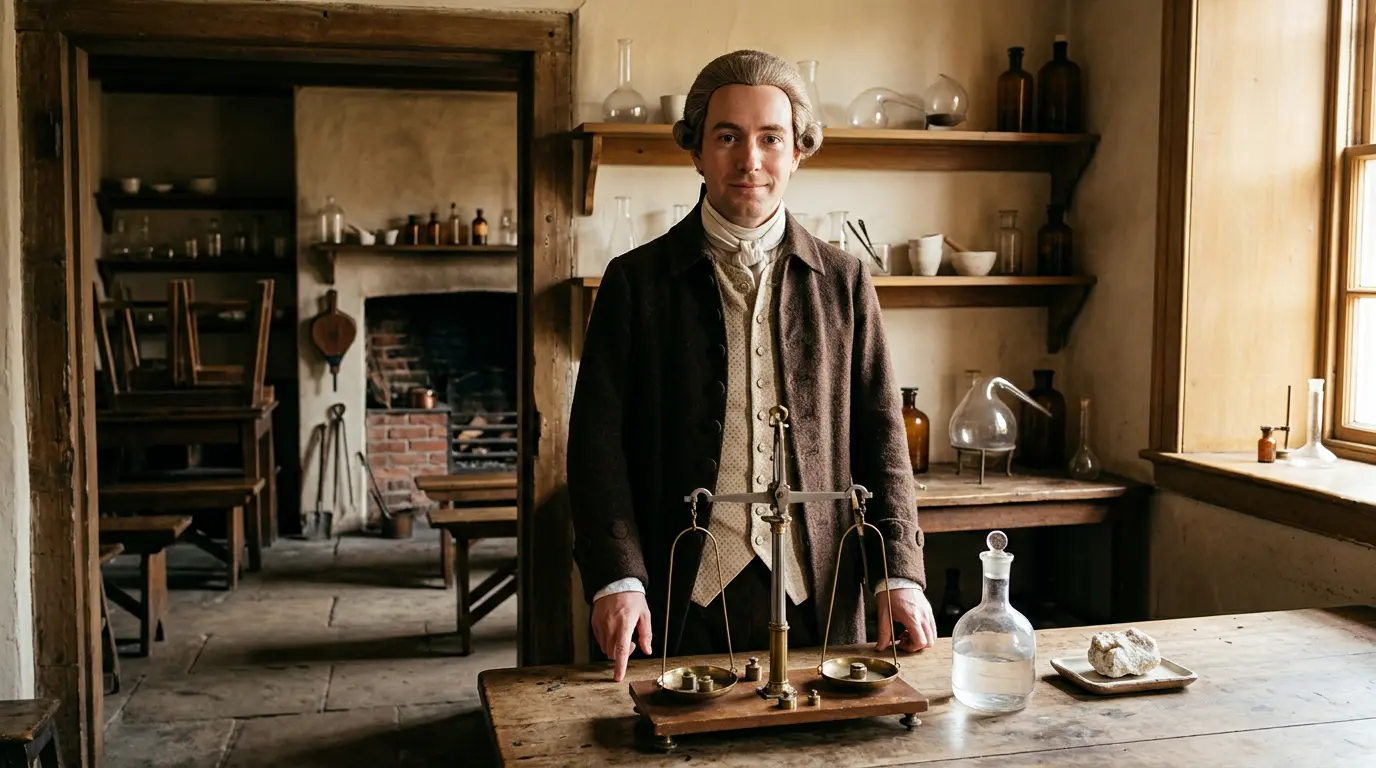
Henry Cavendish was born on 10 October 1731 in Nice, then part of the Kingdom of Sardinia, into a British aristocratic family. He studied at Peterhouse, Cambridge, but left without a degree. Cavendish spent much of his adult life investigating natural phenomena with exceptional attention to measurement. In an age when gases were only beginning to be distinguished chemically, he asked what each kind of “air” actually was, how it behaved and how much it weighed.
What is inflammable air?
In a 1766 paper Cavendish described experiments on several gases, including an extraordinarily light and combustible substance then called “inflammable air”, now recognised as hydrogen. Earlier experimenters had produced hydrogen; his great contribution was the rigorous description of its properties. He also studied carbon dioxide, continuing work associated with Joseph Black, and developed techniques for comparing the densities of gases. Quantities that were hard to weigh demanded inventive apparatus and patient repetition.
Water is not an element
Cavendish made water by reacting hydrogen with oxygen, contributing crucial evidence that water is a compound rather than one of the fundamental elements assumed in older chemistry. His experiments belonged to a wider debate involving figures such as Antoine Lavoisier and James Watt; simple claims that one person alone “discovered water’s composition” obscure the historical sequence. Cavendish also studied the makeup of air and detected a small residue left after the major components were removed, an observation that gained new meaning when argon was identified much later.
An experiment too delicate to rush
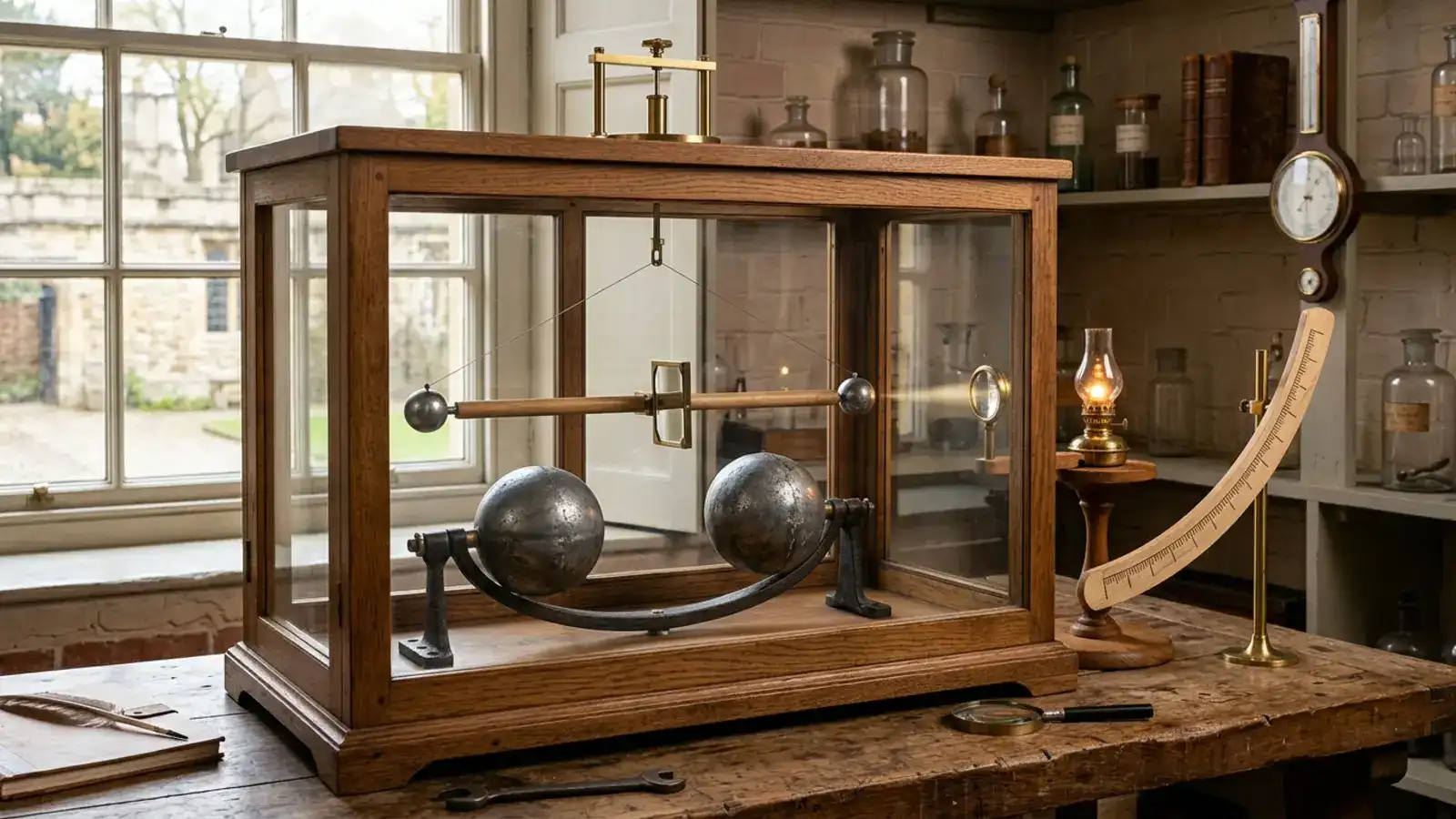
In 1798 Cavendish reported his measurement of the Earth’s mean density. Using a torsion balance, he watched the tiny twist produced when large lead spheres gravitationally attracted smaller ones. John Michell had conceived the apparatus before his death; Cavendish brought the idea to a successful, extraordinarily sensitive experiment. Temperature changes and air currents could spoil a reading, so controlling disturbance was as important as calculating the result. His measured value was remarkably close to the modern figure.
The value of precise evidence
Cavendish investigated electricity and heat as well as gases and gravity. Many of his electrical results remained unpublished during his life, while his published work showed how careful experiments could challenge accepted theory. His legacy reaches classrooms through the Cavendish experiment, through our understanding of hydrogen and water, and through the ideal of precise quantitative measurement. He died in London on 24 February 1810.
What did they discover?
Hydrogen properties
Measured the density and properties of the light combustible gas later named hydrogen.
Composition of water
Provided experimental evidence that water forms from hydrogen and oxygen.
Density of the Earth
Carried out the torsion-balance experiment conceived by Michell and estimated the Earth’s mean density.
Atmospheric analysis
Investigated atmospheric composition and noticed a small unaccounted-for residual gas fraction.
Amazing facts
He was born in Nice, not in England, despite being a British scientist.
He entered Cambridge but did not take a degree.
He published important work on “factitious airs” in 1766.
His “inflammable air” is what we now call hydrogen.
His work supported the understanding that water is made from hydrogen and oxygen.
He investigated a tiny residual part of air later connected with argon.
John Michell designed the original gravity-measuring apparatus concept.
Cavendish’s 1798 torsion experiment determined the Earth’s mean density.
Timeline
Born in Nice, then in the Kingdom of Sardinia.
Elected a Fellow of the Royal Society.
Published experiments on “factitious airs”, including inflammable air, and received the Royal Society’s Copley Medal.
Published experimental work relevant to the composition of water.
Published Experiments to Determine the Density of the Earth.
Died in London.
Awards & honours
Related Super Scientists
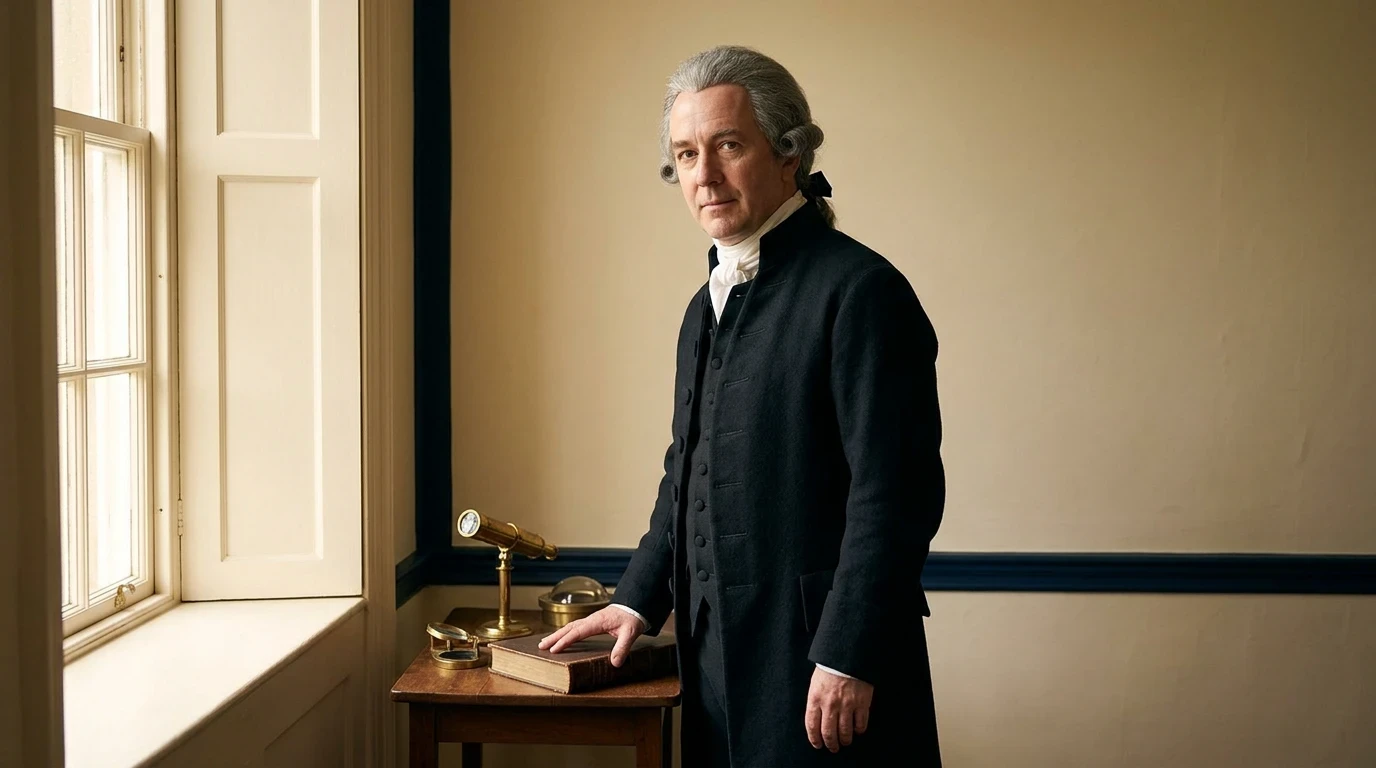
John Michell
1724–1793 · Gravitation, astronomy, magnetism and seismology
John Michell proposed dark stars from which light might not escape, studied earthquake waves and conceived the torsion-balance experiment later carried out by Henry Cavendish.
Joseph Black
1728–1799 · Heat, carbon dioxide and chemical measurement
Joseph Black investigated carbon dioxide and showed that melting and heating involve different kinds of heat transfer.
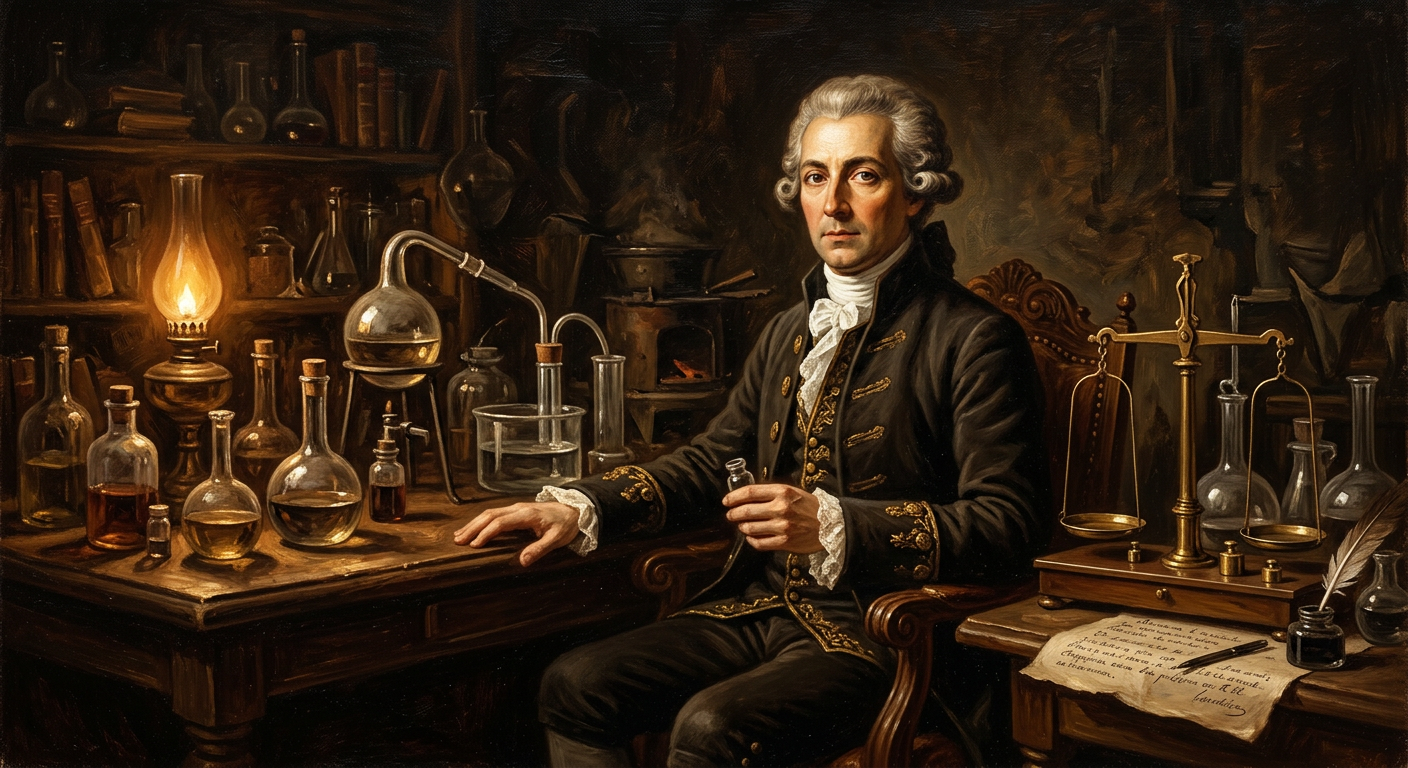
Antoine Lavoisier
1743–1794 · Chemist
A founder of modern chemistry who helped overthrow phlogiston theory, established a quantitative approach to chemical reactions and helped create modern chemical nomenclature.