_(2).jpg)
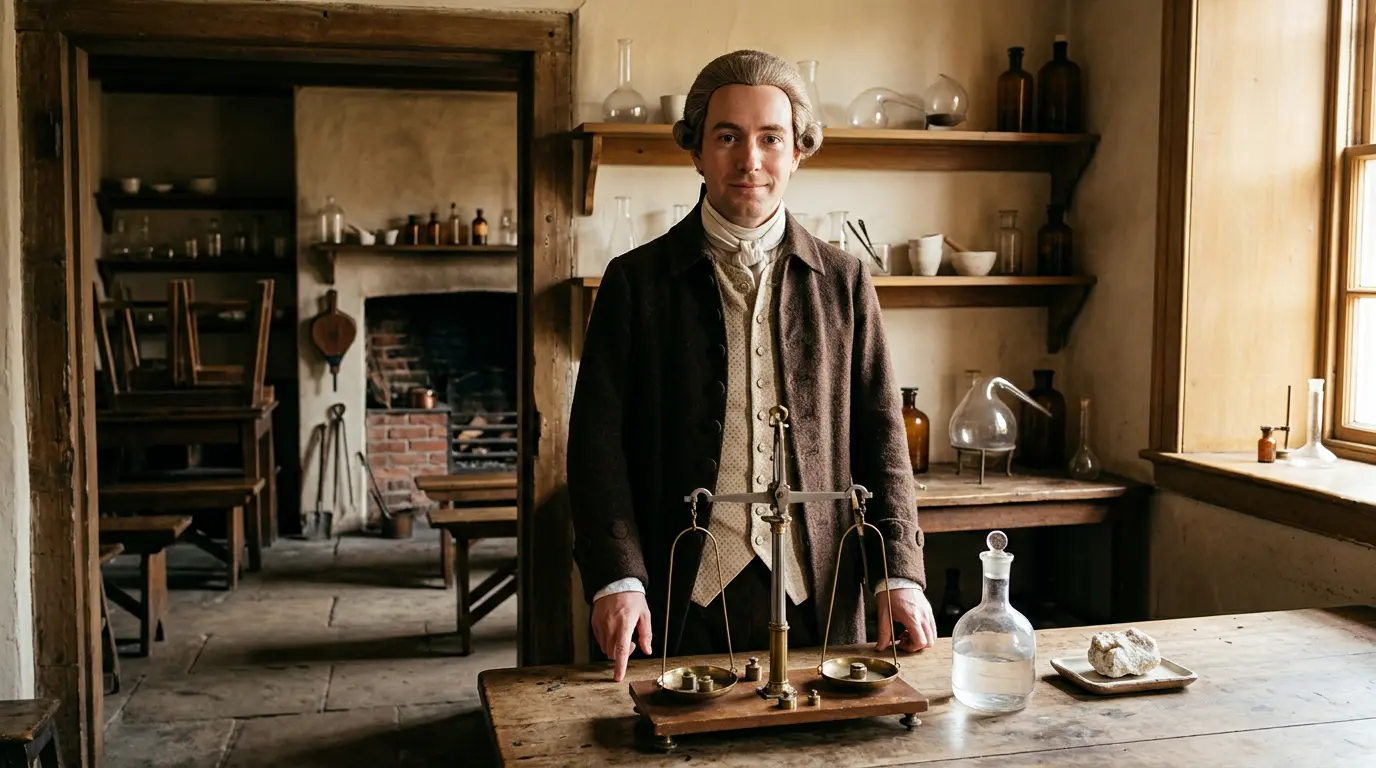
Joseph Black
1728–1799 · Heat, carbon dioxide and chemical measurement
Joseph Black identified carbon dioxide as a distinct gas and explained latent and specific heat, transforming experiments on matter and temperature.
Why is this scientist famous?
Joseph Black investigated carbon dioxide and showed that melting and heating involve different kinds of heat transfer.
Latent and specific heat explain ice melting, cooking, thermal storage, cooling systems and many engineering processes.
Joseph's story
A medical student attracted to chemistry
Joseph Black was born in Bordeaux, France, on 16 April 1728, to a family with Scottish and Irish connections. He studied at the University of Glasgow, where the chemist William Cullen encouraged his interest in medical chemistry, and then earned a medical doctorate at Edinburgh in 1754. Chemistry was changing from a collection of practical recipes into a science increasingly built on precise weighing and measured comparisons. Black became an important part of that change.
Finding a hidden gas
Black studied the reactions of a white mineral material called magnesia alba and showed that it could release a distinctive gas, which he called fixed air. That gas is now known as carbon dioxide. He showed that substances could gain or lose this gas during chemical reactions, helping chemists distinguish a gas from the ordinary air around it. Other investigators later expanded gas chemistry; Black’s careful measurements were a major step toward the chemical revolution.
Heat that does not raise temperature
Black’s work in Glasgow revealed that heat can be absorbed during melting without raising the temperature. Ice can take in energy while turning into liquid water and remain at its melting point throughout the change. He called this hidden exchange latent heat. This helps explain why ice keeps a drink cool as it melts. The lesson also applies to boiling: energy can change the state of matter without simply making a thermometer reading climb.
Not every substance warms alike
Black also distinguished specific heat: different amounts of energy are needed to raise equal masses of different materials through the same temperature change. He developed these ideas through experiments and lectures rather than publishing a large treatise on heat during his lifetime. Black knew the engineer James Watt, whose work on steam engines occurred in the same intellectual world, but a simple claim that Black invented Watt’s improvements would be false.
An influential teacher
Black became professor at Glasgow in 1756 and moved to Edinburgh in 1766, where he became a celebrated teacher. He helped found the Royal Society of Edinburgh and served as president of the Royal College of Physicians of Edinburgh. He died in Edinburgh on 6 December 1799. His science joins two things pupils meet often: invisible gases produced in chemical reactions, and the surprising way temperature behaves as ice melts or water boils.
What did they discover?
Carbon dioxide as a distinct gas
Identified fixed air and investigated chemical reactions involving it.
Latent heat
Explained heat absorbed during changes of state without a rise in temperature.
Specific heat
Studied why substances warm by different amounts when supplied with energy.
Quantitative chemistry
Used careful weighing to examine the composition of chemical substances.
Amazing facts
He was born in Bordeaux, France, though strongly associated with Scottish science.
He studied with William Cullen at the University of Glasgow.
He completed a medical doctorate at Edinburgh in 1754.
He used the term fixed air for the gas now called carbon dioxide.
He investigated magnesia alba to study chemical changes and gases.
He explained why ice can melt while its temperature stays constant.
He distinguished the different heat capacities of substances.
He was among the founders of the Royal Society of Edinburgh in 1783.
Timeline
Born in Bordeaux, France.
Began studies at the University of Glasgow.
Earned a medical doctorate from the University of Edinburgh.
Began teaching as a professor at Glasgow.
Described investigations of latent and specific heat to a Glasgow learned society.
Moved to a professorship at the University of Edinburgh.
Helped found the Royal Society of Edinburgh.
Died in Edinburgh, Scotland.
Related Super Scientists
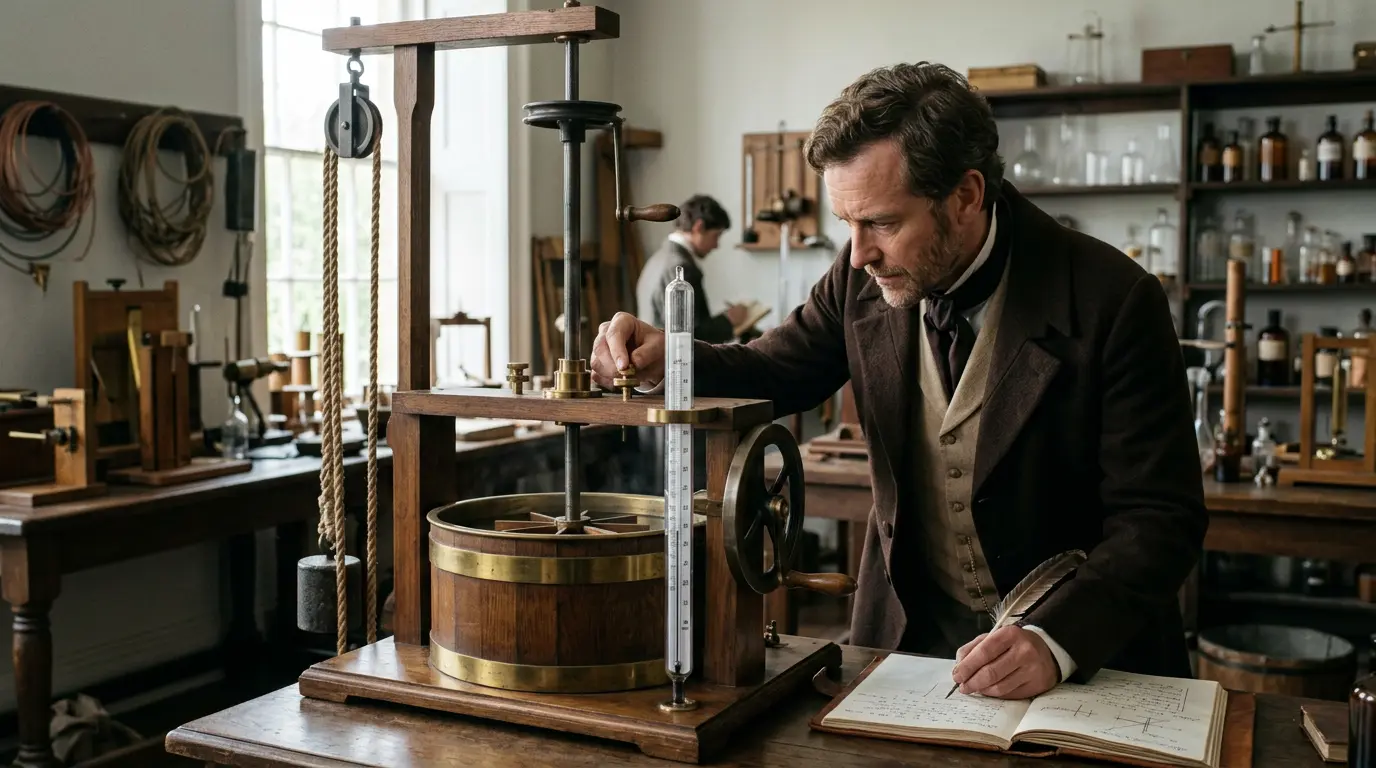
James Prescott Joule
1818–1889 · Physicist
Measured the mechanical equivalent of heat, discovered the electrical heating law bearing his name and made major contributions to the development of energy conservation and thermodynamics.
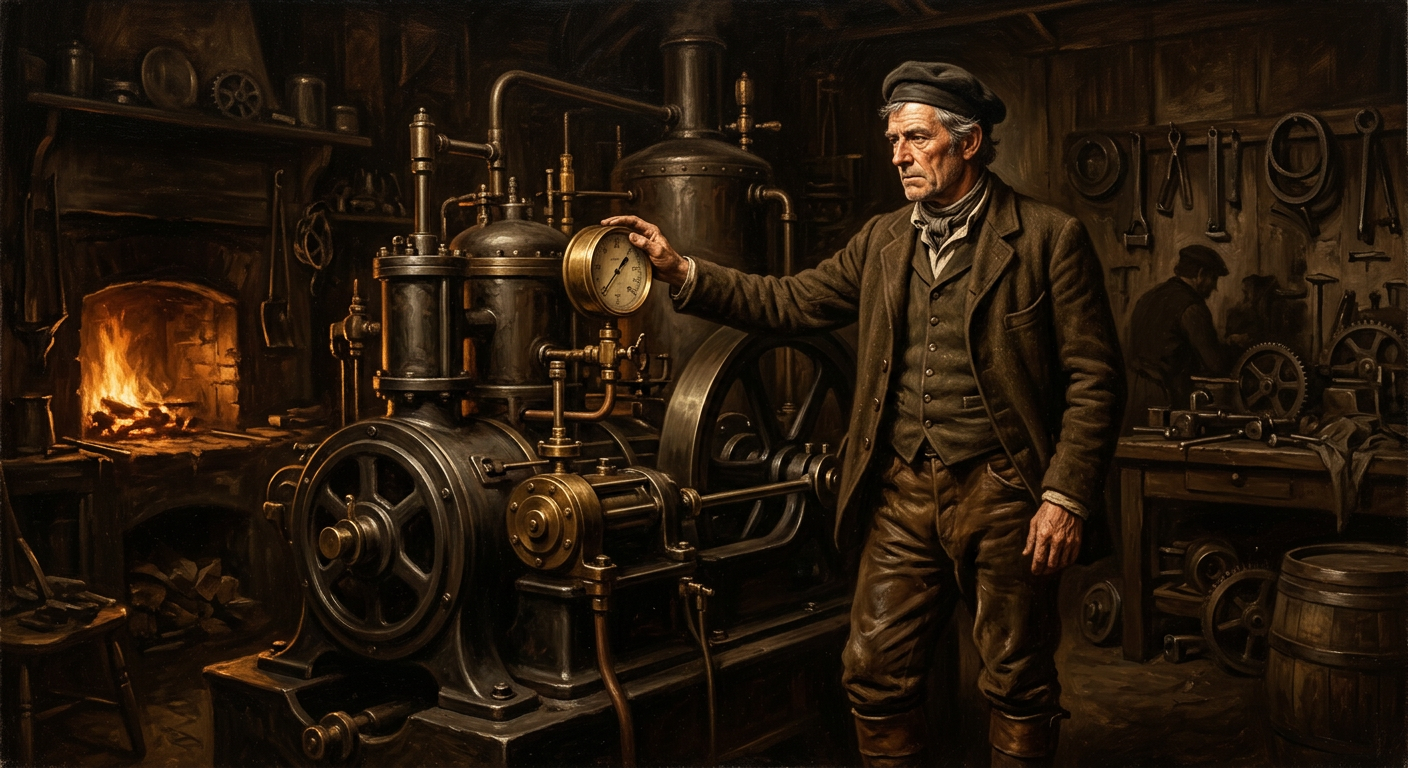
James Watt
1736–1819 · Engineer & Inventor
Watt's separate condenser greatly reduced the fuel needed by Newcomen-type steam engines. Working with Matthew Boulton and others, he developed engines capable of supplying rotary power for factories and other machinery, making steam power far more useful during the Industrial Revolution.