_(2).jpg)
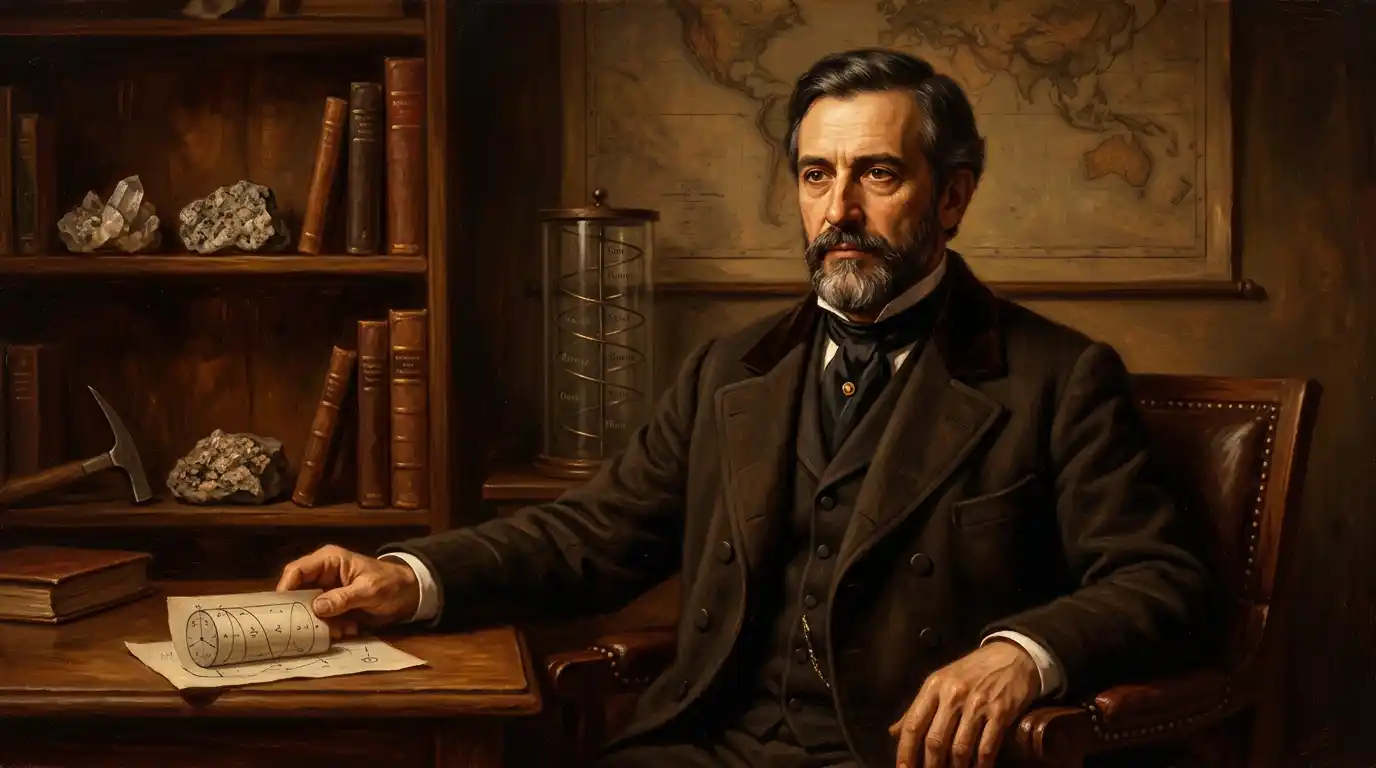
Alexandre-Émile Béguyer de Chancourtois
1820–1886 · Geologist and Mining Engineer
A French geologist and mining engineer who created the telluric screw, an early periodic arrangement of the elements.
“The most exciting phrase to hear in science, the one that heralds new discoveries, is not 'Eureka!' but 'That's funny...'”
Why is this scientist famous?
Developed the 1862 telluric screw, which arranged elements by atomic weight around a cylinder and revealed repeating chemical properties. One of the earliest attempts to arrange all known elements periodically.
Alexandre-Émile's story
A Geologist and Mining Engineer
Alexandre-Émile Béguyer de Chancourtois was born on 20 January 1820 in Paris. He entered the École Polytechnique in 1838 and then trained in the Corps des mines at the École des Mines. Appointed a mining engineer in 1845, he spent several years working in provincial mining districts before returning to Paris to teach at the École des Mines.
As a mining engineer, Chancourtois worked in mines and mineral surveys across France. His geological background gave him a deep familiarity with elements and their properties, and he approached the classification of elements from a practical rather than purely theoretical perspective.
The Telluric Screw
In 1862, Chancourtois developed a system he called the telluric screw, or vis tellurique. He arranged the known elements in order of increasing atomic weight in a spiral around a cylinder. As the spiral wound upwards, elements with similar chemical properties appeared at regular intervals — a repeating pattern that anticipated the idea of periodicity.
The telluric screw was one of the earliest attempts to organise all known elements into a system that revealed recurring relationships. One complete turn of the cylinder represented an atomic-weight increase of 16, so several elements with similar chemical properties aligned vertically.
However, the system had significant limitations. It included some substances that were not true elements, and its organisation was not as clean as later periodic tables. Crucially, the diagram showing the cylindrical arrangement was omitted from the original publication in Comptes Rendus, which meant that many readers could not visualise the pattern Chancourtois had identified.
Legacy
Chancourtois died on 14 November 1886. By that time, Mendeleev’s periodic table of 1869 had become far more influential, partly because Mendeleev explicitly left gaps for undiscovered elements and made successful predictions.
Chancourtois’s telluric screw nevertheless remains an important milestone. It was one of the first systems to arrange elements by atomic weight and to recognise that their properties repeated in a pattern. His work showed that a periodic arrangement was possible, even if his version was incomplete and did not reach a wide audience.
What did they discover?
The Telluric Screw
Chancourtois arranged the known elements by increasing atomic weight in a spiral around a cylinder, revealing that chemically similar elements appeared at regular intervals — one of the earliest periodic arrangements.
Periodicity Before Mendeleev
His 1862 system predated Mendeleev's periodic table by seven years and was one of the first attempts to show that elemental properties repeat in a pattern when elements are ordered by atomic weight.
Geological Approach to Classification
As a mining engineer, Chancourtois brought a practical geological perspective to the classification of elements, drawing on his deep familiarity with minerals and their chemical properties.
Amazing facts
Chancourtois was a mining engineer, not a laboratory chemist — his approach to classifying elements came from his geological and mineralogical background.
The telluric screw was published in 1862, seven years before Mendeleev’s more famous periodic table.
The diagram showing the cylindrical spiral was omitted from the original Comptes Rendus publication, which limited the work’s impact.
Chancourtois named his system the vis tellurique, or telluric screw, after tellurium, which occupied a position on the spiral.
In 1875, he became professor of geology at the École des Mines in Paris.
His system included some substances that were not true elements, which was one of several limitations compared to later periodic tables.
Timeline
Born in Paris, France.
Returned to Paris and began teaching at the École des Mines after several years working as a mining engineer.
Published the telluric screw, an early periodic arrangement of the elements.
Mendeleev published his more influential periodic table; Chancourtois’s earlier telluric screw had attracted little attention.
Became professor of geology at the École des Mines in Paris.
Died in Paris, aged 66.
Related Super Scientists
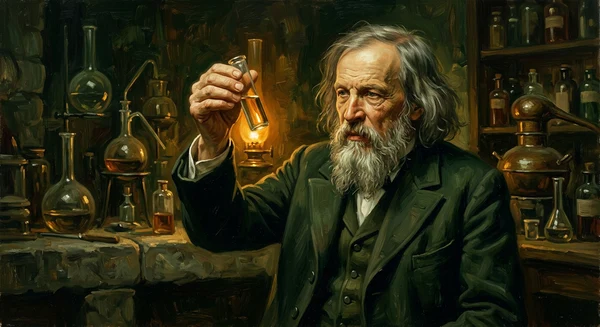
Dmitri Mendeleev
1834–1907 · Chemist & Inventor
Developed an influential periodic table and periodic law, leaving gaps for undiscovered elements and predicting several of their properties.
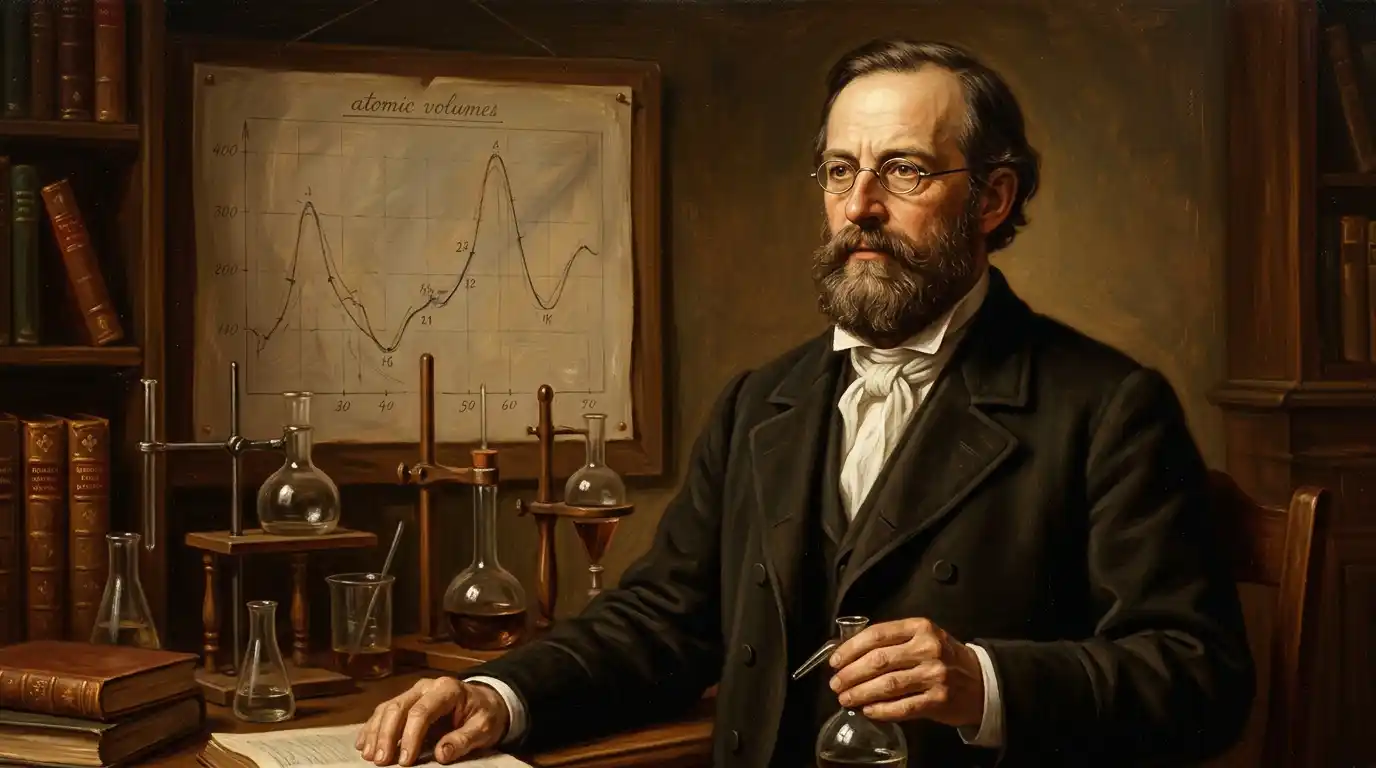
Julius Lothar Meyer
1830–1895 · Chemist
Independently developed periodic arrangements of the elements, organising them using atomic weight and valence. He and Dmitri Mendeleev were jointly awarded the Royal Society's Davy Medal in 1882 for their work on periodic classification.
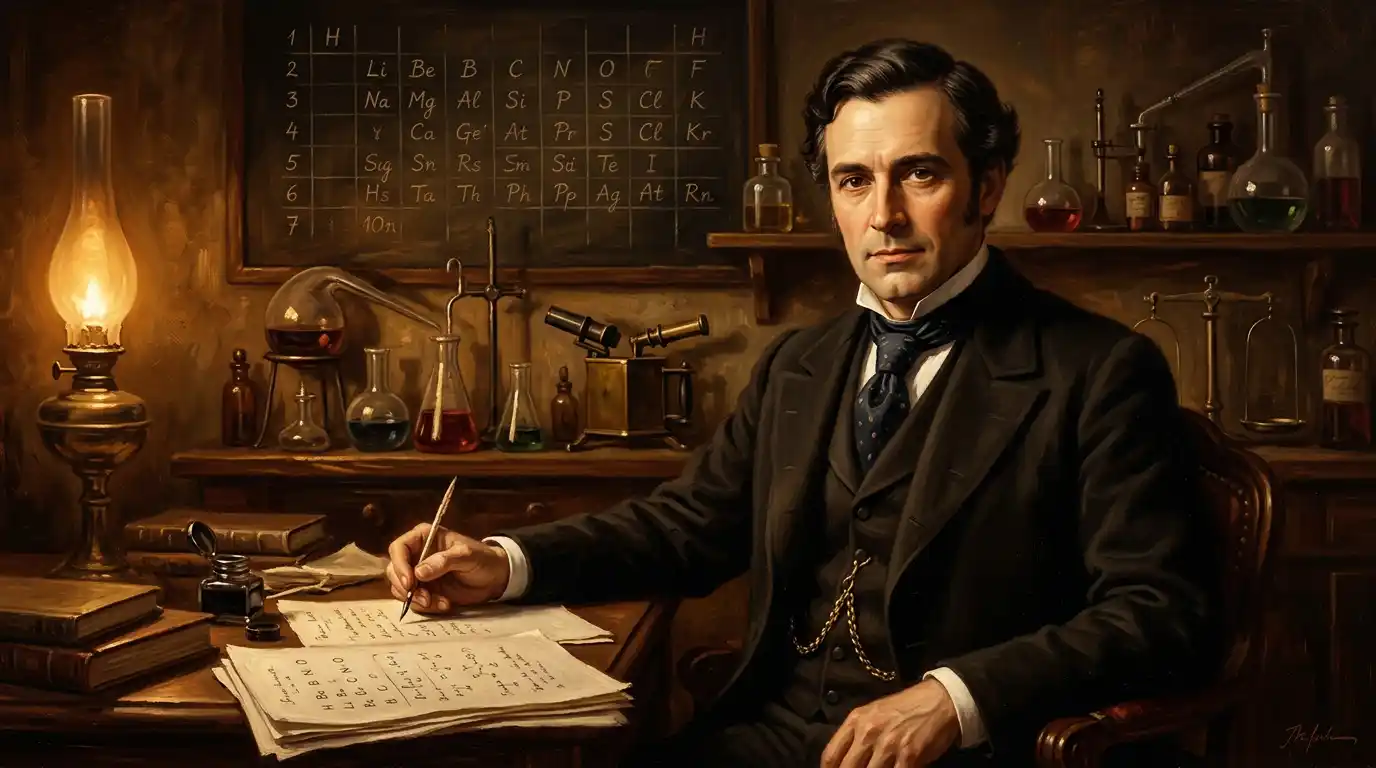
John Alexander Reina Newlands
1837–1898 · Chemist
Arranged elements in order of increasing atomic weight and recognised a repeating pattern he called the Law of Octaves. He was later awarded the Royal Society's Davy Medal in 1887 for his work on the periodic law of the chemical elements.