_(2).jpg)
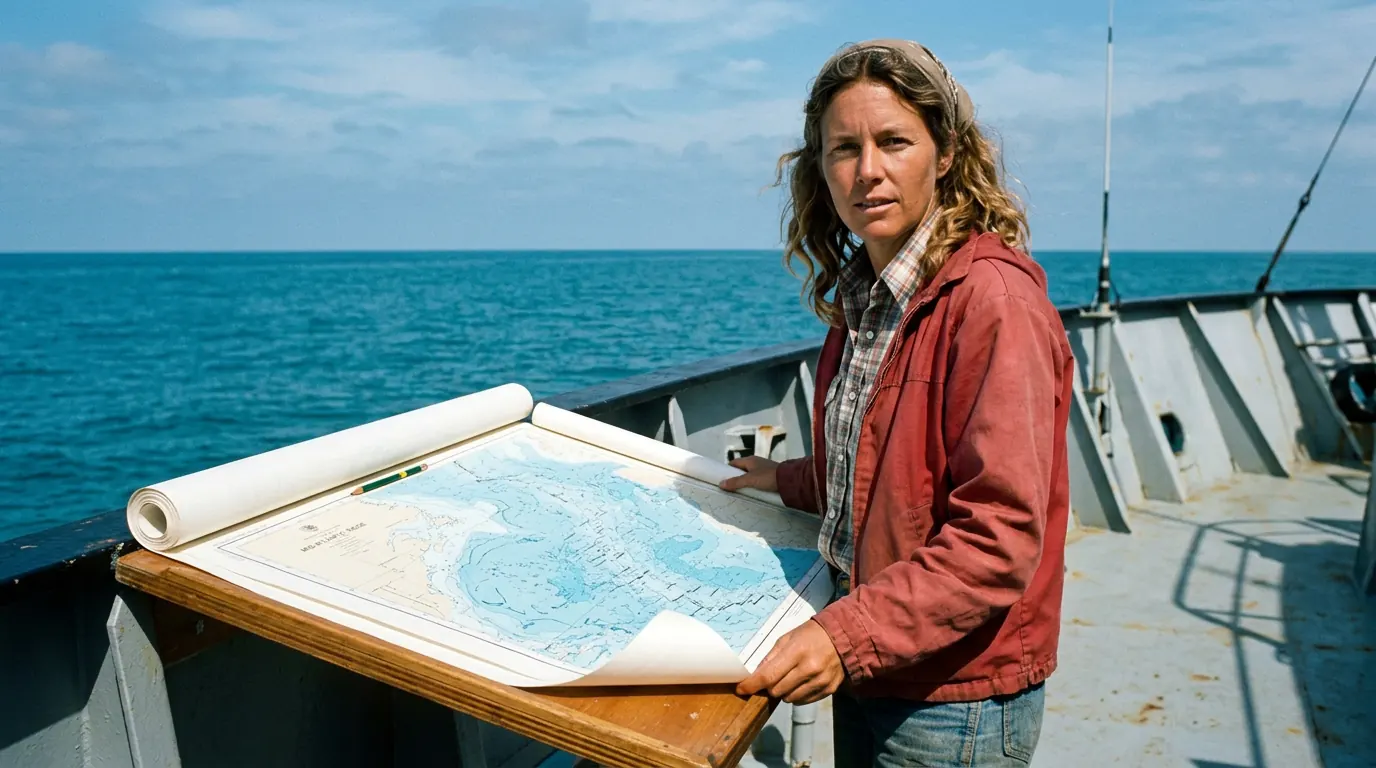
Tanya Atwater
1942–present · Marine geology and plate tectonics
Tanya Atwater linked seafloor magnetism to moving tectonic plates and helped explain how California’s San Andreas Fault developed.
“I love explaining things, anyway, and these audiences were rapt!”
Why is this scientist famous?
Tanya Atwater combined ocean-floor magnetic records, field geology and plate-motion reconstructions to explain the geological history of western North America and the San Andreas Fault.
Her maps and animated reconstructions make it easier to understand earthquakes, western North American landscapes and tectonic change.
Tanya's story
A revolution under the sea
Tanya Atwater grew up in California and studied science as plate tectonics was becoming a major new explanation of Earth. She studied at the Massachusetts Institute of Technology, then earned a degree at the University of California, Berkeley, in 1965. At Scripps Institution of Oceanography she became involved with newly interpreted magnetic patterns on the ocean floor. She completed her doctorate in 1972. Those magnetic stripes could be used to trace how seafloor spread and plates moved.
Mapping an unseen history
Ships had measured magnetic variations across the Pacific Ocean, recording clues to the age and formation of oceanic crust. Atwater worked with oceanographer H. William Menard to reinterpret those patterns as plate movements. Their work helped reveal changes in seafloor spreading direction. Rather than treating the ocean floor as fixed, they used measurements to reconstruct pieces of Earth’s moving surface through geological time.
Where the San Andreas came from
Atwater became particularly known for explaining the changing relationships between the Pacific, North American and formerly extensive Farallon plates. The Farallon plate was progressively consumed beneath western North America. As the Pacific and North American plates met, the San Andreas transform system developed. Her landmark work around 1970 linked the record of the ocean floor with geological evidence on land. It made the familiar California fault part of a much larger story.
Exploration and visual explanations
Her research took her to seafloor spreading centres, mountainous regions and aboard oceanographic expeditions. She made a series of dives in the research submersible Alvin, experiencing the deep ocean as a working geologist rather than only on maps. At the University of California, Santa Barbara, she also developed ways to communicate plate motion through animations. These visualisations helped learners see changes too slow to watch during a human lifetime.
Science that moves in slow motion
Atwater joined the faculty at Santa Barbara after earlier academic appointments and became professor emerita. She was elected to the US National Academy of Sciences in 1997 and awarded the Geological Society of London’s Wollaston Medal in 2022. Her career combines measurement, adventurous fieldwork, computer-based visual explanation and careful teaching. Plate movements take millions of years to reshape continents, but Atwater helped make their history understandable today.
What did they discover?
Western North American plate history
Explained changes in the Pacific, Farallon and North American plate relationships.
Seafloor magnetic reconstruction
Helped interpret magnetic patterns and changes in the direction of seafloor spreading.
San Andreas Fault history
Linked the fault system to plate-boundary changes over geological time.
Geology visualisation
Developed educational animations that show plate motions and changing landscapes.
Amazing facts
She studied at MIT and the University of California, Berkeley, before earning her Scripps doctorate in 1972.
Ocean-floor magnetism helped her and H. William Menard reconstruct plate movements.
Her influential 1970 work helped explain the formation of the San Andreas Fault system.
The vanished Farallon plate was central to her reconstruction of western North America.
She made twelve dives to the deep ocean floor aboard the submersible Alvin.
She made animated plate reconstructions used in science teaching and museums.
She was elected to the US National Academy of Sciences in 1997.
She received the Geological Society of London’s Wollaston Medal in 2022.
Timeline
Graduated from the University of California, Berkeley.
Joined a period of pioneering marine-geophysics research at Scripps.
Published influential work on western North American plate-tectonic history.
Completed her doctorate at Scripps Institution of Oceanography.
Joined the University of California, Santa Barbara faculty.
Elected to the US National Academy of Sciences.
Awarded the Geological Society of London’s Wollaston Medal.
Awards & honours
Related Super Scientists
Alfred Wegener
1880–1930 · Meteorologist & Geophysicist
Proposed the theory of continental drift, the foundation of modern plate tectonics.
Marie Tharp
1920–2006 · Oceanographic cartography and geology
Her seafloor maps, made with colleague Bruce Heezen, revealed major underwater features and strengthened the case for continental movement and plate tectonics.
Lawrence Whitaker Morley
1920–2013 · Geophysics and remote sensing
He submitted his 1963 magnetic-stripe hypothesis before the similar paper by Vine and Matthews appeared; he later led Canada's remote-sensing programme.