_(2).jpg)
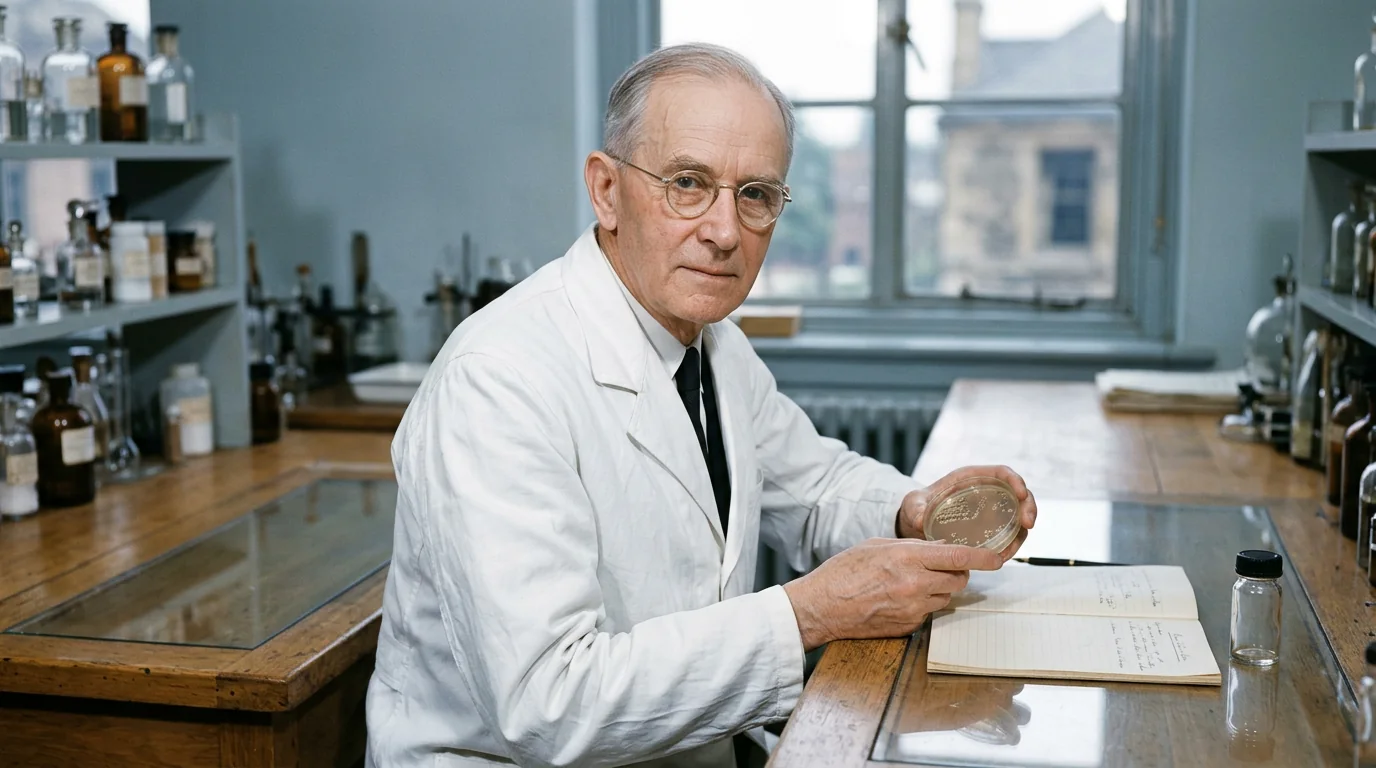
Oswald Avery
1877–1955 · Bacteriology and the chemical basis of heredity
Oswald Avery and his colleagues showed in 1944 that DNA carries a transferable inherited trait in bacteria, helping launch molecular genetics.
Why is this scientist famous?
Oswald Avery worked with Colin MacLeod and Maclyn McCarty to show that DNA could transfer inherited traits between bacteria, transforming the study of genes.
Identifying DNA as the material responsible for bacterial transformation opened the way for molecular genetics, genome research and biotechnology.
Oswald's story
A doctor with a scientific question
Oswald Theodore Avery was born in Halifax, Nova Scotia, Canada, on 21 October 1877, and grew up partly in New York City. He studied at Colgate University and qualified as a physician in 1904 at Columbia University’s College of Physicians and Surgeons. He became interested in medical laboratory work and joined the Rockefeller Institute in 1913. His major research problem was pneumonia, an illness often caused by bacteria called pneumococci.
Bacteria that could change
Researchers had learned that different pneumococcal bacteria behaved differently. Some made a smooth protective capsule; others lacked it and formed rough-looking colonies. In 1928 Frederick Griffith had shown that material from one type could permanently change another type, a process called bacterial transformation. The puzzle was what the transforming substance actually was. Avery’s group approached the question through chemistry, taking bacterial material apart and testing which fraction could still cause the change.
The three scientists and DNA
With colleagues Colin MacLeod and Maclyn McCarty, Avery isolated material that could transform rough bacteria into capsule-forming bacteria. They showed that destroying DNA removed this activity while treating the preparation to remove proteins did not produce the same result. Their 1944 paper identified deoxyribonucleic acid (DNA) as the transforming substance. This was strong evidence that DNA can carry inherited information, but scientists continued testing and debating its implications for years.
Not a lone discovery
Avery’s discovery depended on earlier work by Griffith and on the specialised experiments of MacLeod and McCarty. It also preceded the 1952 experiments of Alfred Hershey and Martha Chase and the 1953 double-helix model. Giving all these scientists credit prevents a misleading story in which DNA science sprang from a single moment. Avery’s own contribution was especially powerful because it linked a visible inherited bacterial trait with a specific chemical substance.
From pneumonia to genetics
Avery received major honours, including the 1947 Lasker Award, and died on 20 February 1955. Today, DNA is central to inheritance, medicine and biotechnology, although many details of gene regulation were still unknown in Avery’s lifetime. His story shows how investigating a practical medical problem can reveal a principle that affects all biology. It also illustrates why careful controls and collaboration matter as much as a famous result.
What did they discover?
DNA as transforming material
Co-led experiments identifying DNA as the agent that transfers bacterial capsule traits.
Bacterial transformation
Helped explain a lasting inherited change in pneumococci.
Chemical testing of heredity
Used biochemical fractionation and enzyme controls to distinguish DNA from proteins.
Bridge to molecular genetics
Provided evidence that supported later genetic and molecular discoveries.
Amazing facts
Avery was born in Halifax, Canada, but spent much of his youth in New York City.
He graduated from Colgate University in 1900.
He received his medical degree from Columbia University in 1904.
He joined the Rockefeller Institute in 1913 to study pneumococcal pneumonia.
Frederick Griffith’s earlier bacterial-transformation experiments helped frame Avery’s question.
The famous 1944 DNA paper was jointly written by Avery, Colin MacLeod and Maclyn McCarty.
Their biochemical tests showed that destroying DNA stopped bacterial transformation.
Avery received the Albert Lasker Award in 1947.
Timeline
Born in Halifax, Nova Scotia, Canada.
Graduated from Colgate University.
Completed his medical degree at Columbia University.
Joined the Rockefeller Institute to investigate pneumonia bacteria.
With MacLeod and McCarty, published the DNA transformation finding.
Received the Lasker Award.
Died in Nashville, Tennessee.
Awards & honours
Related Super Scientists
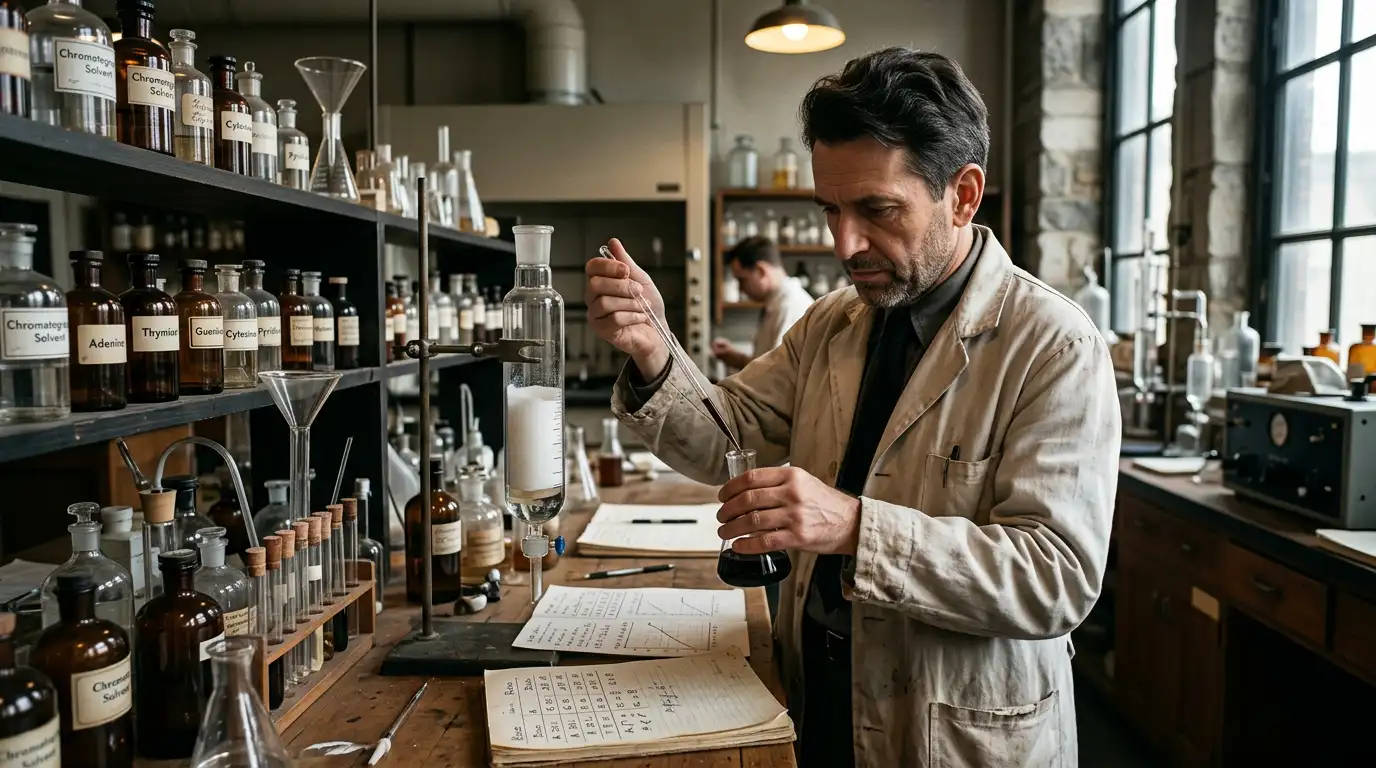
Erwin Chargaff
1905–2002 · Biochemist
Discovering important relationships in DNA base composition — later called Chargaff's rules — which supplied crucial evidence for understanding DNA structure.
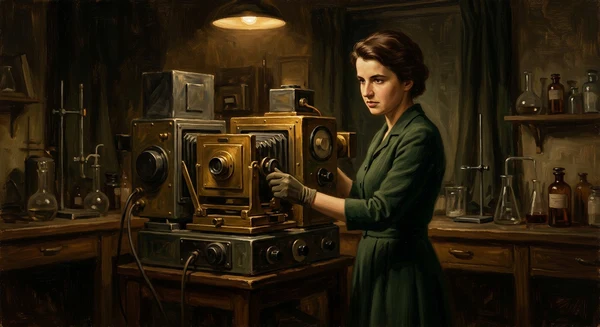
Rosalind Franklin
1920–1958 · Chemist & X-ray Crystallographer
Producing crucial X-ray diffraction data on DNA, including Photograph 51, with her student Raymond Gosling.
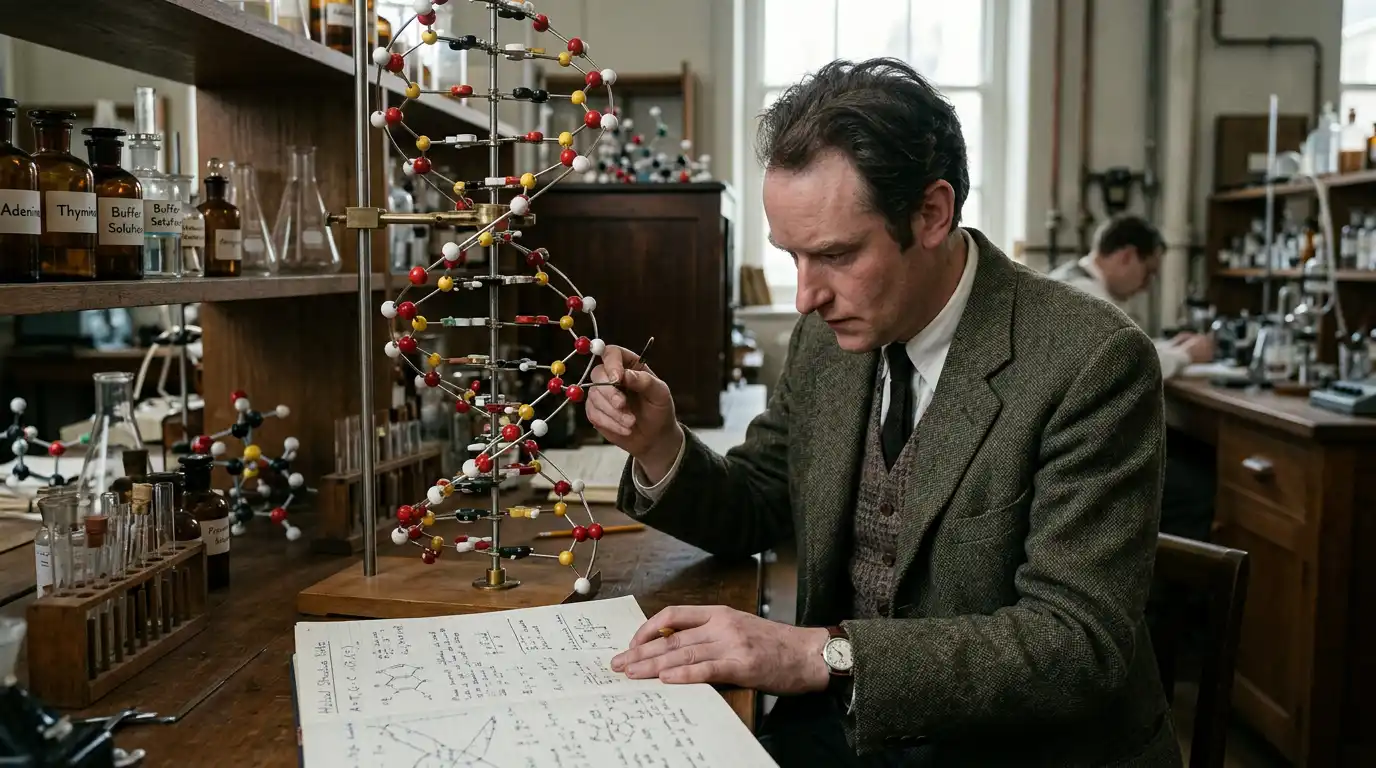
Francis Crick
1916–2004 · Molecular Biologist
Working with James Watson to develop the double-helix model of DNA in 1953 and later making major contributions to understanding genetic information and the genetic code. He shared the 1962 Nobel Prize in Physiology or Medicine with James Watson and Maurice Wilkins.