_(2).jpg)
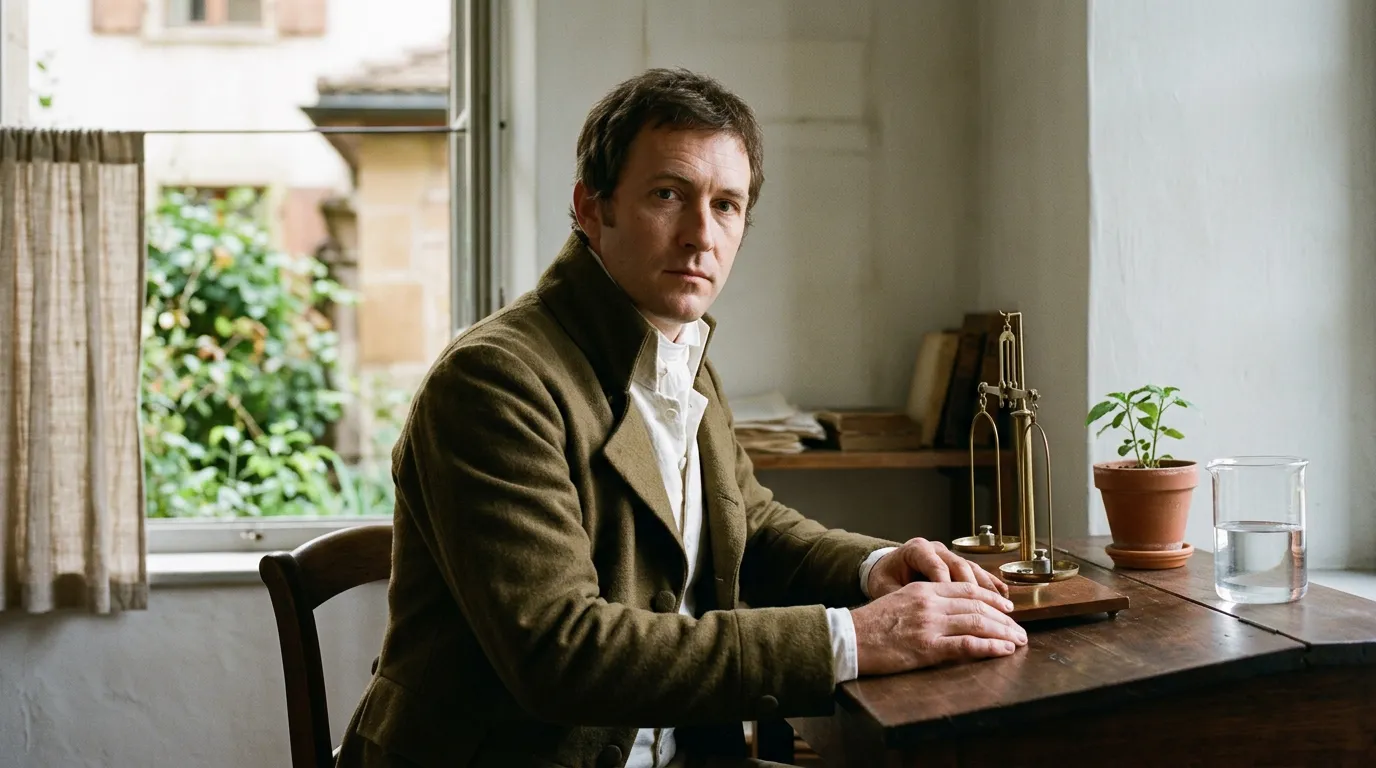
Nicolas-Théodore de Saussure
1767–1845 · Plant chemistry, nutrition and photosynthesis
Nicolas-Théodore de Saussure measured how plants use carbon dioxide, water and minerals, making photosynthesis a quantitative science.
Why is this scientist famous?
Nicolas-Théodore de Saussure used careful chemical measurements to show that plant growth involves carbon dioxide, water and substances from soil.
His mass-balance approach underpins modern photosynthesis research, plant mineral nutrition and experimental agricultural science.
Nicolas-Théodore's story
Learning to measure the natural world
Nicolas-Théodore de Saussure was born in Geneva on 14 October 1767. His father, Horace-Bénédict de Saussure, was a celebrated naturalist who studied the Alps. The younger de Saussure received his education in Geneva and assisted scientific investigations before deepening his chemistry studies in Britain in the 1790s. He became interested in a difficult problem: what new material does a growing plant obtain, and how can that material be measured?
Where a plant gets its mass
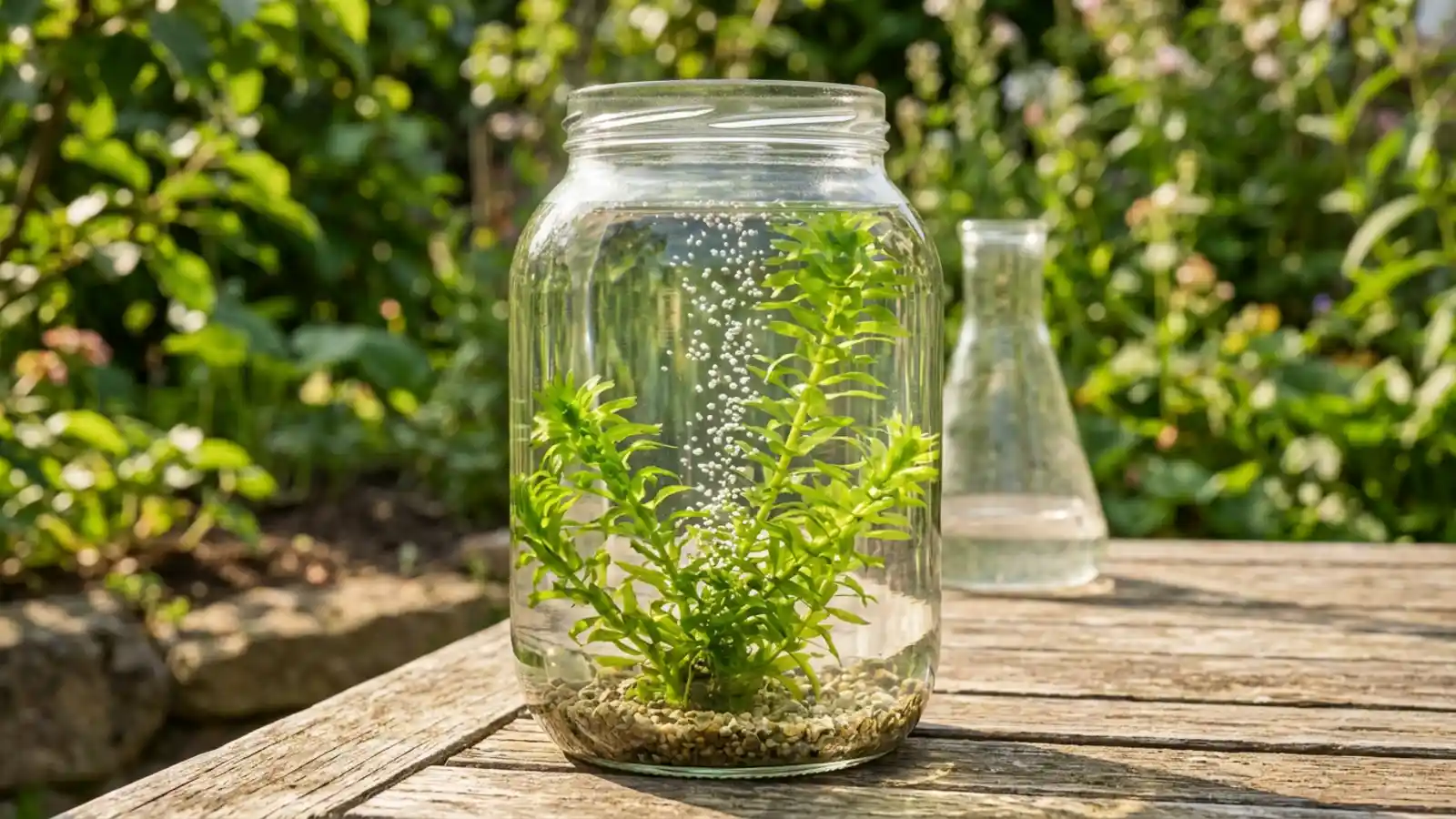
Experiments by Ingenhousz and Senebier had shown how sunlight and gases matter for plants. De Saussure added carefully weighed and measured comparisons. He investigated exchanges of carbon dioxide and oxygen, the role of water and the materials a plant takes up from its surroundings. These results were important because plant growth could not be explained by carbon dioxide alone, nor by soil consumption alone. Quantitative experiments began to join the pieces together.
The chemistry of vegetation
His 1804 book Recherches chimiques sur la végétation assembled investigations of plant nutrition. It explained the essential role of water and examined mineral substances absorbed through roots. At the time, researchers did not know the modern molecular details of chloroplasts or enzymes. De Saussure nevertheless brought experimental chemistry into questions previously discussed mainly by naturalists, demonstrating the value of measuring both inputs and products.
More than one scientific interest
He was appointed honorary professor of mineralogy and geology at the Academy of Geneva in 1802 and continued wide-ranging chemical studies. He investigated alcohol, starch and aspects of germination as well as plant gases. Other scientists went on to clarify that much of the oxygen released during photosynthesis comes from water, a conclusion established long after his lifetime. His own contribution was helping reveal water as a necessary participant in plant production.
A foundation for plant science
De Saussure died in Geneva on 18 April 1845. His work bridged the early gas experiments of the eighteenth century and later chemical accounts of photosynthesis and plant nutrition. Modern crop researchers still ask quantitative questions that he helped make central: how much carbon, water and nutrient material enters a plant, and what changes under different growing conditions?
What did they discover?
Water and photosynthesis
Demonstrated that water participates in the chemistry of plant growth.
Plant carbon balance
Measured relationships between atmospheric carbon dioxide and plant matter.
Mineral nutrition
Studied salts and minerals absorbed from soil by plants.
Quantitative plant chemistry
Used careful measurements to examine chemical exchanges in vegetation.
Amazing facts
His father Horace-Bénédict studied Alpine natural history.
He studied at the Academy of Geneva in the 1780s.
He expanded his chemistry training in England in 1793–1794.
He published plant-chemistry studies before his 1804 book.
He became an honorary professor of mineralogy and geology at Geneva in 1802.
His major plant book Recherches chimiques sur la végétation appeared in 1804.
He investigated water and minerals as well as atmospheric gases.
His later research included starch, germination and fermentation.
Timeline
Born in Geneva.
Continued chemical studies in Britain during 1793–1794.
Appointed honorary professor at the Academy of Geneva.
Published Recherches chimiques sur la végétation.
Published further research on starch and related chemistry.
Died in Geneva.
Related Super Scientists
Joseph Priestley
1733–1804 · Chemist, Natural Philosopher & Minister
Isolating the gas now called oxygen in 1774, pioneering experiments on gases and air, developing a method for making carbonated water, and contributing important observations to early research on plants and the atmosphere.
Charles Darwin
1809–1882 · Naturalist & Biologist
Proposing the theory of evolution by natural selection.