_(2).jpg)
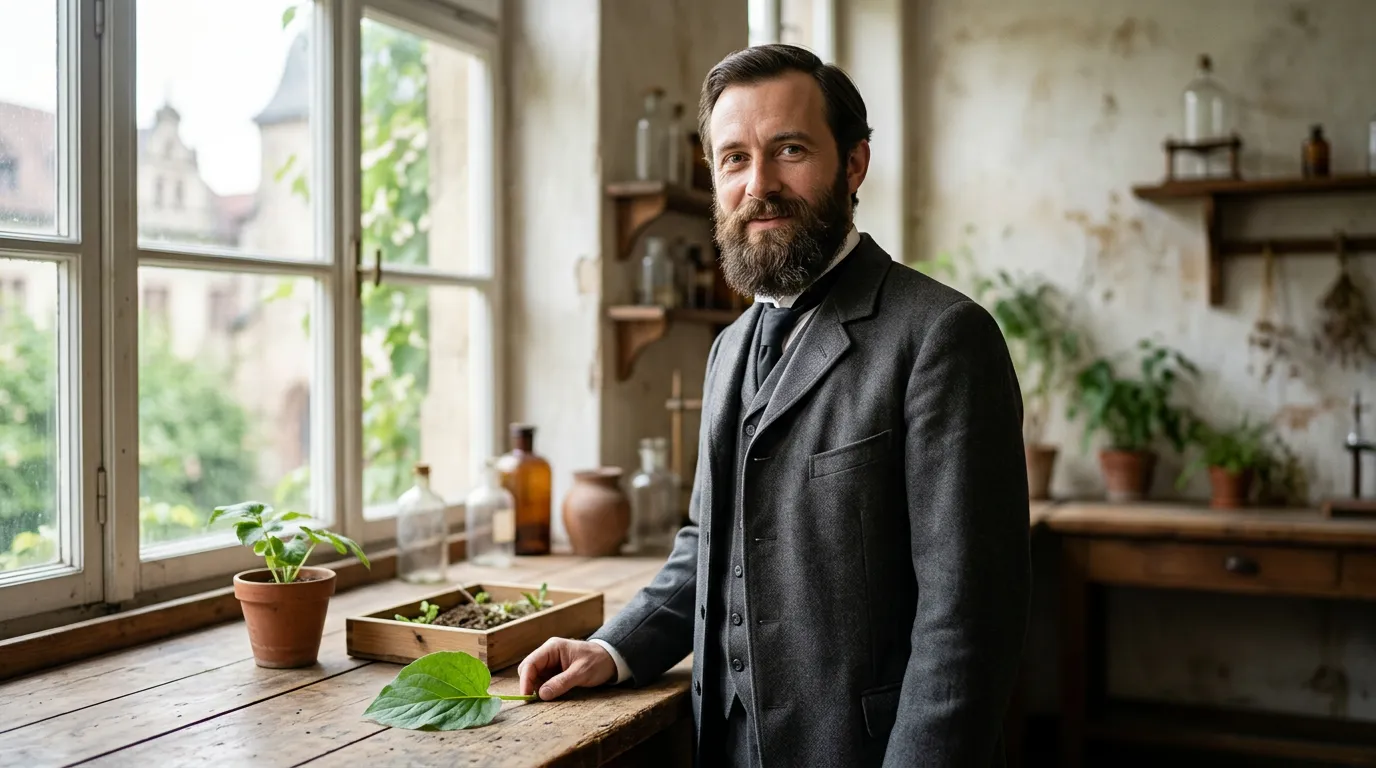
Julius von Sachs
1832–1897 · Plant physiology and photosynthesis
Julius von Sachs helped show how green plants produce starch in light and built experimental plant physiology into a major scientific field.
Why is this scientist famous?
Julius von Sachs developed careful experiments on plant growth, including evidence that illuminated leaves form starch during photosynthesis.
His methods influenced modern plant laboratories studying growth, light, mineral nutrition and photosynthesis.
Julius's story
Plants in a scientific laboratory
Julius von Sachs was born in Breslau, then part of Prussia, on 2 October 1832. He studied and carried out early scientific work in Prague before teaching botany at several institutions. In the nineteenth century, many naturalists described the appearance and classification of plants. Sachs wanted to know what plants actually do: how they grow, move water, respond to light and change their internal chemistry. That meant designing experiments rather than relying on description alone.
What appears in a sunlit leaf?
Sachs investigated how green leaves behave in light and darkness. His 1860s work helped establish that starch accumulates in illuminated green plant tissues, connecting sunlight with the production of stored organic material. Starch is a substance plants make from smaller sugar units; its presence can offer evidence of photosynthetic activity. The familiar iodine test for leaf starch is a teaching tool that builds on this line of research, although modern classroom procedures should not be mistaken for an exact reproduction of his historical bench.
Growing without ordinary soil
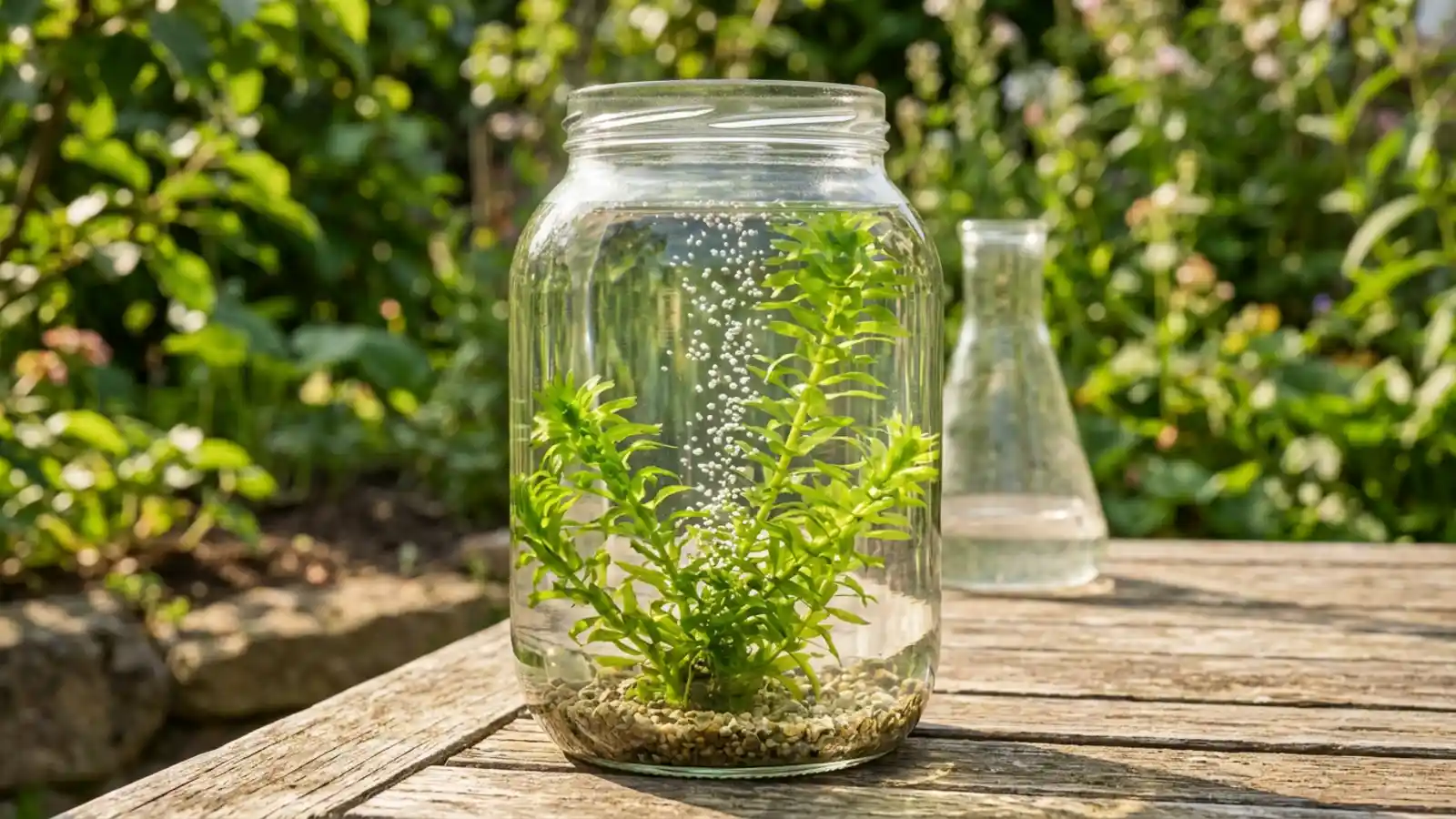
He also studied plant mineral nutrition and water culture, where roots grow in a prepared solution instead of natural soil. These experiments helped researchers ask which substances are needed for healthy plant growth. His broad investigations covered germination, roots, temperature effects and the behaviour of plant organs. Sachs did not work alone in every area, but he was a powerful advocate for treating plants as living systems that could be investigated with reproducible measurements.
A teacher who reshaped botany
Sachs became professor at the University of Würzburg in 1868 after a period at Freiburg. His Handbook of Experimental Plant Physiology appeared in 1865 and his textbook of botany in 1868. His 1875 History of Botany traced how earlier researchers had developed the subject. Together, his books, experiments and teaching helped make plant physiology a well-defined field with its own research questions and laboratory practices.
A lasting experimental approach
Sachs died in Würzburg on 29 May 1897. Plants still puzzle scientists: why do roots follow gravity, how do leaves make and distribute sugars, and what happens when light or water is limited? Laboratories now use sensors and molecular tools he could not have imagined, but his insistence on carefully comparing growing conditions remains central to plant science.
What did they discover?
Starch formation in light
Helped establish a connection between illuminated green tissue and starch formation.
Plant mineral nutrition
Investigated growth in carefully prepared nutrient solutions.
Experimental plant physiology
Promoted reproducible tests of plant function.
Botanical teaching and synthesis
Published influential textbooks and a history of botany.
Amazing facts
He was born in Breslau, now Wrocław in Poland.
He developed his early academic career in Prague.
His plant experiments linked green tissue, light and starch formation.
He studied how plants grow in nutrient solutions without ordinary soil.
He published a major experimental plant-physiology handbook in 1865.
His influential botany textbook appeared in 1868.
He became professor at Würzburg in 1868.
His History of Botany was published in 1875.
Timeline
Born in Breslau, Prussia (now Wrocław, Poland).
Qualified to teach at university level in Prague.
Published Handbook of Experimental Plant Physiology.
Became a professor at Freiburg.
Moved to Würzburg and published a major botany textbook.
Published History of Botany.
Died in Würzburg.
Related Super Scientists
Joseph Priestley
1733–1804 · Chemist, Natural Philosopher & Minister
Isolating the gas now called oxygen in 1774, pioneering experiments on gases and air, developing a method for making carbonated water, and contributing important observations to early research on plants and the atmosphere.
Charles Darwin
1809–1882 · Naturalist & Biologist
Proposing the theory of evolution by natural selection.