_(2).jpg)
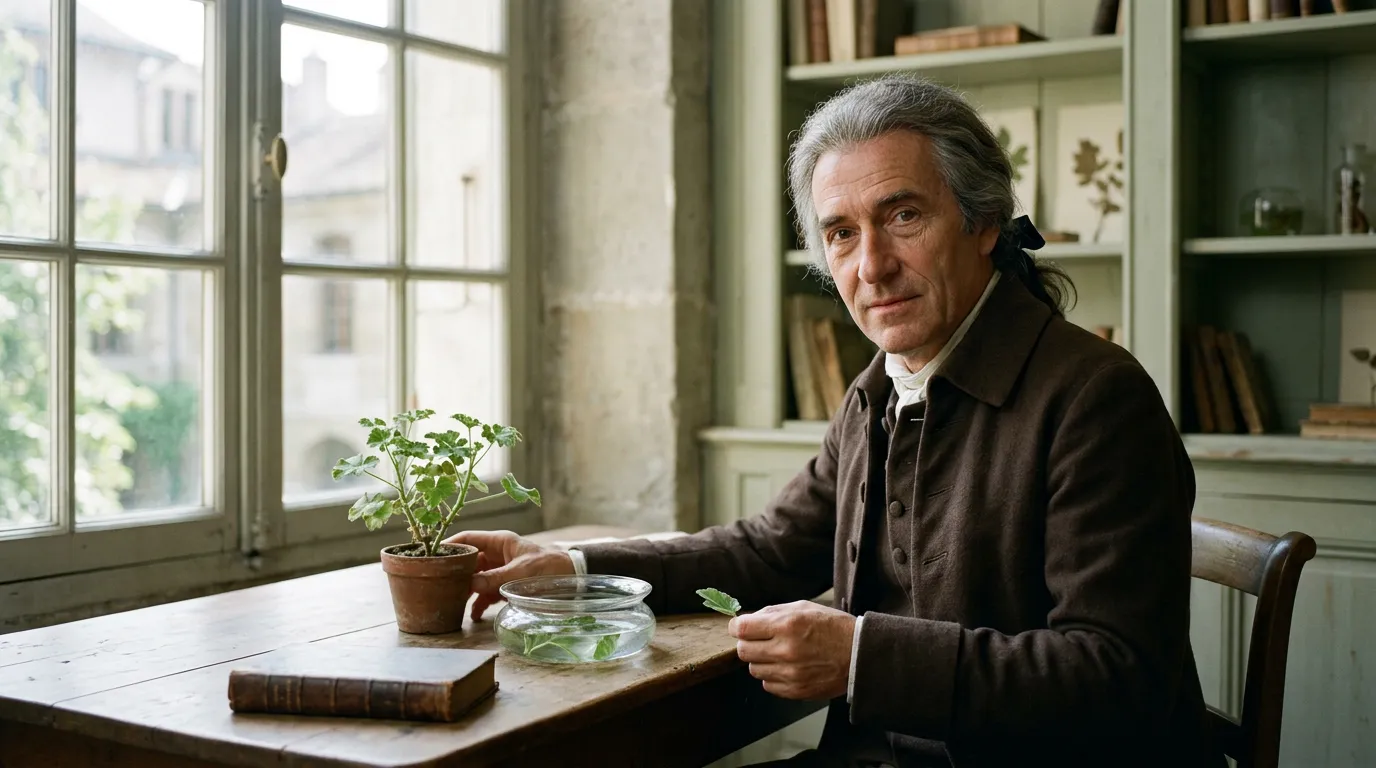
Jean Senebier
1742–1809 · Plant physiology and carbon dioxide in photosynthesis
Jean Senebier showed that plants use carbon dioxide in light and helped establish an experimental understanding of photosynthesis.
Why is this scientist famous?
Jean Senebier linked plant gas exchange to carbon dioxide and sunlight, adding an essential explanation of how green plants grow.
Understanding carbon dioxide uptake is essential to photosynthesis, plant productivity and the global carbon cycle.
Jean's story
A librarian who studied living leaves
Jean Senebier was born in Geneva in 1742. He studied theology, became a Protestant pastor and later organised the city’s library. His scientific work grew out of close attention to experiments and careful reading of other natural philosophers. When people debated how plants could gain so much mass from air and water, Senebier saw an opportunity to use controlled observations to learn what the leaves were doing.
Air is not an empty ingredient
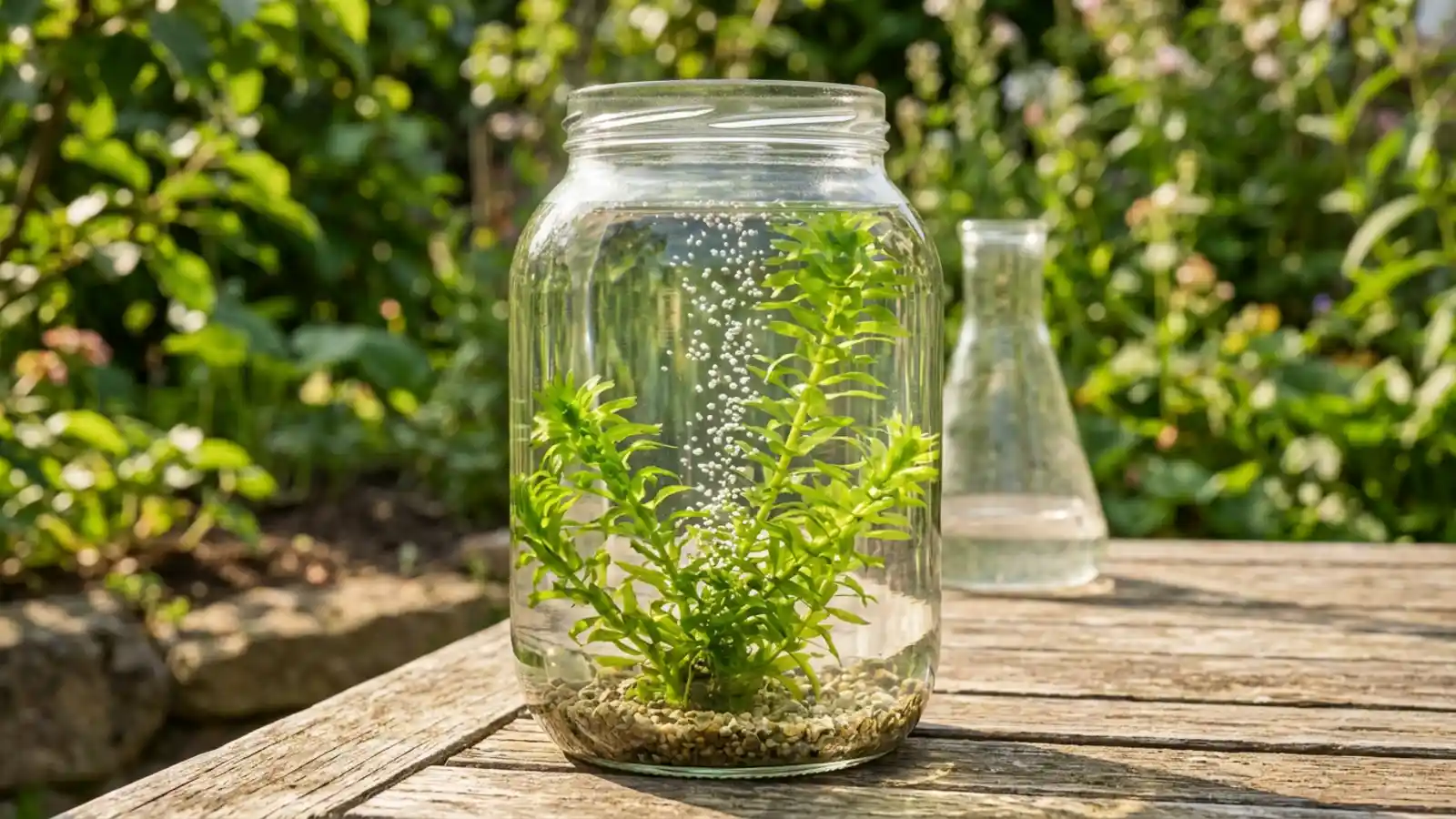
Earlier experimenters, including Joseph Priestley and Jan Ingenhousz, showed important changes in the gases around plants. Senebier investigated how the availability of carbon dioxide, then often called fixed air, influenced the production of oxygen in light. His findings helped connect a plant’s gas exchange to its nutrition rather than viewing bubbles of oxygen as an isolated curiosity. He was working before modern chemical equations or the internal machinery of photosynthesis were known.
A library full of experiments
Senebier published substantial studies of sunlight and plant processes in the early 1780s. He also published a carefully organised catalogue of Geneva library manuscripts in 1779. These projects may seem unrelated, but both demanded attention to observation, records and comparison. His 1800 multi-volume Physiologie végétale gathered plant research into an ambitious account of plant structure and function.
Scientific progress is shared
Senebier built on predecessors and became part of a sequence rather than the single inventor of photosynthesis. Later, Nicolas-Théodore de Saussure tested the roles of water and mineral nutrients with more quantitative chemical methods. Senebier’s research helped move natural history toward experimental plant physiology: instead of only describing leaves, scientists investigated what leaves exchanged with their environment and under which conditions.
From eighteenth-century leaves to carbon cycles
Senebier died in Geneva on 22 July 1809. Today, scientists measure how plants take in carbon dioxide and how light, temperature and water affect that uptake. The instruments have changed enormously, but the question Senebier helped sharpen remains familiar: where does the substance that makes up a growing plant actually come from?
What did they discover?
Carbon dioxide in plant growth
Connected the availability of carbon dioxide with oxygen production by illuminated plants.
Experimental plant physiology
Used comparisons of plant behaviour in different conditions.
Plant gas exchange
Helped identify the environmental materials involved in photosynthesis.
Scientific synthesis
Published major works organising research on plant function.
Amazing facts
He was a Protestant pastor as well as a plant researcher.
He became librarian of Geneva in 1773.
He published a catalogue of Geneva library manuscripts in 1779.
His plant experiments investigated carbon dioxide, once called fixed air.
He connected light-driven gas changes with how plants obtain material for growth.
A three-volume collection of physical and chemical memoirs appeared in 1782.
His five-volume Physiologie végétale appeared in 1800.
He died in Geneva in 1809.
Timeline
Born in Geneva; exact day is withheld because reference works disagree.
Began serving as pastor in Chancy.
Became Geneva city librarian.
Published a catalogue of the city library’s manuscripts.
Published memoirs about sunlight and changes in plant gases.
Published the five-volume Physiologie végétale.
Died in Geneva.
Related Super Scientists
Joseph Priestley
1733–1804 · Chemist, Natural Philosopher & Minister
Isolating the gas now called oxygen in 1774, pioneering experiments on gases and air, developing a method for making carbonated water, and contributing important observations to early research on plants and the atmosphere.
Charles Darwin
1809–1882 · Naturalist & Biologist
Proposing the theory of evolution by natural selection.